

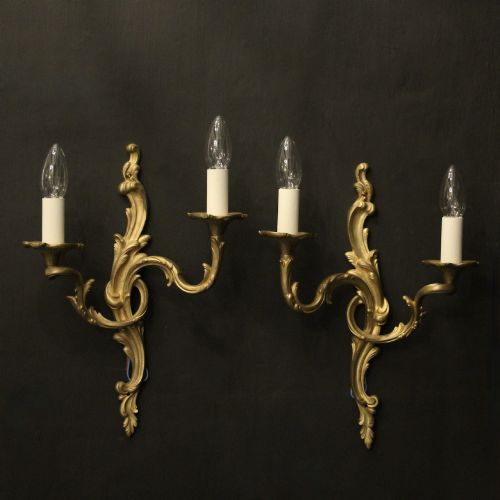
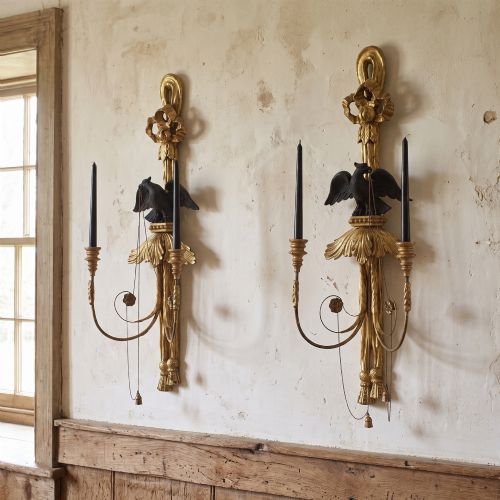
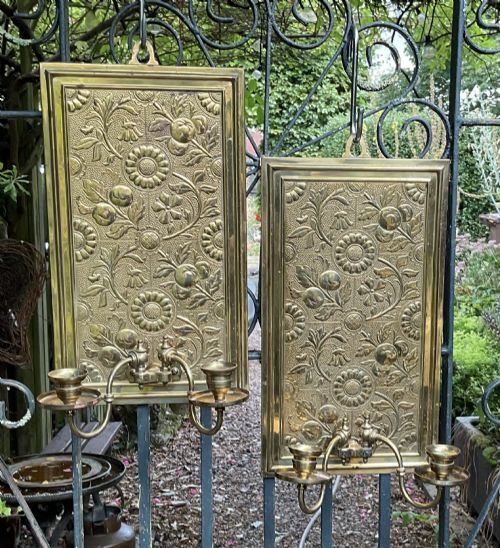
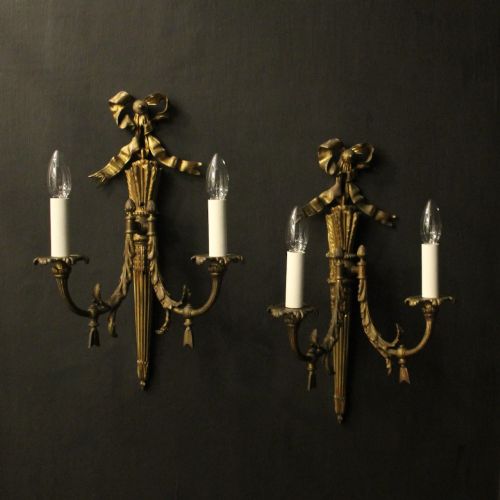
Gold Candle Sconces
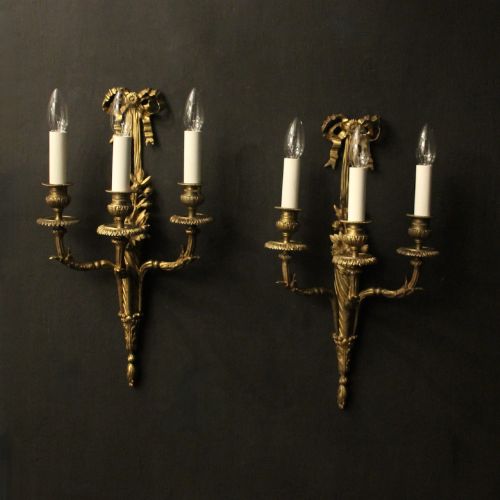
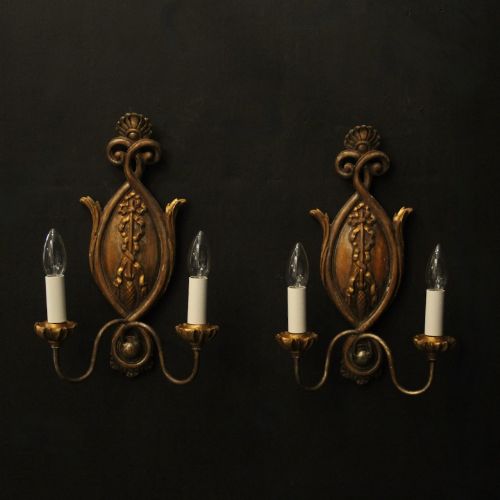
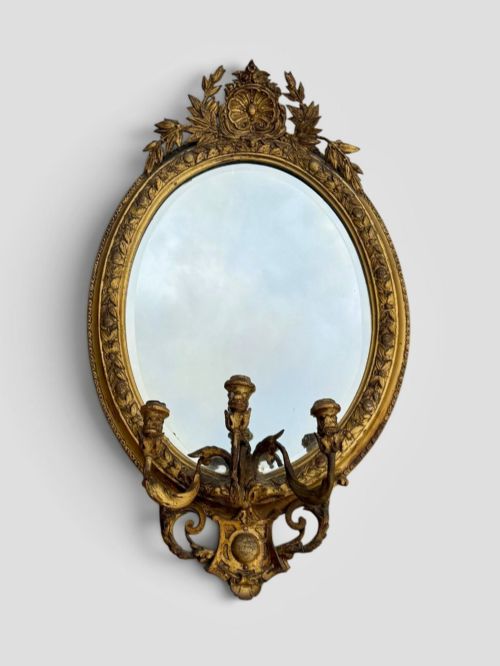
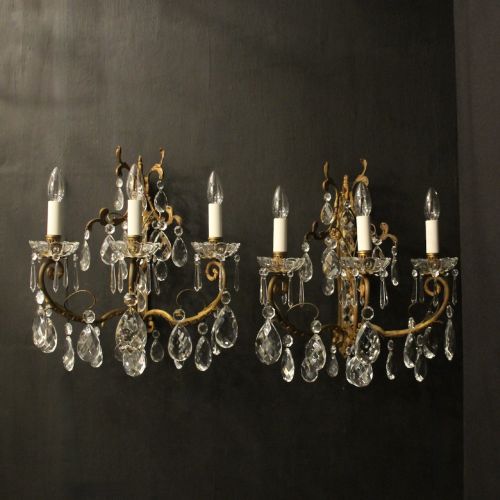
Gold candle sconces bring warmth and reflective light to a room, cast in gilt bronze, giltwood, brass, and gesso.
Identifying gold candle sconces
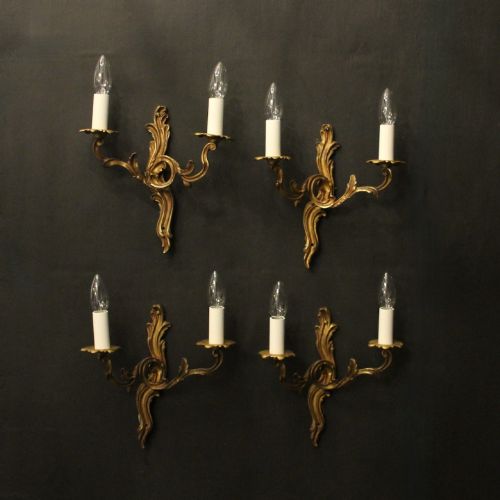
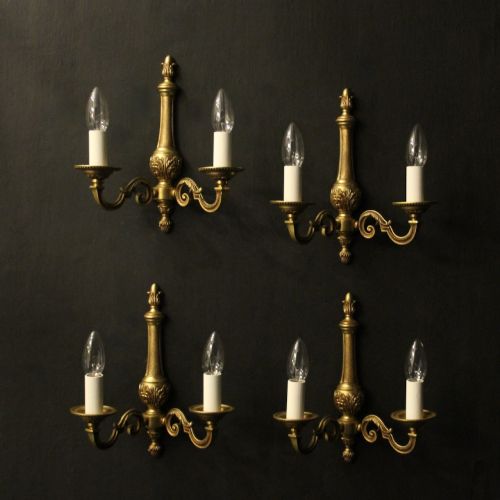
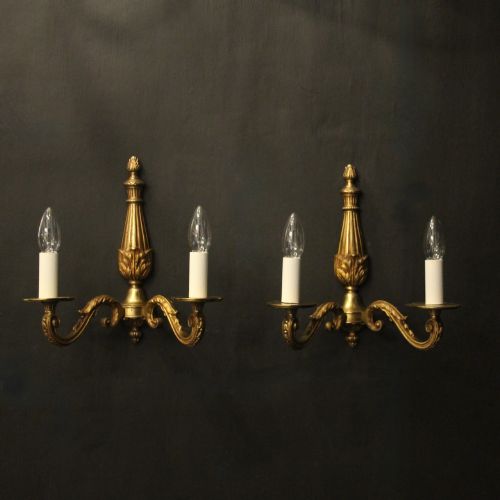
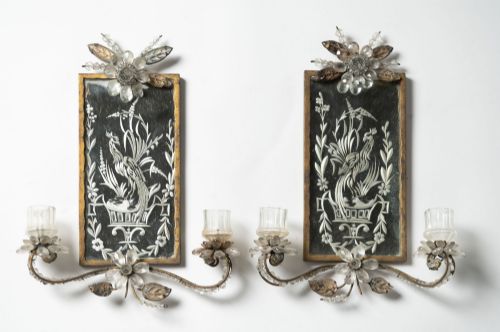
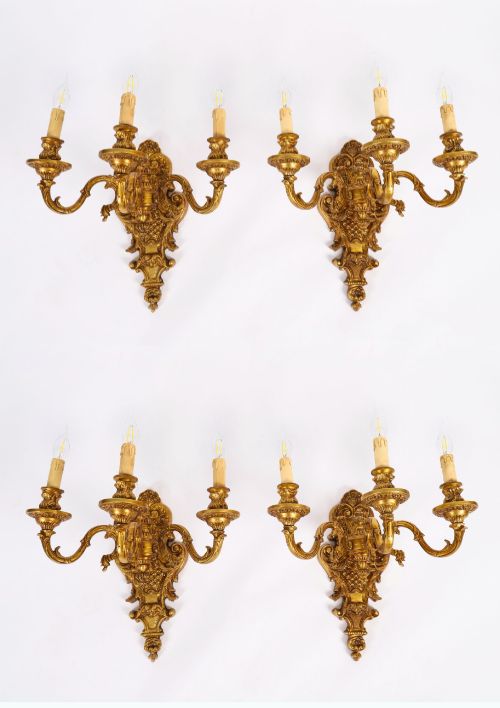
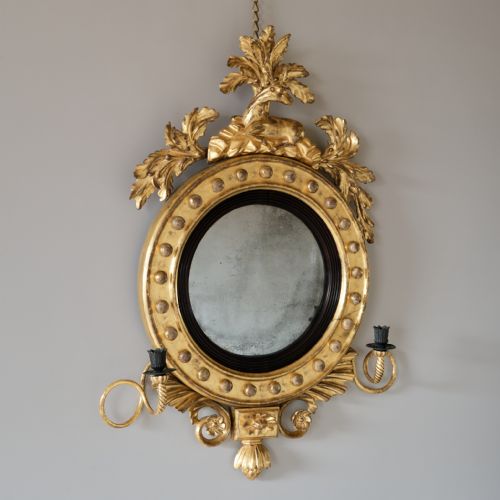
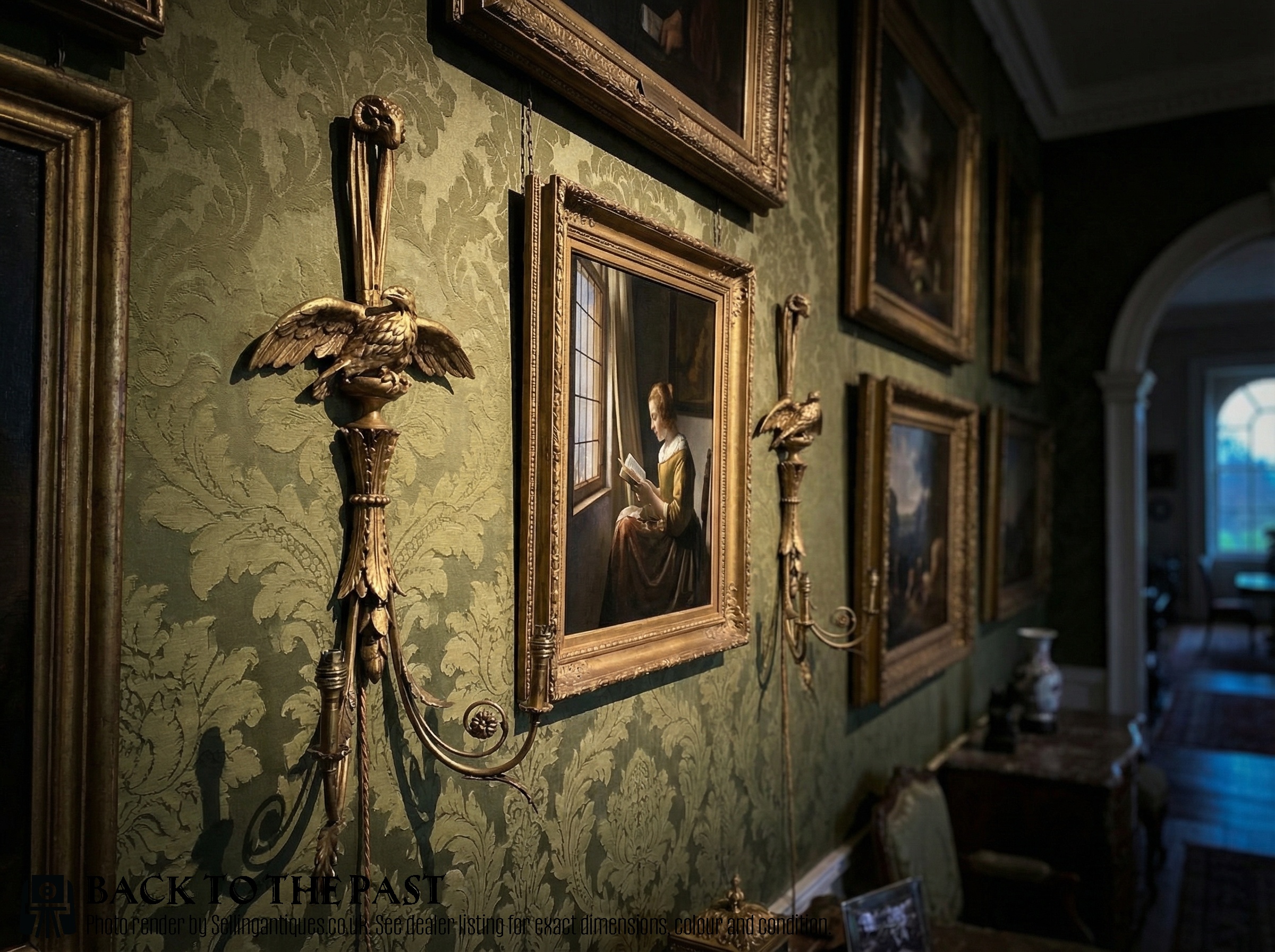
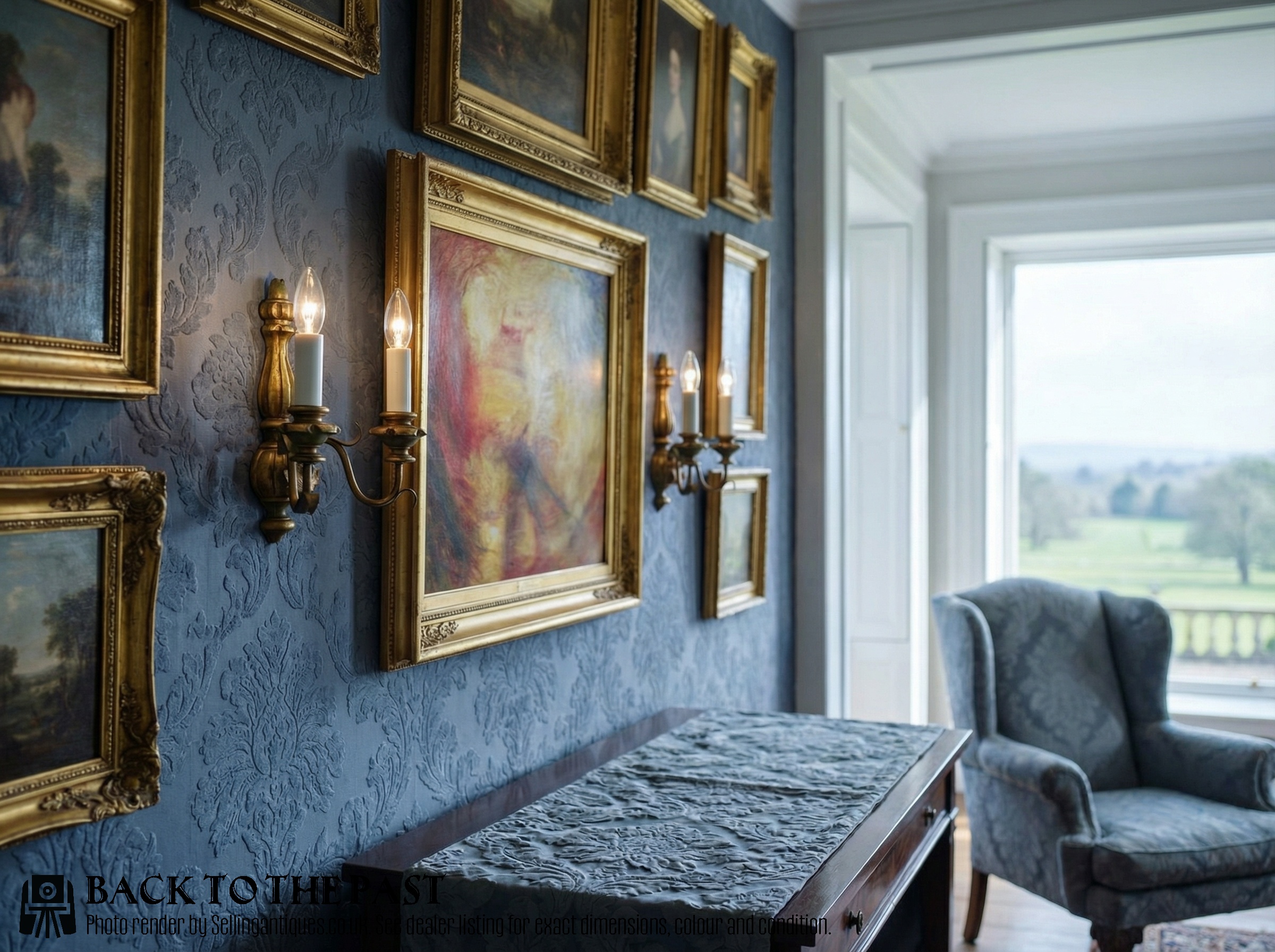
Gold candle sconces are wall lights designed to hold candles, appearing in forms such as twin-arm, triple-arm, and single-light configurations. These fixtures attach directly to walls, projecting illumination across a room through polished metal and reflective glass.
The pieces available here span several decades and centuries, ranging from nineteenth-century examples to pieces from the early twentieth century, including the nineteen-tens, nineteen-twenties, and nineteen-thirties. French origins dominate the selection, bringing continental styling to British interiors.
Makers and designers embraced various historical motifs, producing items styled in French Rococo, Louis XV Revival, George III style, and Neoclassical designs. Buyers encounter pairs and larger sets, frequently featuring carved wood, cast bronze, or crystal adornments.
Materials and construction
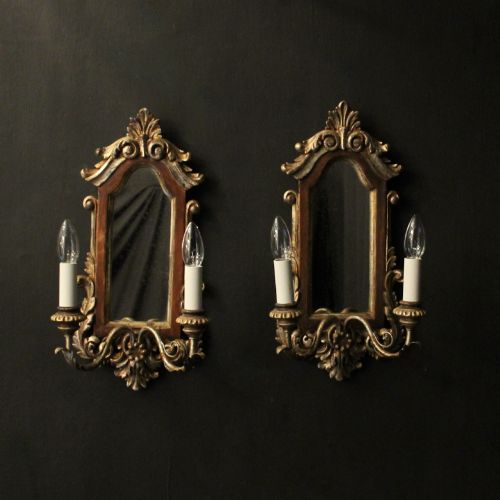
Craftsmen shaped these sconces from solid brass, gilt bronze, giltwood, gesso, and mixed metals, applying gold leaf or gilding to create a luminous surface. Wooden frames received layers of gesso before gilding, while metal components were cast and chased.
Many examples incorporate glass and crystal pendants, drops, or bobeches that refract the candlelight. Polychrome finishes appear on selected giltwood pieces, adding colour contrast to the gilded surfaces.
Retail Price Guide 2026
Typical UK retail prices for gold candle sconces, calculated from the Sellingantiques database of over a million retail prices indexed since 2003. This retail price guide relies exclusively on Sellingantiques data; no external sources or auction records are used, so the figures do not describe the wider market.
Listings feature items dated across the nineteenth century and the early twentieth century up to nineteen-thirty.
Quality and craftsmanship
The distinction between standard and superior pieces lies in the crispness of the casting or the depth of the wood carving. Finely chased gilt bronze and deeply carved giltwood exhibit sharper detail and greater handwork than simpler pressed metal or moulded composition alternatives.
The integration of materials also defines the grade of a sconce, where heavy cast frames hold securely aligned arms and genuine rock crystal or high-grade glass drops rather than modern synthetic replacements.
The Gold Candle Sconces Glossary
- Giltwood
- Wood, typically lime or pine, that has been coated in gesso and covered with thin sheets of gold leaf. This technique provides a durable and brilliant golden finish on carved frames.
- Gilt Bronze
- Bronze metal that has been treated with a layer of gold amalgam or electroplated to produce a rich golden exterior. It allows for intricate, sharp casting details.
- Gesso
- A plaster-like mixture applied to wood surfaces as a preparation for gilding or painting. It creates a smooth, absorbent base for gold leaf application.
- Bobeche
- A small collar or disc fitted below the candle nozzle to catch melting wax. These are often made of glass or matching metal.
- Rococo
- An ornate design style characterised by asymmetrical curves, scrollwork, and naturalistic plant motifs. It heavily influences French wall light designs of the eighteenth and nineteenth centuries.
Frequently Asked Questions
How do I hang a heavy antique sconce?
Wall sconces require secure fixing into solid masonry or direct attachment to wall studs using appropriate screws and rawlplugs. Due to the weight of cast bronze and carved giltwood, plasterboard alone cannot support them safely.
Consult a professional electrician or installer if the sconce has been adapted for electricity or requires secure load-bearing support on older lath and plaster walls.
Are these sconces wired for electricity?
Many antique wall lights retain their original configuration or have undergone conversion for electrical wiring at various points in their history. Examine each individual listing to determine whether the piece holds candles or accommodates electrical fittings.
Buyers should have a qualified electrician inspect any vintage wiring before connecting it to a domestic mains supply to ensure safety and compliance.
How do I distinguish Louis XV Revival from Neoclassical styles?
Louis XV Revival pieces feature asymmetrical scrolls, flowing organic lines, and exuberant Rococo ornamentation. They emphasise curves and natural asymmetry derived from eighteenth-century French design.
Neoclassical pieces rely on symmetry, straight lines, urn motifs, and classical architectural details inspired by ancient Greece and Rome.