




Gold Brass Standing Lamp
A gold brass standing lamp brings vertical light and architectural presence to a room, spanning Victorian telescopic designs to Edwardian floor pieces.
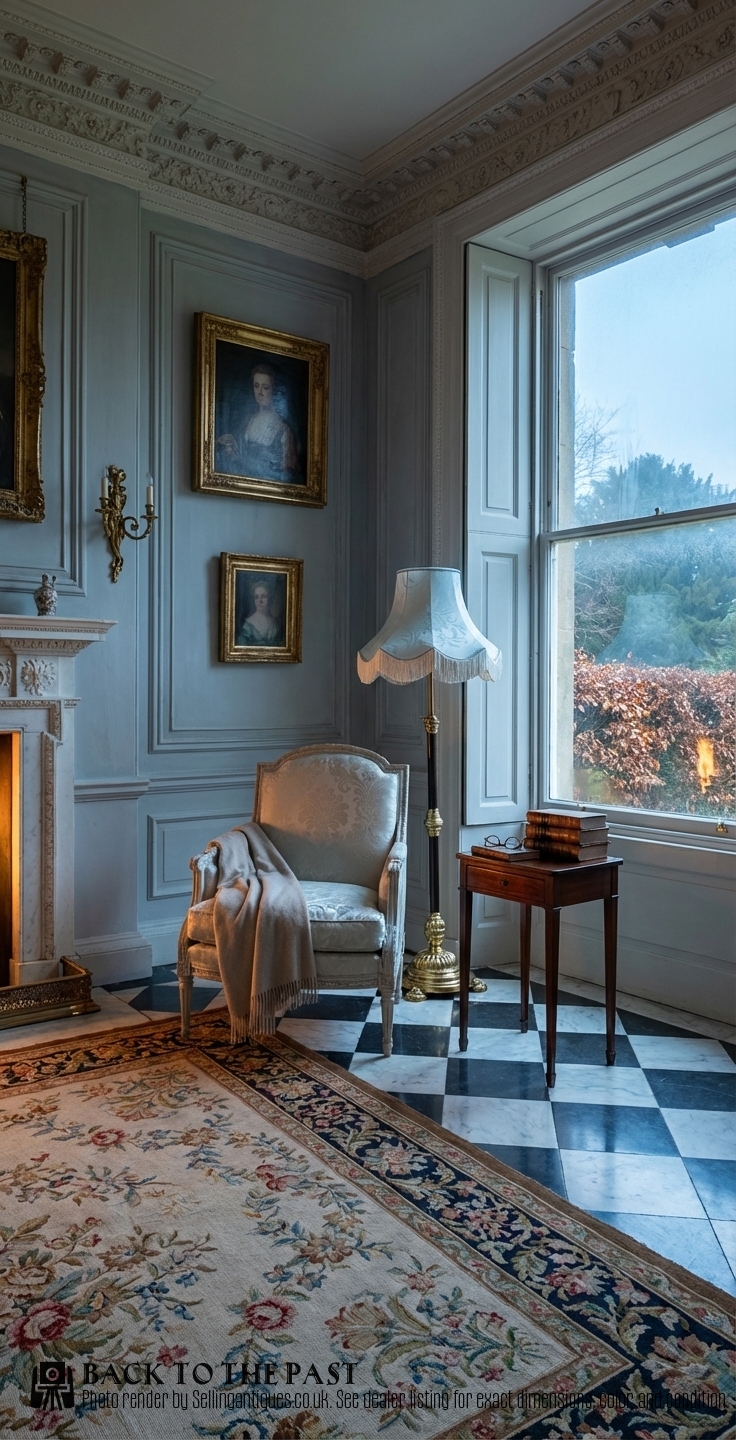
Gold Brass Standing Lamp
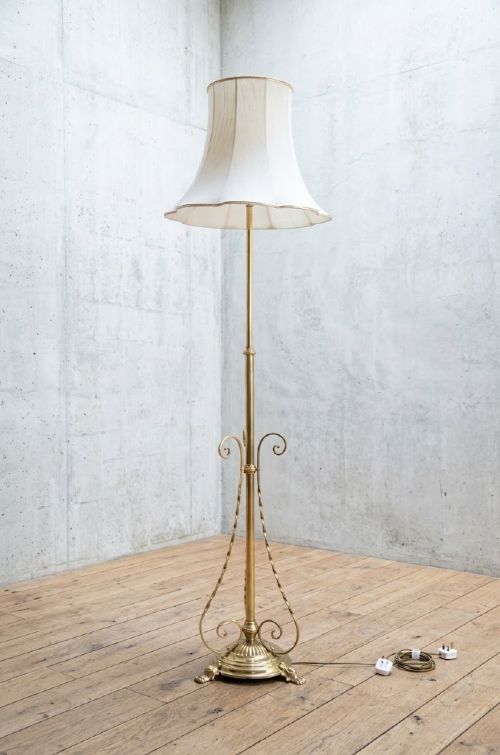
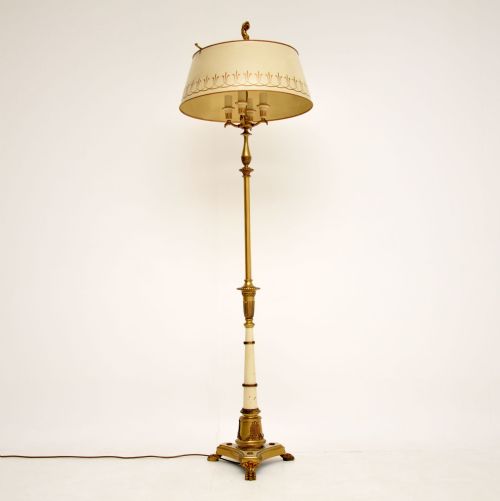
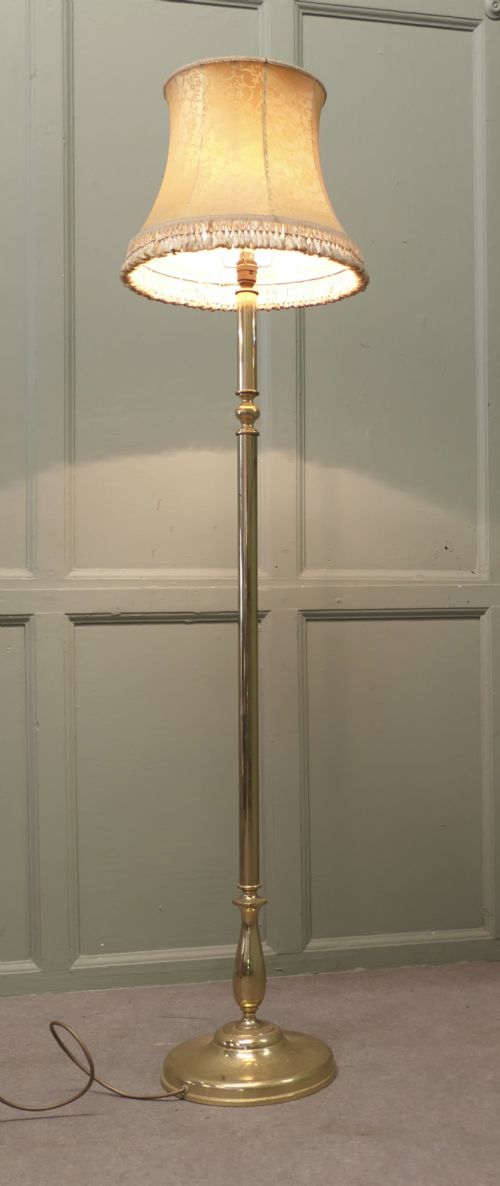
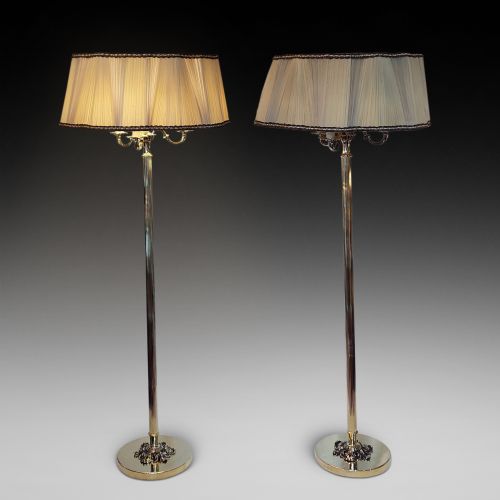
When you search for a gold brass standing lamp, you encounter tall lighting fixtures designed to illuminate rooms from floor level, frequently recorded as standard lamps, floor lamps, or converted oil lamps. These pieces originate across various periods, notably the Victorian era, Edwardian period, and the 1920s, reflecting shifts in domestic lighting from oil combustion to electricity.
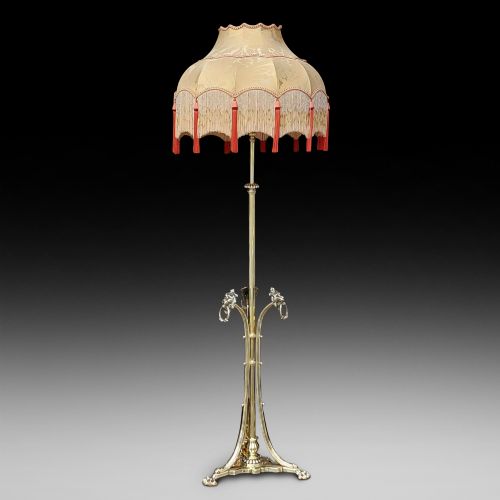
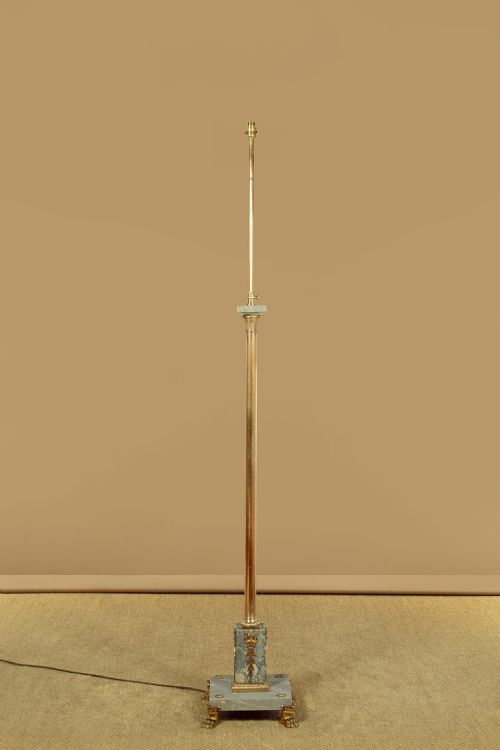
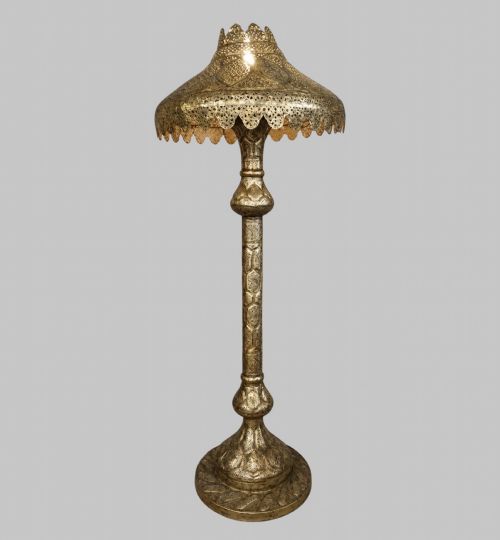
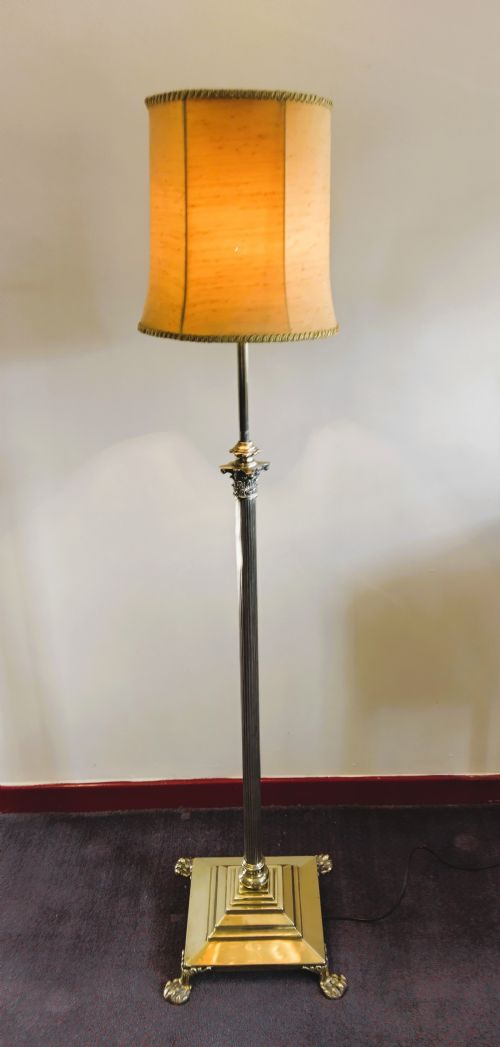
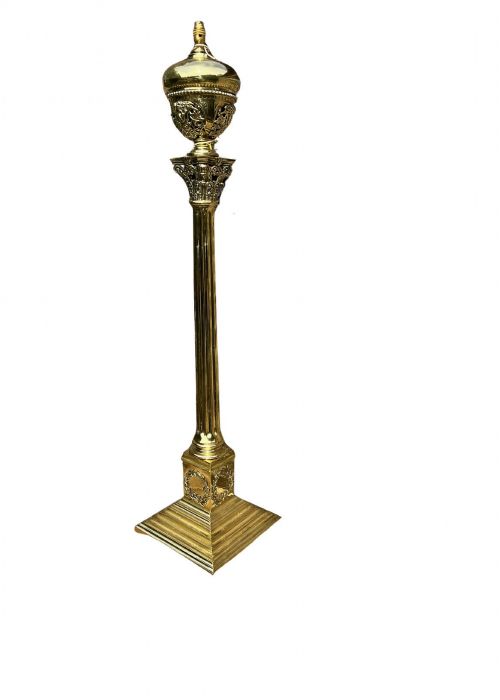
The most common versions on this page are upright brass columns, telescopic standards that adjust in height, and tripod frames. Many examples incorporate classical motifs such as Corinthian capitals or neoclassical columns, whilst others display the organic floral openwork characteristic of Art Nouveau and Arts and Crafts designs.
How they were made
Construction relies primarily on brass, cast metal, and gilt metal, often combined with secondary materials like marble, onyx, glass, and fabric shades. Cast brass components provide structural weight at the base, whilst slender columns and telescopic stems allow for height adjustment mechanisms.
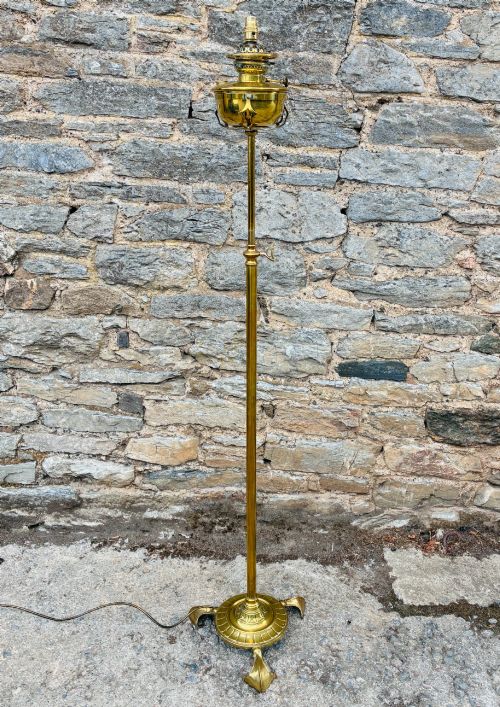
Surface treatments range from polished brass and gilt finishes to painted details and patinated metal surfaces. Many surviving examples began as oil lamps with burners and reservoirs, later adapted for electrical wiring during subsequent decades.
Listings span the 1880s through the 1930s, incorporating Victorian, Edwardian, Art Nouveau, Arts and Crafts, and Neoclassical styles.
What varies in quality
The distinction between standard production and finer execution lies in the depth of casting detail and the integrity of the adjustable mechanisms. Heavy bases with crisp floral openwork or well-defined Corinthian columns demonstrate superior foundry work compared to simpler, plain tubular stems.
Proportion and material combination also elevate certain pieces, such as those integrating carved marble or onyx sections into the metal shaft. The smoothness of the telescopic action and the stability of the weighted base determine the functional success of the design.
The Gold Brass Standing Lamp Glossary
- Telescopic standard
- A floor lamp featuring a sliding inner shaft that allows the total height to be adjusted manually. This mechanism was particularly common on Victorian and Edwardian oil and electric lamps.
- Corinthian column
- A vertical support featuring an ornate capital decorated with acanthus leaves, frequently utilised on formal Victorian floor lamps. It mimics classical architectural orders.
- Gilt metal
- A base metal treated with a thin layer of gold or gold-coloured wash to simulate solid or heavy ormolu. It appears widely on decorative lighting fixtures.
- Standard lamp
- The traditional British term for a tall floor-standing lamp designed to sit beside seating areas. These fixtures often incorporate weighted bases to support fabric shades.
Gold Brass Standing Lamp: Frequently Asked Questions
How do I date a brass floor lamp?
Dating relies on stylistic clues, manufacturing techniques, and the presence of original conversion hardware. Victorian and Edwardian examples often feature heavy cast brass bases and threaded components distinct from later twentieth-century production.
Changes in wiring ports and burner assemblies also indicate whether a piece started as an oil lamp before electrification. Period markers in the construction help narrow the decade of manufacture.
What is a telescopic standard lamp?
A telescopic standard lamp uses a two-part adjustable stem that raises or lowers the light source. A screw key or internal friction collar secures the upper shaft at the desired height.
This function allowed Victorian and Edwardian households to alter the throw of light for reading or ambient illumination. The mechanism requires careful handling to preserve the internal threads.
Were these lamps originally electric?
Many standing lamps from the nineteenth and early twentieth centuries were manufactured as oil lamps with brass burners and reservoirs. These were subsequently converted to accept electrical fittings as domestic power supplies spread.
Converted pieces retain the original fuel containers or burner galleries beneath the modern bulb holder. Purpose-built electric standards appear more frequently by the 1920s and 1930s.
How do I style a brass standing lamp?
A tall brass lamp suits traditional reading corners, sitting rooms, and studies where vertical illumination balances lower furniture. The warm metallic finish pairs naturally with wooden side tables and upholstered seating.
Choosing an appropriate fabric shade influences the quality of light diffused into the room. Period pieces work well alongside eclectic or classic interiors to add height and architectural texture.