


Brass Adjustable Standing Light
A brass adjustable standing light brings purposeful illumination to a room, offering height variations through telescopic stems and arms built for practical tasks.
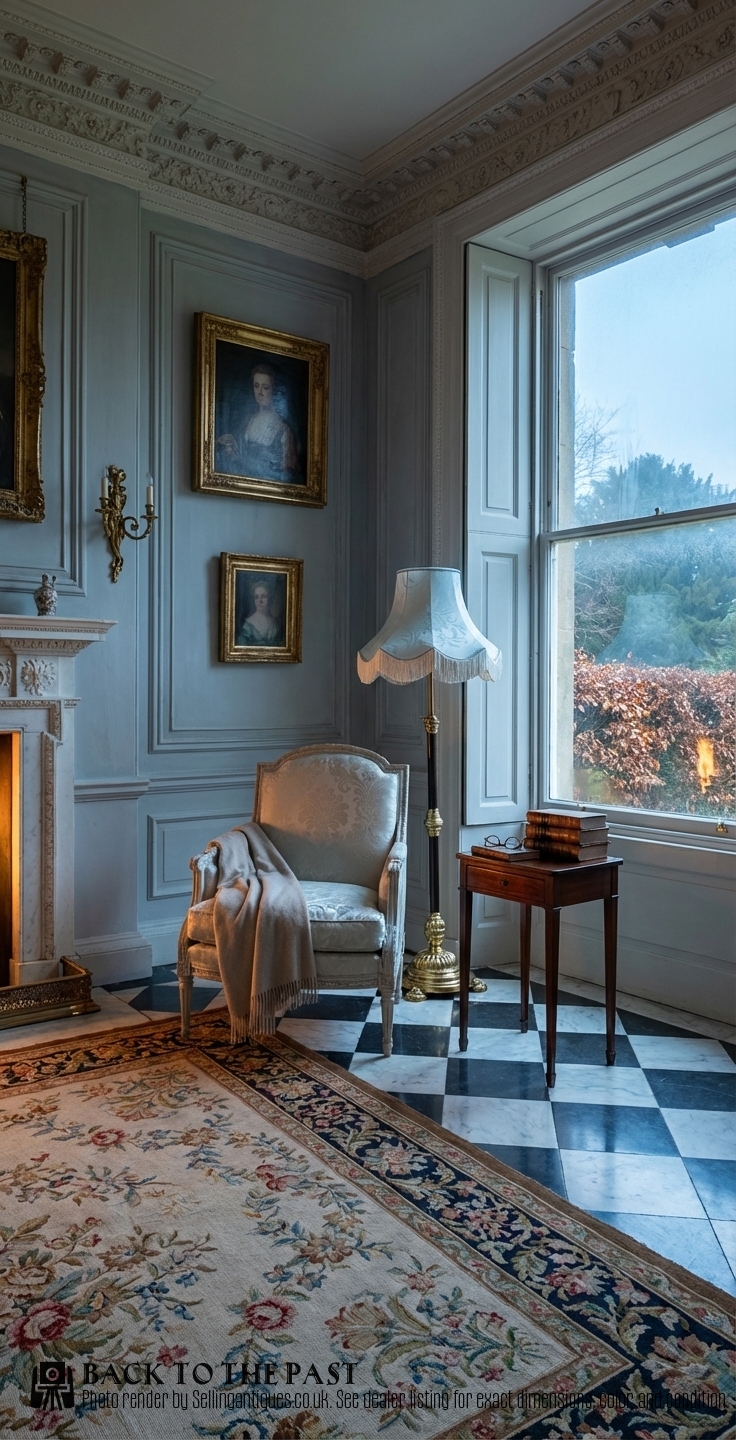
Brass Adjustable Standing Light
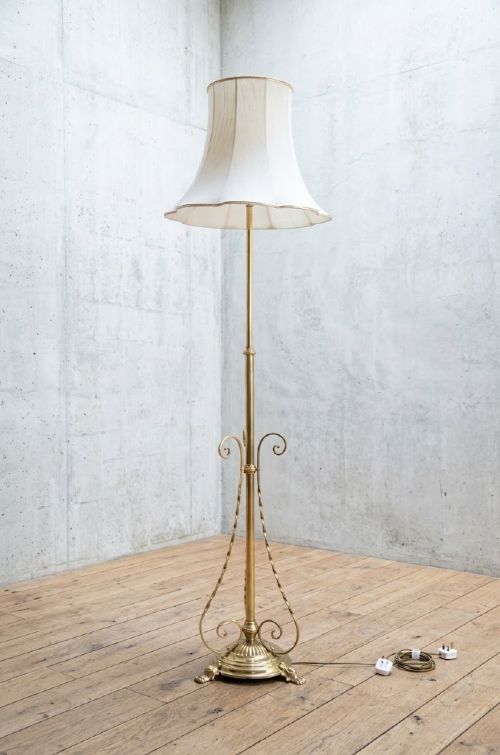
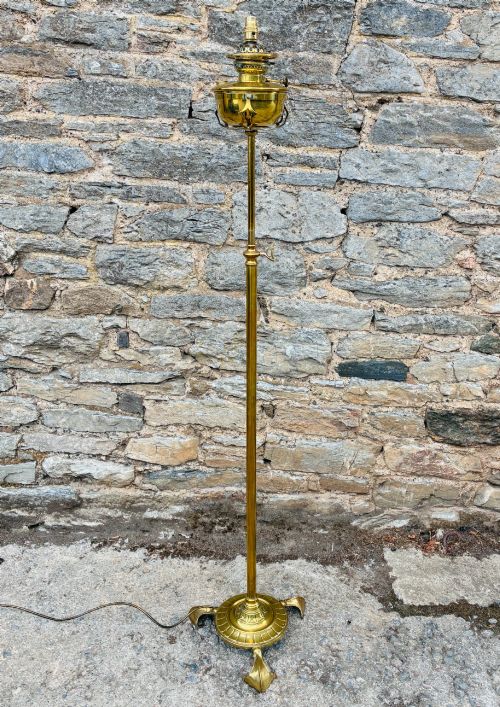
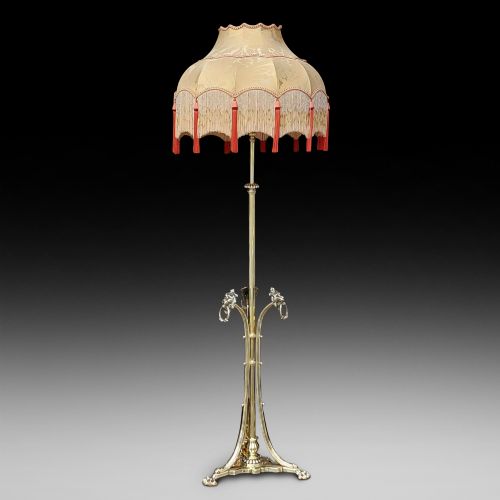
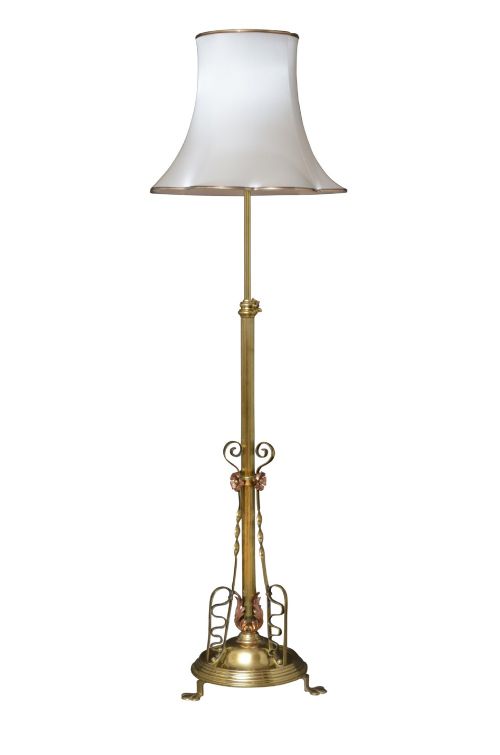
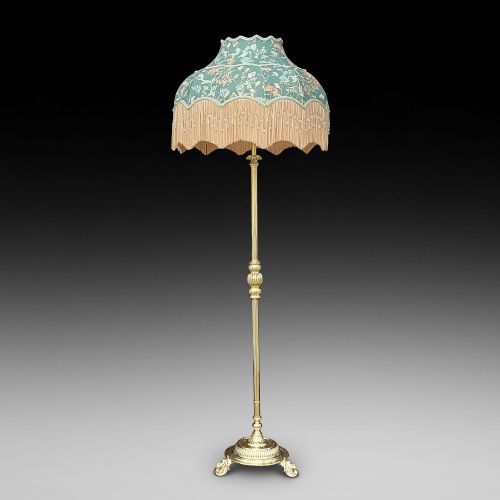
A brass adjustable standing light is primarily found as a standard lamp, floor lamp, or converted oil lamp dating from the Victorian and Edwardian eras, alongside Arts and Crafts and Art Nouveau interpretations. These pieces were designed to move light precisely where needed, utilising telescoping mechanisms, swivel joints, and articulated arms.
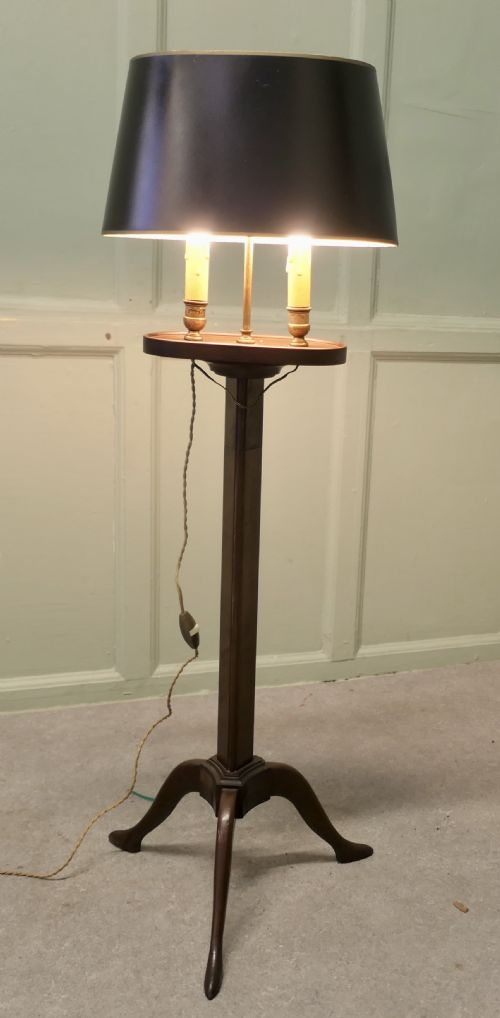
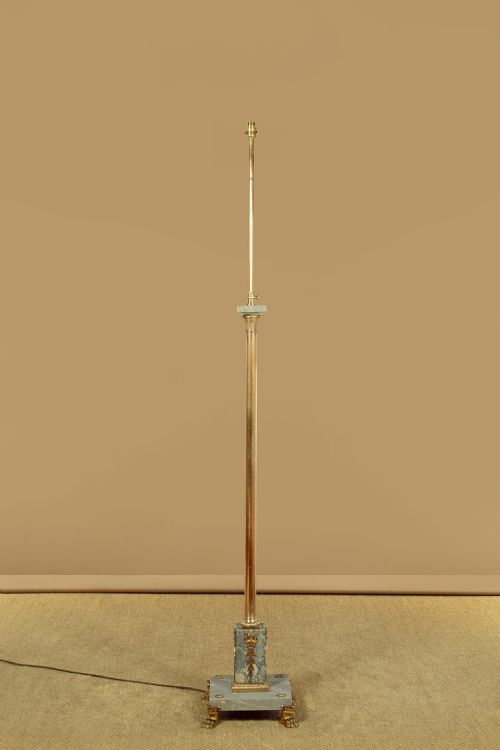
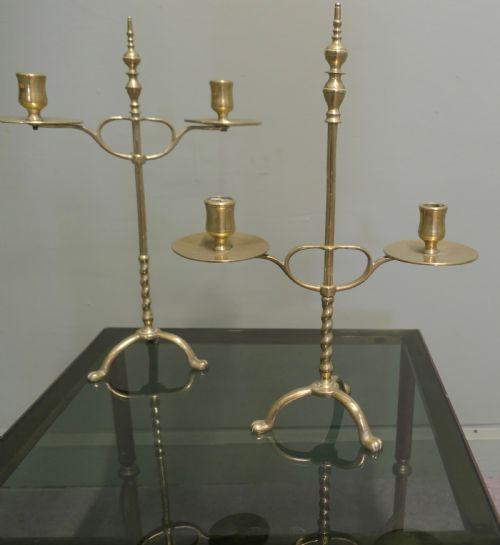
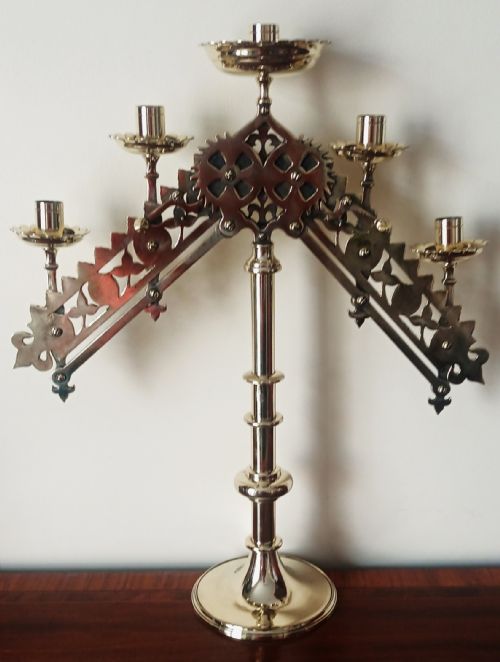
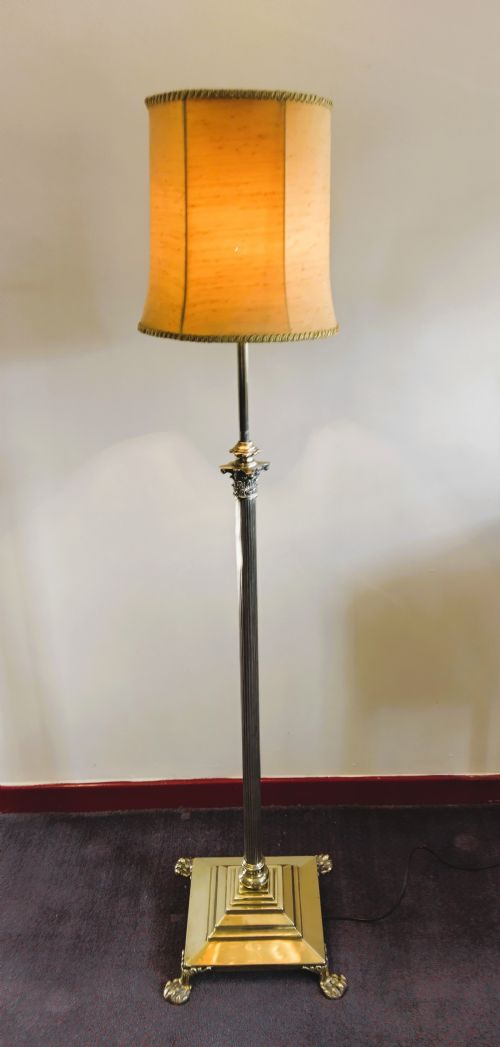
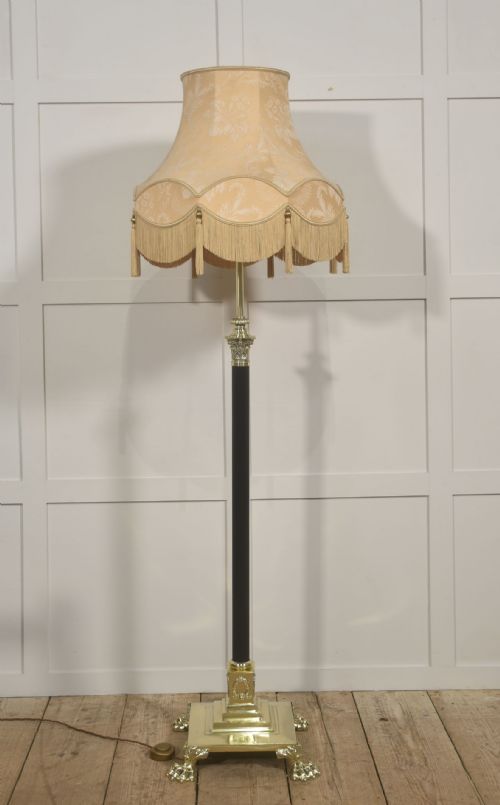
The standard lamps and floor lamps on this page span the nineteenth century through the early twentieth century, including pieces featuring tripod bases, Corinthian columns, and heavy weighted stands. Buyers also encounter specialised student lights, candelabras, and bouillotte forms adapted for height adjustment.
The most common forms merge utilitarian engineering with decorative metals, moving from simple nineteenth-century telescopic oil lamps to early twentieth-century electric conversions. Each variant retains mechanical agility, allowing the shaft or arm to rise and lock into place.
Materials and construction methods
Construction relies heavily on brass, often paired with copper, iron, or silver plate to create sturdy vertical standards that support complex internal sliding mechanisms. Bases are frequently weighted with heavy cast iron or filled with materials like marble and onyx to balance the extended height of the lamp.
The manufacturing process combines metal casting, spinning, and turning with precise engineering for the telescopic inner tubes and friction screws. Many examples integrate secondary materials such as glass shades, fabric covers, and silk elements to diffuse the illumination.
The listings here span the nineteenth and twentieth centuries, incorporating Victorian, Edwardian, Arts and Crafts, and Art Nouveau design movements.
Assessing quality in adjustable lighting
Quality rests in the precision of the mechanical adjustment, where a superior telescopic action moves smoothly and locks securely without slipping. Substantial gauge brass and weighty bases indicate a higher grade of manufacture, ensuring the extended column remains stable.
The refinement of surface detail and decorative casting distinguishes finer examples, from crisp Corinthian column capitals to hand-finished scroll arms. Maker attribution, through stamps or known patents, further elevates the standing of an individual piece.
AFC·Bleriot·Harrison Patent·Messenger
The Brass Adjustable Standing Light Glossary
- Telescopic
- Designating a standard lamp or candlestick with a sliding inner shaft that extends upwards to alter the overall height. This mechanism relies on friction keys or screw keys to hold the stem in place.
- Bouillotte
- A style of reading or desk lamp featuring an adjustable central column and a shade that slides up and down on the vertical rod. The form derives from eighteenth-century card games played under artificial light.
- Student light
- A specialised adjustable lamp designed to direct concentrated illumination over a desk or reading surface. These pieces often feature articulated arms or dual candleholders.
- Articulated
- Built with joints, hinges, or swivels that allow the arm or shade to pivot and direct the beam of light. This mechanical flexibility marks out utilitarian pieces designed for specific tasks.
Brass Adjustable Standing Light: Frequently Asked Questions
How do I adjust the height of these lamps?
Most pieces utilise a telescopic inner stem that slides up and down within the main column. A thumb screw or friction collar is then tightened to secure the shaft at the desired elevation.
Older oil lamp standards often retain their original brass keys for this purpose. Care should be taken to support the inner tube with one hand while loosening the mechanism.
Can these old oil lamps be used with electricity?
Many standard lamps originally designed for oil have subsequently been converted to electricity for modern domestic use. This conversion generally involves running wiring down through the central telescopic core.
Buyers often find examples that blend nineteenth-century metalwork with contemporary wiring standards. Professional inspection is recommended to ensure the internal electrical components meet current safety guidelines.
What materials are used alongside the brass?
While brass forms the primary metal structure, makers frequently incorporated contrasting materials for stability and visual effect. Bases commonly feature heavy weights of iron, alongside decorative additions of marble and onyx.
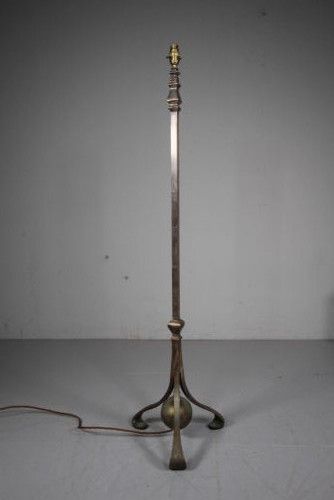
Shades and diffusers typically introduce glass, silk, fabric, and copper elements. Wrought iron also appears on specific Arts and Crafts and utilitarian floor-standing models.
How do I tell Victorian from Edwardian pieces?
Victorian standards frequently display heavier, more ornate ornamentation such as Corinthian columns, neo-classical casting, and robust telescopic mechanisms built for heavy oil reservoirs. They lean towards formal historical revival styles.
Edwardian and later Arts and Crafts pieces often present cleaner lines, simpler tripod bases, and smoother brass or copper surfaces. The focus shifts toward functional simplicity and organic forms characteristic of the early twentieth century.