





Gold Brass Jardiniere
A gold brass jardiniere brings sculptural planting indoors, offering period weight and decorative presence for the home.
Gold Brass Jardiniere
When you search for a gold brass jardiniere, you are looking at metal plant holders designed to display greenery within domestic rooms. These pieces originate largely from the Victorian and Edwardian eras, alongside select examples from the eighteenth and nineteenth centuries.
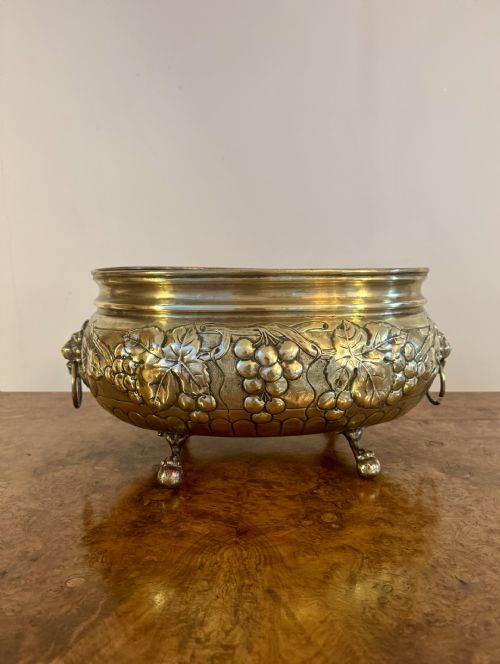
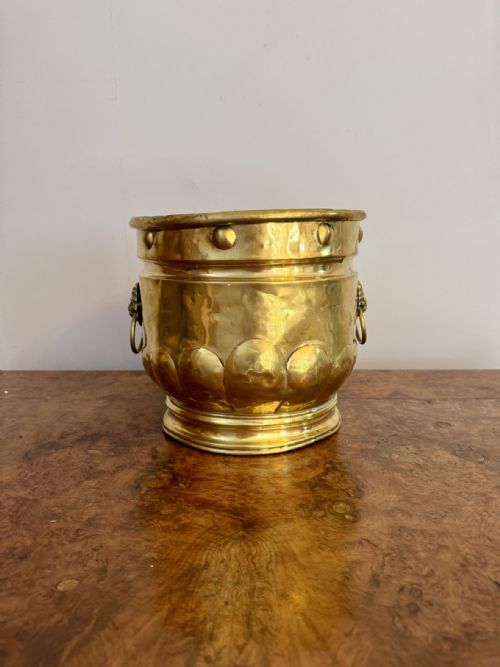
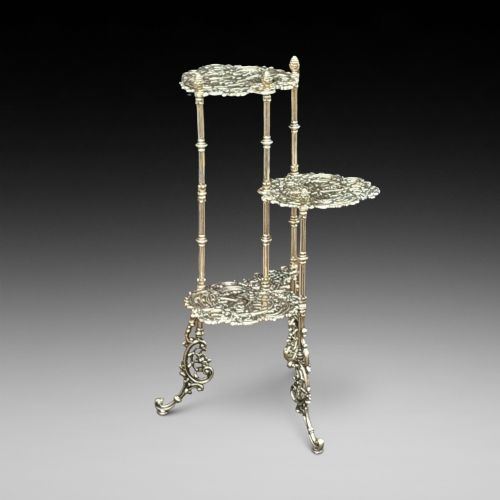
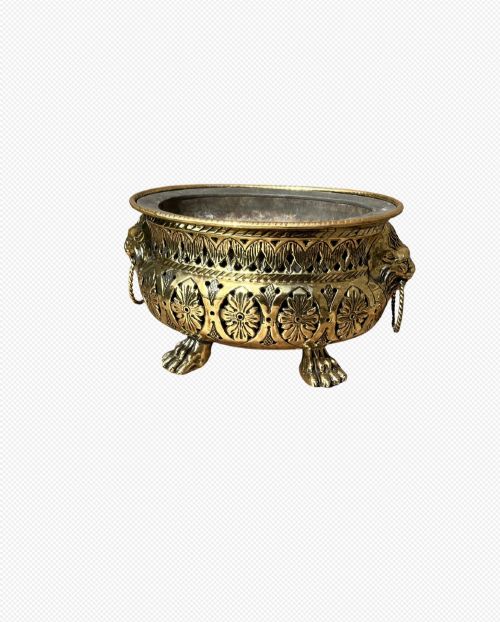
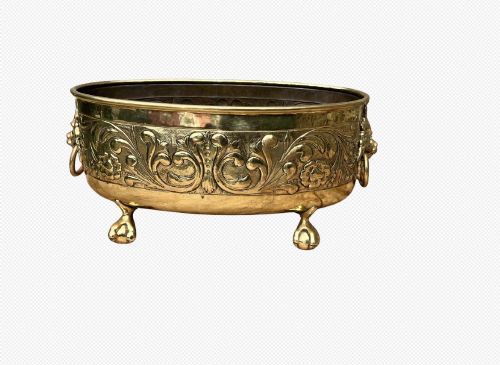
The inventory on this page centres on planters, cachepots, log buckets, and plant stands shaped from brass and bronze. You will find items ranging from simple nineteenth-century troughs to elaborate revival styles bearing heraldic crests or animal heads.
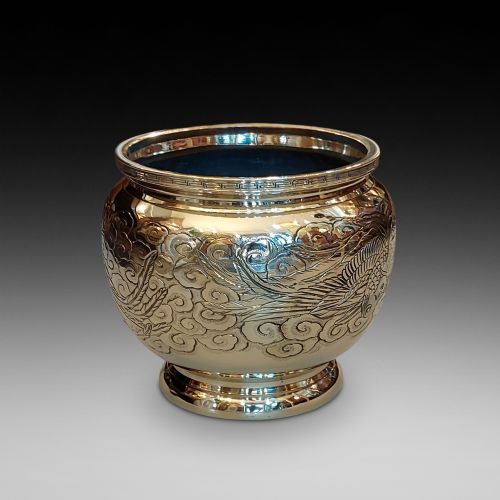
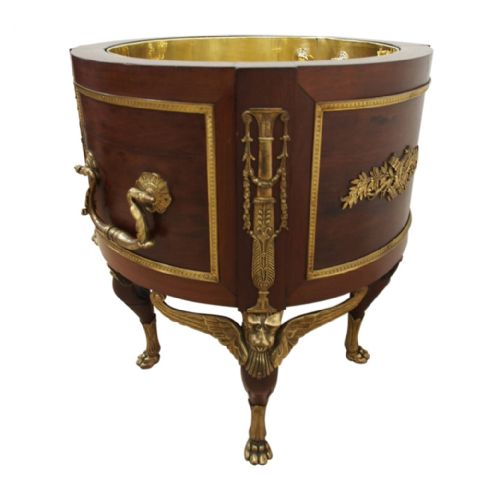
Forms include single vessels on stands as well as paired urns, reflecting both domestic utility and formal interior decoration. Their design spans multiple traditions, incorporating French, Chinese, and Anglo-Indian influences.
How they were made
These vessels rely primarily on brass, bronze, and zinc, frequently shaped through casting, pressing, and repoussé techniques. Metalworkers hammered sheet brass from the reverse to create raised decorative motifs, or cast heavier bronze and brass components into rigid structural forms.
Many interiors feature applied components such as ormolu mounts, cast brass handles, or animal heads fixed to the body of the planter. Zinc liners frequently protect the main metal structure from moisture, ensuring the durability of the outer container.
Gold Brass Jardiniere Retail Price Guide 2026
Typical asking prices for gold brass jardiniere among the pieces listed under this phrase on Sellingantiques today, from the lower quarter to the upper quarter. They describe what is for sale here now, not the wider market.
Several planters feature watchful animal heads peering outward from the brass body, guarding the ferns within.
What varies in quality
Quality rests in the crispness of surface detail and the substance of the metal. Hand-worked repoussé work with deep, sharp definition separates standard production pieces from finer examples of period metalwork.
Structural integrity also distinguishes the range, particularly in the weight of the metal and the stability of any accompanying stands. Original liners and well-cast decorative mounts indicate a higher standard of original manufacture.
The Gold Brass Jardiniere Glossary
- Jardiniere
- An ornamental pot or stand for holding flowers or plants. These vessels often sat on tables or dedicated floor stands within nineteenth-century reception rooms.
- Cachepot
- A decorative flowerpot cover designed to conceal a plain inner plant pot. The term derives from the French for hiding the pot.
- Repoussé
- A metalworking technique where the artisan hammers or presses metal from the reverse side to form a raised design. This method provides the tactile surface texture found on many nineteenth-century planters.
- Ormolu
- Gilt bronze mounts applied to furniture and decorative objects. This technique added metallic contrast and decorative richness to nineteenth-century revival pieces.
- Trough
- A long, narrow rectangular container. In plant stands, these accommodate multiple botanical specimens side by side.
Gold Brass Jardiniere: Frequently Asked Questions
What was a jardiniere used for?
These vessels held potted plants and floral arrangements inside nineteenth-century homes, allowing greenery to sit directly upon furniture without water damage.
They served as focal points for drawing rooms and conservatories, often paired with matching stands or placed on dedicated tables.
How do I care for a brass jardiniere?
Maintain the surface by dusting gently with a soft cloth and avoiding harsh chemical polishes that strip historic patination.
Protect the interior metal by using appropriate waterproof liners when housing living plants.
How do I identify a Victorian planter?
Victorian examples often display heavy brass construction, aesthetic movement motifs, or distinctive heraldic crests reflecting nineteenth-century design tastes.
Construction methods typically involve pressed sheet metal or robust casting combined with applied decorative handles.
Can these planters hold water directly?
Many period pieces utilise internal zinc or metal liners designed to contain moisture and soil. Unlined vessels require a secondary pot placed inside to prevent water contact with the outer brass.