



Gold Art Glass Vessel
A gold art glass vessel brings iridescent shimmer and rich metallic gilding into a room, capturing light in ways ordinary ceramics simply cannot manage.
Gold Art Glass Vessel
A gold art glass vessel encompasses decorative bowls, pitchers and vases shaped during periods spanning the late nineteenth century through to the mid-twentieth century. Collectors searching for a gold art glass vessel will encounter diverse international origins, from French Belle Epoque pieces to Bohemian works.
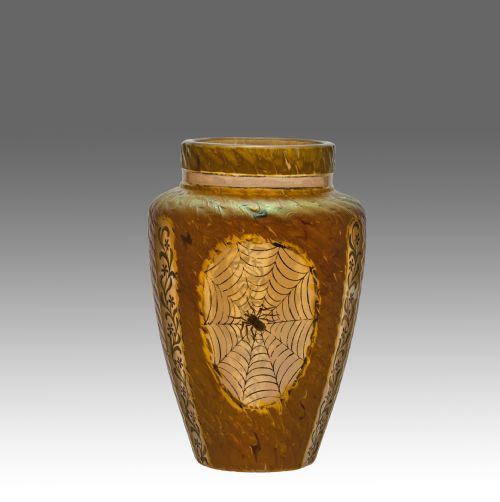
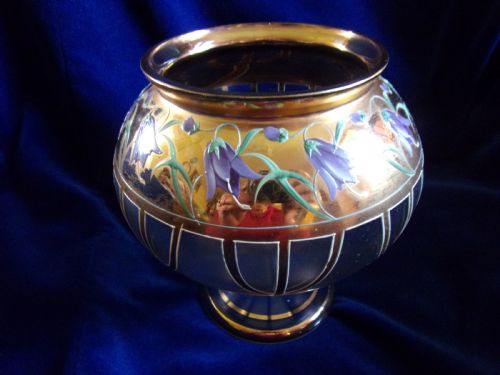
The pieces appearing most frequently on this page date from around nineteen hundred, showcasing the flowing organic lines typical of the Art Nouveau movement. These early examples frequently combine lustrous iridescent glass with applied metallic details or delicate enamel work.
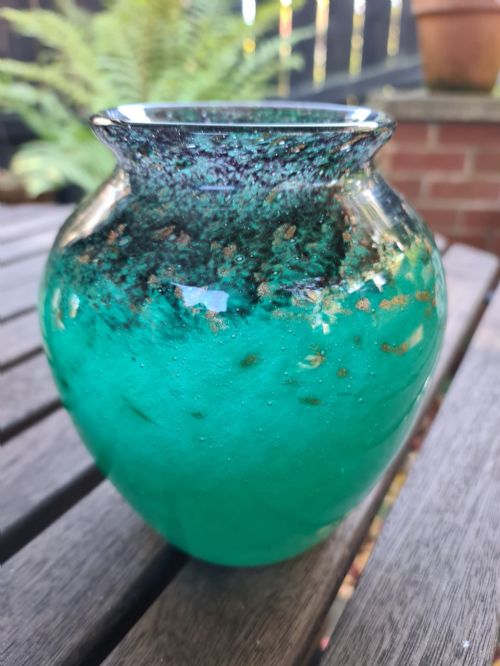
Later examples extend into the nineteen twenties and thirties, featuring cleaner geometric designs associated with Art Deco and manufacturing techniques involving aventurine inclusions. Occasional mid-century Italian works complete the selection, demonstrating enduring fascination with metallic glass effects.
Materials and methods
Makers formed these vessels using molten crystal glass or standard glass formulas, frequently incorporating metallic oxides during the blowing process to create natural iridescent sheens. Artisans manipulated the hot material into lobed or serpentine forms, occasionally applying decorative glass snakes or handles.
Surface ornamentation involved applying gold leaf, gold enamel, or sterling silver mounts directly to the cooled glass body. Techniques like acid-etching and enamelling allowed workshops to render intricate floral motifs, such as lotus or palmette flowers, directly onto the shimmering surfaces.
The selection includes forms ranging from large lobed vases and pitchers to three-handled crystal bowls.
Assessing quality and execution
Superior pieces display exceptional harmony between the iridescent base glass and the applied metallic overlay, whether silver or gold leaf. The crispness of the enamel work and the precision of applied elements like cabochons or handles dictate the refinement of the object.
Works attributed to notable historical glasshouses generally exhibit greater weight, balanced proportions, and sophisticated colour manipulation within the glass matrix. Lesser examples rely on simple surface gilding without the depth and complexity found in top-tier studio production.
Kralik Glass·Legras·Ferdinand von Poschinger·Loetz·LCT Tiffany
The Gold Art Glass Vessel Glossary
- Aventurine
- A form of glass containing suspended metallic particles that glitter within the material. This sparkling effect results from copper or other metals crystallising inside the cooling glass.
- Iridescent glass
- Glass treated with metallic vapours to produce a rainbow sheen on the surface. Makers achieved this shimmering effect by exposing hot glass to metallic salts.
- Favrile glass
- A term patented by Louis Comfort Tiffany for his iridescent art glass. The method produces rich, internal coloration combined with a distinctive metallic lustre.
- Hyalite glass
- An opaque black or coloured glass developed during the nineteenth and twentieth centuries. It provides a striking dark background for contrasting enamel or gilt decoration.
- Paste gilt
- A decorative metallic coating applied to glass surfaces to imitate solid gold leaf. This technique was frequently utilised for repeating geometric or floral borders.
Gold Art Glass Vessel: Frequently Asked Questions
What is art glass?
Art glass refers to high-quality, often handmade glassware created primarily for decorative display rather than daily domestic utility. These pieces showcase experimental techniques in colour, shape, and surface texture developed by master glassmakers.
Production flourished particularly during the late nineteenth and early twentieth centuries, driven by design movements like Art Nouveau. Individual makers pushed technical boundaries to achieve unique optical effects within the glass.
How do I clean my glass vessel?
Maintenance requires gentle handling using a soft, dry cloth to remove dust from the delicate surfaces. Avoid submerging vessels that feature delicate gold leaf, enamel work, or metal mounts in water.
Harsh chemical cleaners can permanently damage applied metallic overlays and iridescent treatments. Dusting with a feather duster or soft brush remains the safest method for regular upkeep.
How do I date a piece?
Dating relies on stylistic indicators such as the sinuous organic motifs of Art Nouveau or the sharp geometric lines of Art Deco. Manufacturing techniques and specific signatures or registry marks also provide clues to the period of origin.
Comparing the vessel's form and material composition with documented examples from known makers helps narrow down the decade of production. Examining pontil marks on the base offers further insight into manufacturing age.
Where were these vessels made?
These decorative objects originated across various European glassmaking centres, with significant production in Bohemia, France, and Britain. Major workshops operated in regions with long traditions of skilled glass craftsmanship.
French makers often focused on intricate enamelling and cameo techniques, while Bohemian houses excelled in iridescent finishes. Italian glassmakers later contributed mid-century interpretations from the island of Murano.