

Gold and Bronze Candelabra
Gold and bronze candelabra bring dual-tone metallic contrast and height to a mantel or sideboard.
Gold and Bronze Candelabra
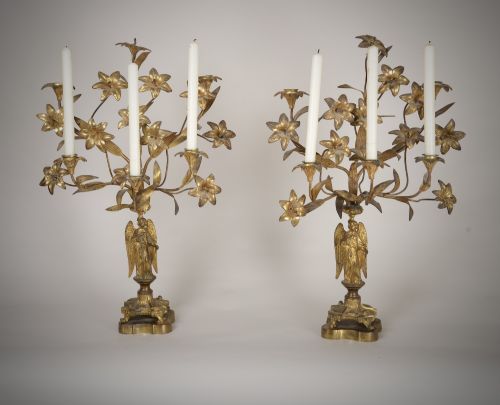
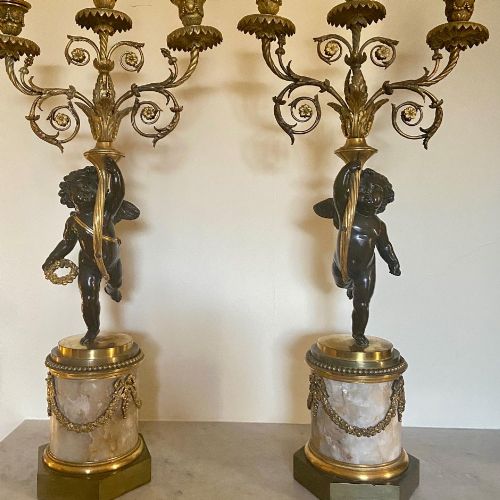
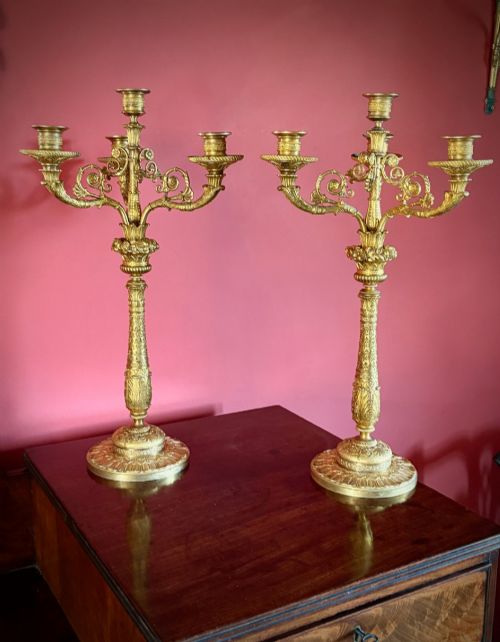
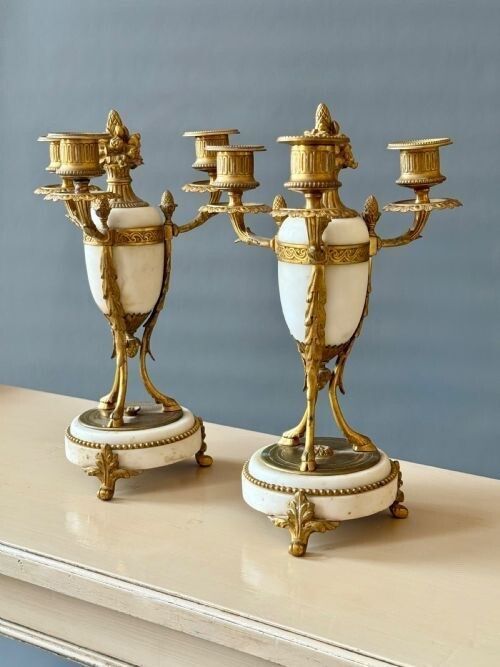
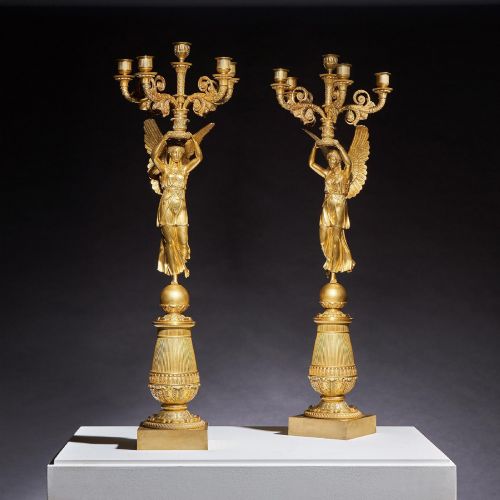
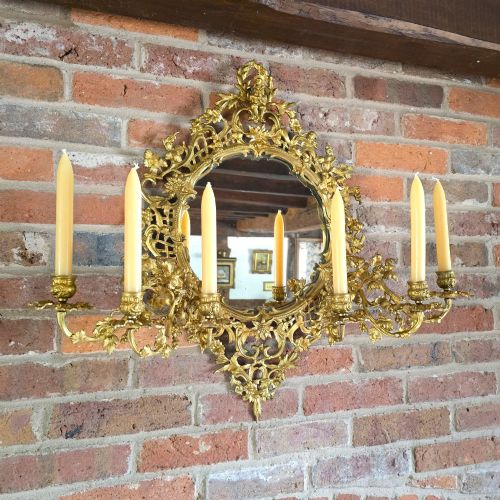
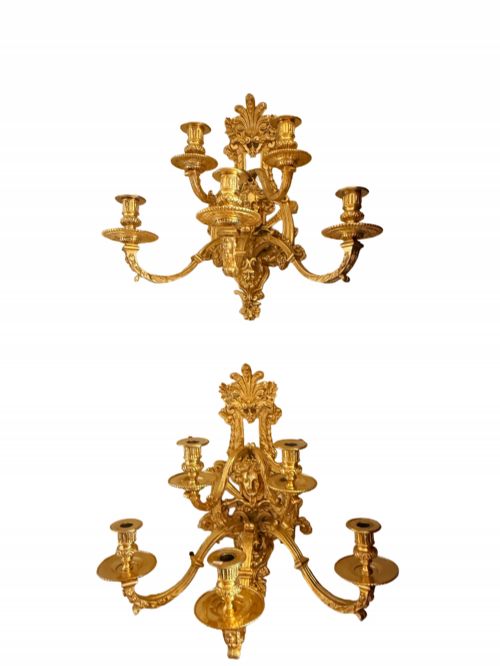
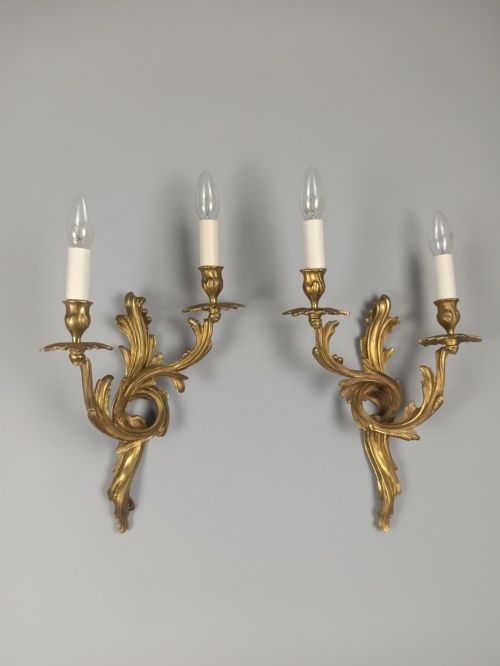
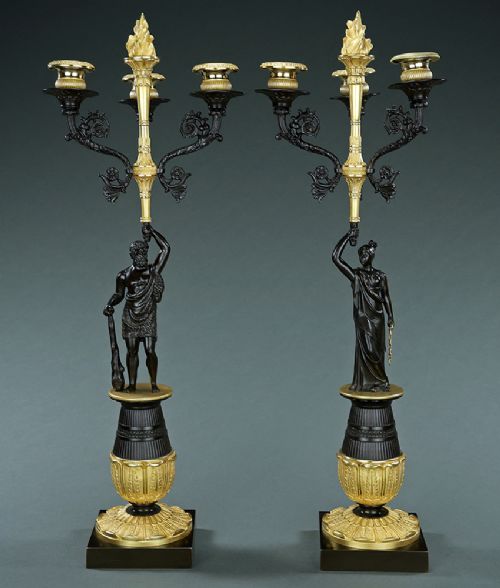
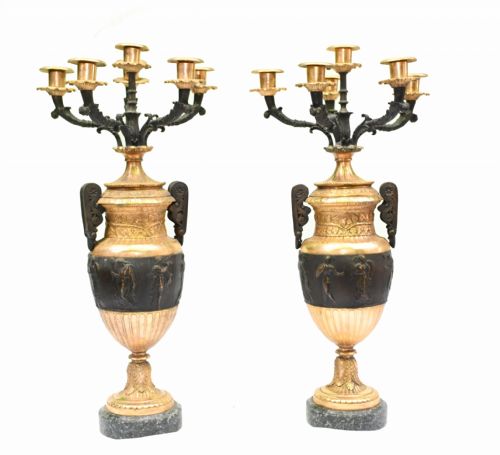
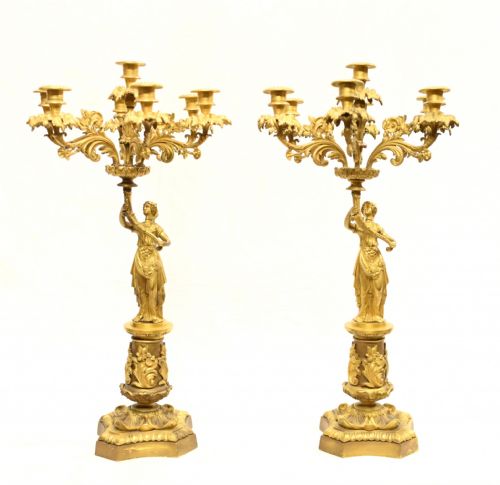
Gold and bronze candelabra combine gilded surfaces with darker patinated or cast metal to hold multiple candles, appearing frequently in pairs from the nineteenth century. These objects range from table candelabra and figural pieces to wall sconces and garniture sets incorporating marble bases.
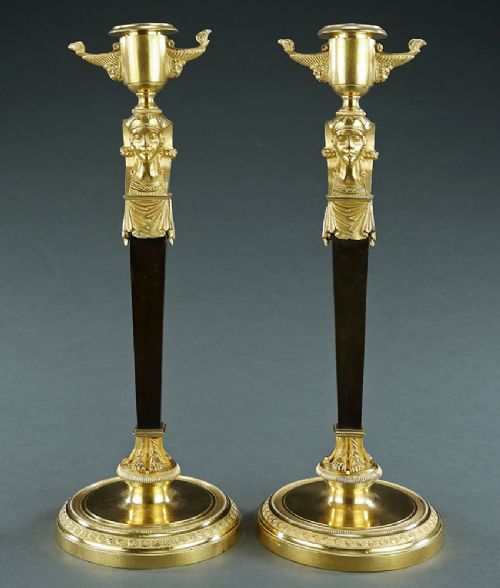
French workshops produced many of the examples seen here, drawing on Empire, Rococo Revival, and Louis XVI styles. Pieces span the nineteenth and early twentieth centuries, featuring branched arms for multiple lights alongside simpler single-candle holders.
How they were made
Makers utilised cast bronze, patinated metal, and brass as structural bases, applying mercury gilding or ormolu to achieve the bright golden finish. White marble and fluorspar frequently appear as plinths or supporting components beneath the metalwork.
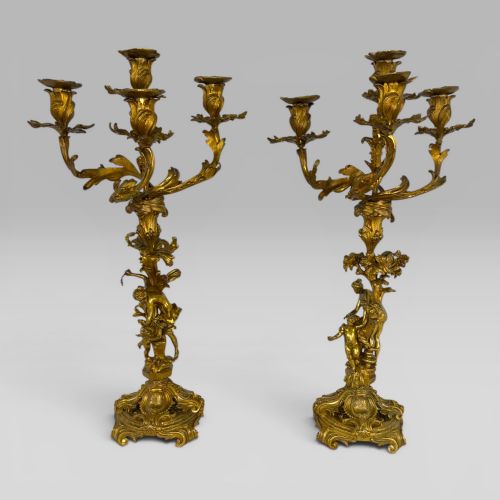
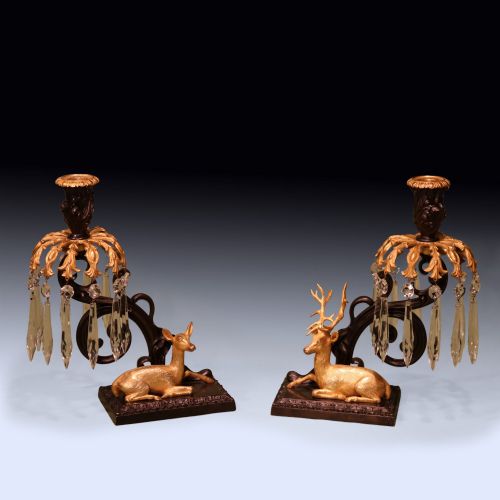
Detailed figures, putti, and naturalistic motifs were cast in sections before being chased, assembled, and secured with internal pins and screws. Crystal drops and enamel details occasionally complement the core bronze structure.
Cast cherubs and stags frequently share lighting duties, holding candle sockets across nineteenth-century salons.
What varies in quality
The crispness of the chasing and the depth of the original gilding distinguish superior examples from standard production. Sharp, cleanly defined cast details on figures and foliage indicate skilled workmanship in the foundry.
Substantial weight from solid bronze and the integration of quality materials like marble bases elevate certain pieces. Complete, matched pairs with intact arm configurations and uniform patination hold greater distinction.
Francois Redmond·Pierre Philippe Thomire·Rabiat·Henry Dasson
The Gold and Bronze Candelabra Glossary
- Ormolu
- Gilt bronze produced by applying a mercury and gold amalgam to a bronze base, creating a durable golden surface. This technique was widely practiced by French bronze-makers.
- Patinated Bronze
- Bronze treated with chemicals or heat to produce a dark, uniform surface colour. This contrasting dark tone highlights the adjacent bright ormolu sections.
- Garniture
- A decorative matching set, typically comprising a central clock flanked by a pair of candelabra or vases. These sets were designed to display together on a mantelpiece.
- Fluorspar
- A colourful mineral occasionally utilised in decorative bases and mounts for nineteenth-century candelabra. It adds distinct natural banding beneath the metalwork.
Gold and Bronze Candelabra: Frequently Asked Questions
How do I clean gilt bronze candelabra?
Dust gently with a soft, dry brush to prevent dirt buildup in recessed cast details. Avoid commercial metal polishes, which can strip the thin gold layer from ormolu surfaces.
Moisture can harm patinated bronze and marble components, so keep cleaning strictly dry. Professional conservation is recommended for tarnished or structurally compromised pieces.
Were these candelabra originally electrified?
Nineteenth-century candelabra were designed exclusively for wax candles and carried no internal wiring. Many survive in their original candle-holding configuration without alterations.
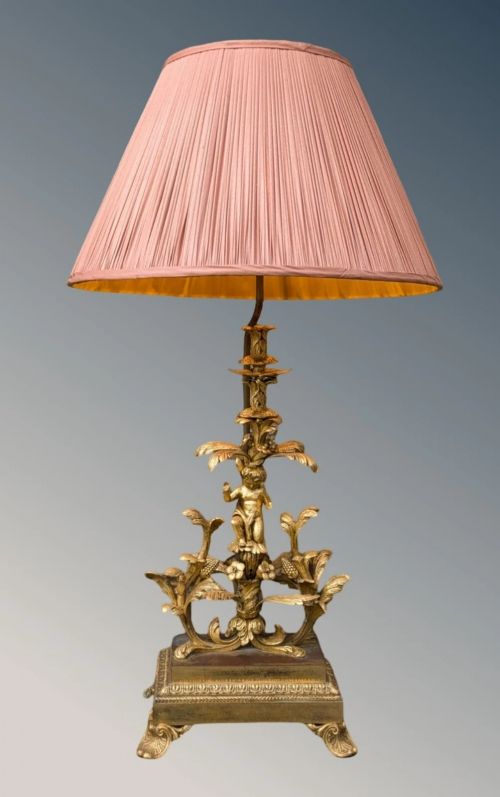
Some examples found today have been adapted into table lamps or wired for electricity. Buyers often look for unaltered pieces to preserve historical integrity.
What is a clock garniture set?
A garniture set pairs a central mantel clock with matching side ornaments, most commonly candelabra. These matched groupings were manufactured together to decorate nineteenth-century drawing rooms.
Finding a complete set with matching bronze work and bases is particularly valued by collectors. Individual candelabra were also produced separately in pairs.
How do I identify French Empire style?
French Empire pieces draw heavily on classical antiquity, featuring military trophies, swans, sphinxes, and rigorous symmetry. The bronze work combines dark patinated surfaces with bright ormolu mounts.
This style flourished during the early nineteenth century under Napoleonic influence. Forms remain architectural and disciplined compared to earlier Rococo curves.