



Empire Style Ormolu Candelabra
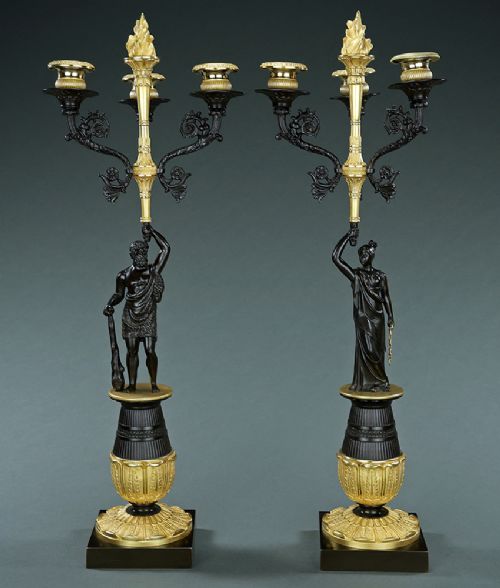
Empire style ormolu candelabra bring striking neoclassical presence to an interior through substantial cast metalwork and classical architectural form.
Empire Style Ormolu Candelabra
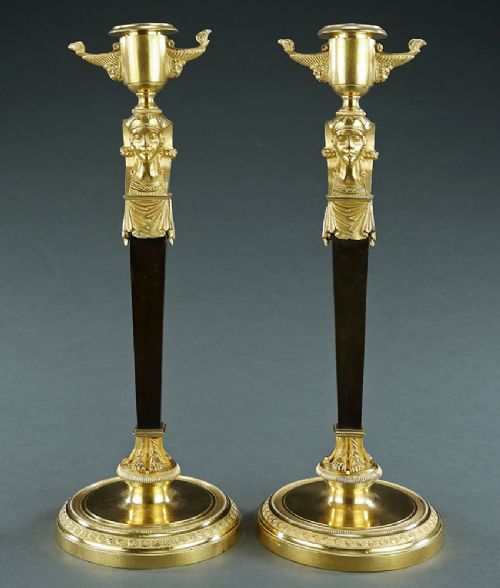
When searching for empire style ormolu candelabra, a buyer is looking at decorative lighting fixtures designed to hold multiple candles, originating predominantly from the nineteenth century. The listings on this page span the 1860s through the 1890s, alongside Regency and Victorian periods, capturing French Empire, Louis XVI style, and Retour d'Egypte influences.
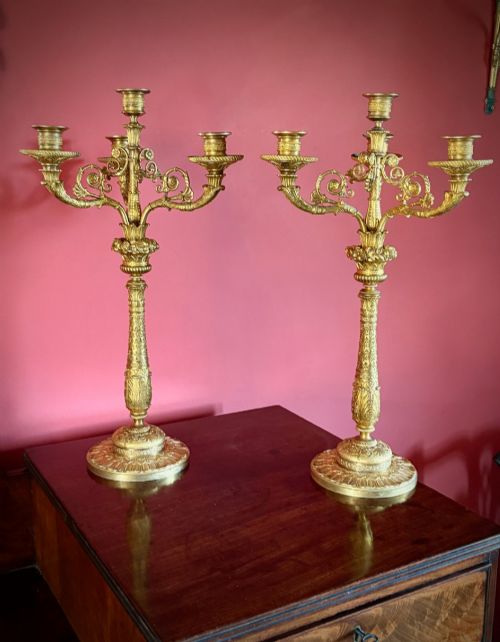
Most pieces encountered here are matched pairs featuring multi-branch configurations, often incorporating candelabras, candlesticks, and complete clock garnitures with matching side pieces. Materials range from solid gilt bronze and ormolu to patinated bronze combined with white, siena, or onyx marble bases.
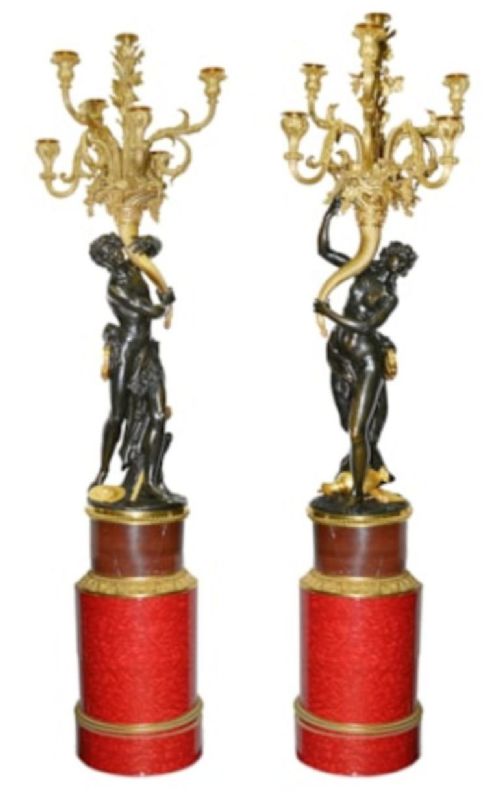
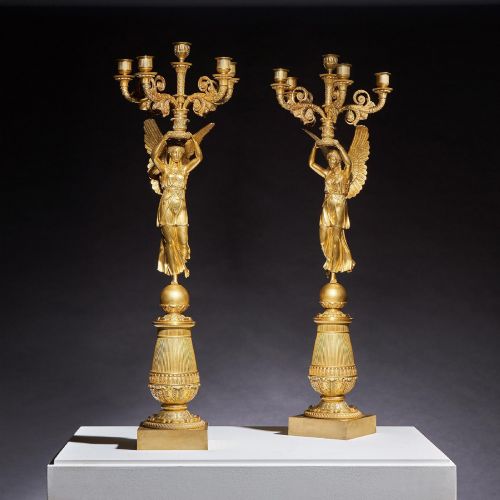
Formations vary from simple two-light candlesticks to substantial four and five-arm candelabra featuring figures such as Hercules and Hesione, winged putti, and cherubs. The overarching aesthetic draws heavily on classical antiquity, referencing models by makers such as Pierre-Philippe Thomire, Clodion, and Thomas Hope.
Materials and construction methods
The manufacture of these pieces relies heavily on the combination of bronze and ormolu, which is a finely ground gold mercury amalgam applied to a bronze base. Craftsmen utilised lost-wax casting and subsequent hand-chasing to achieve sharp detail on decorative motifs before applying fire gilding.
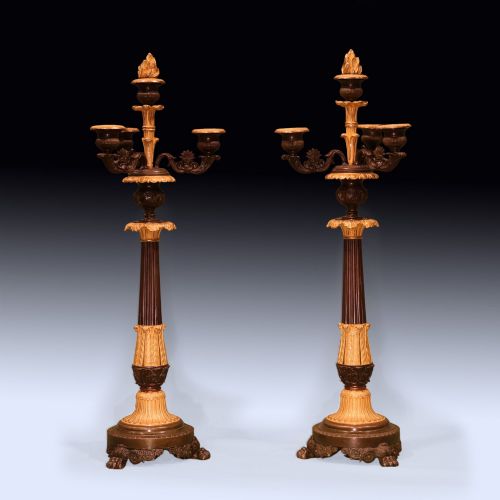
Contrasting patination is a defining characteristic, pairing the brilliant golden surface of the ormolu with dark patinated bronze figures and structural elements. Marble bases, including white, siena, and onyx variants, provide heavy structural foundations and contrasting cool tones to the warm metallic finish.
Materials recorded across the inventory include gilt bronze, patinated bronze, ormolu, brass, enamel, and white, siena, and onyx marble.
Evaluating quality and execution
The choice and integration of secondary materials also signal higher craftsmanship. Fine pieces utilise substantial, unblemished marble bases and feature balanced, symmetrical arm configurations that maintain stability and proportion.
Pierre Philippe Thomire·Clodion·Thomas Hope
The Empire Style Ormolu Candelabra Glossary
- Ormolu
- Gilded bronze achieved through the application of a mercury and gold amalgam. This historical technique produces a deep, lasting golden lustre distinct from modern electroplating.
- Clock garniture
- A set comprising a central mantel clock accompanied by matching side ornaments such as candelabra or urns. These matched groupings create a unified decorative scheme for a mantelpiece.
- Patinated bronze
- Bronze treated with chemical solutions to produce a darkened surface colour. This dark tone provides visual contrast against bright ormolu mountings.
- Retour d'Egypte
- A decorative style inspired by Napoleon's Egyptian campaign of the late eighteenth and early nineteenth centuries. It incorporates motifs such as sphinxes, pharaohs, and winged figures.
- Chasing
- The manual post-casting process of refining and sharpening details on metalwork using small hammers and punches. Superior chasing distinguishes master bronziers from routine production.
Empire Style Ormolu Candelabra: Frequently Asked Questions
How were empire style ormolu candelabra used?
These pieces served as functional lighting devices and decorative status symbols in formal nineteenth-century interiors. Placed upon mantelpieces, sideboards, or dining tables, they held candles to illuminate evening rooms while reflecting light off their gilded surfaces.
Over time, many surviving examples have been adapted for modern electrical wiring to function as table lamps while retaining their original antique bases and branches.
How do I distinguish French Empire from Regency period pieces?
French Empire pieces typically lean heavily into classical Roman and Egyptian motifs, featuring monumental figures, bold proportions, and intense use of fire-gilt ormolu. Regency pieces, developed concurrently in Britain, often incorporate similar classical restraint but with distinct local cabinet-making traditions and subtle brass or bronze detailing.
Examining the casting quality, patination techniques, and underlying marble or timber construction helps clarify the regional origin of an individual candelabrum.
What is a clock garniture set?
A clock garniture is a coordinated ensemble consisting of a central mantel clock paired with matching side pieces, usually formed as candelabra, vases, or urns. These sets were designed to sit together on a fireplace mantel to create a balanced, symmetrical decorative arrangement.
In period interiors, the matching side pieces tied the entire decorative scheme of the room together by repeating the materials and motifs found on the central clock.
How should I clean ormolu and bronze?
Ormolu and patinated bronze require very gentle maintenance to preserve their historic surfaces. Dusting with a soft, dry brush is generally sufficient, avoiding all abrasive commercial metal polishes that can strip away the original gold amalgam layer.
Any heavier cleaning should be left to professional conservators to prevent permanent damage to the delicate fire-gilded and patinated finishes.