

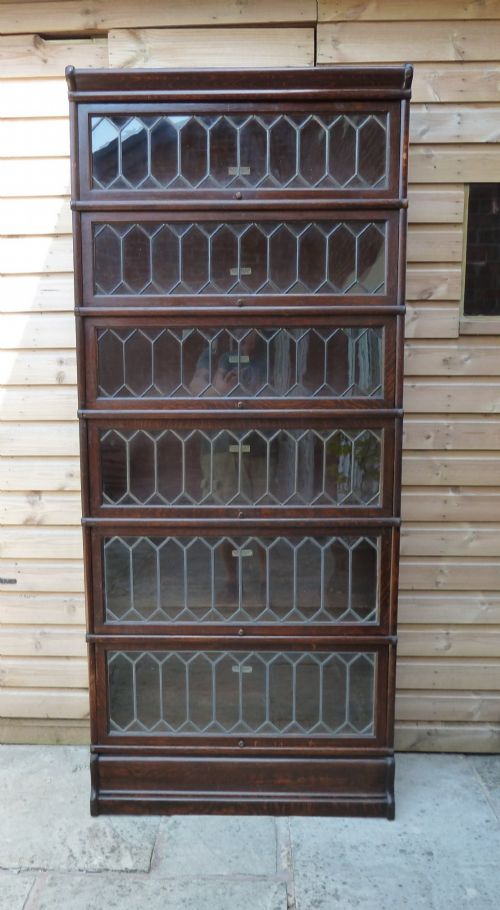
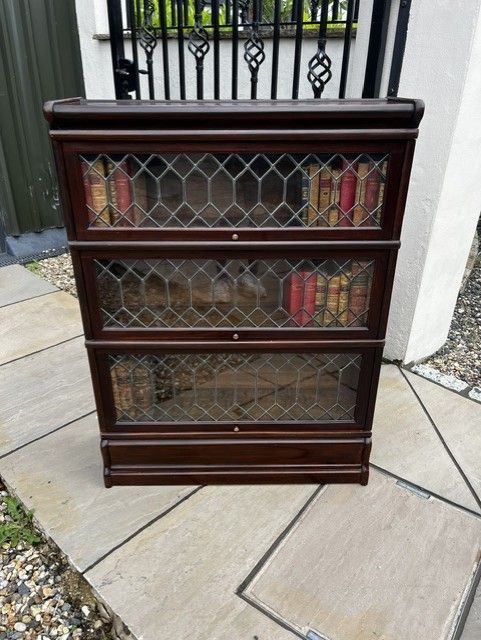
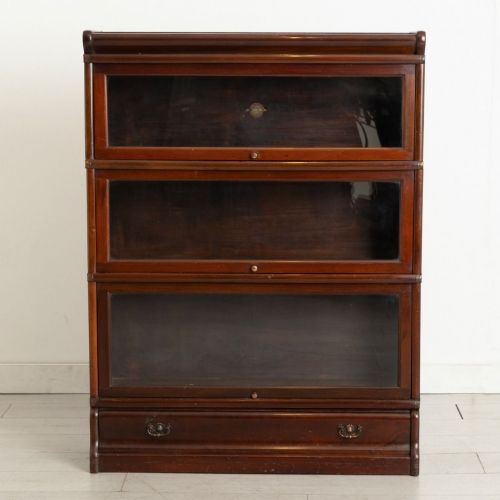
Globe Wernicke Sectional Bookcase
When you handle a globe wernicke sectional bookcase, you hold a modular system of glazed tiers built to protect valuable volumes while adapting to any office or library wall.
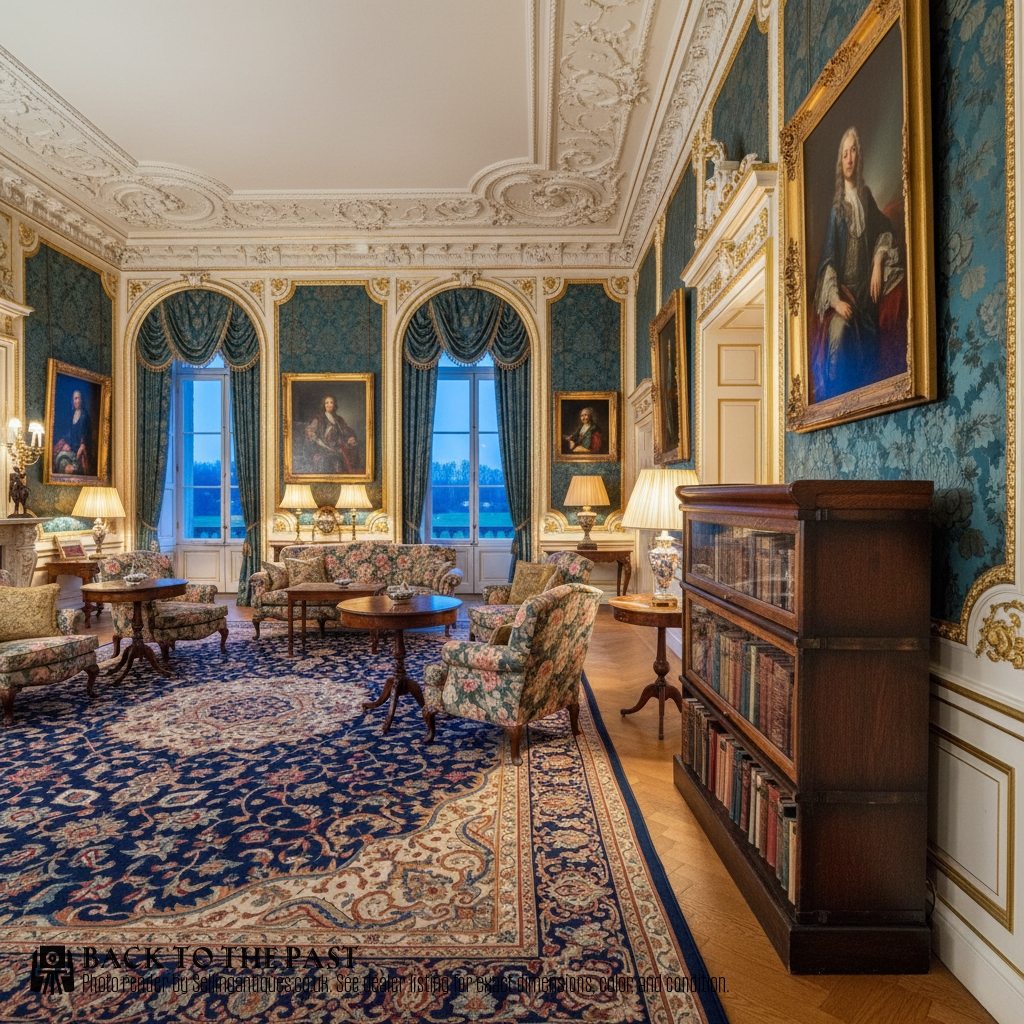
Globe Wernicke Sectional Bookcase
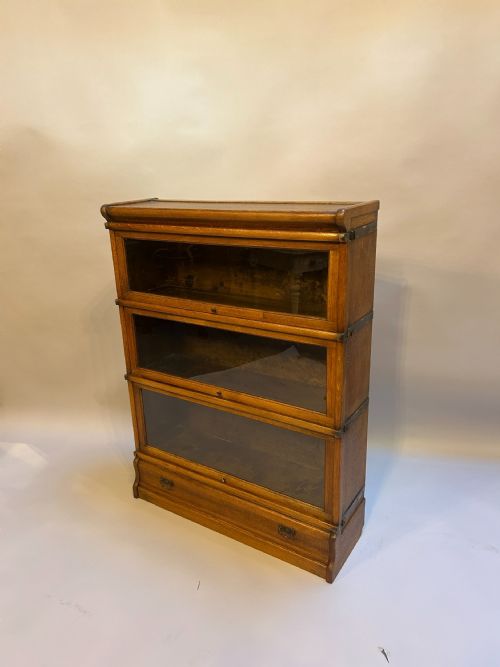
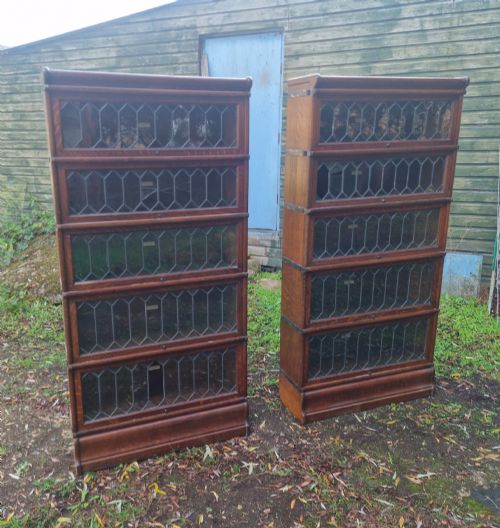
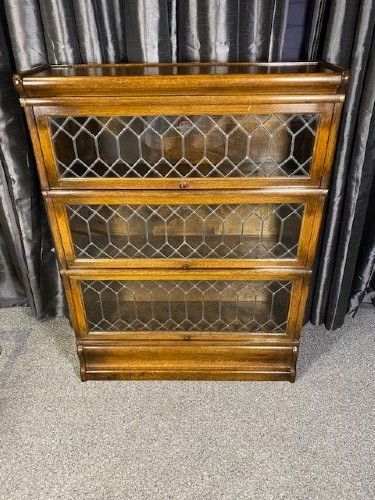
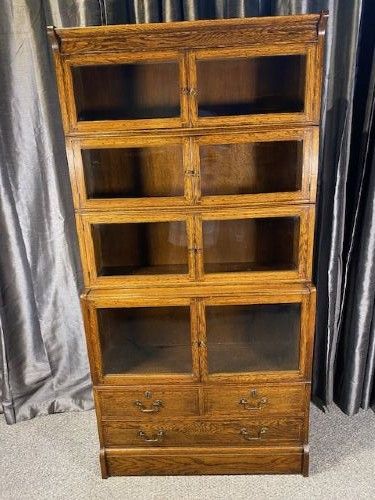
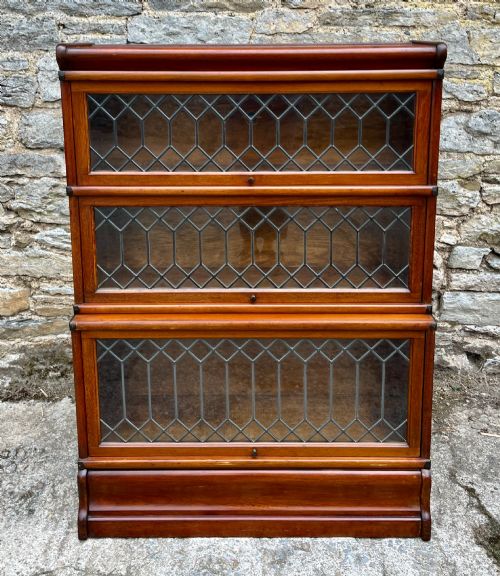
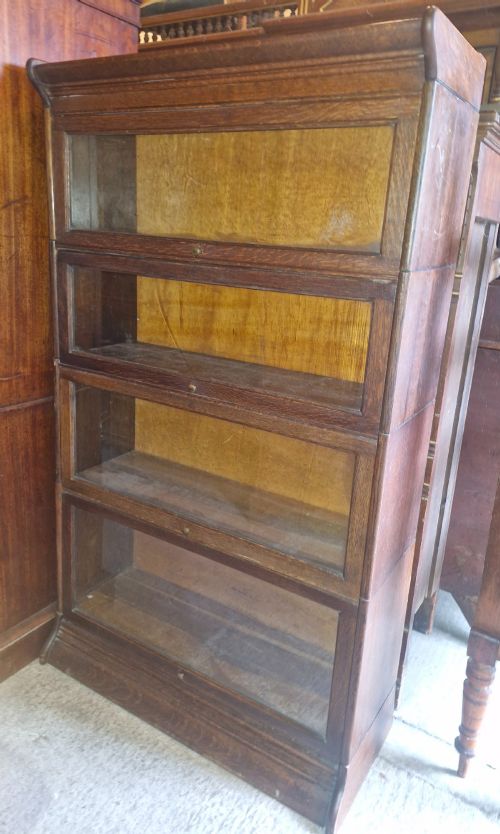
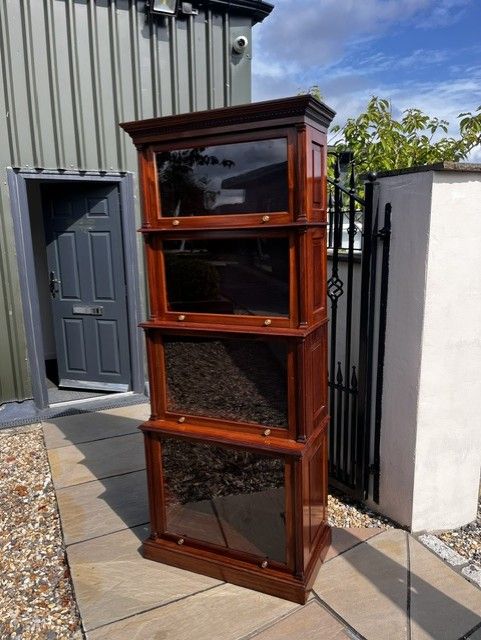
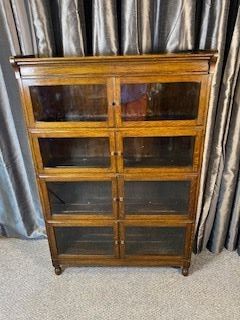
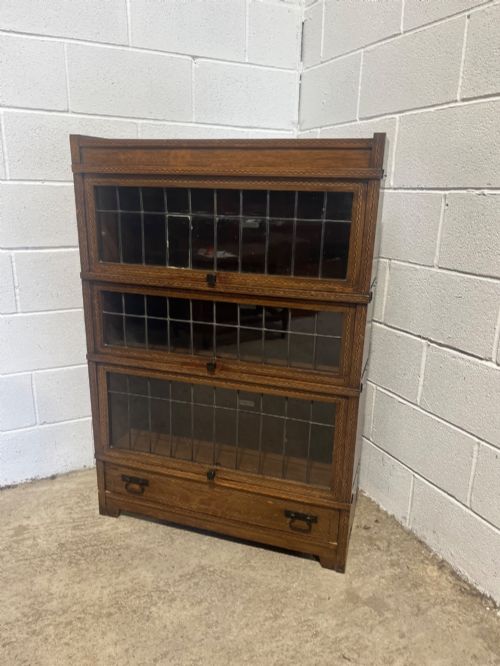
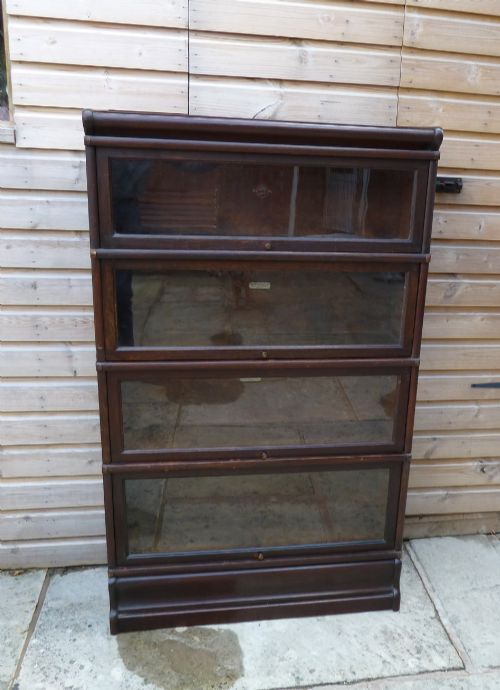
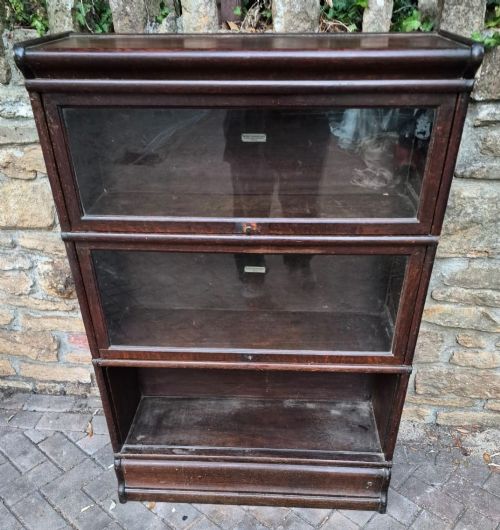
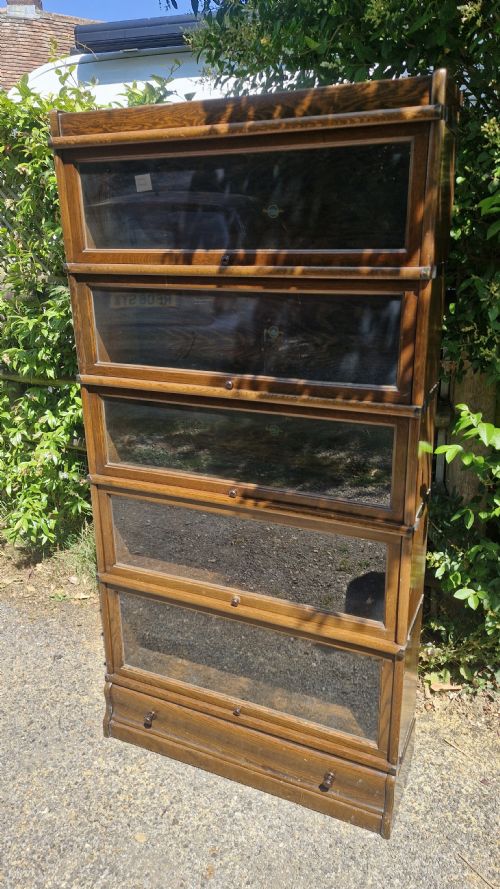
A globe wernicke sectional bookcase consists of individual stacking tiers topped with a cornice and raised on a base, designed to expand vertically as collections grow. The pieces available span the Edwardian period through the nineteen-thirties, with oak standing as the dominant timber alongside solid mahogany and walnut.
Most examples meet the eye as three, four, or five section units fitted with upward-opening glass doors that slide smoothly into the cabinet above each shelf. These modular lawyer or barrister cabinets reflect practical early twentieth-century design, appearing in both standard rectilinear forms and specialised bureau variations.
Materials and construction methods
Makers utilised solid oak and mahogany for the structural carcasses, often selecting quarter-sawn oak to display prominent medullary rays across the panels. Brass hardware, including connecting pins, knobs, and strap mechanisms, secures the modular tiers together while allowing individual sections to separate.
Glazing takes the form of plain glass or segmented leaded panes, held within timber frames that lift and slide on internal metal guides. Back panels and internal carcase elements rely on secondary timbers, maintaining a sturdy enclosure designed for heavy office use.
Listings feature oak and mahogany construction spanning the Edwardian era through the nineteen-thirties, incorporating both plain and leaded glass doors.
Distinctions in craftsmanship and condition
Quality rests upon the precision of the mechanical lifting mechanism and the smoothness with which each glazed tier glides into its housing. Superior examples maintain unwarped timber frames and original brass fittings that operate without binding against the carcase sides.
The choice of timber grain and the integrity of the original polish distinguish finer production. Pieces retaining matching sections with clear leaded glass or figured mahogany display a higher level of original workshop execution than mismatched or later assembled tiers.
Globe Wernicke·Minty·Lebus·Heal s·Gunn·AMYL
The Globe Wernicke Sectional Bookcase Glossary
- Sectional bookcase
- A modular furniture format composed of interchangeable stacking tiers that function independently or lock together vertically under a shared cornice.
- Barrister bookcase
- An alternative name for a stacking office bookcase, historically associated with legal professionals who transported or housed substantial volumes.
- Leaded glass
- Small panes of glass joined together by lead cames within the door frame, creating geometric or decorative patterns characteristic of arts and crafts design.
- Cornice
- The decorative moulded projection that sits atop the uppermost tier to finish the top of the cabinet.
- Base
- The plinth or low foot section upon which the lowest tier of the stacking bookcase rests.
Globe Wernicke Sectional Bookcase: Frequently Asked Questions
Can I separate the stacking tiers?
Yes, the individual sections lift apart once the cornice is removed and any side locking pins or brackets are disengaged from the adjoining frames.
This modular construction allows for easy transport up staircases or reconfiguration when moving the furniture into different rooms.
What periods do these bookcases date from?
The majority of these modular units date from the Edwardian era through the nineteen-twenties and nineteen-thirties, spanning early twentieth-century manufacturing.
Design influences shift from traditional golden oak Edwardian office furniture toward cleaner arts and crafts styles and later art deco interpretations.
Where were these bookcases originally used?
Lawyers, solicitors, and professionals placed these modular cabinets in offices and studies to protect reference volumes and municipal records from dust and damp air.
The scalable nature of the stacking design made them equally popular in domestic libraries where book collections expanded steadily over time.