


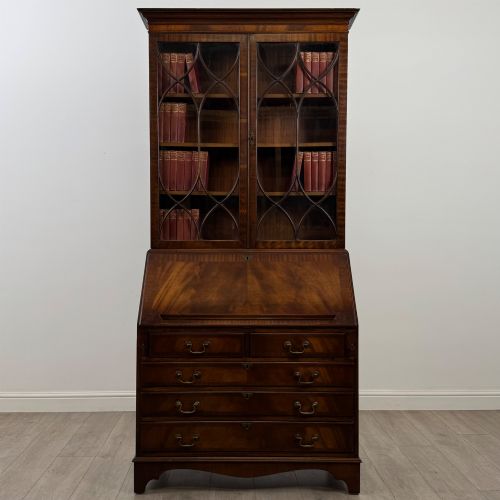
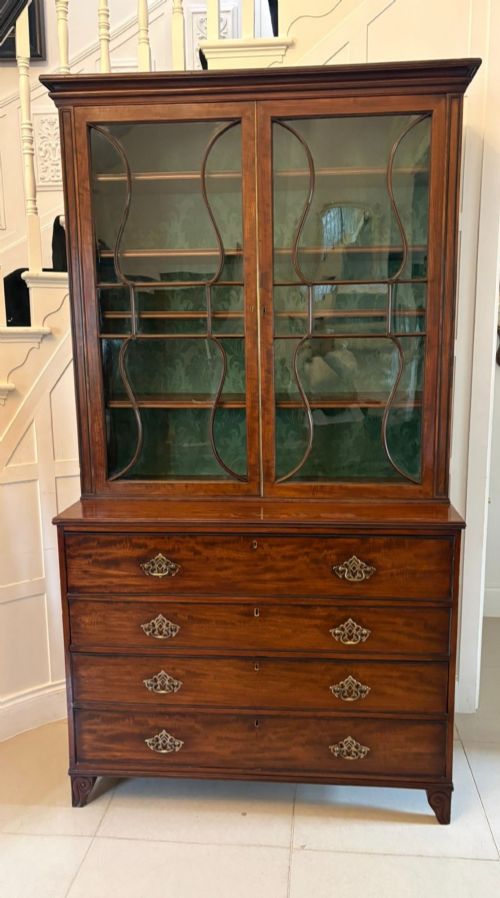
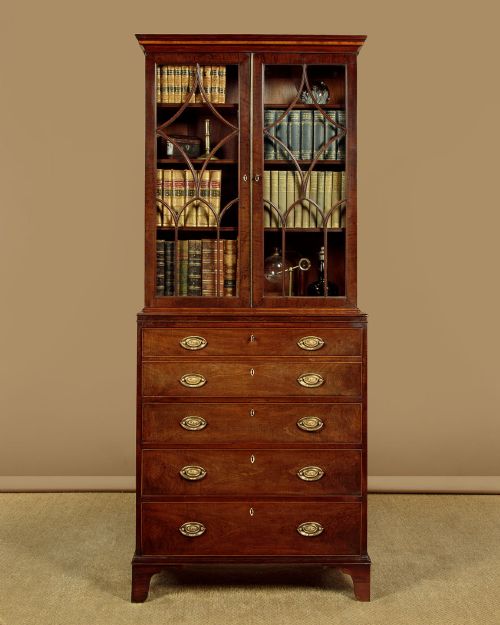
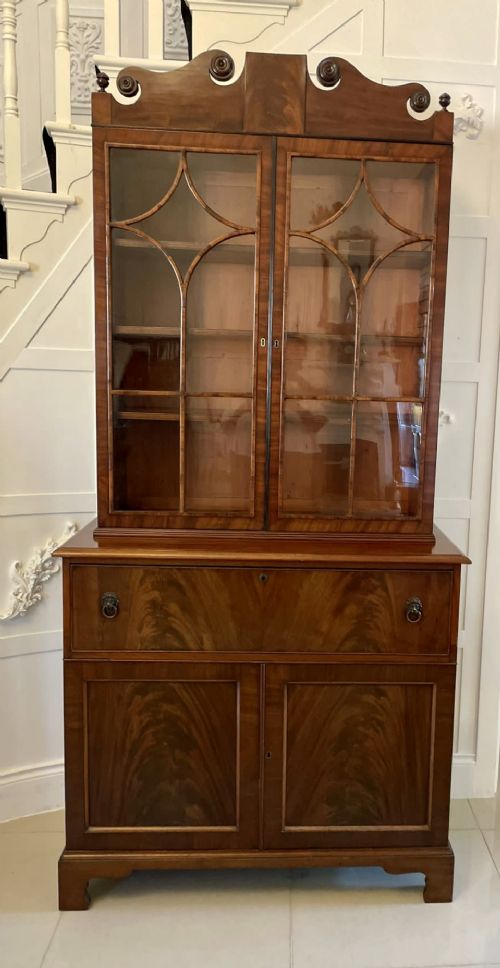
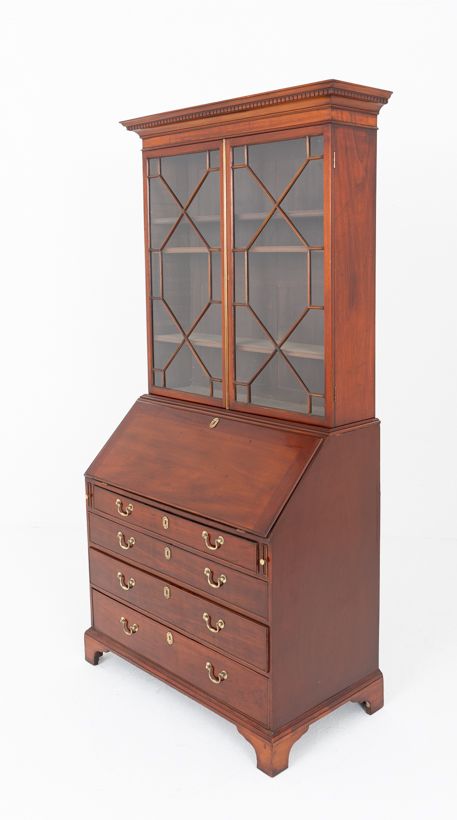
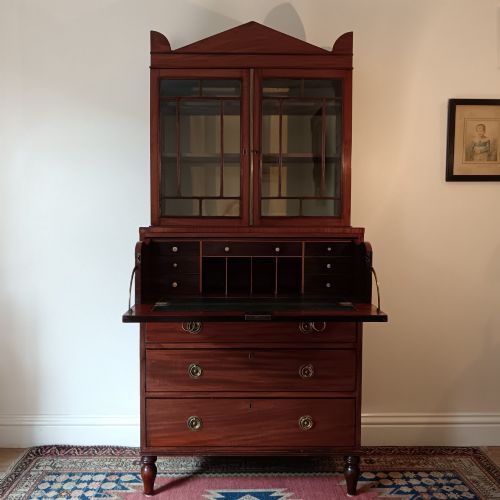
Glazed Writing Bureau
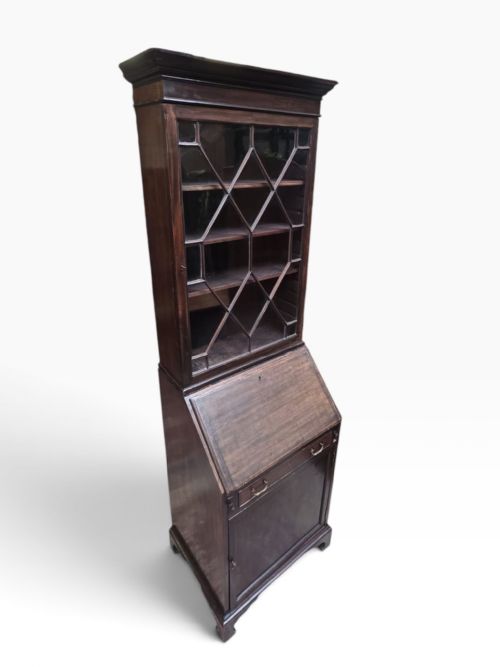
A glazed writing bureau combines a shelved upper display with a fitted fall-front desk, offering practical workspace and elegant storage in one substantial piece of furniture.
Glazed Writing Bureau
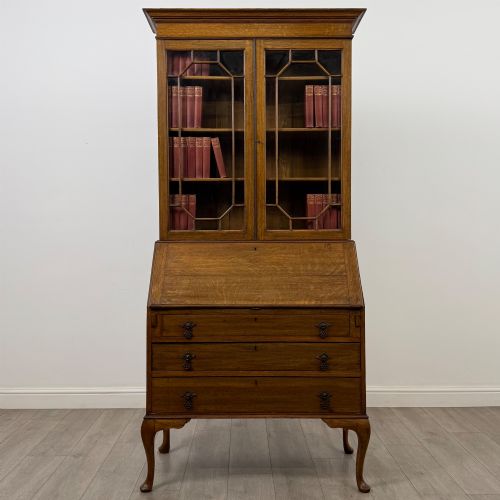
A glazed writing bureau typically comprises a tall upper section with glass doors enclosing shelves, set above a lower cabinet containing a hinged writing flap and internal compartments. These items span periods from the eighteenth century through the Victorian and Edwardian eras, reflecting changing domestic requirements for reading, writing and display.
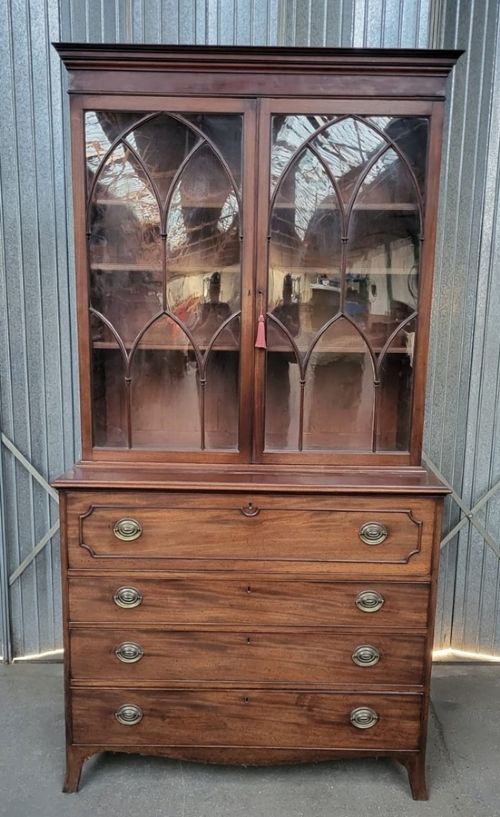
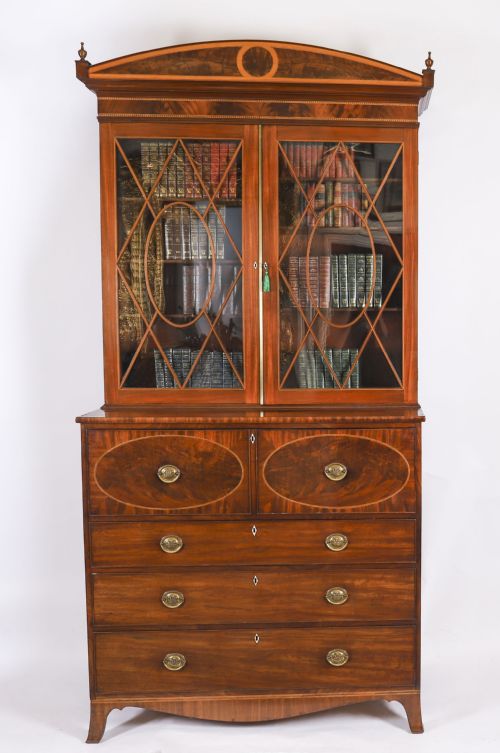
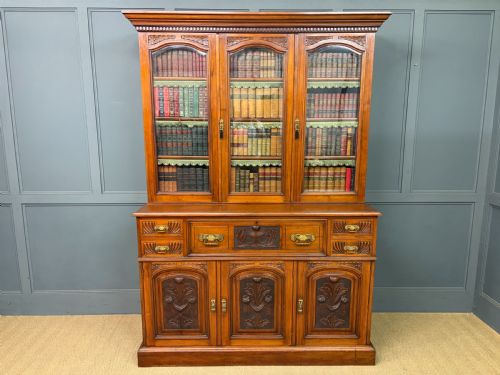
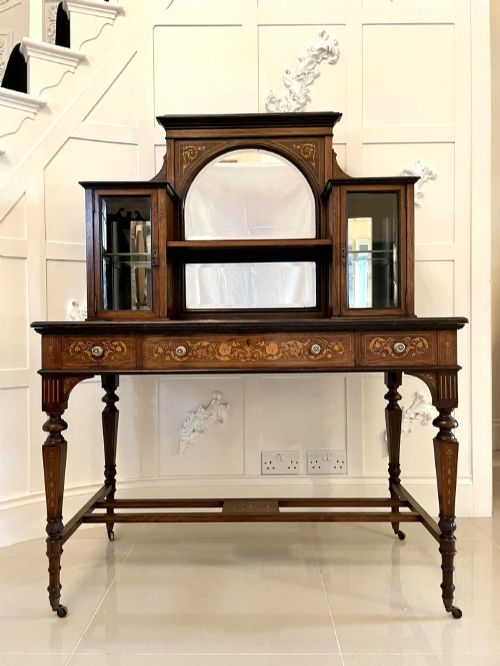
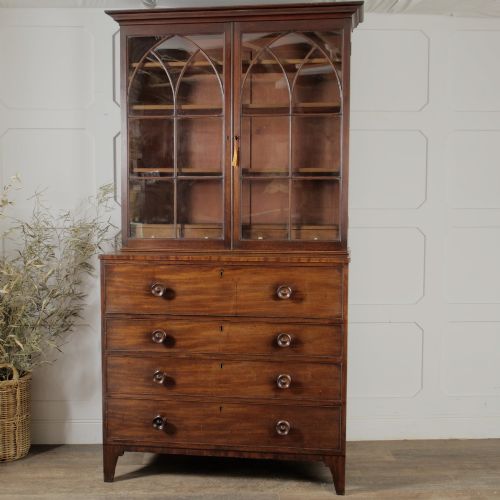
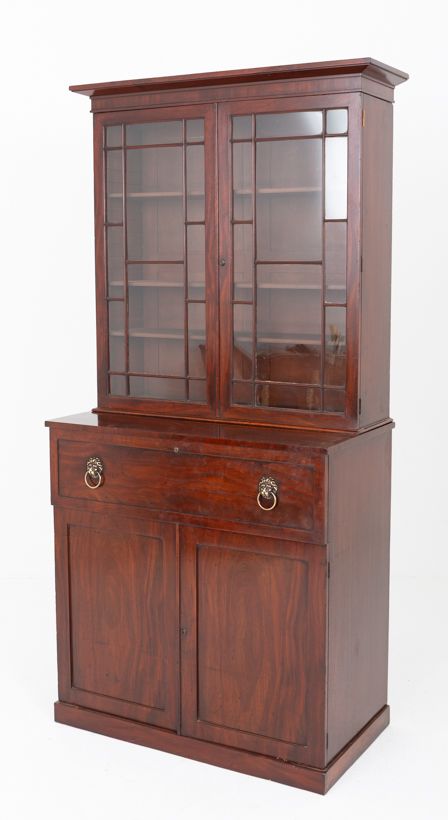
The pieces appearing on this page include bureau bookcases, secretaire bookcases, and writing cabinets built in mahogany, oak, walnut, and satinwood. Variations range from restrained Georgian proportions to heavily carved Victorian examples and lighter Edwardian interpretations.
Materials and Construction
Cabinetmakers utilised dense hardwoods such as mahogany, walnut, and oak for carcass construction, frequently applying finely figured veneers, flame mahogany, or marquetry to exterior surfaces. Glass doors incorporated individual timber glazing bars, while interiors utilised secondary woods and incorporated small drawers, pigeonholes, and leather-lined writing surfaces.
Joinery techniques involved precise dovetailing for drawer construction and sturdy framing for the heavy upper glazed cabinets. Brass hardware, including drop handles, escutcheons, and hinges, secured the doors and drop-front desks.
Miniature apprentice pieces appear alongside full-sized library cabinets, offering a quarter-scale view of proper cabinetmaking.
Design and Execution
Quality rests in the selection of timber figures, the subtlety of marquetry or inlay work, and the crispness of carved details on the woodwork. Superior examples exhibit balanced proportions between the upper bookcase and lower desk cabinet, alongside well-organised internal fittings.
The construction of the sliding or hinged writing flap and the stability of the glazed doors dictate the structural integrity. Cabinetmaking workshops of different eras applied varying levels of finish to hidden secondary timbers and internal drawer linings.
Gillows of Lancaster·Edwards & Roberts·Maple & Co·Tudor & Burrey Shrewsbury·George Oakley
The Glazed Writing Bureau Glossary
- Secretaire bookcase
- A tall cabinet featuring a fitted desk drawer or drop-front writing compartment positioned beneath a glazed upper bookcase.
- Astragal glazed
- Glass doors divided into individual panes by narrow moulded wooden strips known as astragals.
- Fitted interior
- The arrangement of small drawers, pigeonholes, and central compartments concealed behind the fall-front of a writing desk.
- Flame mahogany
- A veneer cut from timber where the grain creates a distinctive flickering flame pattern.
- Marquetry
- Decorative patterns formed by the insertion of different coloured veneers into a solid wood background.
Glazed Writing Bureau: Frequently Asked Questions
What is a glazed writing bureau?
A glazed writing bureau is a dual-purpose piece of furniture combining a display bookcase with glass doors and a lower section featuring a sloping or fall-front desk.
Inside the lower section, fitted compartments and small drawers provide a dedicated space for writing and storage.
How do I date a bureau bookcase?
Dating relies on identifying stylistic markers, timber types, and construction methods associated with specific periods like the Georgian or Edwardian eras.
For example, early eighteenth-century pieces often use walnut, while later Georgian and Regency examples favour figured mahogany with detailed stringing or inlay.
Where should I place a bureau bookcase?
These tall cabinets require adequate wall space and clearance for the fall-front writing flap to open fully.
Placing them away from direct sunlight and heat sources protects the timber veneers and prevents the wood from warping.
How do I maintain the leather writing surface?
Leather inserts benefit from occasional cleaning with a slightly damp cloth and specialised leather balms to prevent drying and cracking.
Avoid using harsh chemical cleaners or excessive moisture on both the leather and the surrounding timber polish.