


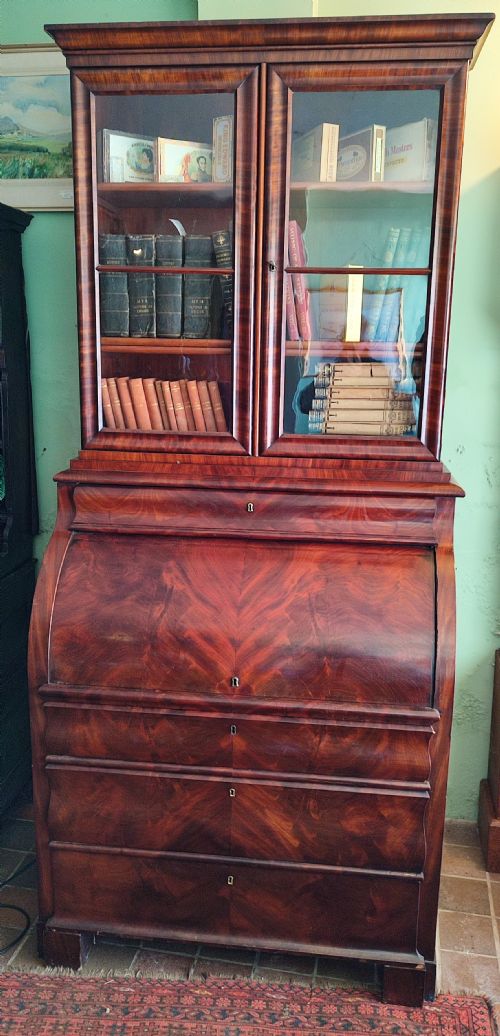


Glazed Top Writing Bureau
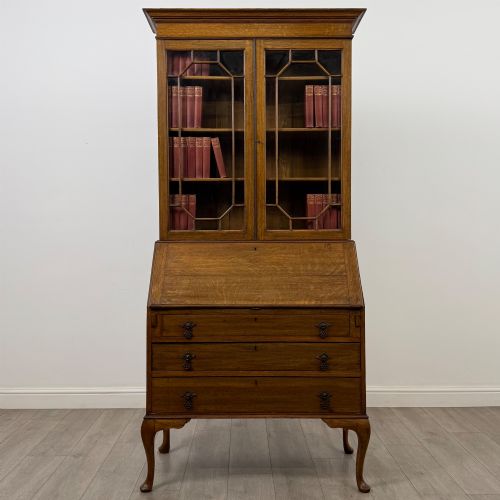
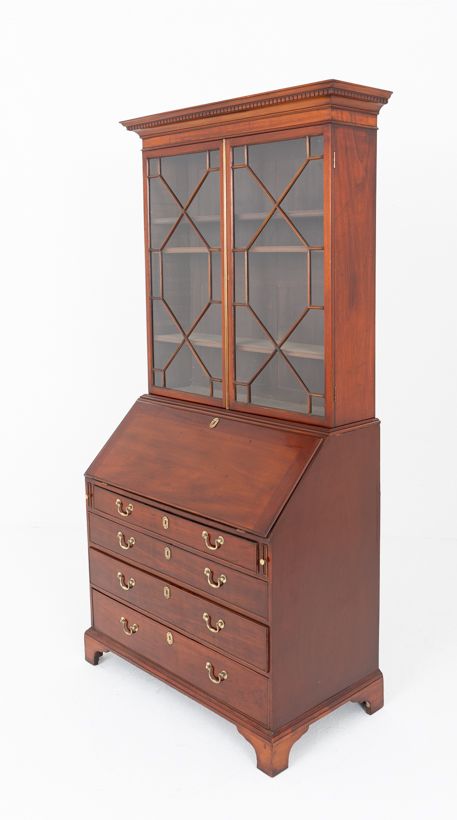
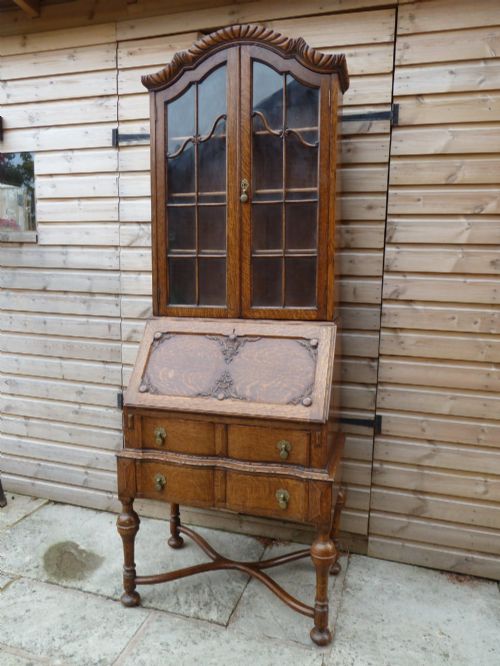
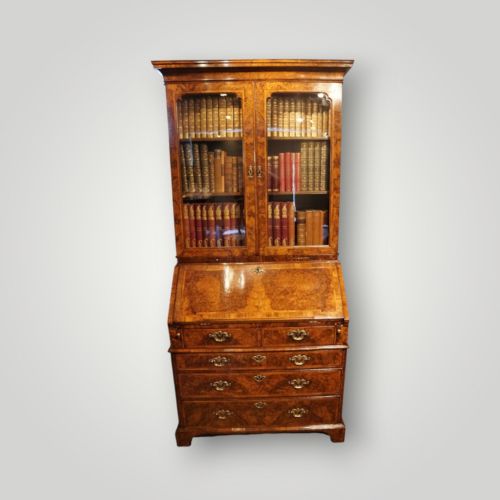
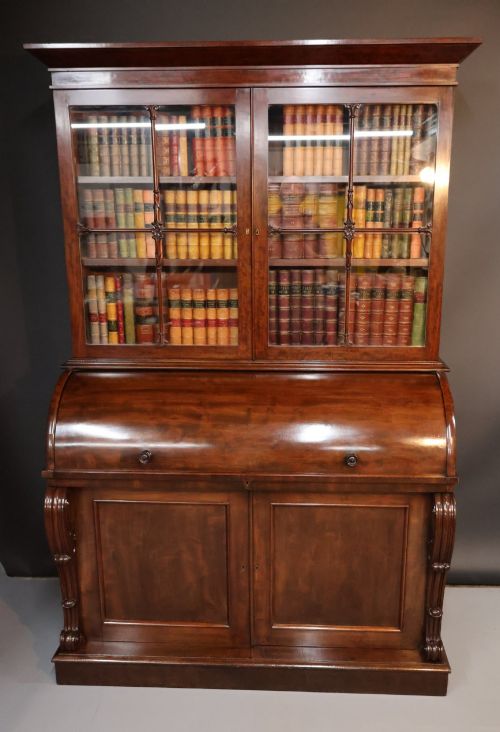
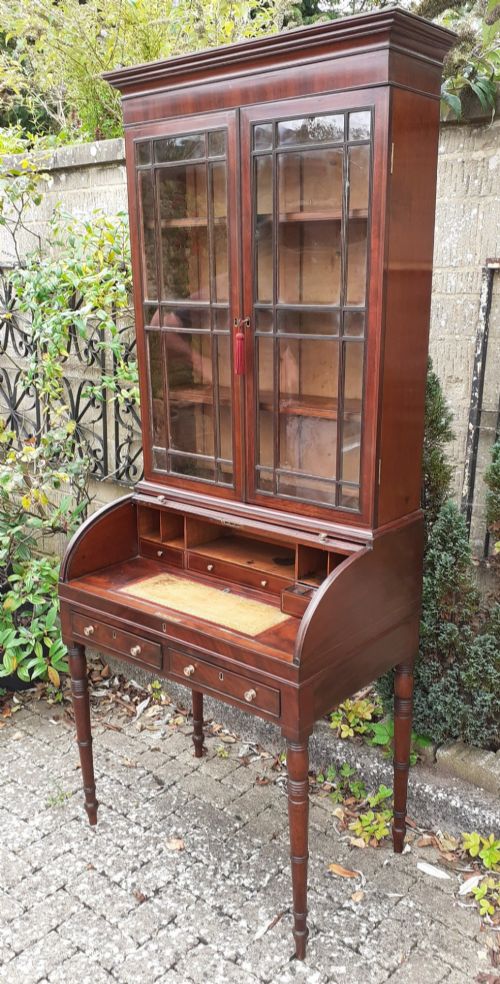
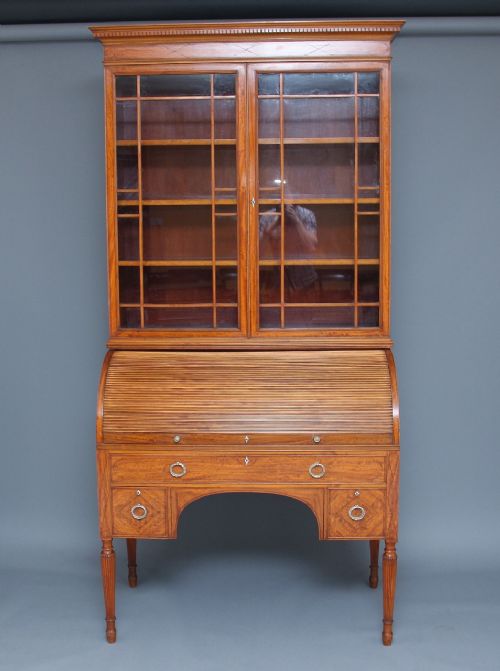
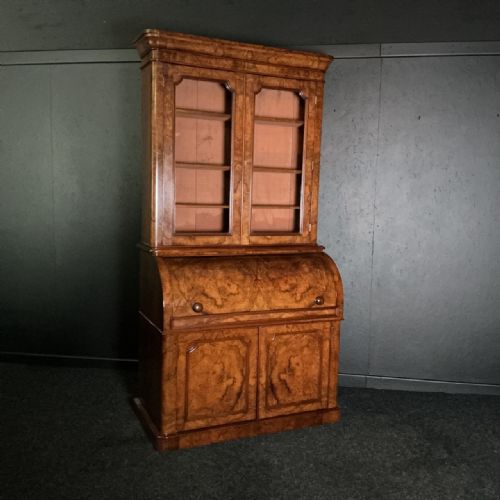
A glazed top writing bureau brings together a practical writing desk and a display bookcase in one stately piece of antique furniture.
Glazed Top Writing Bureau
When you search for a glazed top writing bureau, you encounter tall combination furniture that pairs a lower writing compartment with an upper glass-doored bookcase. These pieces span several centuries of design, with Georgian, Victorian and Edwardian examples appearing most frequently.
The lower section usually opens as a sloping flap or a cylinder front to reveal a fitted interior of small drawers and pigeonholes. Above this, glazed doors protect books or collected objects while keeping them visible.
Makers utilised various formats, including bureau bookcases, secretaire bookcases and compact bonheur du jour desks. Oak, mahogany and walnut dominate the construction, often complemented by satinwood or rosewood veneers.
How they were made
Cabinet makers constructed these pieces using solid timbers like mahogany, oak and walnut, frequently applying fine veneers of satinwood or rosewood to the exterior surfaces. Glass panels were fitted into wooden frames to form the upper doors, allowing light to enter the bookcase section.
Internal components relied on traditional joinery, incorporating small drawers, sliding candle shelves and hidden compartments within the writing section. Brass handles, key escutcheons and sometimes brass inlay added decorative contrast to the dark and figured woods.
Listings feature pieces spanning from the early eighteenth century through the Edwardian era, constructed in mahogany, walnut, oak, satinwood and rosewood.
What varies in quality
The choice of timber underpins the overall grade of the piece, with richly figured Cuban mahogany, burr walnut or meticulously matched satinwood setting finer examples apart from standard utility items. The precision of the internal cabinet work, such as secret compartments and dovetailed drawer construction, reflects the skill invested by the maker.
Proportion and decorative restraint dictate the visual success of the piece, where subtle stringing, brass inlay and well-balanced glazing bars elevate the design. The survival of original glass, internal fittings and working locks significantly influences the integrity of the cabinet.
Tudor & Burrey·Edwards & Roberts
The Glazed Top Writing Bureau Glossary
- Bureau bookcase
- A tall furniture form combining a sloping-front writing desk below with a glazed bookcase above. This dual-purpose piece served both administrative and library needs in formal rooms.
- Cylinder top
- A curved wooden roll that slides back into the body of the desk to reveal the writing surface and interior fittings. It offers a smooth mechanical alternative to the traditional drop-down flap.
- Secretaire
- A dedicated writing drawer or cabinet section that pulls out or drops down to provide a flat surface for correspondence. It often conceals a fitted interior with pigeonholes and small drawers.
- Bonheur du jour
- A light lady writing desk featuring a small cabinet or shelving superstructure on top. These dainty pieces gained popularity during the eighteenth and nineteenth centuries.
- Candle slide
- A pull-out wooden board positioned beneath the writing surface to hold lighting in the evening. They provide extra surface space without permanently altering the cabinet facade.
Glazed Top Writing Bureau: Frequently Asked Questions
How do I tell Georgian from Edwardian pieces?
Georgian examples often utilise dense Cuban mahogany or figured walnut with hand-cut dovetails and restrained proportions. Their glazing bars tend to be finer and the internal stationery compartments display traditional cabinet-making methods.
Edwardian pieces frequently employ lighter mahogany with extensive decorative inlay, satinwood banding and manufacturing techniques suited to early twentieth-century workshops. The interior fittings on Edwardian cabinets often reflect slightly more standardised production.
Where were these bureaus placed?
These tall cabinets were traditionally placed in libraries, studies or formal drawing rooms where books and writing materials were regularly required. Their imposing height made them focal points against the walls of principal rooms.
Smaller variations, such as cylinder desks or bonheur du jour tables, found placement in private boudoirs or ladies sitting rooms for personal correspondence.
How do cylinder desks work?
A cylinder desk uses a curved quarter-circle wooden shutter that slides backward into the body of the cabinet when opened. This mechanical action simultaneously draws out the writing surface or reveals the internal drawers.
Makers balanced counterweights inside the carcass so the roll top operated smoothly by hand. The mechanism requires careful alignment of the internal tracks to function correctly.