

Glazed Stoneware Jug
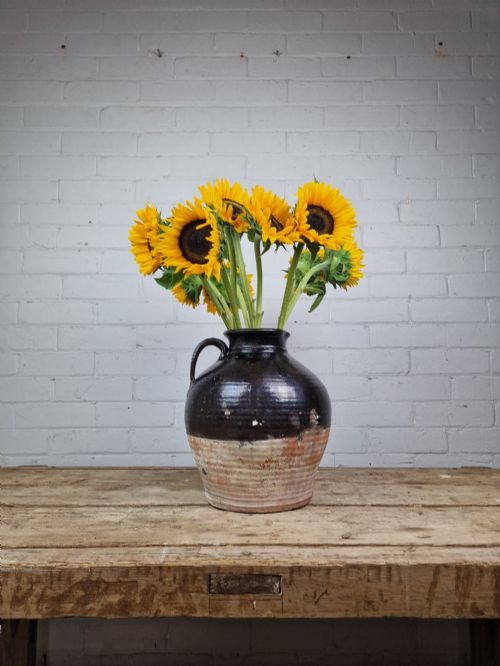
When you handle a glazed stoneware jug, you hold a sturdy vessel shaped for the tavern, the cellar shelf, or the Victorian parlour.
Glazed Stoneware Jug
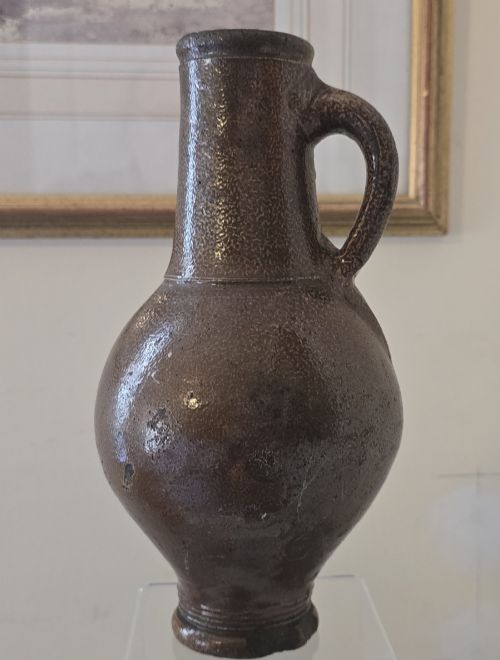
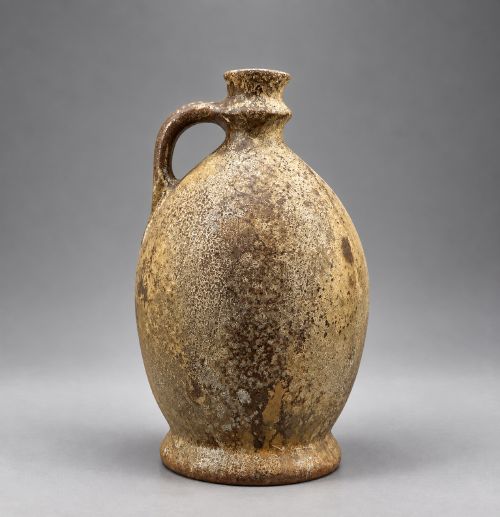
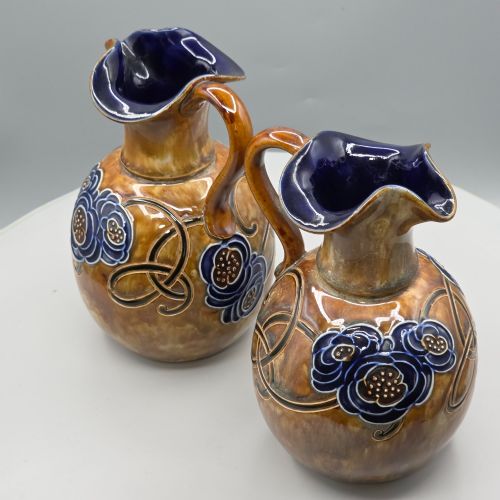
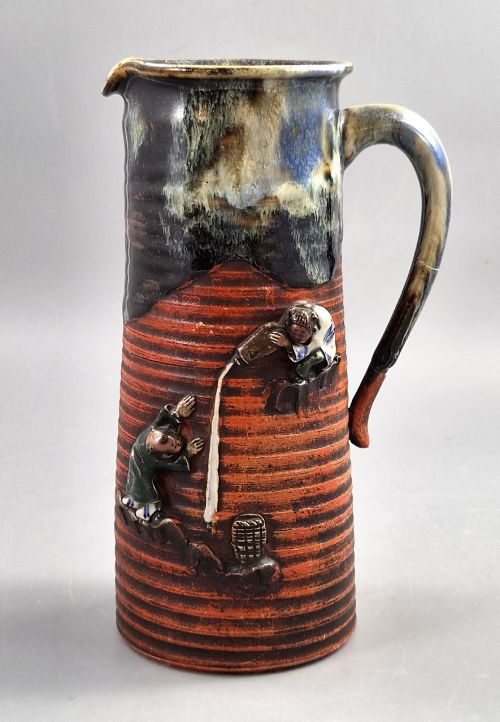
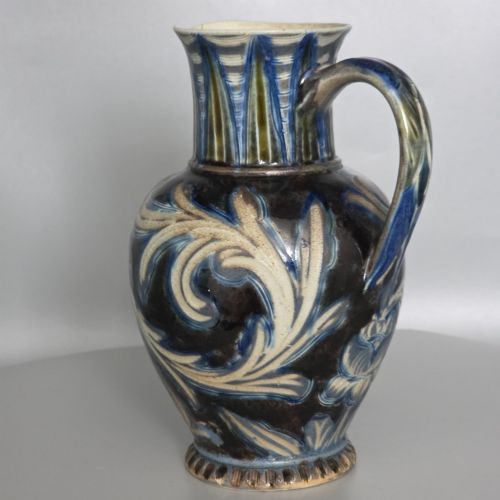
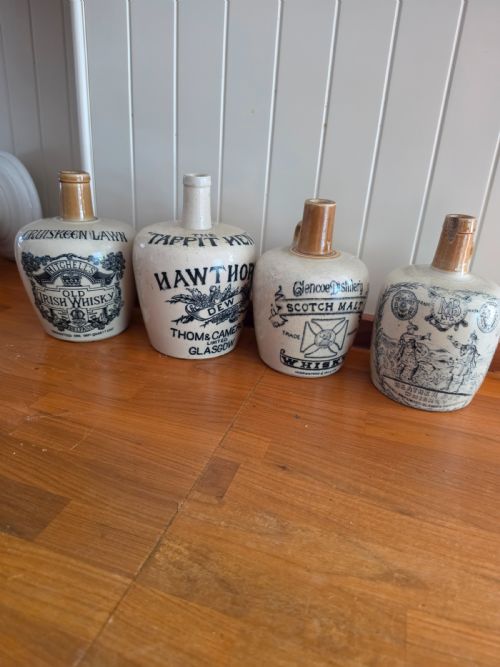
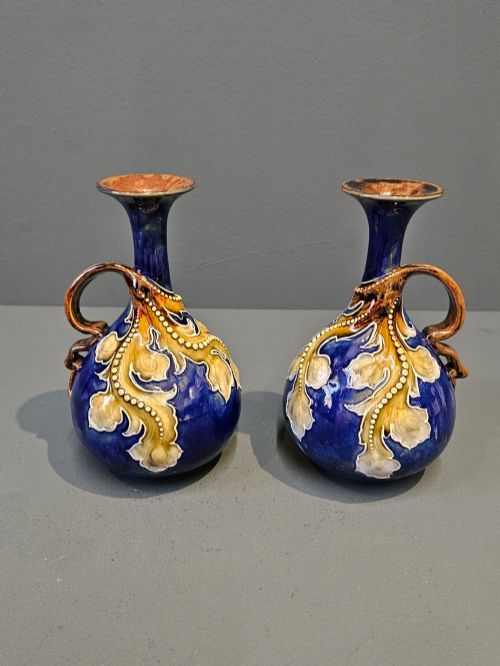
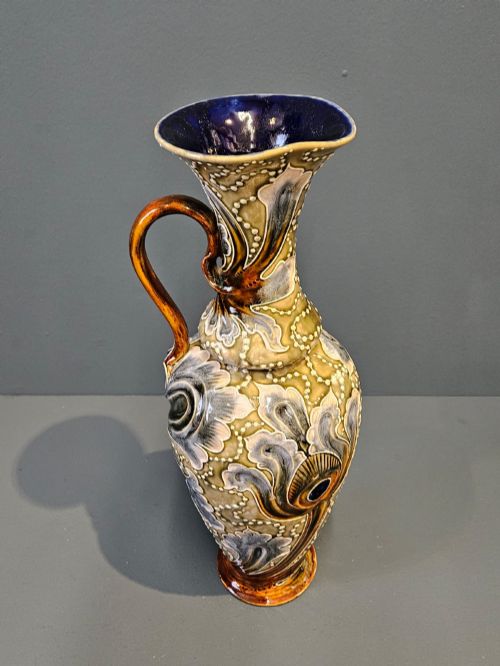
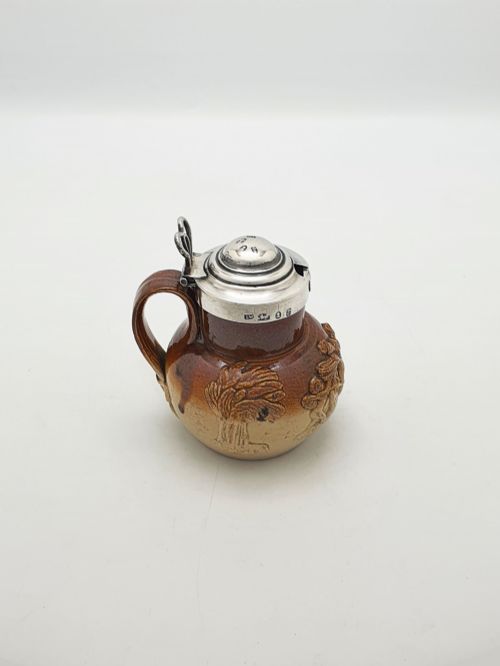
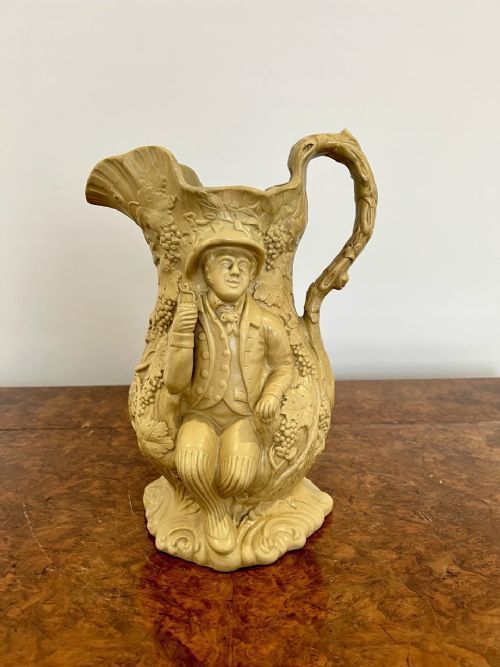
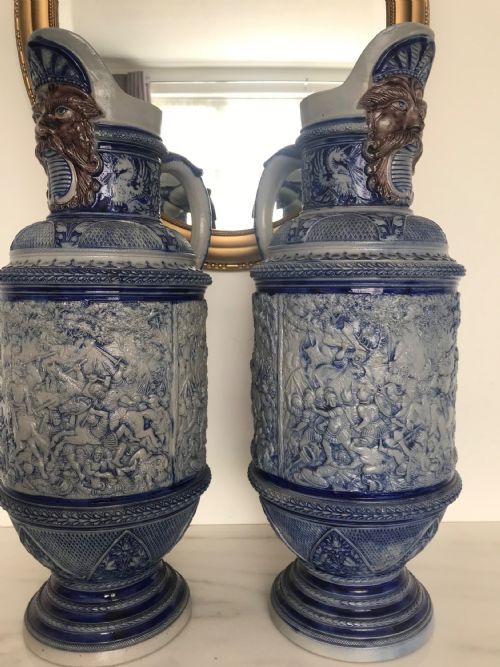
A glazed stoneware jug is a utilitarian or decorative pouring vessel fashioned from dense ceramic material, designed to hold liquids safely without seepage. When you examine the options on this page, you encounter pieces spanning from early German import bottles to late Victorian studio creations.
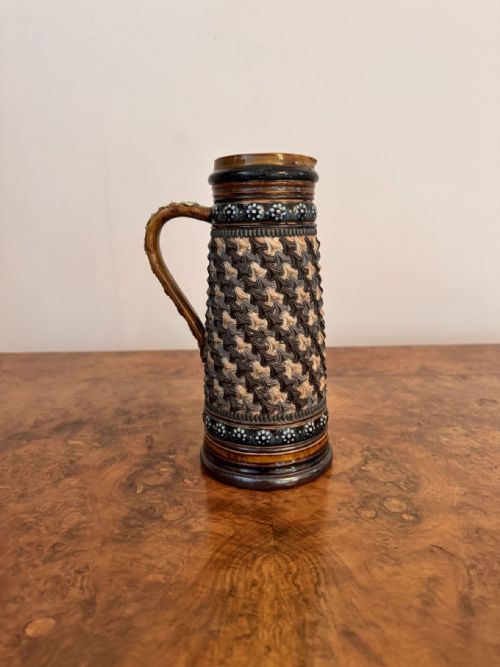
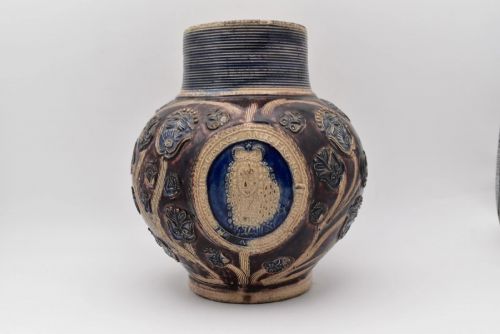
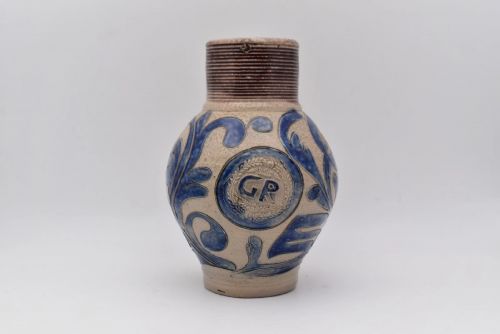
The most common forms you meet here are robust nineteenth-century English examples, particularly salt-glazed stoneware from makers like Doulton Lambeth, alongside German Westerwald salt-glazed jugs bearing historical ciphers or cobalt blue decoration.
How they were made
Potters shaped these vessels from heavy clay bodies on a wheel or in moulds before firing them at high temperatures until the material vitrified and became completely non-porous. During the kiln firing, salt was often thrown into the flames to create a characteristic pitted, orange-peel texture across the surface of salt-glazed pieces.
Many items received additional decoration through incising, relief moulding, or the application of slip and cobalt oxide pigments before the final glaze was fixed by heat.
Puzzle jugs were designed to baffle tavern drinkers with hidden spouts, turning a simple sip into an entertaining challenge.
What varies in quality
Quality in a glazed stoneware jug rests upon the crispness of the modelling and the control of the kiln atmosphere during firing. Finer examples display deeply incised patterns, precise relief moulded scenes, and even cobalt coloration without muddy bleeding into the body.
Pieces bearing identifiable artist signatures or specific factory stamps command greater attention from collectors because they demonstrate deliberate studio artistry rather than routine commercial production.
Royal Doulton·Doulton Lambeth·Simon Peter Gerz·Sir Edmund Elton·Emma Shute
The Glazed Stoneware Jug Glossary
- Salt glaze
- A vitreous coating formed by throwing common salt into the hot kiln, creating a characteristic pebbled texture on the stoneware surface.
- Westerwald
- A German region renowned for producing salt-glazed stoneware decorated with cobalt blue incisions and stamped medallions.
- Slip
- A liquid mixture of clay and water used for coating or decorating the surface of a vessel before firing.
- Puzzle jug
- A drinking vessel with a perforated neck that forces the user to solve a riddle to drink without spilling through hidden channels.
- Relief moulded
- A decorative technique where designs are pressed into the clay body to stand out in low relief.
Glazed Stoneware Jug: Frequently Asked Questions
How do I clean an old stoneware jug?
Wash the vessel gently with warm water and a soft cloth, avoiding harsh detergents or abrasive pads that might scratch the glaze or ancient surfaces.
Dry the piece thoroughly with a lint-free towel to prevent any moisture retention in historic hairspring cracks.
Can I still use these jugs for serving drinks?
While many nineteenth-century jugs remain structurally sound, centuries of use and the presence of historic materials mean they serve better as display pieces.
If you do use them for liquids, avoid hot beverages that could stress the old ceramic body.
How do I date a Westerwald salt glaze jug?
Look for royal ciphers, such as the GR mark for George Rex or specific historical portraits that tie the vessel to a reigning monarch's timeline.
The style of the cobalt blue stamped rosettes and floral motifs also shifts across the centuries from the sixteenth to the nineteenth.
What is the difference between stoneware and earthenware?
Stoneware is fired at much higher temperatures until the clay vitrifies, making it completely waterproof and robust even without an interior glaze.
Earthenware remains porous after firing and requires a complete glaze layer to hold liquids safely.