
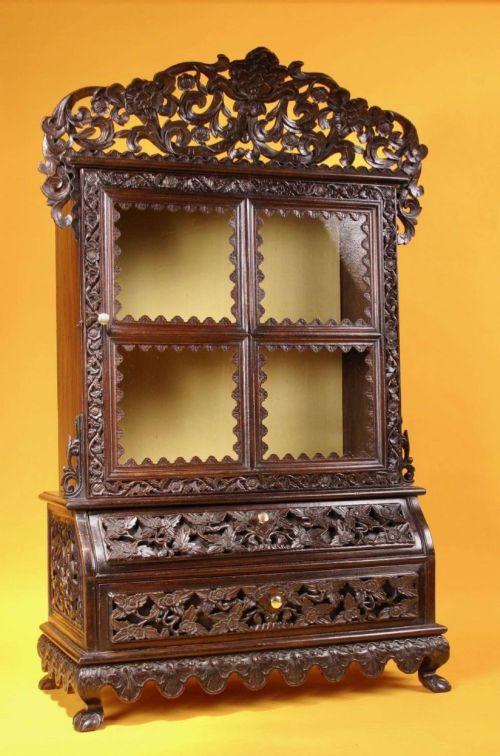
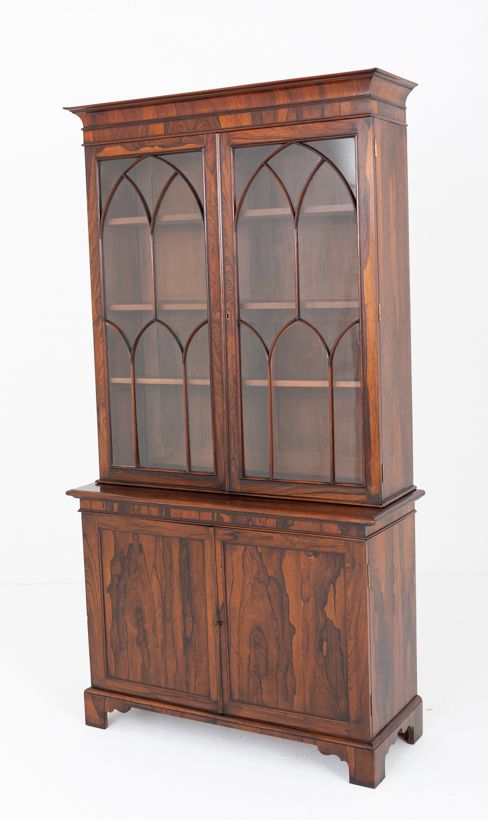

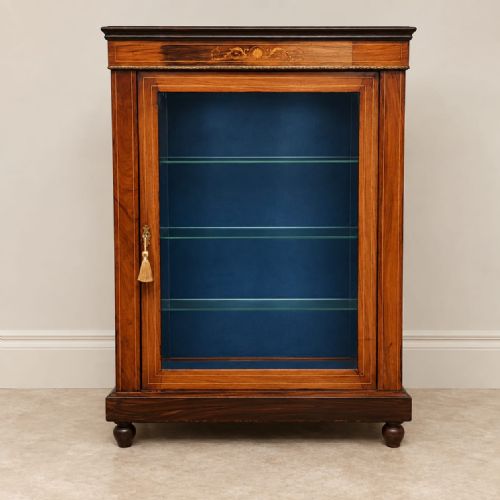
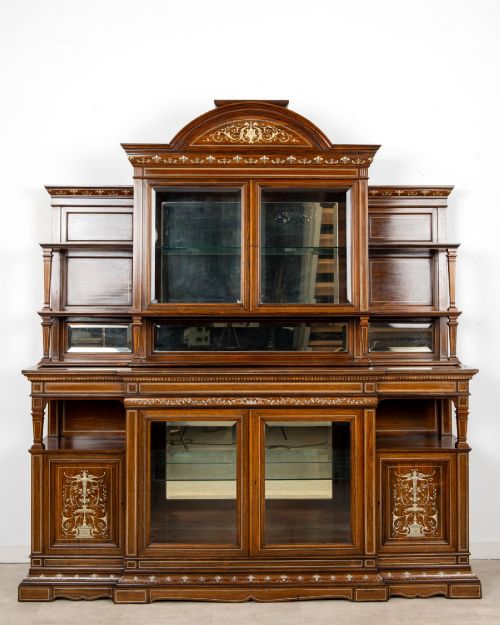



Glazed Rosewood Display Cabinet
A glazed rosewood display cabinet brings warmth and figured grain to a room while protecting treasured objects behind glass.
Glazed Rosewood Display Cabinet
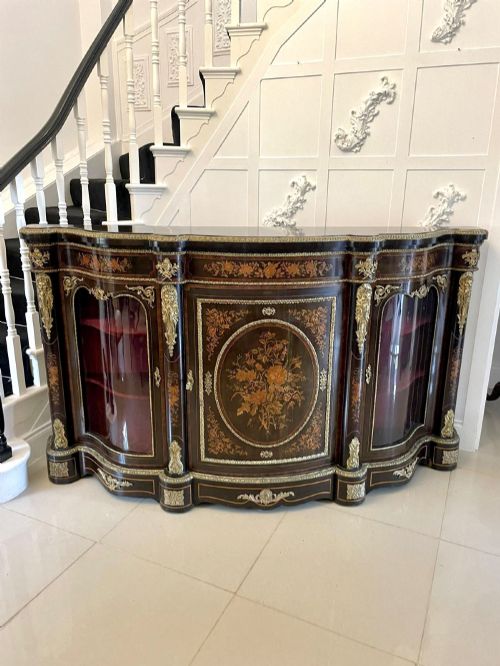
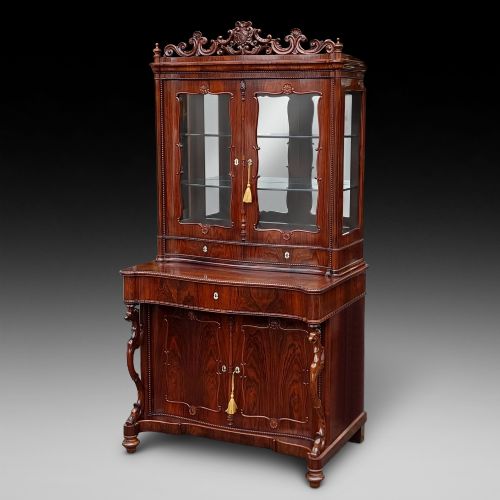
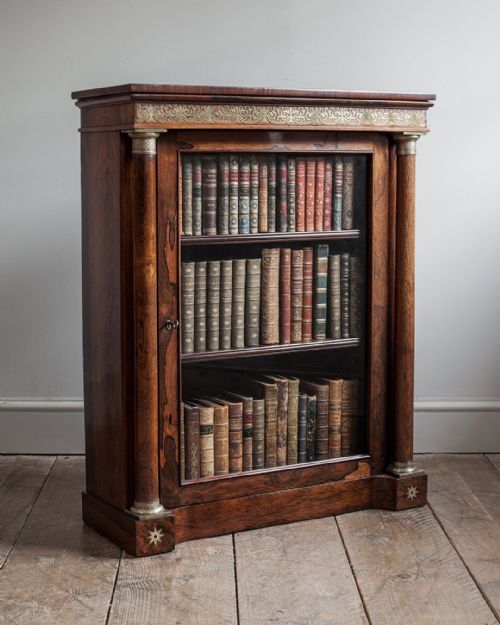
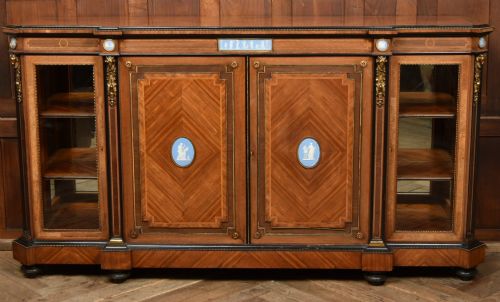
A glazed rosewood display cabinet serves to house and exhibit fine items, drawing on a rich vocabulary of nineteenth-century design. When searching this phrase, a buyer encounters pieces spanning the Regency, Victorian, and Edwardian periods, constructed in forms ranging from compact pier cabinets and corner cupboards to expansive bookcases and credenzas.
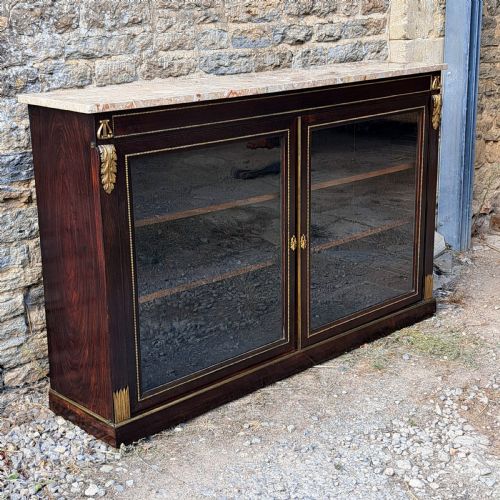
The most common versions met on this page are Victorian and Regency pieces, often featuring glass doors and substantial rosewood timbers. Makers combined utility with display, creating side cabinets and vitrines that suited formal interiors through proportion and glass panels.
Origins stretch across English workshops and continental makers influenced by French styles, including Louis XV revival and Biedermeier aesthetics. These cabinets accommodated the Victorian and Georgian appetite for organised display, using shelves behind glazed timber framing.
How They Were Made
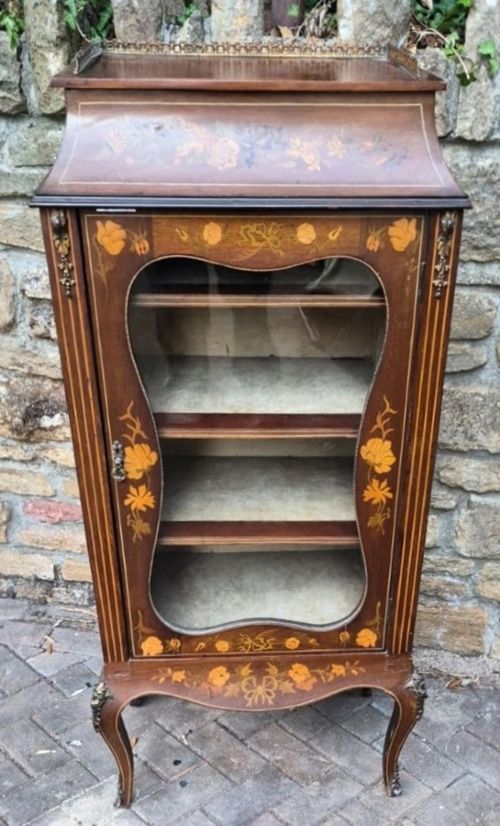
Cabinetmakers utilised dense, heavily figured rosewood veneers laid over secondary timbers, often accentuating the dark grain with brass inlay, satinwood stringing, or floral marquetry. Glass panes were fitted into timber doors to protect the interior while offering an unhindered view of the contents.
Metal mounts in ormolu and gilt brass appeared frequently on the finest pieces, framing corners and door edges to catch the light. Interior spaces often incorporated mirrored backs and fabric linings to reflect light through the display shelves.
Structural integrity relied on traditional joinery, with mahogany or other secondary woods forming the internal carcasses and drawer linings. Surface finishes were hand-polished to a deep sheen that highlighted the natural variations of the rosewood timber.
Listings feature glazed rosewood display cabinets spanning the Regency, Victorian, and Edwardian eras, incorporating brass, ormolu, mirror, and satinwood.
What Varies in Quality
The sophistication of the timber selection and inlay work dictates the standing of a glazed rosewood display cabinet. Exemplary pieces display matched rosewood veneers with intricate marquetry or brass inlay executed with precision, whereas simpler examples rely solely on plain polished grain.
Mounts and hardware reveal the standard of original production, distinguishing cast and chased ormolu details from simpler stamped brass fittings. The integration of curved serpentine fronts and mirrored elements requires advanced joinery that separates standard production from ambitious cabinet work.
Proportion and architectural harmony define the finer examples, where the relation between the glazed upper section and the cupboard base or plinth feels deliberate and balanced. Cabinets bearing attribution to documented firms demonstrate design execution that sets them apart from anonymous workshop output.
Collinson & Lock·James Winter·François Linke·Edwards & Roberts·Maple and Co.
The Glazed Rosewood Display Cabinet Glossary
- Pier cabinet
- A low cabinet designed specifically to stand against the wall space between windows. These pieces often feature single glazed doors and flat tops.
- Ormolu
- Gilded bronze mounts applied to furniture for decoration. This technique added metallic contrast to dark rosewood surfaces.
- Marquetry
- Inlaid patterns of wood veneers creating pictorial or floral designs. Artisans used contrasting timbers such as satinwood to achieve distinct motifs.
- Vitrine
- A glass-fronted cabinet designed for displaying porcelain or curiosities. The term originates from the French word for glass.
- Biedermeier
- A Central European style emphasising clean lines and utilitarian comfort over excessive ornament. Rosewood was frequently utilised for its striking grain patterns during this period.
Glazed Rosewood Display Cabinet: Frequently Asked Questions
Where were glazed rosewood display cabinets placed?
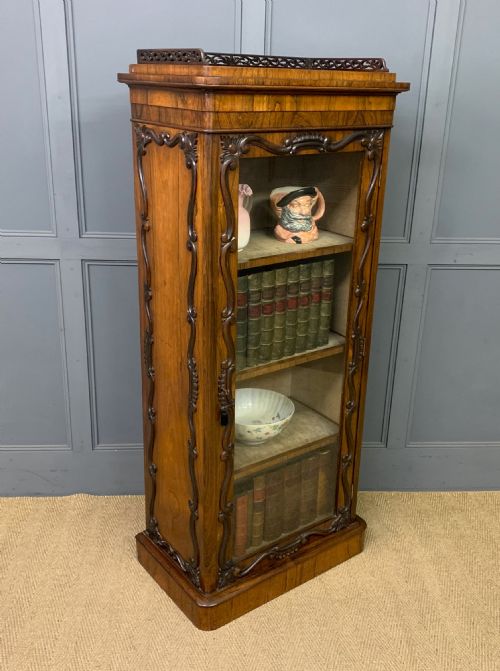
These cabinets occupied principal reception rooms, parlours, and drawing rooms where hosts exhibited porcelain, books, and collections to visitors. Their glazed doors kept dust away from delicate items while maintaining visibility.
Compact versions like pier cabinets fitted narrow wall spaces between windows, whereas larger bookcases and credenzas anchored main walls.
How do I identify a Regency period cabinet?
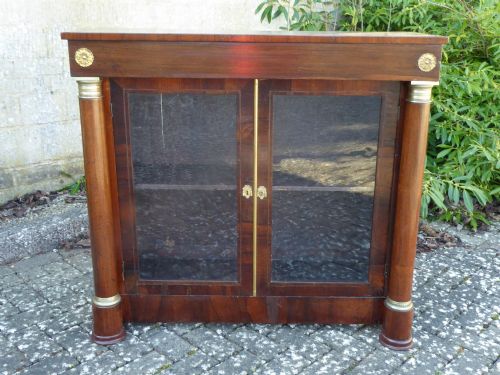
Regency pieces often display classical restraint, incorporating geometric brass inlay and architectural proportions inspired by antiquity. They date from the early nineteenth century and frequently use straight lines alongside figured rosewood veneers.
Later Victorian interpretations tend towards more ornate carving, serpentine fronts, and elaborate marquetry inlay.
How should I care for rosewood furniture?
Rosewood benefits from stable indoor humidity and protection from direct sunlight, which can fade figured timber veneers over time. Regular dusting with a soft, dry cloth preserves the polished surface.
Avoid placing these cabinets near direct heat sources that could dry out the historic wood and joinery.