



Rosewood Marble Cabinet
A rosewood marble cabinet brings together rich dark timbers and cool stone surfaces, serving as a striking focal point for refined interiors.
Rosewood Marble Cabinet
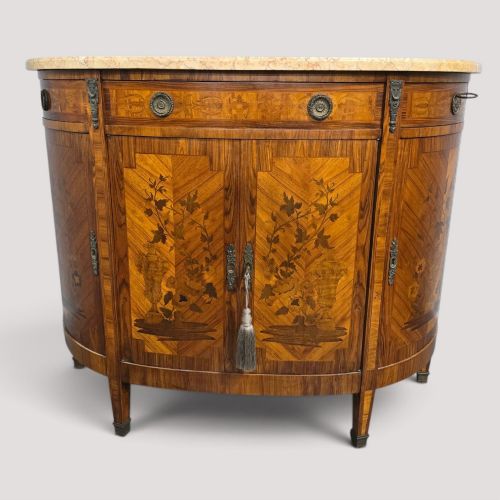
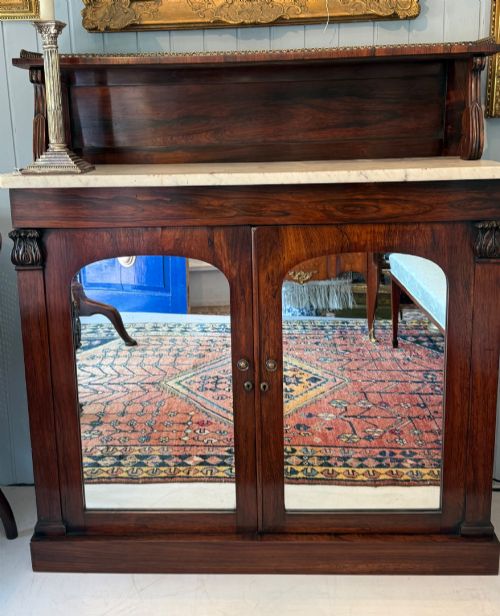
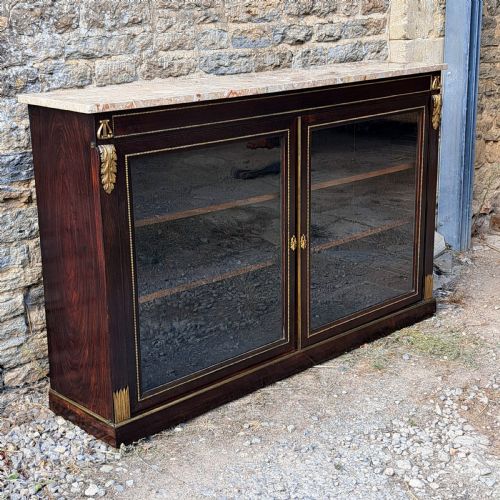
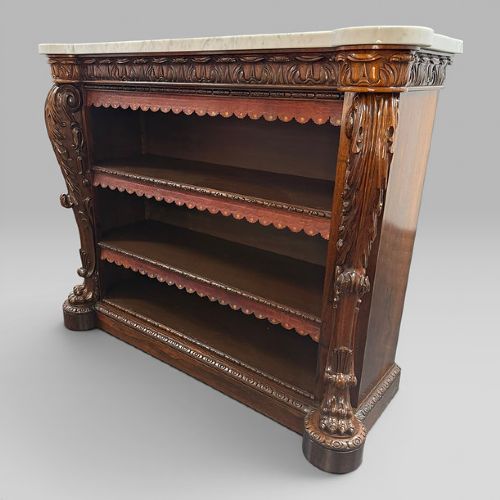
The most frequently encountered examples on this page are Regency and nineteenth-century pieces, often featuring fitted marble tops paired with lower cupboard doors or open shelving.
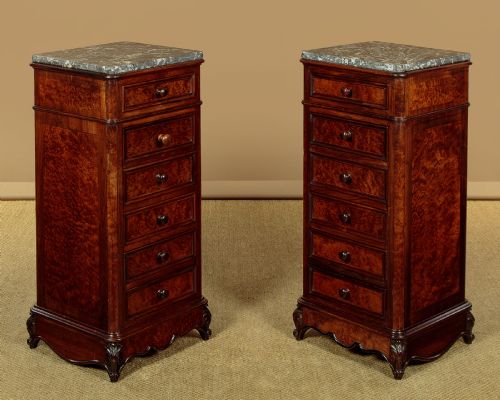
Origins span both English workshops and continental French centres, bringing together diverse regional interpretations of classical and revival designs.
Materials and Construction
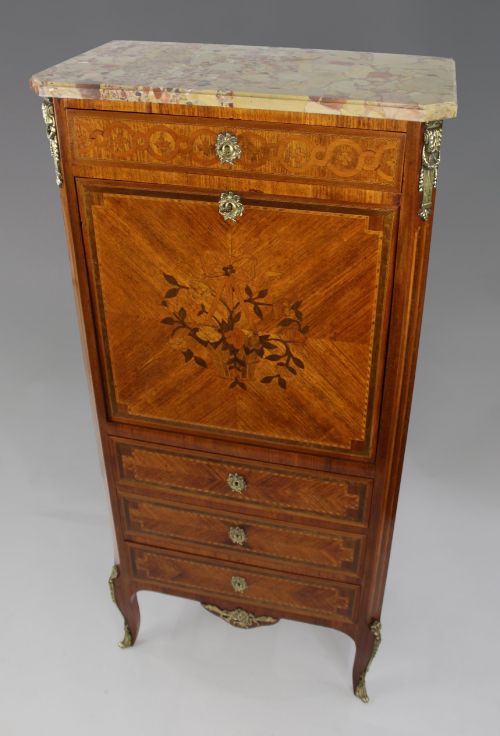
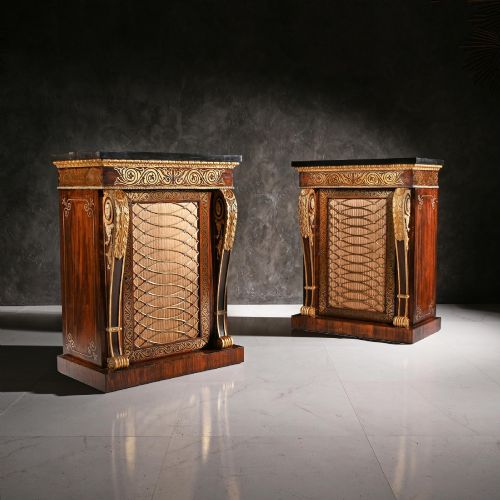
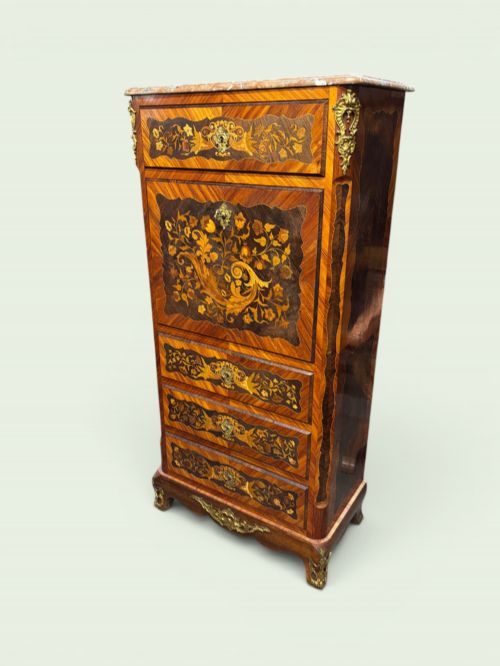
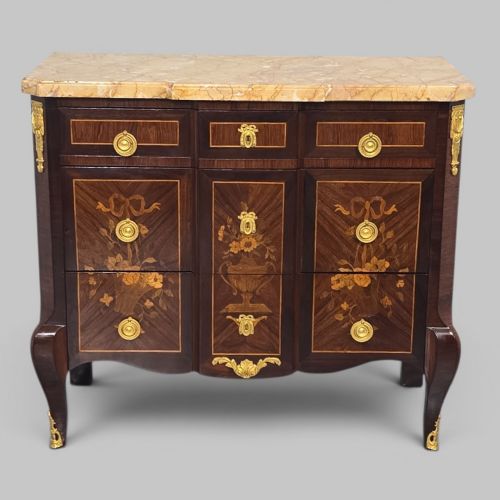
Cabinet makers utilised dense tropical rosewood veneers laid over secondary timbers, frequently embellishing surfaces with intricate marquetry, brass inlay, or parcel-gilt details.
Heavy stone surfaces, particularly white Carrara and various coloured marbles, were custom-fitted to the upper profiles of these cabinets to provide a durable and decorative counter.
Gilded bronze or ormolu mounts were cast and chased to accent corners, friezes, and door frames on French and English pieces alike.
Listings feature extensive nineteenth-century examples, spanning Regency, William IV, and Victorian periods alongside French Louis XV and XVI revival styles.
Craftsmanship and Proportion
The upper tier of these pieces is distinguished by the precision of the cabinet work, where timber grains are deliberately matched across doors and drawers.
Integration of the stone top demonstrates the maker's skill, showing tight joints and harmonious proportions relative to the base cabinetry.
Subtlety in cast mounts and delicacy in inlaid brass or marquetry separate workshop standards from standard commercial output.
Gillows·Louis Constantin Le Gaigneur·François Linke·James Winter
The Rosewood Marble Cabinet Glossary
- Chiffonier
- A low cabinet featuring a combination of drawers and shelving or enclosed cupboards below. This form became particularly popular during the Regency and early Victorian periods.
- Ormolu
- Gilded bronze mounts applied to furniture for decorative accent. These were cast and chased by hand before gilding.
- Marquetry
- Inlaid patterns composed of different coloured wood veneers or other materials fitted together to form pictorial or geometric designs.
- Vitrine
- A glass-fronted display cabinet intended for showing porcelain or small decorative objects. They often feature delicate frame construction and mirrored backs.
- Meuble d'appui
- A French term for a sideboard or standing cabinet of medium height. These pieces typically incorporate a flat marble top and enclosed lower storage.
Rosewood Marble Cabinet: Frequently Asked Questions
What is a rosewood marble cabinet?
A rosewood marble cabinet is a piece of antique case furniture combining rich dark rosewood timber with a fitted stone top. These pieces typically function as sideboards, chiffoniers, or bookcases.
Craftsmen produced them extensively during the nineteenth century in both English and French workshops, utilising the cool stone surface for practical display and serving.
How were these cabinets used historically?
Historically, these cabinets served multiple purposes in reception rooms, dining rooms, and libraries. The enclosed lower sections stored books, porcelain, or linens, while the flat stone upper surface held lamps or decorative objects.
In dining spaces, similar low cabinets acted as sideboards for serving food and displaying silver during gatherings.
How do I style a rosewood marble cabinet today?
Living with a rosewood marble cabinet involves balancing the dark, figured timber grain with neutral surroundings. The stone top provides a durable surface that requires minimal protection for everyday objects.
Placing the cabinet against a simple wall allows the natural contrast between the dark wood and the marble to anchor the room's decorative scheme.
How can I tell Regency pieces apart from later ones?
Regency pieces often display restrained classical proportions, featuring precise brass inlay and architectural lines influenced by ancient design. Cabinetwork from this era relies on disciplined geometry rather than heavy relief carving.
Later Victorian and revival examples frequently incorporate more exuberant French styling, including serpentine fronts, heavier ormolu mounts, and complex floral marquetry.