

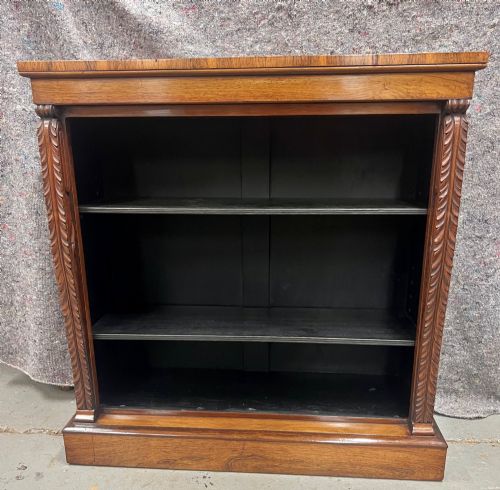


Dark Rosewood Low Cabinet
A dark rosewood low cabinet offers rich grain and compact storage, bringing warmth and proportion to a room.
Dark Rosewood Low Cabinet
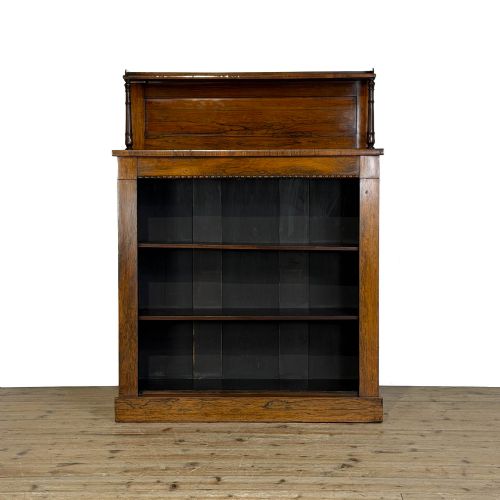
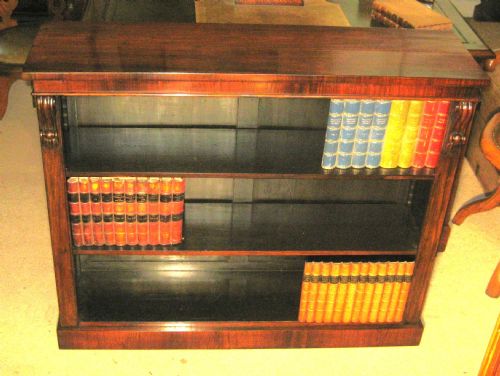
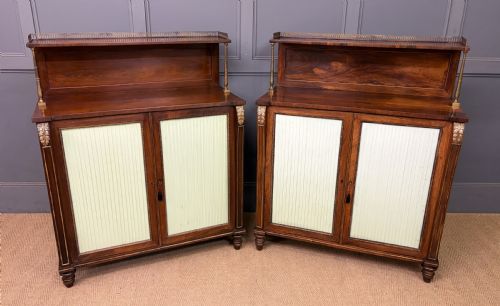
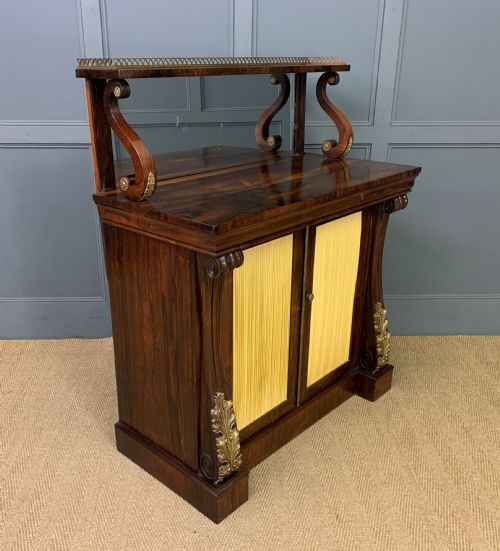
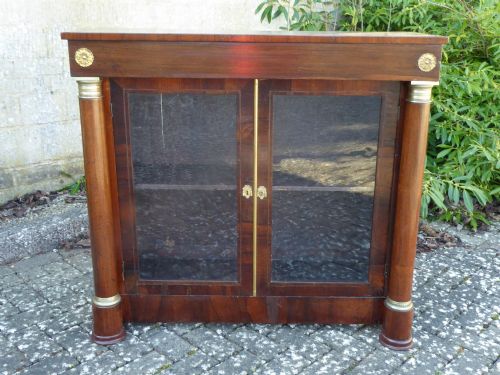
A dark rosewood low cabinet encompasses open bookcases, side cabinets, chiffoniers, and pier cabinets designed to sit low against a wall. These low forms emerged strongly during the Regency, William IV, and Victorian periods, often serving to display books or china while maintaining clear sightlines in a drawing room.
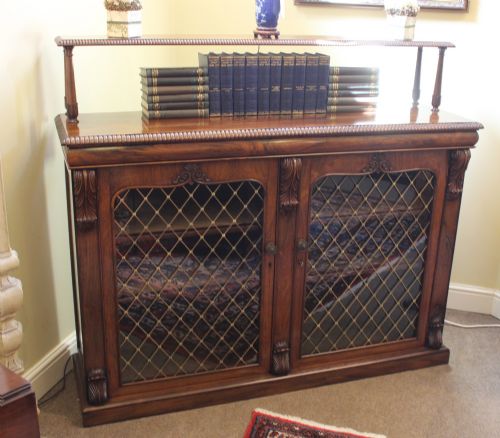
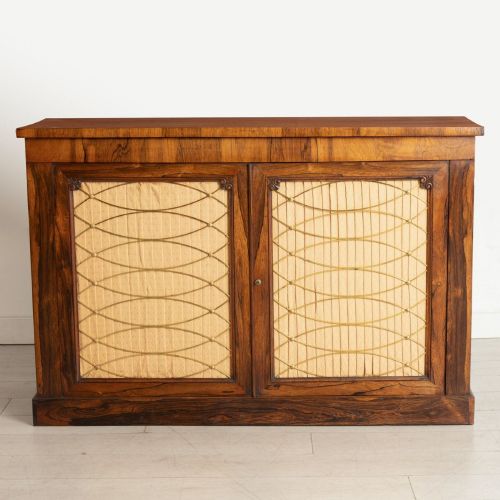
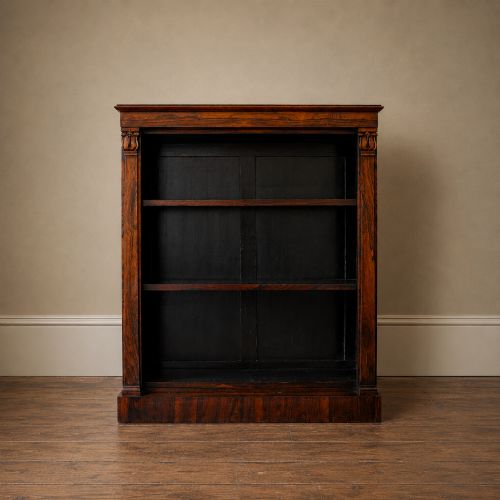
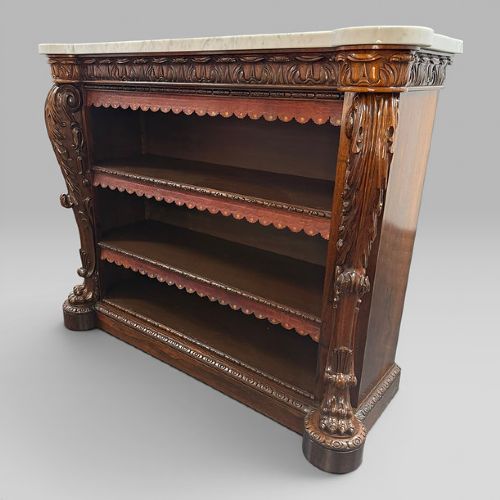
The pieces appearing on this page span the early nineteenth century through to later Victorian examples, with occasional Chinese Export items and twentieth-century interpretations. Buyers encounter compact side cabinets with brass inlays, open bookcases with adjustable shelves, and chiffoniers fitted with glazed or fabric-backed doors.
Low rosewood furniture balances utility with formal elegance, suiting modern interiors just as well as period settings. Their modest height distinguishes them from taller armoires and breakfronts, offering a grounded surface for lamps, clocks, or decorative objects.
How they were made
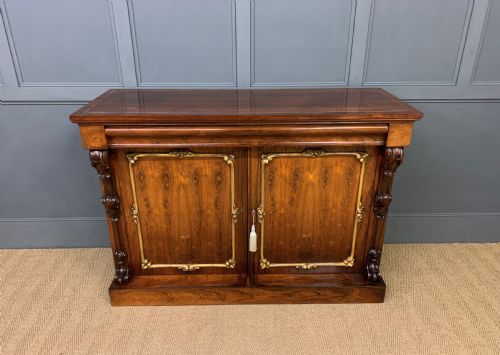
Cabinet makers utilised dense, highly figured rosewood veneers applied over secondary timbers like pine and oak, often enhancing the deep brown and purple tones of the wood with French polishing. Workshops incorporated brass stringing and brass mounts to accent the dark surfaces, contrasting the warm timber with bright metallic inlay.
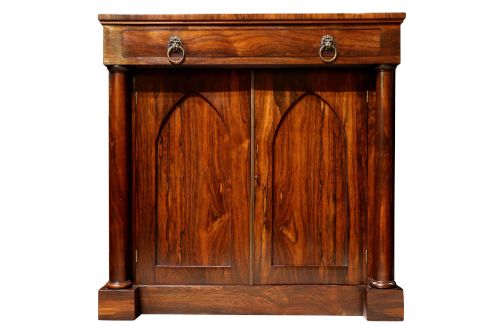
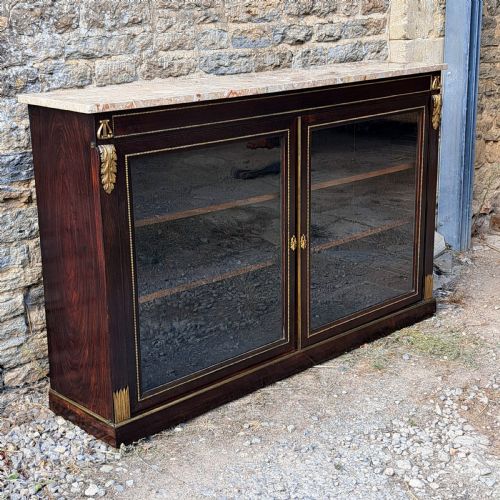
Structural details include adjustable shelving mechanisms, Gothic panelled doors, and protective marble tops. Interiors sometimes feature mirrored backs, fabric panels such as pleated silk behind glass or grilles, and sturdy timber carcases built to support heavy volumes.
The construction relies on traditional joinery methods suited to the nineteenth-century trade, allowing veneers to remain stable across wide, low doors and breakfront bodies. Secondary woods provide structural integrity while the rich exterior showcases the natural grain patterns.
Some nineteenth-century cabinets hide secret compartments behind dummy book spines, perfect for stashing midnight snacks.
What varies in quality
Quality rests in the selection and matching of the rosewood veneer across the doors and panels, where harmonious grain patterns create a unified facade. Master workshops achieved seamless transitions between cabinet sections, whereas lesser examples display mismatched or interrupted figures.
The refinement of brass inlay and mounts separates standard production from exceptional cabinet work. Precision in routing channels for brass stringing and the crispness of cast brass grilles or gallery rails indicate the skill level of the original maker.
Proportion and architectural detailing define the upper tier of these cabinets. Elements like neat turnings, well-executed Gothic panels, and integrated marble tops demonstrate deliberate design choices rather than mass production.
Gillows
The Dark Rosewood Low Cabinet Glossary
- Chiffonier
- A low sideboard or cabinet, typically featuring enclosed storage below and sometimes a small shelf or mirror superstructure above.
- Breakfront
- A cabinet design where the central section projects forward from the flanking wings, creating visual depth.
- Gilding
- The application of gold leaf or gilt paint to wooden surfaces, often highlighting carved mouldings or decorative trims.
- Pier cabinet
- A narrow cabinet specifically designed to fit the wall space between windows, frequently glazed to display collectibles.
- Goncalo Alves
- A dense, exotic timber resembling rosewood with distinct contrasting dark brown and light yellow-brown markings.
Dark Rosewood Low Cabinet: Frequently Asked Questions
What is a dark rosewood low cabinet used for?
These cabinets serve as practical storage furniture for books, linens, and tableware while providing a flat surface on top for lamps and decorative objects. Their low profile makes them suitable for placing beneath windows or paintings without obstructing wall space.
Historically, they populated drawing rooms and libraries as multi-functional pieces that combined display space with concealed storage behind panelled or glazed doors.
How do I date a rosewood cabinet?
Dating relies on observing stylistic markers, construction methods, and secondary timbers used within the carcase. Regency and William IV pieces often display crisp brass inlay, classical proportions, and rich dark veneers.
Victorian examples tend to show heavier moulding, varied door configurations, and occasionally marble tops or mirrored backs. Comparing the hardware and joinery against documented pieces helps narrow the decade of production.
Are the shelves adjustable?
Many of the open bookcases and side cabinets from the Regency and Victorian eras feature adjustable wooden shelving supported by brass rack strips or wooden pegs. This practical innovation allowed owners to alter shelf heights for varying book sizes.
Checking the interior walls of an open bookcase reveals whether the original ratchets or slot systems remain intact.
How do I care for antique rosewood?
Maintain antique rosewood by keeping cabinets away from direct sunlight and sudden temperature shifts, which can dry out timber and cause veneer to lift. Dust gently with a dry, soft cloth and avoid modern silicone polishes.
Feeding the wood occasionally with traditional wax preserves the depth of the French polished finish and protects the grain from atmospheric changes.