


Victorian Rosewood Pier Cabinet
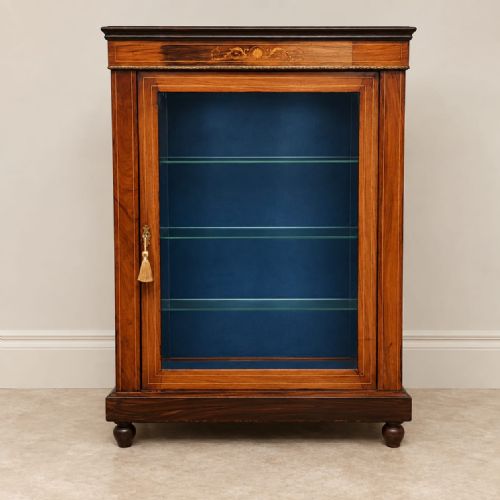
A victorian rosewood pier cabinet is a low, narrow display piece designed to stand against the wall between windows, bringing refined storage and timber grain into a drawing room.
Victorian Rosewood Pier Cabinet
A victorian rosewood pier cabinet is typically a narrow display or side cabinet dating from the nineteenth century, built to fit slender wall spaces between drawing room windows. The examples you encounter span single door variants, tall narrow formats, and occasional pairs designed for symmetrical placement.
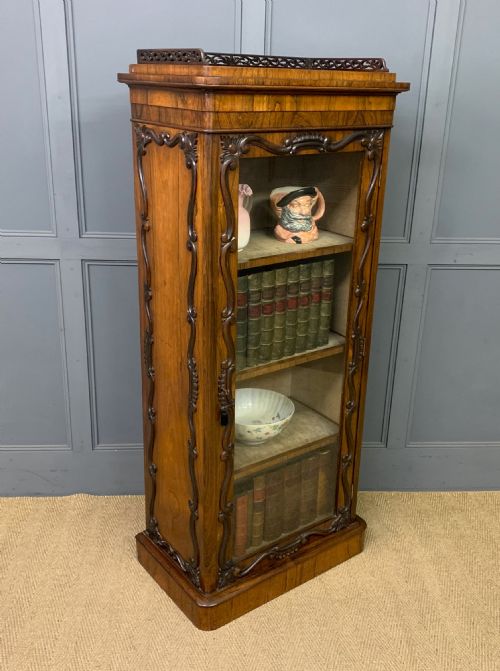
Most pieces date from the mid to late nineteenth century, specifically between 1850 and 1890, though earlier William IV antecedents also appear in the record. These forms encompass straightforward glass door display units as well as bookcase cabinets and pedestal cupboards with marble tops.
The primary form involves a single glazed or grill door enclosing shelves, frequently augmented by marquetry or parquetry details. They serve as both functional storage and ornamental display furniture intended to exhibit books and decorative objects.
Judging Quality and Execution
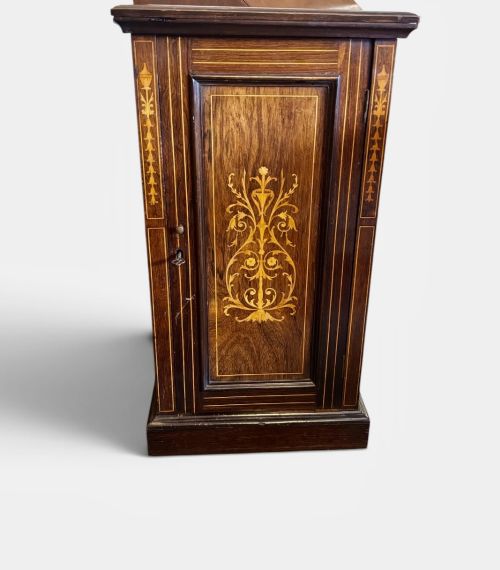
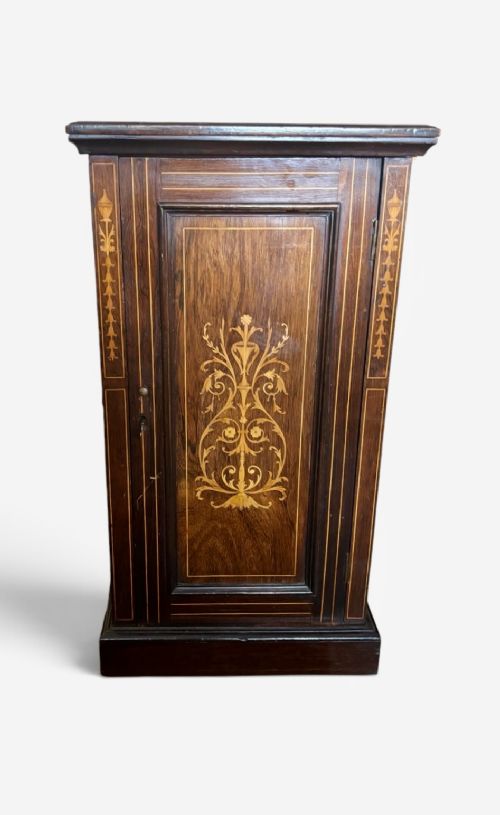
Quality reveals itself in the precision of the timber inlay and the selection of figured veneers. Sharp contrasts in satinwood and boxwood banding demonstrate superior cabinet making compared to simpler, plain rosewood surfaces.
The refinement of cast ormolu mounts and the integration of brass stringing differentiate standard production from finer workshop output. Better examples balance structural proportion with meticulous attention to secondary timbers and interior fitting.
Some nineteenth century cabinets hid delicate books behind brass grill doors rather than glass.
James Winter
The Victorian Rosewood Pier Cabinet Glossary
- Pier cabinet
- A low, narrow cabinet designed to stand against the wall space between windows. These pieces typically feature a single glazed door and flat top.
- Marquetry
- Decorative veneer work forming pictures or geometric patterns using various coloured woods. Craftsmen cut thin slices of timber and fit them into a prepared background.
- Ormolu
- Gilded bronze mounts applied to furniture for decorative effect. The technique involves treating brass or bronze with a gold amalgam.
- Stringing
- Thin inlay lines of contrasting wood or metal set into the surface of furniture. It creates fine borders around panels and drawers.
- Grill door
- A cabinet door inset with woven or cast metal wire rather than glass. This allowed ventilation or visibility while protecting the contents.
Victorian Rosewood Pier Cabinet: Frequently Asked Questions
What is a pier cabinet?
A pier cabinet is a narrow, upright piece of furniture built to occupy the narrow wall space, or pier, between tall Victorian windows.
These cabinets generally feature glass doors to display ornaments or books while keeping dust away from delicate collections.
Where should I place a pier cabinet?
They suit narrow wall spaces, hallways, or drawing rooms where standard bulkier furniture would block walkways or overwhelm the proportions of the room.
Their shallow depth allows them to sit flush against walls without projecting too far into the living space.
What woods were used in these cabinets?
Rosewood serves as the main structural and surface timber, prized for its deep colour and pronounced grain pattern. Cabinet makers added contrasting details using satinwood, boxwood, ebony, and burr walnut.
These lighter and darker woods formed complex geometric inlays and stringing borders across the doors and frame.