
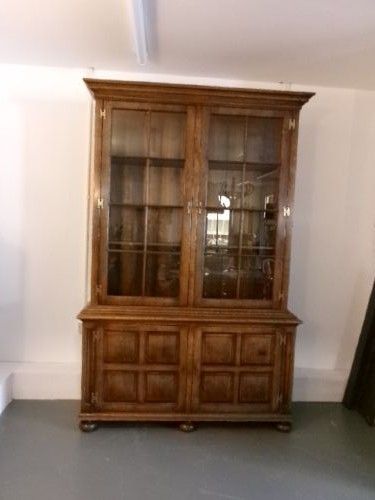
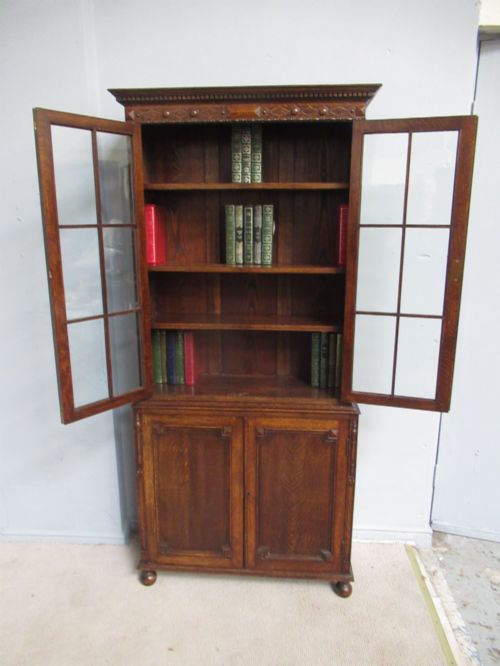
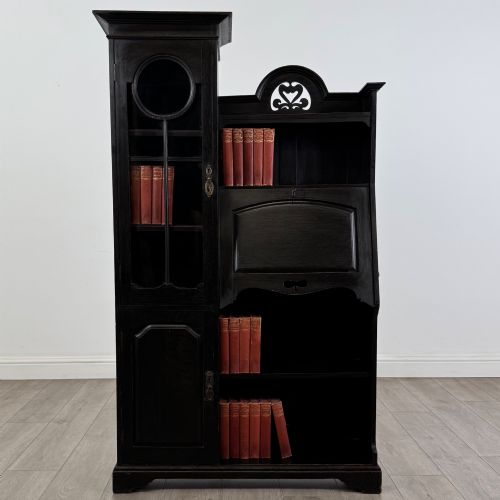
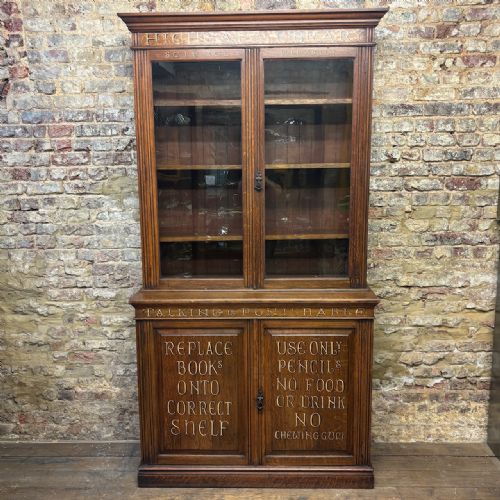
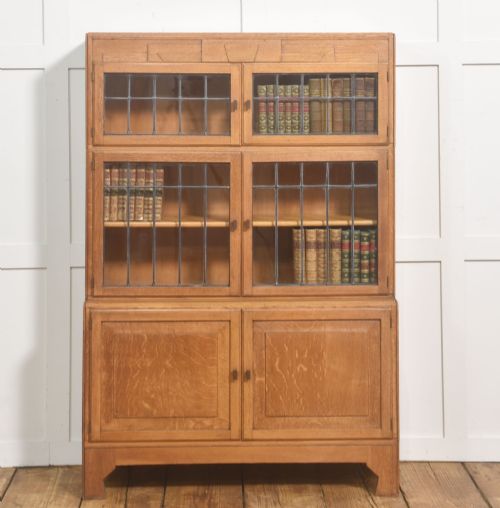
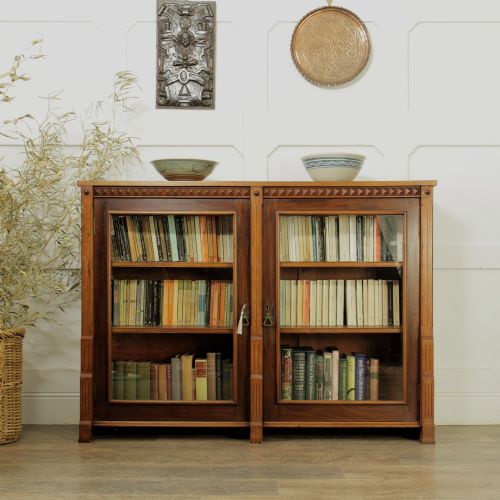
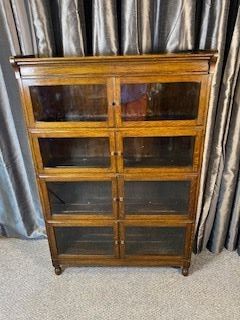
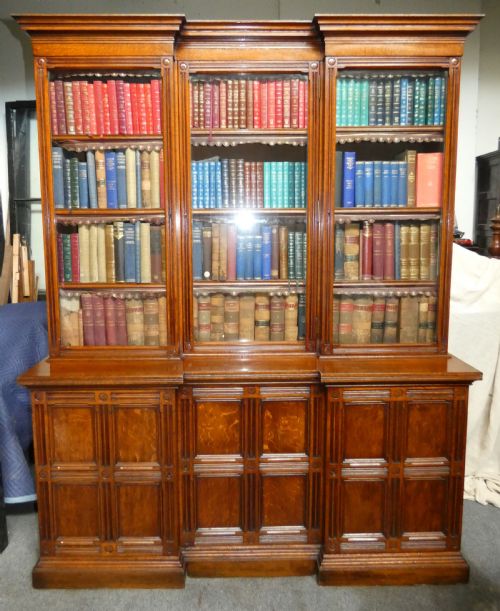
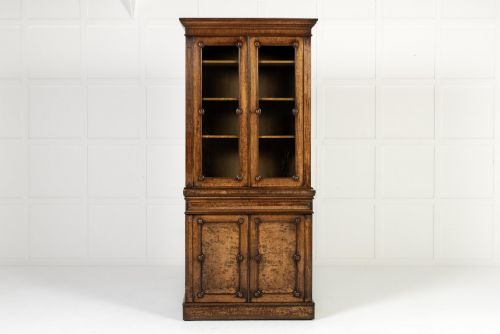

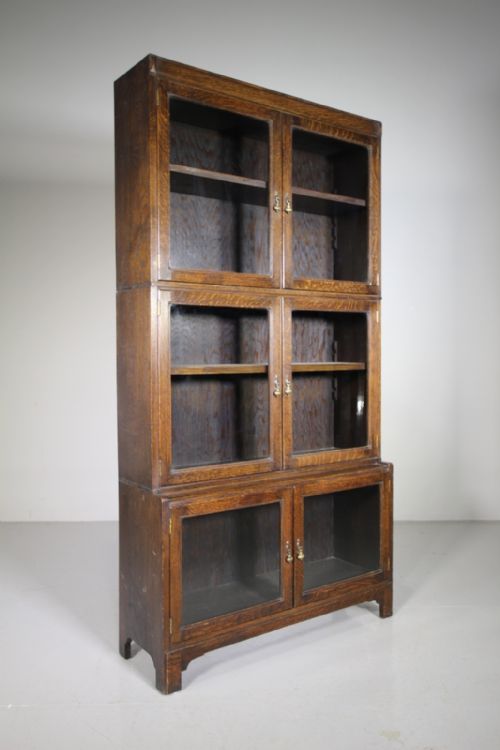

Glazed Oak Library Cabinet
A glazed oak library cabinet brings working practicality and honest construction together, protecting volumes behind glass panels.
Glazed Oak Library Cabinet
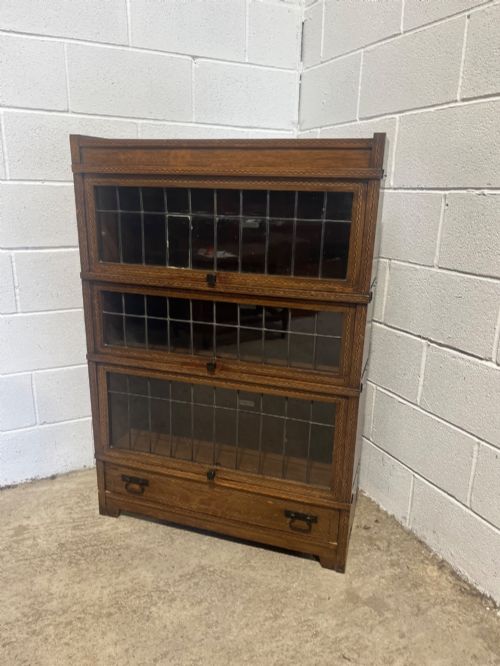
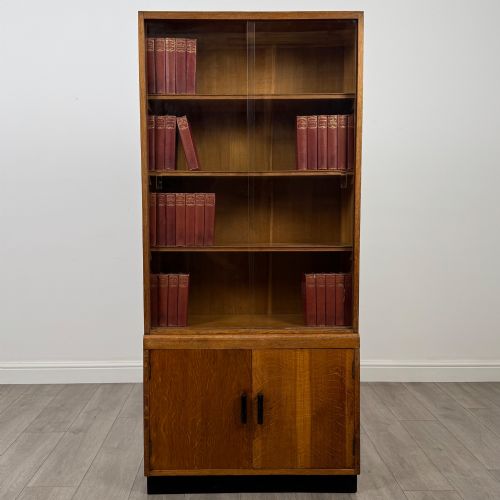
A glazed oak library cabinet is a sturdy storage piece designed to hold and display books while keeping dust at bay. When searching for a glazed oak library cabinet, buyers encounter varied forms spanning the Victorian era through the early twentieth century.
The selection ranges from monumental breakfront cases commissioned for grand rooms to compact sectional office furniture and school library cupboards. Pieces emerge in distinct stylistic interpretations including Gothic Revival, Arts and Crafts, and Art Deco.
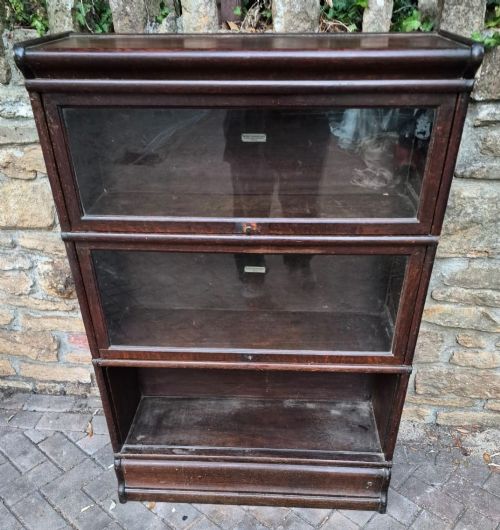
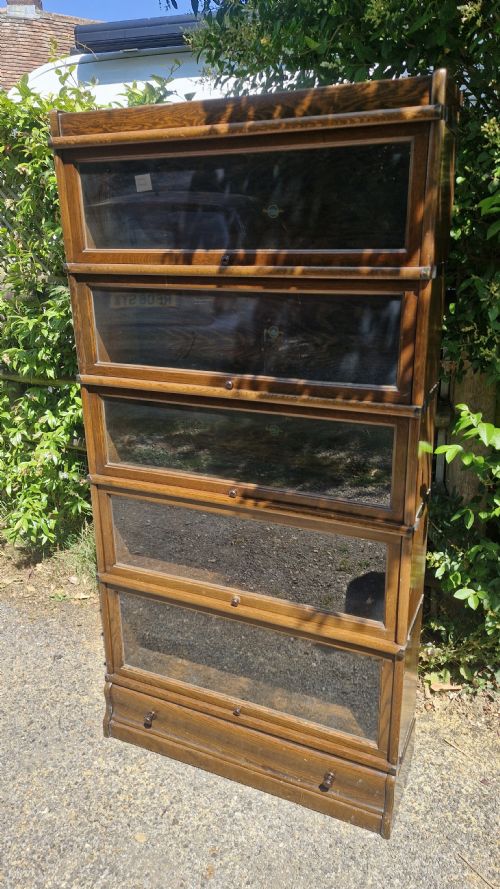
The most common examples on this page date from the late nineteenth century and the opening decades of the twentieth century. These embrace both traditional hinged-door cupboards and inventive modular stacking systems.
Materials and Construction
Makers relied primarily on solid oak, frequently selecting figured variations such as pollard oak to add visual depth to prominent panels. Glass forms the primary door element, held securely within timber frames or detailed leaded cames.
Hardware components like brass hinges, handles, and metal mechanisms provide functional movement and structural reinforcement. Interior shelving is typically adjustable, resting on timber supports within carcass frames built to bear heavy volumes.
The listings span from the Victorian period through the 1930s, utilising solid oak, glass, brass, and lead.
Gradations of Quality
The distinction between standard utility cupboards and high-tier library pieces rests on the ambition of the joinery and the selection of timber. Dense, figured grain and heavy carcase construction separate bespoke architectural commissions from mass-produced office shelving.
Carving detail dictates the hierarchy of craftsmanship, moving from plain geometric mouldings to intricate relief work executed by hand. The integration of specialised hardware, such as smooth-operating sectional lifting doors or stained glass, marks the upper tier of production.
Heals·Howard and Sons·Lebus·Minty·Miskin Manor
The Glazed Oak Library Cabinet Glossary
- Globe Wernicke
- A patented modular stacking bookcase system popular in offices and libraries from the late nineteenth century onward.
- Breakfront
- A cabinet design where the central section projects forward from the flanking wings, creating visual rhythm across the facade.
- Pollard oak
- Timber taken from trees that have been pollarded, producing dense, highly decorative circular growth patterns known as burr or pollard figuring.
- Sectional bookcase
- A modular bookcase comprising separate stacked tiers with glazed lifting doors, often associated with barrister designs.
- Leaded glass
- Individual panes of glass joined together by narrow strips of lead came to form geometric or decorative window patterns.
Glazed Oak Library Cabinet: Frequently Asked Questions
What is a barristers bookcase?
A barristers bookcase is a sectional stacking cabinet featuring individual glass-fronted tiers that lift and slide inward above the books.
This clever modular design allowed legal professionals and scholars to transport their libraries in separate manageable units or expand storage vertically as collections grew.
How do I care for antique oak furniture?
Antique oak benefits from stable indoor humidity and protection from direct sunlight to prevent timber shrinkage and finish degradation.
Regular dusting with a dry lint-free cloth preserves the surface sheen, while occasional applications of traditional wax nourish the timber without building up heavy residues.
Are shelves in these cabinets adjustable?
Many library cabinets feature adjustable shelving supported by internal wooden racks or metal peg systems.
This flexibility allows owners to accommodate varying book sizes, from pocket editions to tall folio volumes, without altering the original interior structure.
How do I distinguish Victorian from Edwardian oak cabinets?
Victorian oak library furniture tends to feature heavier proportions, darker finishes, and deep hand-carved ornamentation reflecting Gothic or revival styles.
Edwardian pieces generally exhibit lighter golden tones, simpler rectilinear lines, and a greater emphasis on functional modular formats like stacking sections.