
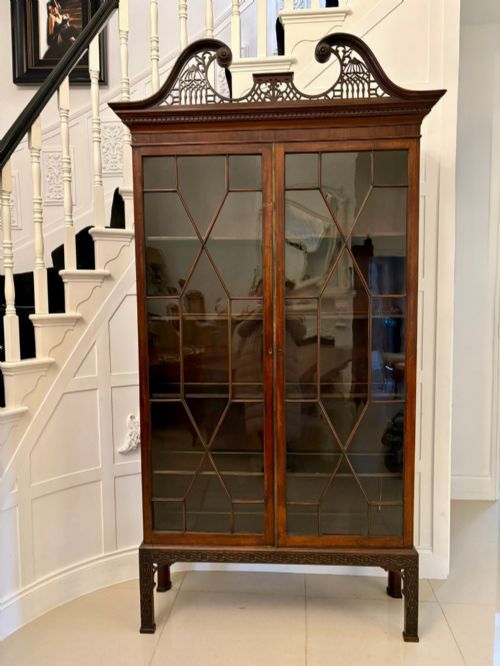
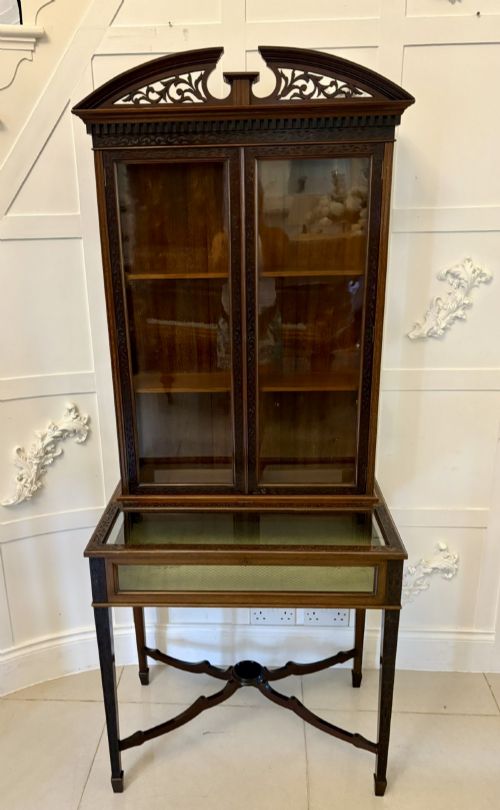
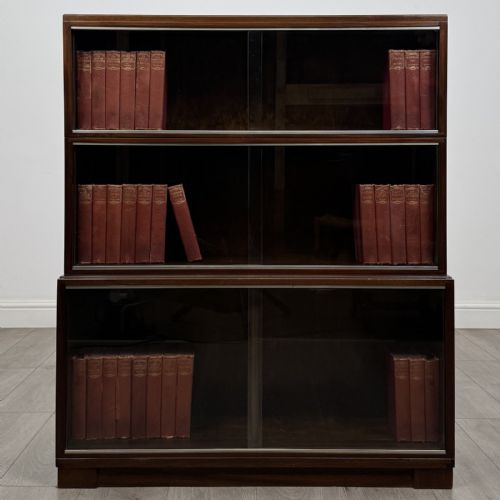
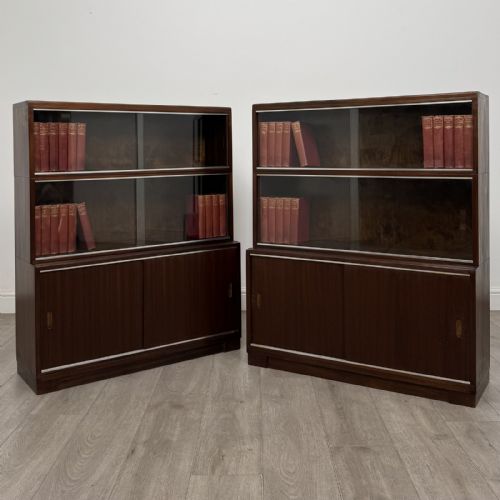
Glazed Mahogany Display Bookcase
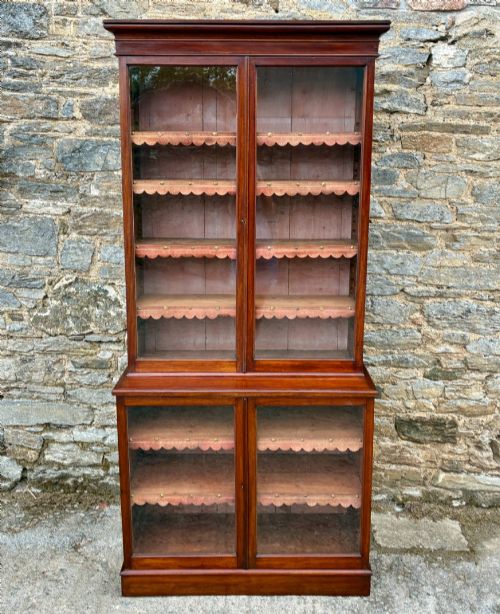
A glazed mahogany display bookcase combines practical library storage with visible display space for books and precious objects.
Glazed Mahogany Display Bookcase
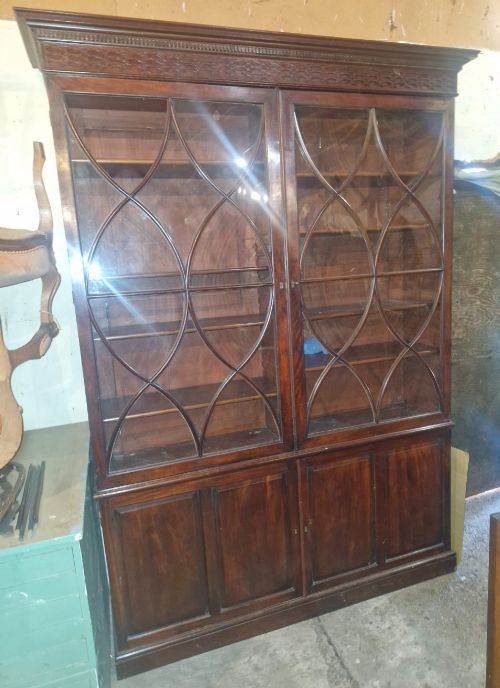
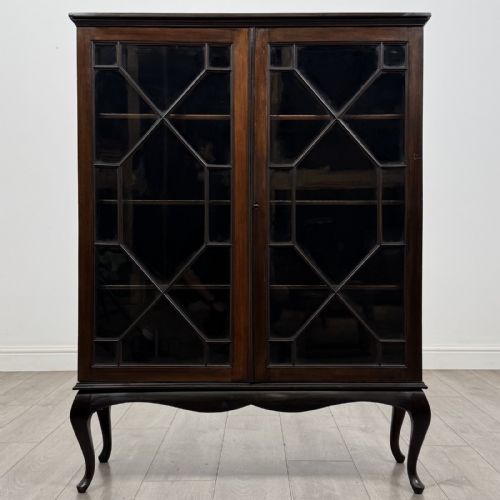
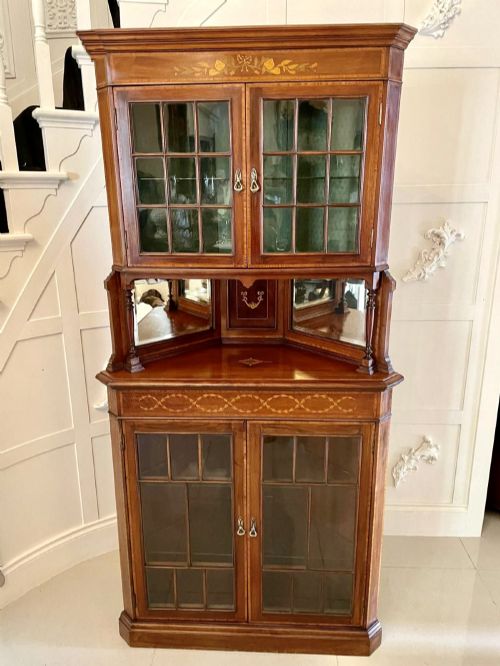
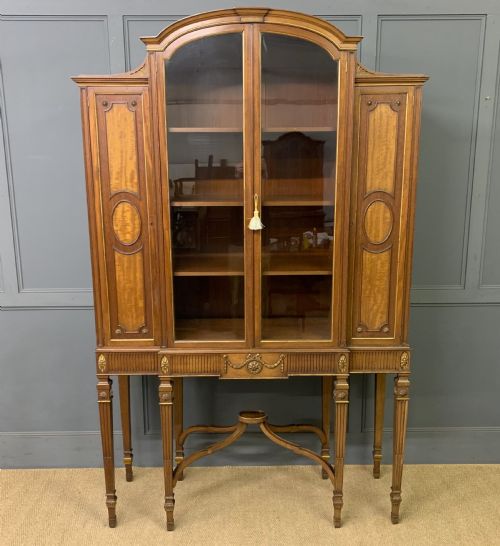
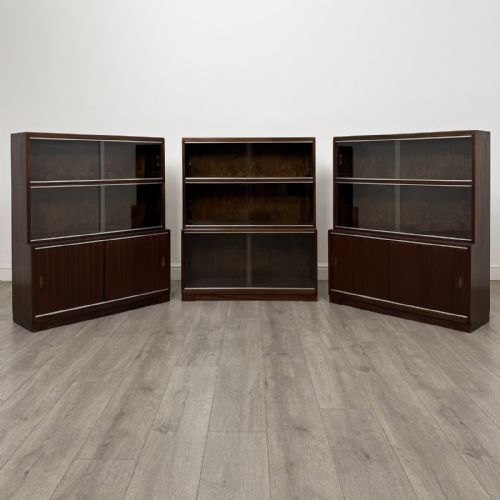
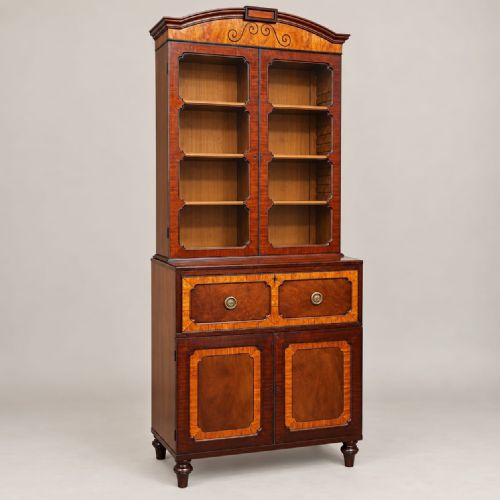
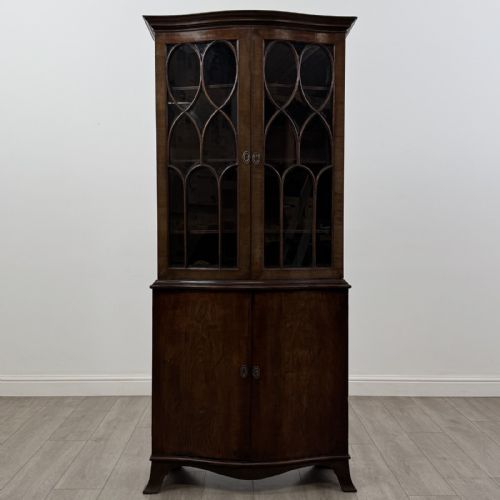
A glazed mahogany display bookcase serves as a dual-purpose piece of furniture designed to protect volumes behind glass doors while exhibiting collections within domestic interiors. Buyers searching for a glazed mahogany display bookcase most frequently encounter Victorian, Edwardian, and Georgian examples spanning breakfront bookcases, smaller display cabinets, and secretaire variants.
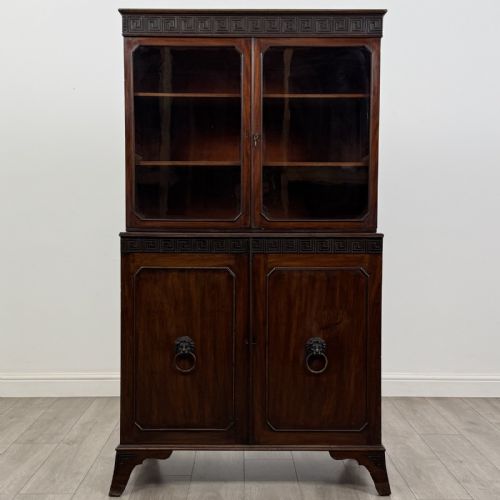
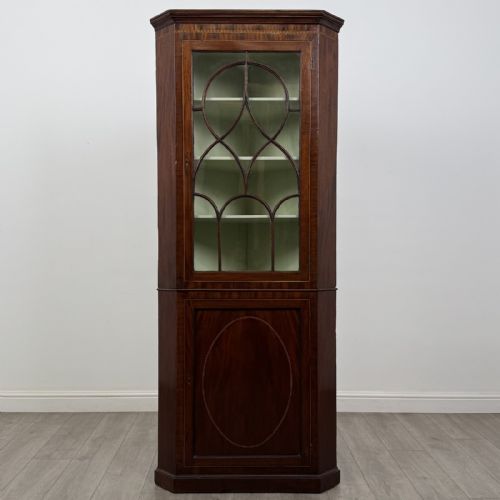
The architectural scale ranges from compact corner cupboards and miniature cabinets to large triple library bookcases and breakfront forms. Many versions incorporate lower wooden cupboards or drawers beneath the upper glazed compartment, providing concealed storage alongside the display area.
Origins stretch from the late eighteenth century through the nineteenth century and into the early twentieth century, encompassing revival styles such as Sheraton Revival and Chippendale Revival alongside period pieces.
Materials and Technique
Cabinet makers utilised solid mahogany and rich veneers such as flame mahogany and figured mahogany over supportive timber carcases. Selected sections often featured delicate satinwood inlay, marquetry, and contrasting stringing to frame the glazed doors and drawer fronts.
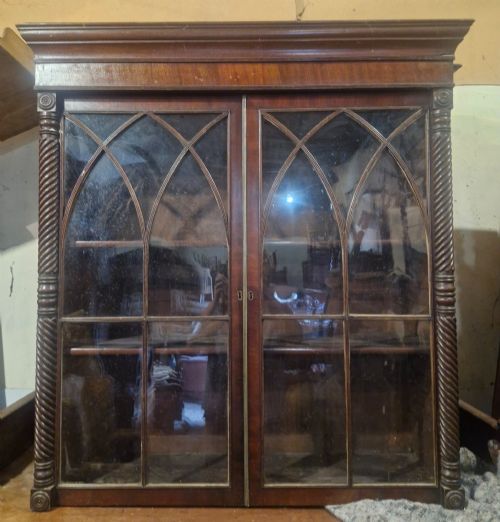
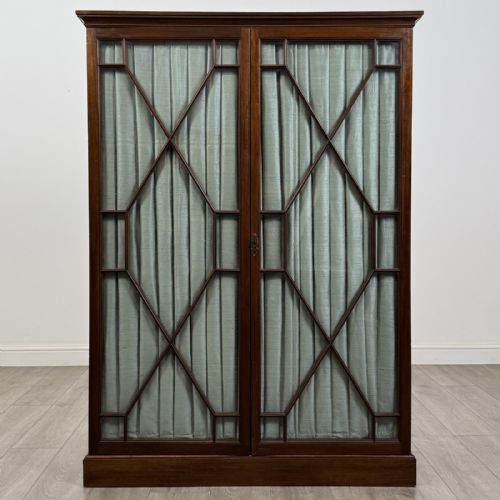
Glazing typically takes the form of astragal bars dividing the glass panes into geometric or Gothic arch patterns, with brass hardware securing the doors. Adjustable shelving systems inside allow owners to alter shelf heights for varying book sizes and display objects.
Distinctions in Quality
The refinement of the timber selection dictates visual depth, where highly figured flame mahogany grain contrasts against plain surfaces. Subtle details such as finely moulded astragal glazing bars, hand-carved ornamentation, and original fitted interiors elevate certain examples above standard utilitarian library storage.
Jas Shoolbred·Gillows·Edwards and Roberts
The Glazed Mahogany Display Bookcase Glossary
- Astragal
- Moulded bars of wood or metal that hold individual panes of glass within a glazed door. These delicate divisions create geometric patterns characteristic of eighteenth and nineteenth-century cabinet work.
- Breakfront
- A piece of furniture where the central section projects forward from the flanking outer sections. This architectural arrangement adds depth and visual interest to large library bookcases.
- Secretaire
- A cabinet incorporating a pull-down writing drawer that conceals a fitted interior of small drawers and pigeonholes. These multifunctional pieces combine a writing desk with upper shelving.
- Flame mahogany
- A veneer cut from timber where the branch joins the main trunk, producing a distinctive flickering flame-like grain pattern. Cabinet makers used this figure on prominent door panels and drawer fronts.
- Sheraton Revival
- A late nineteenth and early twentieth-century design movement inspired by the neoclassical furniture of George Sheraton. Pieces from this era often display light satinwood inlay and refined proportions.
Glazed Mahogany Display Bookcase: Frequently Asked Questions
What is a glazed mahogany display bookcase?
A glazed mahogany display bookcase is a cabinet featuring glass-fronted upper doors designed for storing books and displaying decorative objects. The timber frame utilises mahogany, often enhanced with figured veneers or inlay.
These pieces served as functional library furniture and prominent drawing-room display cabinets across the Georgian, Victorian, and Edwardian periods.
How do I adjust the shelves?
Many period bookcases use traditional wooden rack-and-pinion supports or metal ratchets attached to the interior sides. You lift the shelf slightly and move the supporting pegs or brackets to the desired slot.
This adjustable system allows the interior configuration to accommodate volumes of varying heights.
How do I date a mahogany bookcase?
Dating relies on architectural style, construction methods, timber characteristics, and hardware. Georgian examples tend to feature linear proportions and astragal glazing, while Victorian and Edwardian pieces often incorporate heavier mouldings, machine-sawn backing boards, or revival ornamentation.
Makers' stamps or labels found on drawers or carcases can provide specific attribution and confirmation of period.
Where should I place it in a room?
A freestanding glazed bookcase requires a stable, dry wall away from direct sunlight and strong heat sources to protect the mahogany timber and finish. Large breakfront and library bookcases function well as principal focal points in studies, libraries, or drawing rooms.
Smaller corner cabinets and vitrines fit into tighter architectural spaces while still offering enclosed display surfaces.