
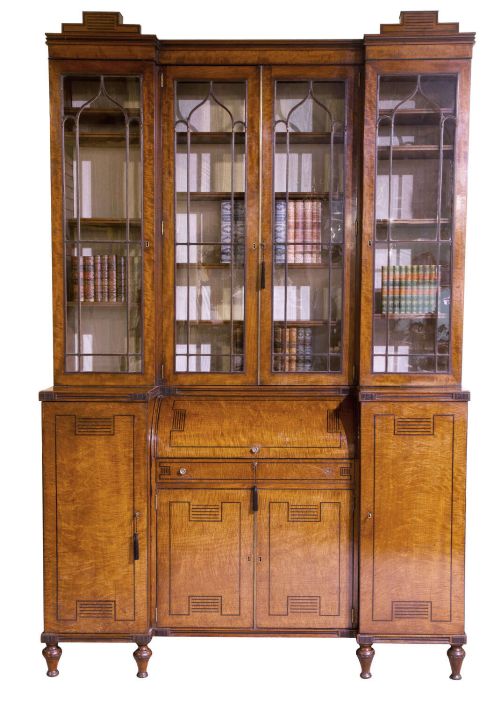
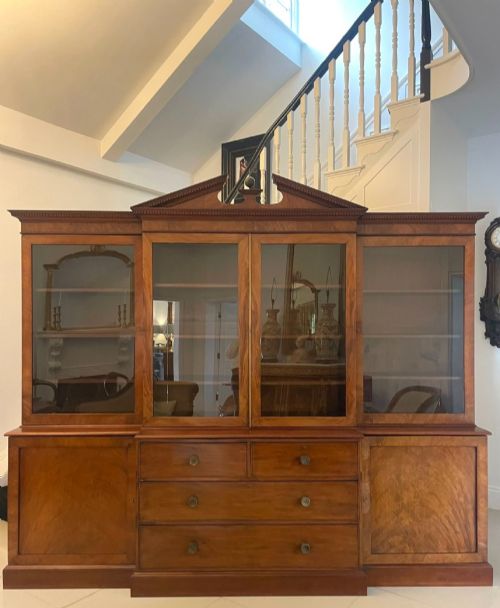
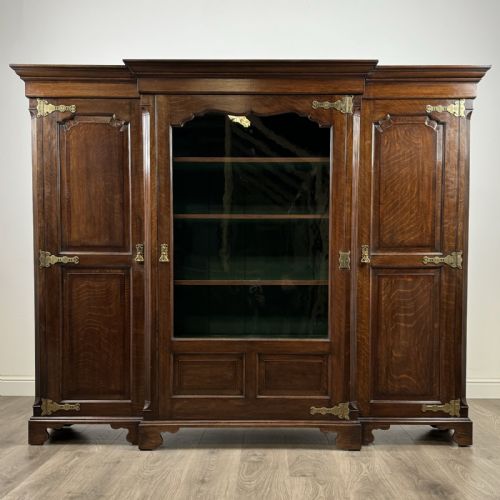
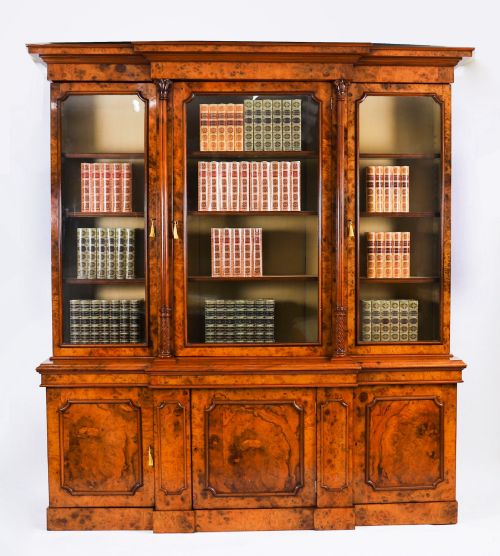
Large Breakfront Display Cabinet
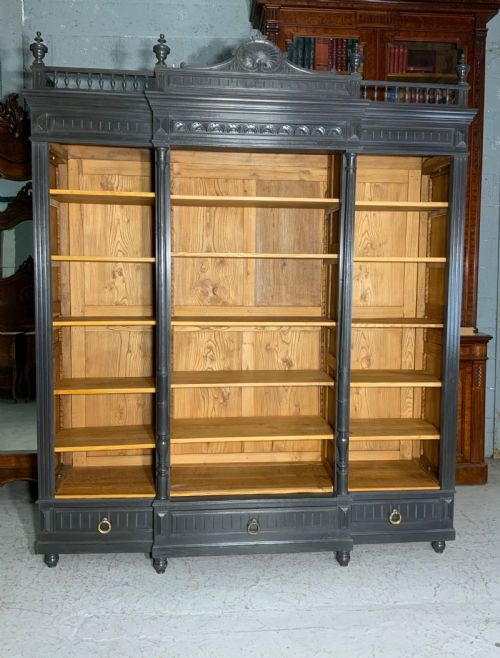
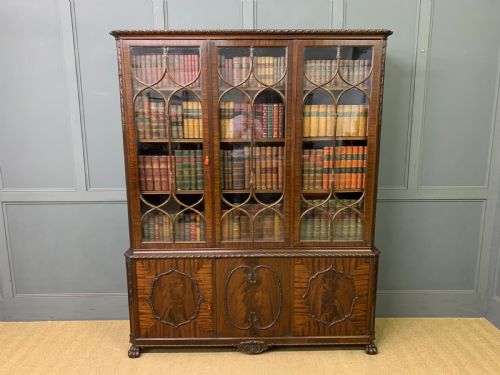
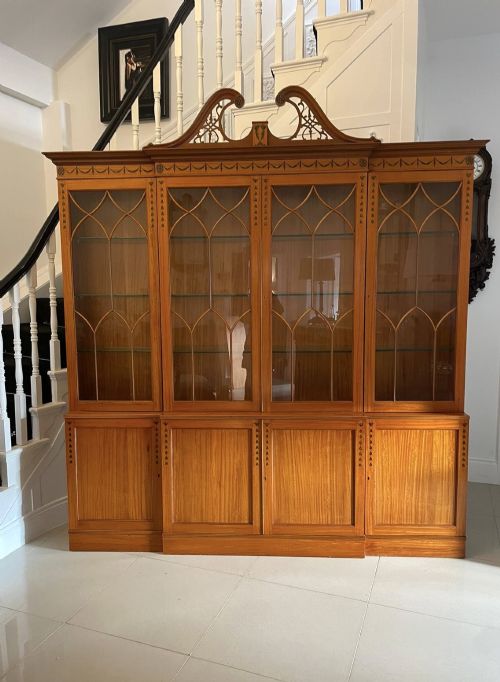
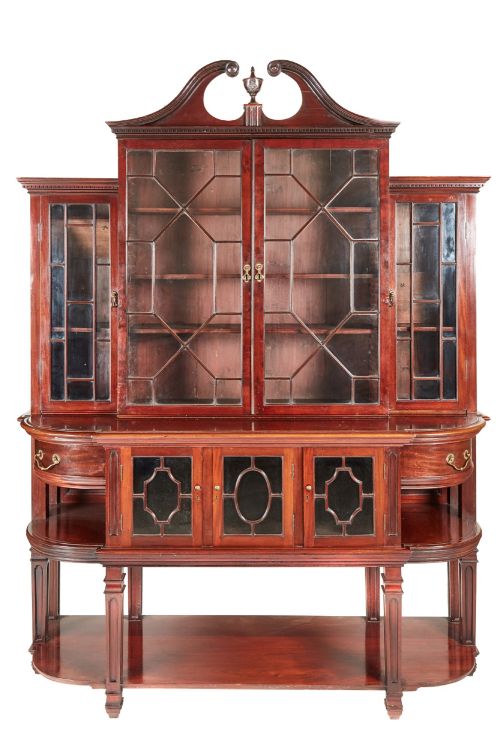
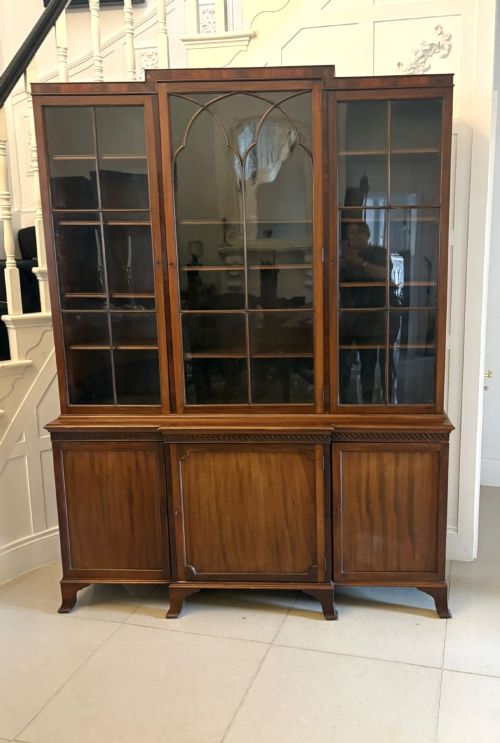
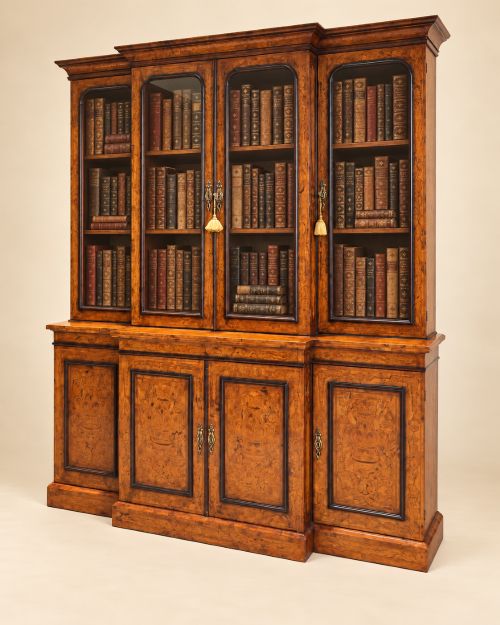
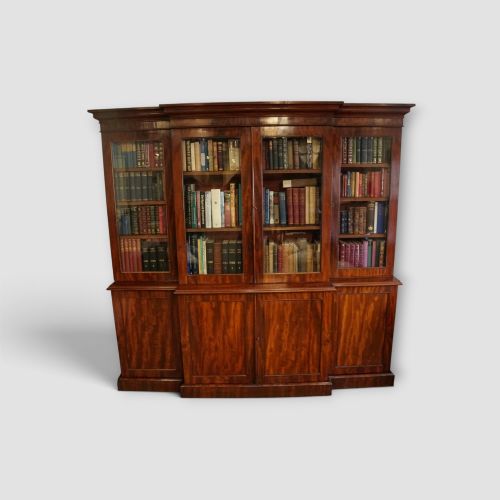
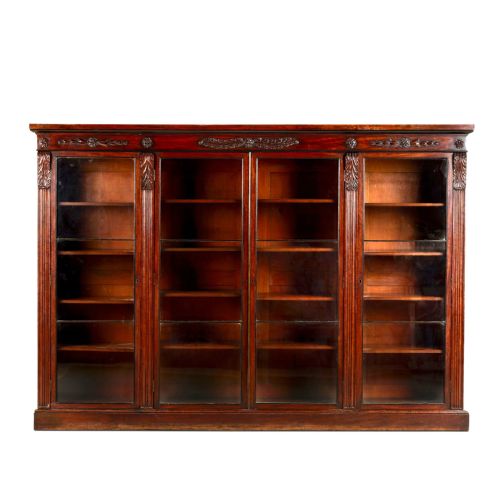
A large breakfront display cabinet commands a room, offering grand proportions and generous glazing to showcase significant libraries and collections.
Large Breakfront Display Cabinet
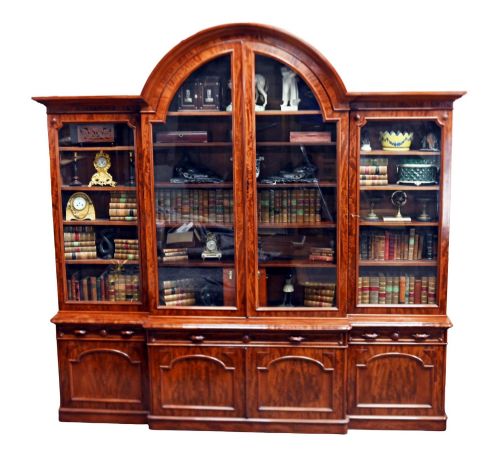
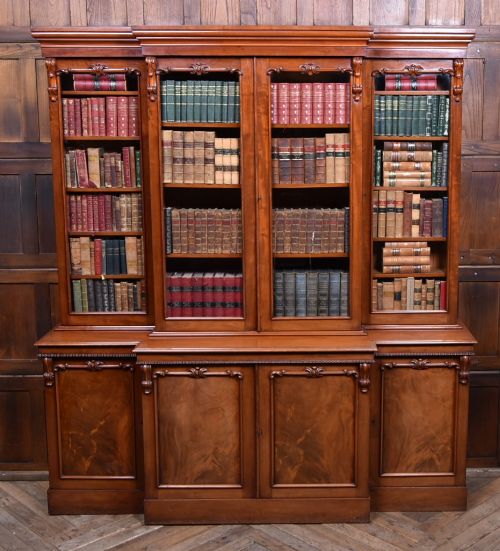
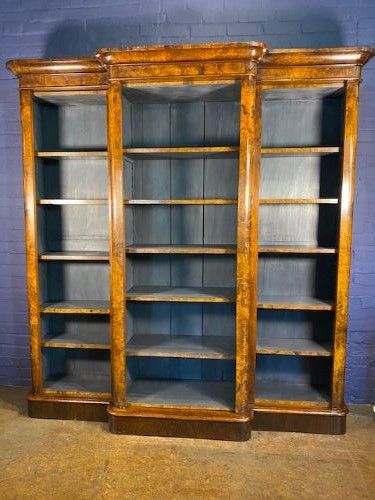
A large breakfront display cabinet is a monumental piece of furniture defined by a central section that projects forward from the flanking wings. When searching for a large breakfront display cabinet, you encounter substantial forms predominantly originating from the nineteenth century, alongside Georgian, Regency, and Edwardian interpretations.
The architectural presence of these pieces suits spacious libraries, drawing rooms, and dining halls. Mahogany and walnut serve as the primary timbers, frequently enhanced by glass doors configured in astragal glazing bars or open shelving arrangements.
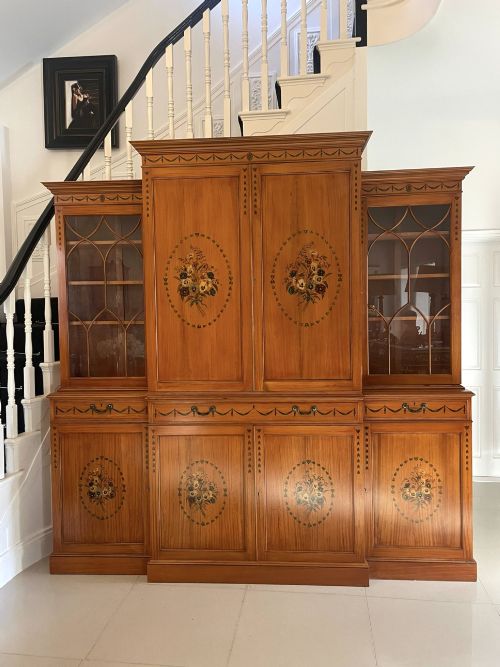
Victorian examples dominate the selection, often incorporating refined satinwood inlays, Gothic revival detailing, or substantial proportions designed to house extensive book collections and porcelain displays.
Materials and Construction
Cabinet makers utilised dense hardwoods including mahogany, walnut, and oak to construct the robust frames required for such expansive furniture. Flame mahogany veneer and burr walnut added rich surface figuring to the principal display areas.
Glazing involved intricate timber or brass-mounted astragal bars holding individual panes of glass securely within large door frames. Ormolu mounts, marquetry, and hand-painted decorations frequently embellished the finest examples from the Victorian and Edwardian periods.
Some nineteenth-century libraries required integrated secretaire drawers, allowing a cabinet to double as a concealed writing desk.
Evaluating Standard
Quality rests upon the selection of timber figures, such as matched flame mahogany or burr walnut veneers, which demonstrate the cabinet maker's ambition. Precision in the joinery of the breakfront profile and the delicacy of the astragal glazing bars separate standard production from exceptional craftsmanship.
The integration of secondary decorative elements, including hand-carved mouldings, brass mounts, or original painted decoration, dictates the standing of a piece within its period.
Gillows
The Large Breakfront Display Cabinet Glossary
- Breakfront
- An architectural cabinet design where the central section projects further forward than the flanking sections. This configuration creates visual depth and breaks the flat line of a large wall.
- Astragal
- A narrow moulding used to hold glass panes within a door frame. Astragal glazing bars divide large windows into smaller geometric patterns.
- Ormolu
- Gilt bronze mounted onto furniture as decorative hardware or feet. It provides a bright metallic contrast against dark woods like mahogany and walnut.
- Marquetry
- The art of applying pieces of veneer to a structure to form decorative patterns. Craftsmen use varied woods to create pictorial or geometric designs.
- Credenza
- A low cabinet originating in Italy, often featuring doors and display space. In nineteenth-century British furniture, the term occasionally describes long, low bookcase forms.
Large Breakfront Display Cabinet: Frequently Asked Questions
Where should a large breakfront display cabinet be placed?
These imposing cabinets require substantial wall space and high ceilings to balance their grand architectural proportions properly. They suit principal reception rooms, libraries, or dining spaces where their depth and height can be fully appreciated.
Position them away from direct sunlight to protect antique timber veneers and sensitive book bindings or displayed collections from fading over time.
How do I care for the wood and glass?
Maintain the timber surfaces by applying appropriate traditional waxes sparingly and buffing gently with a soft cloth. Avoid using modern silicone sprays that can damage antique French polish.
Clean glass panels with mild solutions using a cloth rather than spraying directly onto the cabinet, preventing moisture from seeping into vulnerable wood joints or brass mounts.
Can the shelves be adjusted?
Many Victorian and later period cabinets feature adjustable shelving systems supported on wooden racks or metal pins. This adaptability allows collectors to house volumes and objects of varying heights.
Earlier pieces occasionally feature fixed shelving integrated permanently into the structural carcass during the initial workshop construction.
How do I distinguish between Regency and Victorian examples?
Regency pieces typically display classical restraint, clean architectural lines, and understated brass inlays influenced by ancient Roman and Greek forms. Their timber selection favours dark, figured mahogany without excessive carving.
Victorian cabinets frequently introduce heavier proportions, exuberant carvings, Gothic revival pointed arches, or elaborate marquetry and satinwood contrasts.