


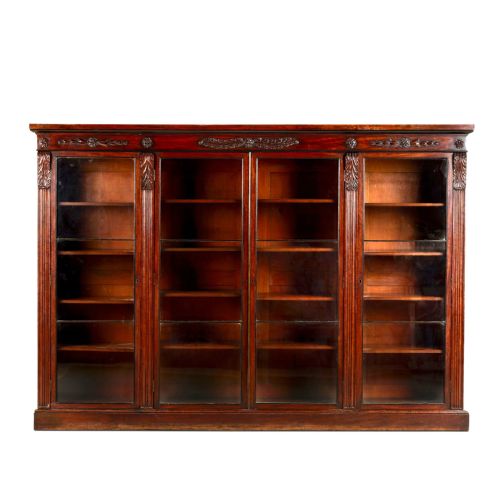
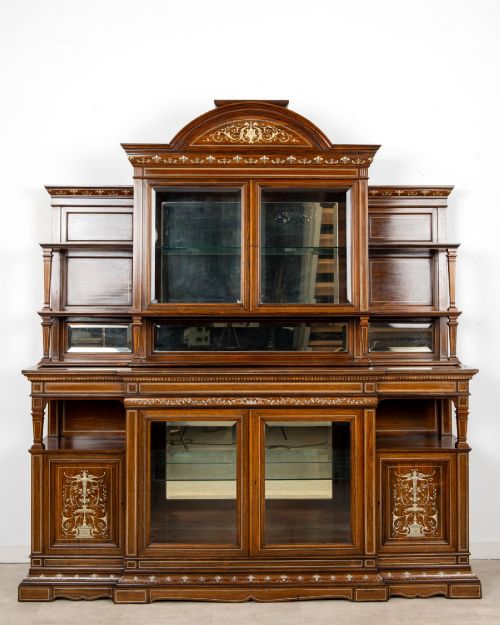
Glazed Breakfront Cabinet
A glazed breakfront cabinet offers imposing presence and ample shelving, uniting architectural proportion with the practical display of books or collections.
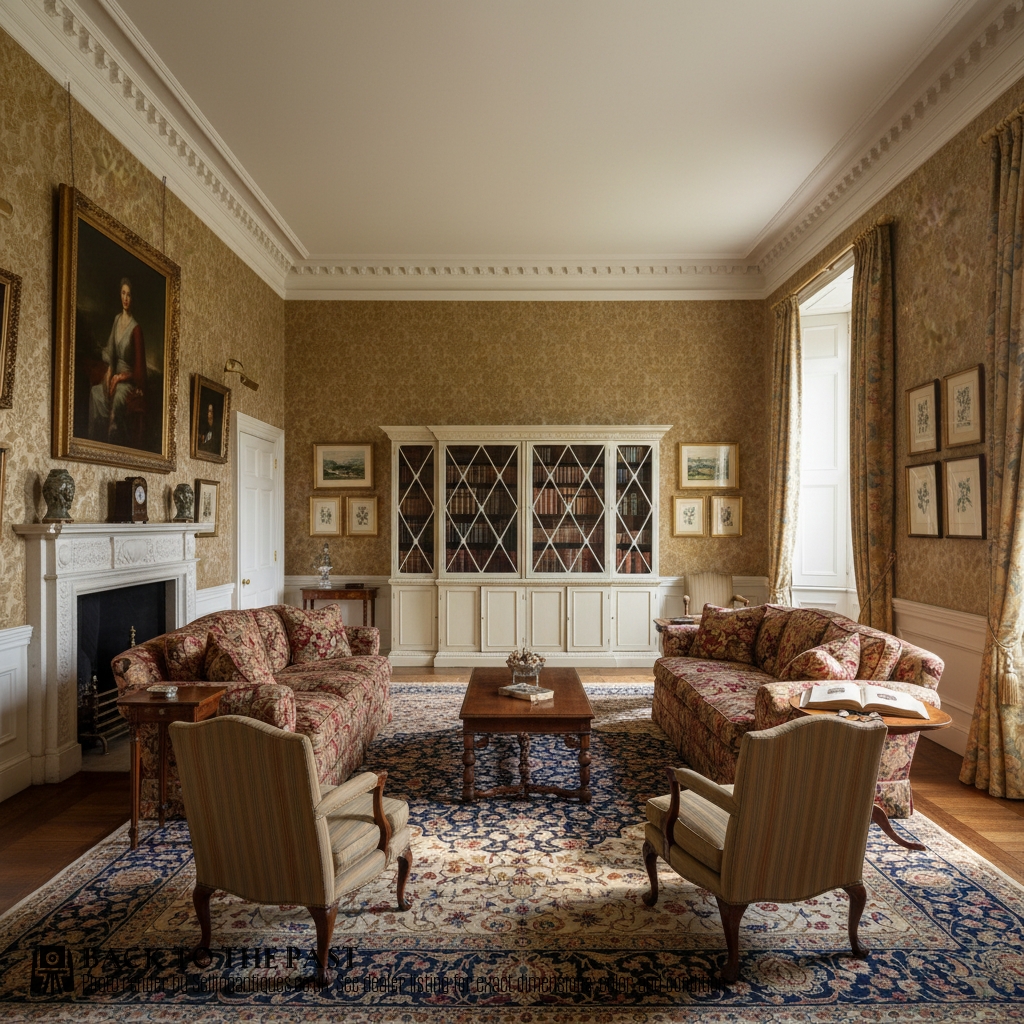
Glazed Breakfront Cabinet
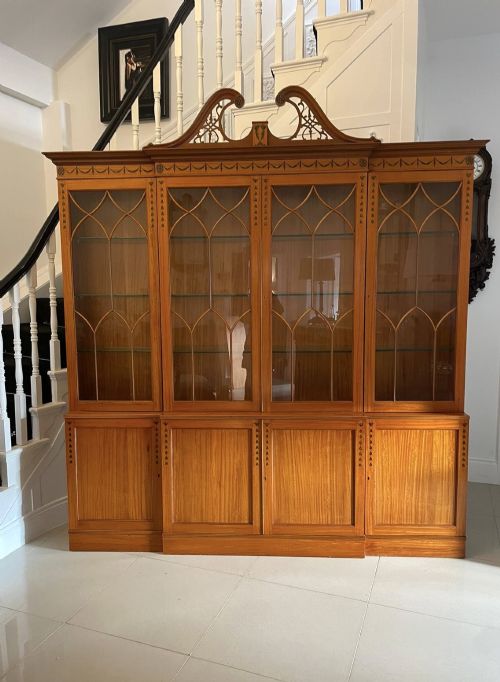
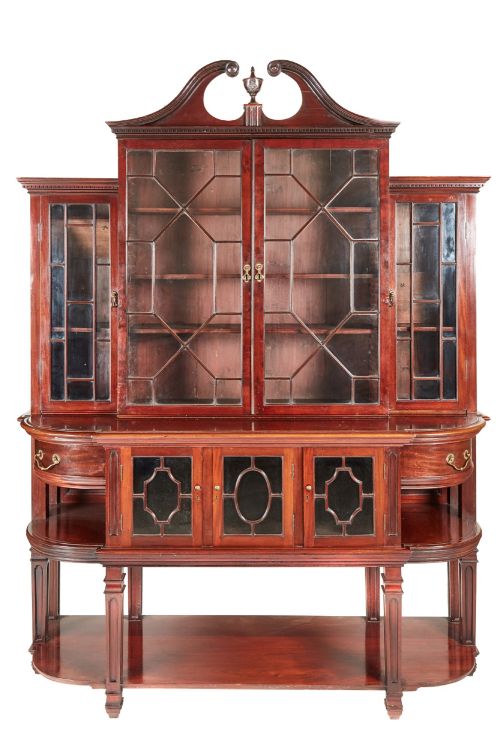
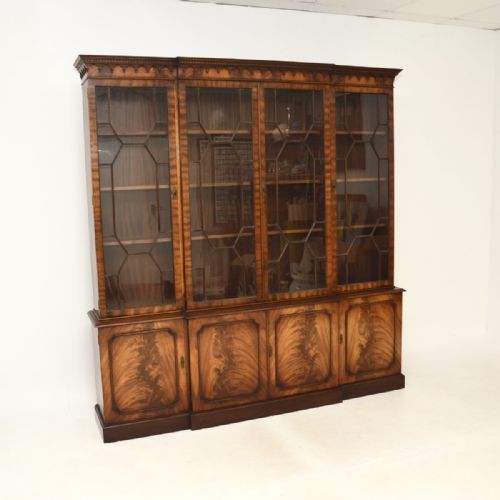
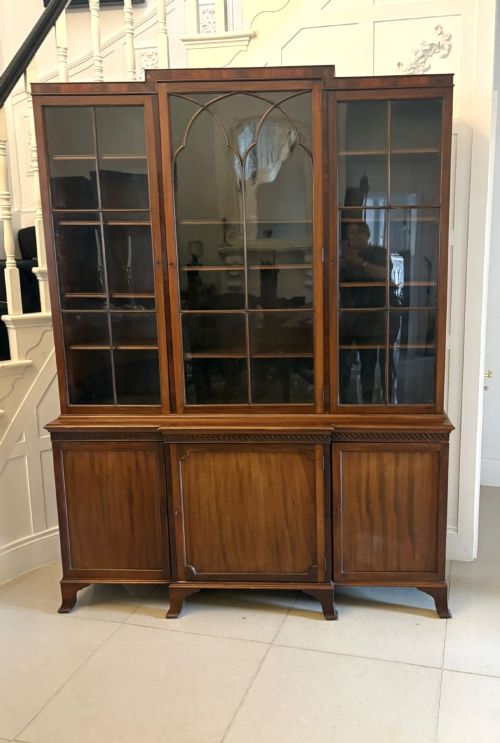
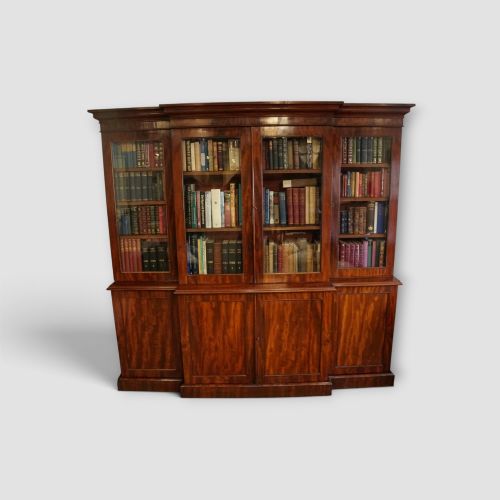
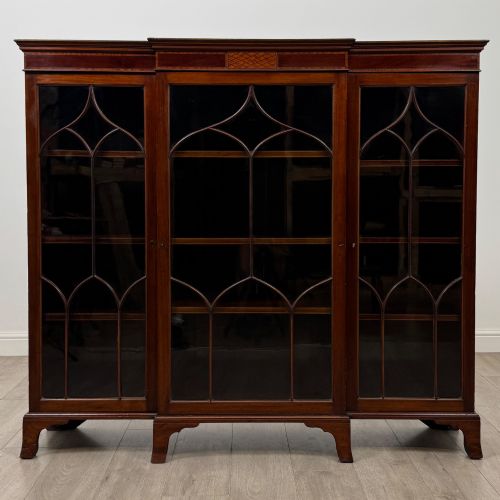
A glazed breakfront cabinet stands as a commanding piece of architectural furniture, characterised by a central section that projects forward from flanking wings. These items function primarily as bookcases, display cabinets, or library furniture to house sizeable collections behind glass doors.
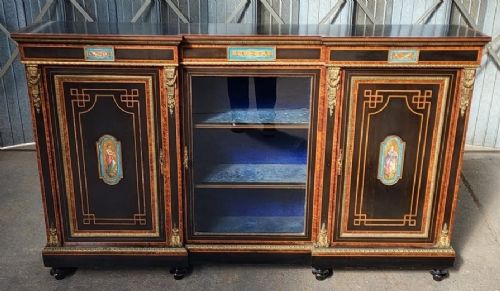
The version most commonly encountered on this page originates in the nineteenth century, spanning Victorian and Edwardian periods, frequently rendered in mahogany, walnut, or satinwood. Examples also take the form of credenzas and side cabinets, combining wood-framed glass panels with lower wooden cupboards.
The form adapts across different stylistic revivals, including Regency, Sheraton Revival, and Georgian style. Buyers frequently select these sizeable forms to anchor a principal room, merging utilitarian storage with formal display.
What varies in quality
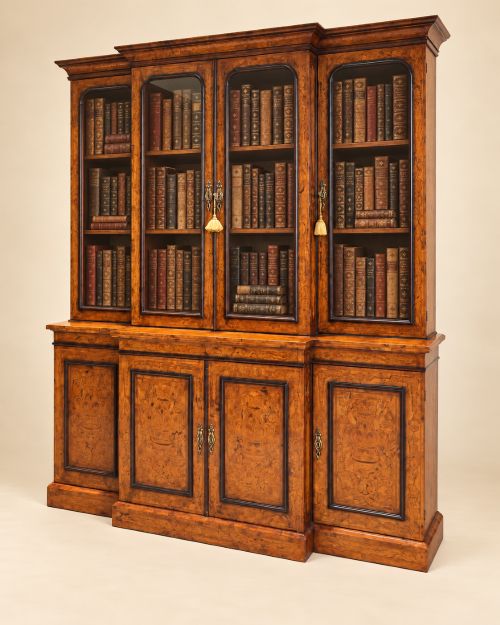
The distinction between tiers rests upon the selection of timber veneers and the intricacy of the joinery within the glazing bars and projecting sections. Superior examples employ carefully matched burr walnut, satinwood, or figured mahogany that flows symmetrically across the doors.
Refinement in secondary details, such as hand-painted decoration, fire-gilt ormolu mounts, and original glass, elevates the standard of construction. The precision of the breakfront profile and the integration of internal shelving further separate standard production from exceptional library pieces.
Listings feature mahogany, burr walnut, and satinwood alongside decorative elements such as ormolu mounts and marquetry inlay.
Jas Shoolbred·Collinson & Lock·Gillows·Edwards & Roberts·Lamb of Manchester
The Glazed Breakfront Cabinet Glossary
- Breakfront
- A cabinet design where the central section projects forward from the two flanking ends. This architectural layout creates visual depth across the facade.
- Astragal
- Moulding profiles used to hold panes of glass within a sash door. They divide large glazed areas into smaller geometric compartments.
- Credenza
- A low-profile side cabinet featuring cupboards, which often incorporates glass display sections or marble tops. The form evolved during the nineteenth century.
- Ormolu
- Gilded bronze mounts applied to furniture for decorative effect. The technique involves a mercury-gilding process on cast bronze.
- Marquetry
- Inlaid patterns formed by fitting contrasting veneer pieces into a wooden ground. Craftsmen use various tinted woods to create pictorial or geometric designs.
Glazed Breakfront Cabinet: Frequently Asked Questions
What is a breakfront cabinet?
A breakfront cabinet is a large storage or display unit featuring a central section that extends further forward than the flanking sides. This stepped configuration breaks up the flat facade to create architectural depth.
Cabinetmakers utilised this layout across bookcases and credenzas to provide visual hierarchy within formal rooms. The projecting centre often houses wider shelving or primary display doors.
How are these cabinets dated?
Dating relies on identifying timber choices, construction techniques, and stylistic revival motifs that align with specific historical periods. Nineteenth-century examples often display Victorian proportions and dense mahogany or walnut framing.
Later Edwardian and Sheraton Revival pieces tend to feature lighter satinwood with painted decoration or marquetry. Examining the interior timber linings and backboards helps confirm the manufacturing era.
Where should I place one?
These large cabinets require significant wall space and substantial ceiling height to accommodate their monumental proportions. They function best as focal points in dining rooms, libraries, or spacious reception areas.
Because glass doors dominate the front elevation, position the piece away from direct sunlight to protect internal book bindings and displayed objects. Ensure the floor can support the combined weight of timber and glass.
How do I care for the wood?
Maintain timber surfaces by dusting with a soft, dry cloth and avoiding silicone-based polishes that can degrade historic finishes. Keep the furniture away from radiators and fireplaces to prevent the veneer from drying and lifting.
Occasional application of appropriate microcrystalline wax helps nourish antique polished surfaces. Stable indoor humidity protects both the structural joints and decorative wooden veneers.