



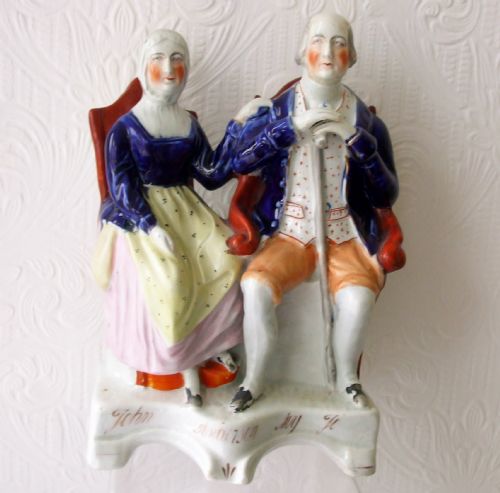
Glazed Earthenware Figurines
Glazed earthenware figurines bring the colourful character of nineteenth-century parlours and twentieth-century studios straight into your display space.
Glazed Earthenware Figurines
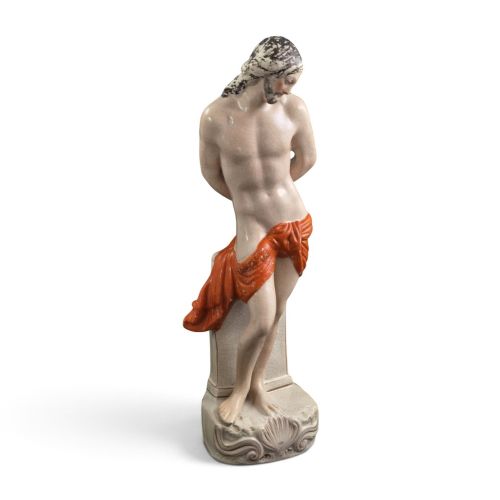
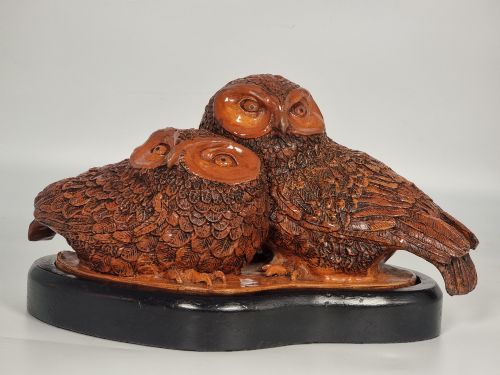
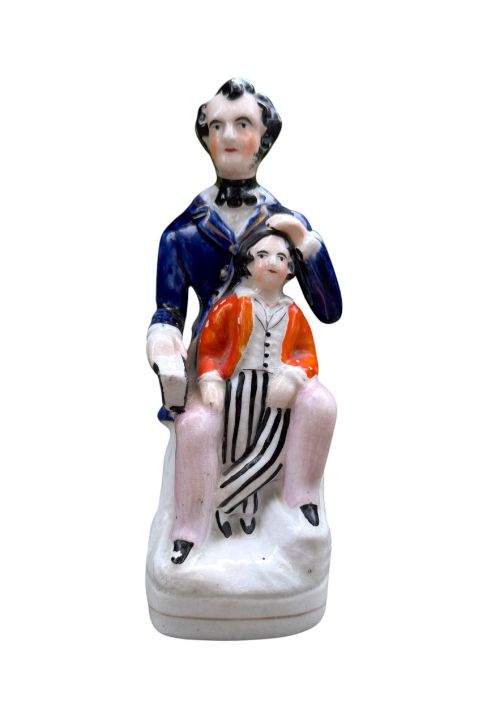
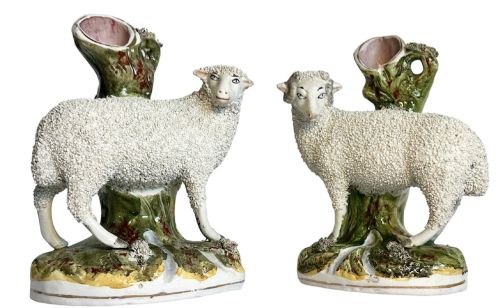
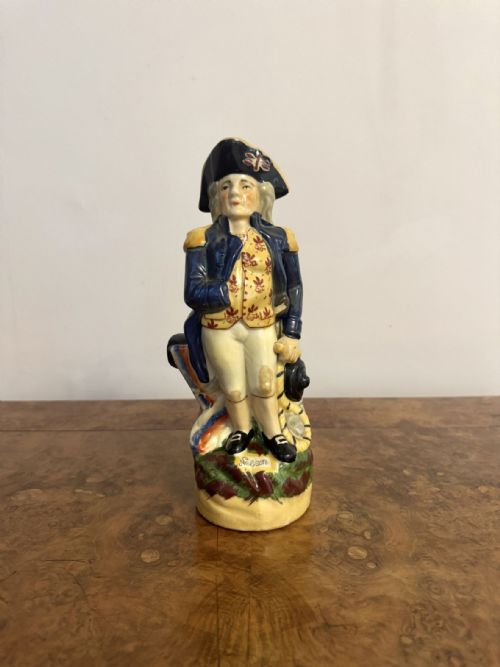
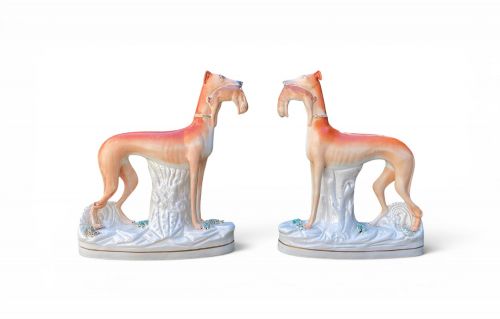
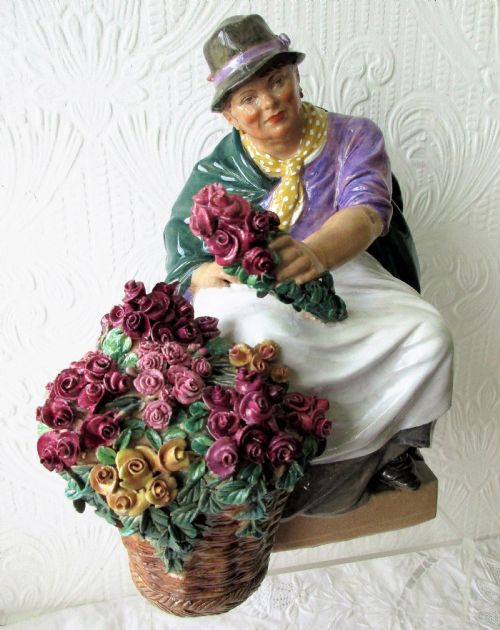
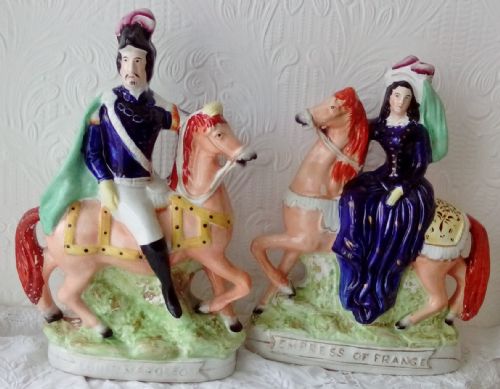
Glazed earthenware figurines encompass a diverse range of ceramic sculpture, from Victorian Staffordshire portrait pieces and animal pairs to later studio pottery works. The most frequent encounters on this page are nineteenth-century Staffordshire figures depicting literary characters, historical figures, and domestic animals like spaniels and greyhounds.
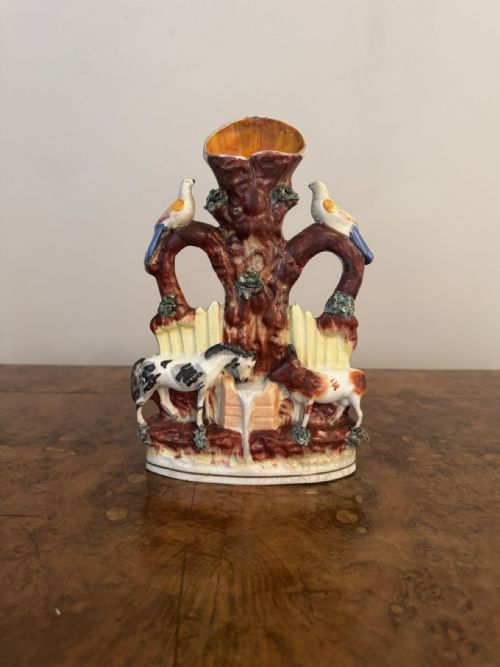
Makers produced these decorative objects for mantels and shelves, shaping them as flatbacks, spill vases, and Toby jugs. Alongside English output, the selections include French faience, Dutch Delftware, Italian majolica, and twentieth-century studio pieces.
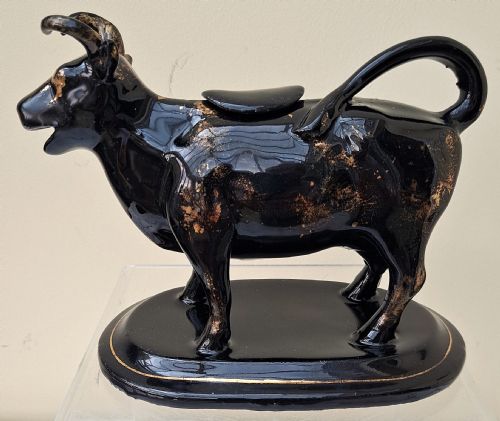
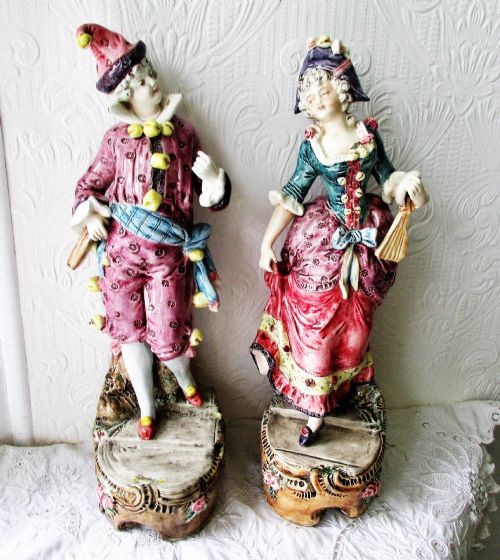
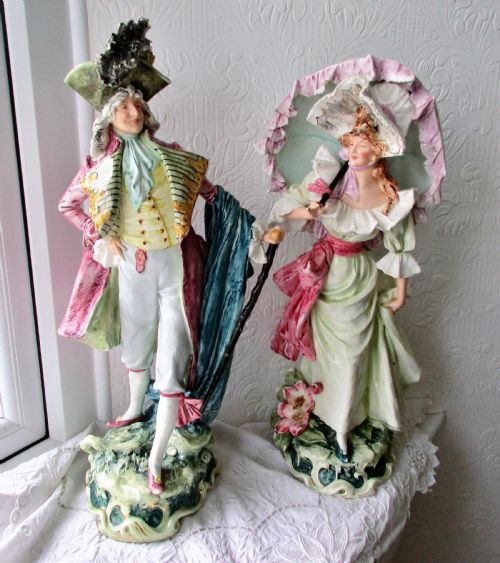
The aesthetic stretches from traditional Victorian portraiture and French Rococo Revival styles to Art Deco expressions. Buyers encounter everything from utilitarian cow creamers to ornate religious groupings and whimsical gnomes.
How They Were Made
Potters shaped these earthenware bodies using moulds or hand-sculpting techniques before applying initial coats of glaze and enamel paint. Many examples utilise lead glazes or treacle glazes to achieve glossy, protective surface sheens.
Enamel colours and cobalt blue details were frequently painted over or under the glaze, sometimes requiring multiple firings in the kiln. Bases were often left unglazed or finished with ebonised touches depending on the origin and period.
Listings feature earthenware figurines spanning the Victorian period through to the 1930s, incorporating studio pottery and Chinese Tang Dynasty styles.
What Varies in Quality
The depth and consistency of the glaze application also separate standard production wares from superior examples. Well-preserved glaze surfaces retain their original lustre without excessive crazing or dull patches.
Charles Vyse·Thomas Parr·George Kemper
The Glazed Earthenware Figurines Glossary
- Flatback
- A figurine moulded with a finished front and a plain, unpainted reverse intended to sit flush against a wall or mantelpiece. This construction method saved on materials and manufacturing time for nineteenth-century Staffordshire potters.
- Spill Vase
- A hollow ceramic figure incorporating an attached cylindrical holder designed to store wooden tapers for lighting pipes or candles. These dual-purpose objects combined domestic utility with decorative display.
- Toby Jug
- A pottery jug modelled in the shape of a seated, stout person, usually wearing eighteenth-century attire and holding a mug or jug of ale. They frequently depict historical figures or stock characters.
- Pearlware
- A refined type of earthenware developed by English potters featuring a pale whitish glaze that pooled slightly blue in crevices. It bridged the gap between creamware and true porcelain.
- Treacle Glaze
- A dark, translucent brown glaze containing manganese that produced a rich, glossy finish on nineteenth-century ceramics. It was particularly popular for Staffordshire animal figures and lion models.
Glazed Earthenware Figurines: Frequently Asked Questions
What are Staffordshire flatback figures?
Staffordshire flatbacks are ceramic sculptures produced in the Midlands during the nineteenth century, designed specifically to be viewed from the front on a mantelpiece.
Potters left the backs unglazed and largely unpainted to reduce production costs while creating substantial decorative displays for middle-class homes.
How do I date an antique ceramic figure?
Dating relies on stylistic clues, clothing details, glaze compositions, and manufacturing marks where present. Nineteenth-century pieces often reflect contemporary political events, literary characters, or reigning monarchs.
Comparative study of base treatments and colour palettes helps narrow the period of production between Georgian, Victorian, and later studio eras.
What is the difference between earthenware and porcelain?
Earthenware is a porous, opaque ceramic fired at lower temperatures, requiring a protective glaze to hold liquids and achieve a smooth surface. Porcelain is vitreous, non-porous, and fired at much higher temperatures until it becomes semi-translucent.
Figurines made from earthenware, such as Staffordshire and majolica pieces, tend to have heavier walls and softer bodies than porcelain equivalents.
How were spill vases used?
Spill vases served a practical household function before the invention of safety matches by holding thin wooden spills used to transfer flames from the hearth to candles or lamps. The hollow upright cylinder formed an integrated part of the figurine's sculpted background.
They allowed households to combine decorative mantel ornaments with everyday utility.
Where should I display glazed earthenware figurines?
These ceramic pieces suit stable surfaces away from direct sunlight and high moisture areas to protect their enamel paints and glazes. Mantels, bookshelves, and enclosed display cabinets offer ideal environments where their colours and forms can be appreciated at eye level.
Pairing matching animals or portrait figures creates a balanced visual arrangement.