



Folk Art Pottery Figures
Folk art pottery figures bring the character of past centuries straight to your shelves, capturing traditional crafts with handmade charm.
Folk Art Pottery Figures
Folk art pottery figures encompass a diverse range of hand-modelled ceramic sculptures, decorative ceramics, and character jugs created across the nineteenth and twentieth centuries. These pieces reflect regional traditions and domestic artistry from Britain, France, Peru, and the Netherlands.
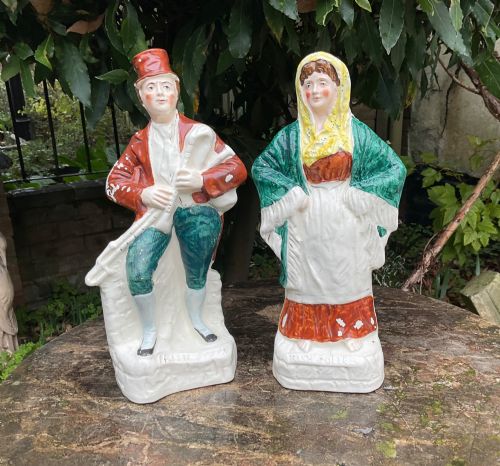
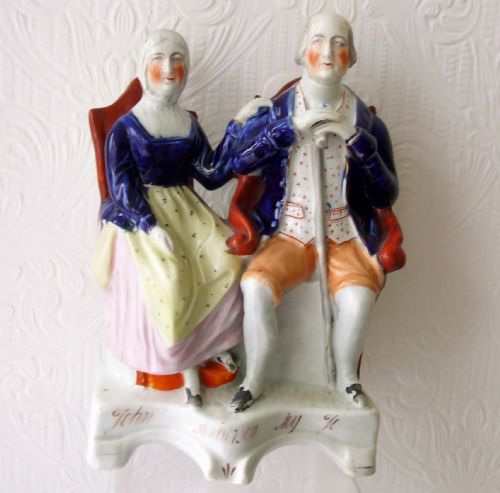
Buyers will most frequently encounter nineteenth-century English Staffordshire figures, including pairs of pipers and colleens, literary characters like Robin Hood, and equestrian portraits such as highwayman Tom King. These traditional Staffordshire pieces dominate the selection alongside continental European faience and primitive Scottish pottery.
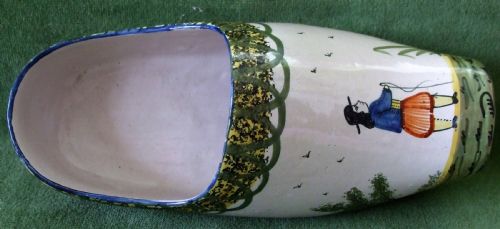
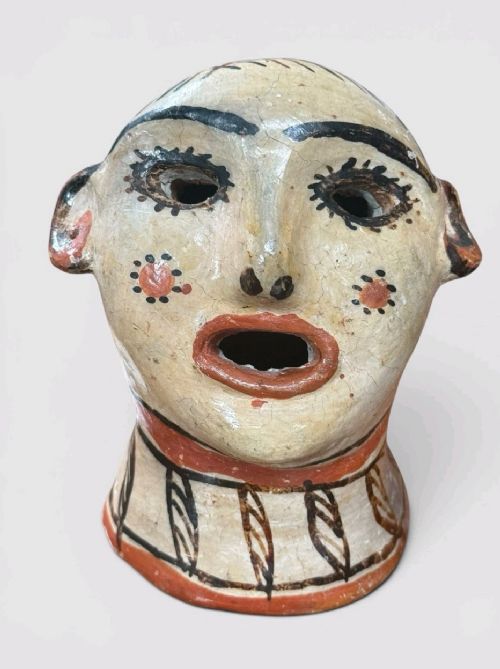
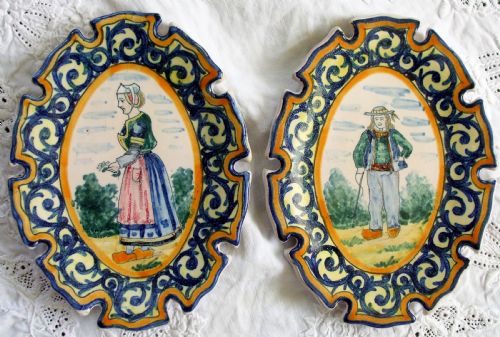
The category also stretches to include French faience sabots and pin trays, Peruvian clay head sculptures, and glazed ceramic animal sculptures originating from Normandy. Each style carries distinct local techniques and subject matter rooted in everyday rural life and popular culture.
Materials and Techniques
Continental workshops, such as those producing Quimper faience or Dutch pottery, employed tin glazes and specialised enamel painting techniques. Meanwhile, traditional Staffordshire potters relied on straightforward earthenware bodies finished with bright hand-painted details and glossy lead glazes.
Folk Art Pottery Figures Retail Price Guide 2026
Typical asking prices for folk art pottery figures among the pieces listed under this phrase on Sellingantiques today, from the lower quarter to the upper quarter. They describe what is for sale here now, not the wider market.
Highwayman Tom King immortalised in clay proves that even nineteenth-century criminals deserved a permanent spot on the Victorian mantelpiece.
Evaluating Quality and Execution
The integrity of the glaze and the preservation of the original enamel paint significantly influence the overall appeal of a piece. Finer items retain their rich surface lustre and clear pigment without excessive fading or loss of decorative detail.
The Folk Art Pottery Figures Glossary
- Earthenware
- A porous type of pottery fired at relatively low temperatures, forming the basic body for the vast majority of these traditional figures.
- Flatback
- A style of Staffordshire pottery figure designed to be placed against a wall or mantelpiece, leaving the reverse side unpainted and flat.
- Lead Glaze
- A glossy surface coating applied to pottery before firing, providing a protective waterproof layer that enhances the underlying colours.
- Faience
- European tin-glazed earthenware, most commonly associated with French production centres like Quimper and featuring painted decorative motifs.
- Character Jug
- A specialised ceramic vessel shaped to represent the head and shoulders of a recognizable person or a traditional archetypal figure.
Folk Art Pottery Figures: Frequently Asked Questions
What are folk art pottery figures?
These pieces are hand-modelled ceramic sculptures and decorative figures created by regional makers, often depicting local characters, animals, and historical subjects.
They reflect the domestic traditions and popular visual culture of communities in Britain, France, Peru, and the Netherlands during the nineteenth and twentieth centuries.
How were Staffordshire figures displayed?
Victorian Staffordshire figures with flat backs were traditionally arranged on mantelpieces, shelves, and sideboards to brighten domestic interiors.
Pairs of figures, such as pipers or literary characters, were often placed symmetrically to anchor a fireplace display.
How do I identify French Quimper pieces?
French Quimper items typically display characteristic hand-painted regional figures and floral motifs executed in tin-glazed faience.
Many of these pieces are marked with initials or studio signatures associated with traditional pottery workshops in Brittany.
Are these figures glazed?
Most of these ceramic pieces feature either a clear lead glaze or an opaque tin glaze applied to seal the clay body.
This glassy coating protects the underlying enamel paint and gives the figures their characteristic surface shine.