
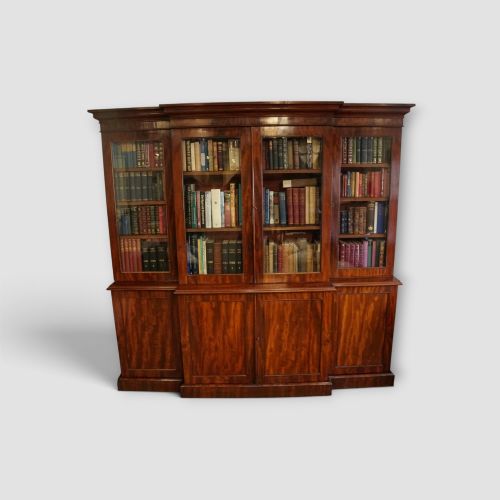
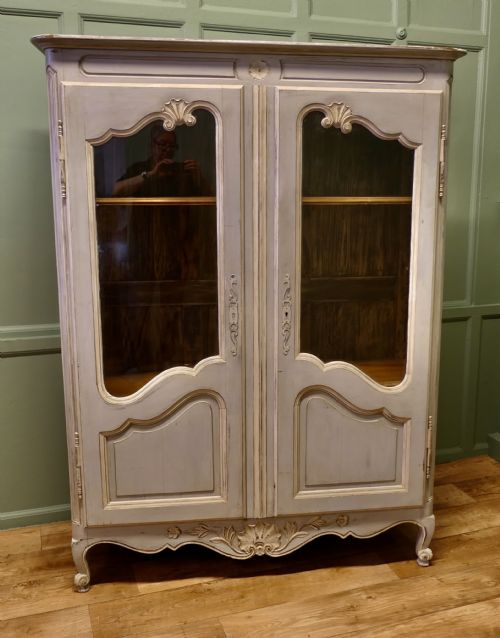
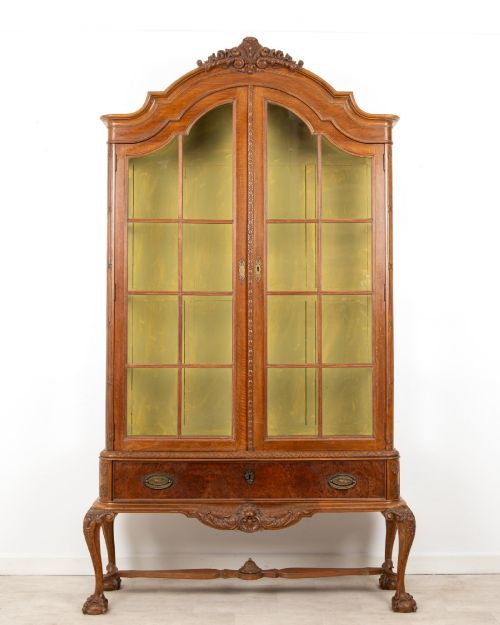
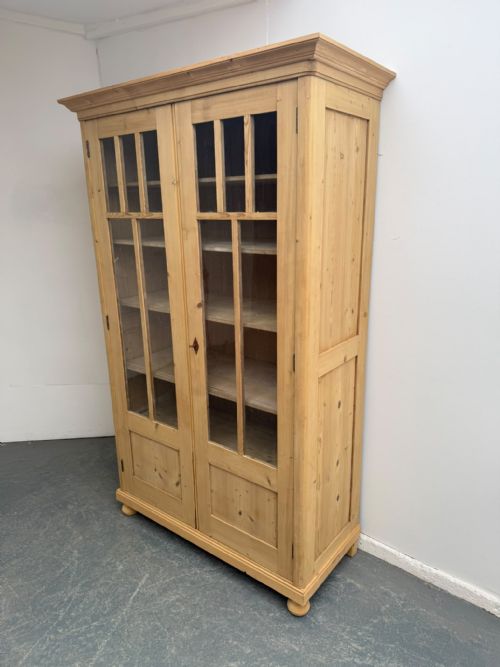


Glazed Double Door Cupboard
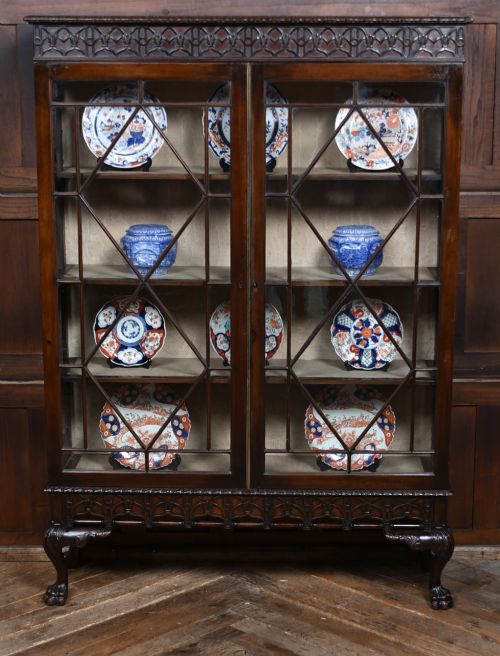
These glazed double door cupboard examples are timber storage and display pieces designed to showcase books and objects, spanning the Victorian and Edwardian eras.
Glazed Double Door Cupboard
When searching for a glazed double door cupboard, you encounter a variety of forms including display cabinets, bookcases, vitrines, and pier cabinets dating from the nineteenth and early twentieth centuries. The pieces on this page are predominantly Victorian and Edwardian examples made from woods such as mahogany, walnut, and oak.
You also find revival styles such as Chippendale Revival, Queen Anne Revival, and French Provincial pieces alongside continental rosewood cabinets and painted finishes. These items function primarily to house collections while keeping them visible through glass panels.
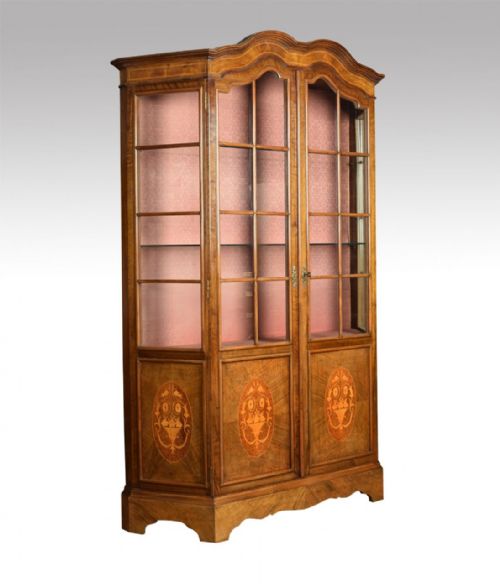
The inventory ranges from tall breakfront bookcases and secretaire bookcases to smaller two-door cabinets and corner cupboards. Most listings combine shelving with glazed upper doors, sometimes incorporating lower wooden doors or inlaid marquetry.
How they were made
Cabinet makers utilised dense hardwoods including mahogany, walnut, and oak as structural foundations, frequently applying figural veneers and marquetry inlay to exterior surfaces. Brass hardware and ormolu mounts provide functional hinges, locks, and decorative accents.
Glass panels are fitted into wooden framework doors to create the display function, while secondary woods line the interiors and drawer construction. Surface treatments vary from polished wood finishes to painted applications and wax treatments.
Design styles span Victorian, Edwardian, Chippendale Revival, Queen Anne Revival, French Provincial, and French Rococo.
What varies in quality
Quality in these cabinets rests upon the selection of timber veneers, the precision of marquetry inlay, and the finesse of carved details such as those seen in Chippendale and Queen Anne revival pieces. Superior examples demonstrate careful grain matching and well-proportioned architectural cornices.
The integrity of the original glass, the weight and finish of brass or ormolu mounts, and the solidity of internal shelving distinguish standard utility furniture from finer cabinet-maker output.
The Glazed Double Door Cupboard Glossary
- Breakfront
- A cabinet design where the central section projects forward from the flanking sections. This configuration adds architectural depth to large bookcases.
- Vitrine
- A glass-sided display cabinet designed primarily for the exhibition of porcelain, curiosities, and small objects. These pieces often feature glazed sides as well as front doors.
- Marquetry
- Decorative veneer work formed by fitting together small pieces of wood, shell, or ivory to create pictorial or geometric patterns on cabinet surfaces. It appears frequently on walnut display cabinets.
- Pier Cabinet
- A low or tall cabinet built specifically to stand against the wall space between windows. These are common in Victorian drawing rooms.
- Secretaire Bookcase
- A combination bookcase featuring a fitted pull-out writing drawer with a drop-front desk surface. This form merges a bureau with upper display shelving.
Glazed Double Door Cupboard: Frequently Asked Questions
What is a glazed double door cupboard used for?
These cabinets serve primarily to store and display books, ceramics, and decorative objects while protecting them from dust. The glazed doors allow contents to remain visible in domestic rooms.
Historically, variations like pier cabinets and vitrines populated Victorian and Edwardian drawing rooms and libraries as both status symbols and practical storage.
How do I tell Victorian from Edwardian cabinets?
Victorian cabinets, dating from the nineteenth century, often feature heavier dark timbers, rich figured walnut veneers, and ornate marquetry or carving. They frequently lean towards revival styles.
Edwardian pieces, from the early twentieth century, tend to exhibit lighter mahogany frames, delicate inlay work, and slightly more restrained proportions while continuing eighteenth-century revival themes.
Are these cabinets suitable for small rooms?
Many options include slim pier cabinets, corner cupboards, and lower-profile display pieces that fit efficiently into restricted floor plans. Double-door formats require clearance for the swing of both doors.
Measuring the available wall space and checking the depth of the cabinet ensures the piece does not overwhelm the room.
How do I care for antique wood and glass?
Maintain timber surfaces by applying appropriate wax polish sparingly and avoiding direct sunlight to prevent veneer fading and wood drying. Glass panels clean easily with standard glass cleaner applied to a cloth.
Check brass hinges and locks periodically to ensure doors hang correctly without putting undue stress on the glass frames.