
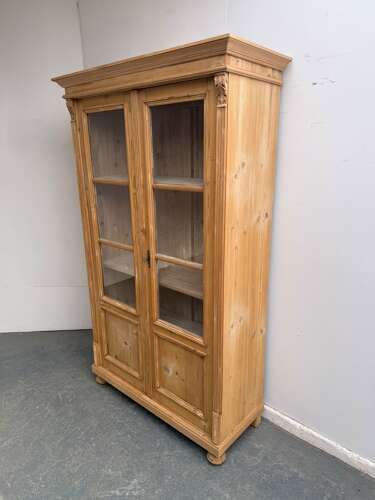
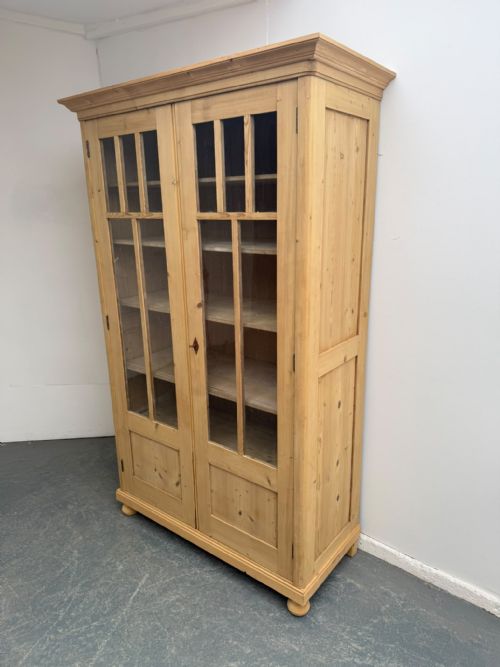


Large Glazed Pine Bookcase
A large glazed pine bookcase offers generous display and storage, bringing timber warmth and architectural presence to a room.
Large Glazed Pine Bookcase
When you search for a large glazed pine bookcase, you are looking at substantial storage furniture built to house libraries and display collections behind glass doors. These pieces span periods from the Georgian era through the Victorian period and into the early twentieth century, reflecting both English country house workshops and broader European cabinetmaking traditions.
Beyond standard shelving units, the selection frequently incorporates specialised forms like secretaire bookcases with drop-down desks and display cabinets featuring wire mesh panels. These substantial items serve as focal points in large rooms, combining utilitarian origins with decorative glasswork.
What varies in quality
The distinction between ordinary and exceptional pieces lies in the proportion of the architectural design, the finesse of the glazing bars, and the integrity of the timber. Finer examples display balanced proportions, delicate cornices, and original glass panes rather than modern replacements.
Quality also rests on the originality of the hardware, the condition of the backboards, and whether the painted surface is historic or recent. Pieces retain greater character when they preserve their original brass fittings, working locks, and authentic patination accumulated over generations.
Materials across the inventory include standard pine, pitch pine, glass, brass, iron, wire mesh, and historic paint.
The Large Glazed Pine Bookcase Glossary
- Breakfront
- A cabinet design where the central section projects forward from the flanking wings, creating a distinct architectural rhythm. This layout adds depth and visual interest to large library pieces.
- Secretaire
- A cabinet incorporating a pull-out or drop-front drawer that serves as a writing desk, often fitted with small internal drawers and pigeonholes. It combines storage with a concealed workspace.
- Glazing bars
- The wooden or metal strips that divide a glass window into smaller panes within a door. Fine glazing bars contribute significantly to the visual lightness of a large cabinet.
- Pitch pine
- A durable, resinous softwood with a strong, prominent grain pattern frequently used in nineteenth-century cabinetry. It offers greater weight and hardness than standard white pine.
- Cornice
- The ornamental moulding fixed to the top edge of a piece of furniture. It provides a finished transition between the tall body of the bookcase and the ceiling.
Large Glazed Pine Bookcase: Frequently Asked Questions
How do I date a pine bookcase?
Dating relies on examining construction methods, nail types, drawer joinery, and stylistic details such as cornices and glazing bar thickness. Georgian pieces generally display hand-cut dovetails and lighter framework, while Victorian examples often feature heavier proportions and machine-sawn elements.
Changes in paint layers and hardware also provide clues to age. Comparing the carcass construction against known regional styles helps narrow the period of manufacture.
Are these bookcases suitable for heavy books?
Pine bookcases were originally built to hold substantial libraries, so their internal shelves are generally robust. However, the weight capacity depends on the thickness of the individual shelves and whether they are adjustable or fixed.
Heavier volumes benefit from being placed on fixed lower shelves rather than long, unsupported adjustable spans. Checking the condition of the shelf supports ensures safe loading.
Can I paint or wax a bare pine bookcase?
Many pine bookcases are listed in a raw state or prepared for wax and paint, allowing you to finish them to suit your interior. Applying traditional beeswax nourishes the timber and develops a soft sheen over time.
If you prefer colour, breathable paints such as chalk paint or traditional milk paint adhere well to historic pine surfaces. Proper surface preparation ensures the finish bonds correctly with the softwood.
What is the difference between a dresser and a bookcase?
A kitchen dresser traditionally combines lower cupboards or drawers with open or glazed shelving above, originally designed for storing and displaying tableware. A bookcase focuses primarily on enclosed shelving behind glass doors for housing book collections.
Despite these traditional distinctions, many large painted pieces overlap in form, serving versatile storage roles in modern dining rooms or libraries.