


Glazed Ceramic Tiles
Glazed ceramic tiles bring centuries of painted pigment, moulded relief and tin-glazed earthenware directly into domestic interiors as panels, plaques and tables.
Glazed Ceramic Tiles
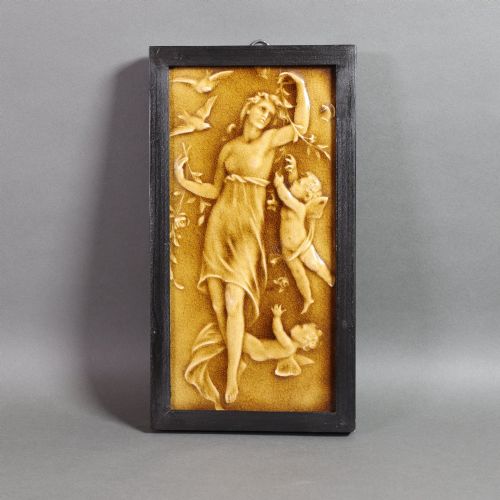
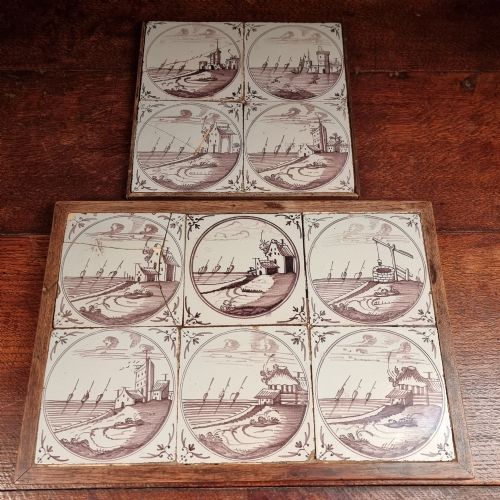
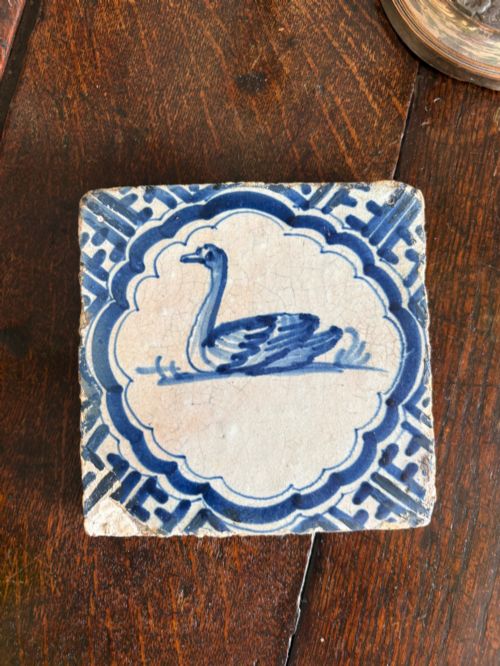
Glazed ceramic tiles encompass individual decorative pieces, framed wall plaques and mounted table tops produced across multiple centuries. You will encounter everything from hand-painted 17th Century Dutch Delft examples to late Victorian and Arts and Crafts pictorial panels.
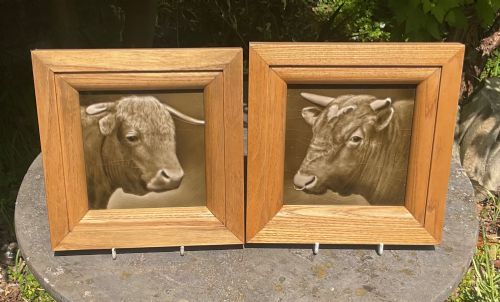
The selection ranges widely in form, featuring single geometric squares, figural wall plaques and architectural roof ornaments. Many items arrive mounted in wooden frames or integrated into furniture, showing how makers adapted wall ceramics for functional domestic use.
What varies in quality
Quality rests upon the crispness of the moulded relief, the precision of the hand-painted brushwork and the depth of the glaze. Superior pieces exhibit confident, expressive linework and harmonious pigment distribution without muddy pooling.
The skill of the individual hand painter or designated manufacturer dictates the distinction between standard utilitarian production and exceptional artistic plaques. Well-preserved surfaces retain their original gloss and clarity of colour across the entire pictorial composition.
Listings feature glazed ceramic tiles spanning from the 17th Century to the mid-20th Century, executed in earthenware and ceramic materials.
Sherwin and Cotton·Minton and Hollins·William de Morgan·Richard Ginori·Longwy
The Glazed Ceramic Tiles Glossary
- Tin glaze
- An opaque white glaze containing tin oxide, used as a smooth background for painted decoration on earthenware. This technique forms the surface of traditional Delftware.
- Cobalt pigment
- A blue metallic colourant applied under the glaze to produce deep blue tones during high-temperature firing. It is especially prominent on seventeenth and eighteenth-century Dutch tiles.
- Faience
- European tin-glazed earthenware decorated with coloured pigments. The term covers various glazed ceramic plaques and decorative wares.
- Polychrome
- Decoration employing multiple colours rather than a single monochrome pigment. Such palettes appear on Dutch plaques and Italian ceramic works.
Glazed Ceramic Tiles: Frequently Asked Questions
How do I hang a framed ceramic tile safely?
Heavy ceramic panels require secure picture wire attached to robust wooden framing rather than relying on the tile body itself.
Ensure wall fixings match the substantial weight of earthenware and wood combinations.
How do I distinguish Delft tiles from later copies?
Examine the edges and reverse for characteristic kiln stilt marks and the thinner, slightly irregular application of early tin glaze.
Authentic pieces show subtle variations in cobalt pigment and hand-painted brushwork unique to historical production.
How should I clean glazed ceramic surfaces?
Dust gently with a dry, soft cloth to remove surface particles without disturbing older glazes or exposed earthenware edges.
Avoid liquid cleaners and harsh chemicals that might seep into micro-cracks or historical repairs.