


Decorative Ceramic Tiles
These decorative ceramic tiles bring surface and colour into a room, turning plain walls and functional furniture into pieces of design.
Decorative Ceramic Tiles
When you search for decorative ceramic tiles, you encounter works spanning the eighteenth century to the Edwardian period, executed in varied regional traditions.
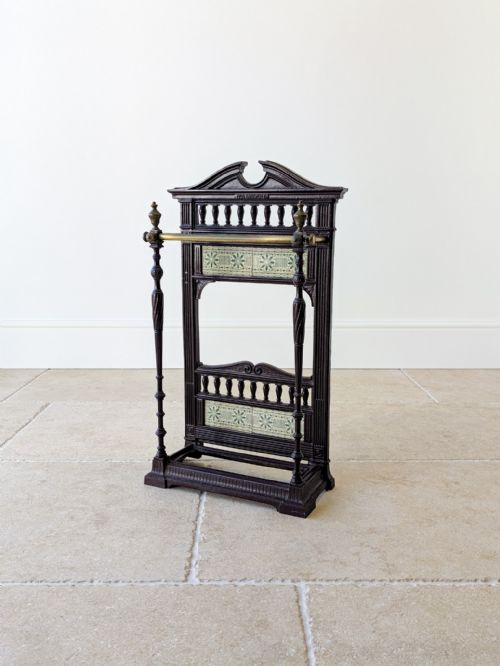
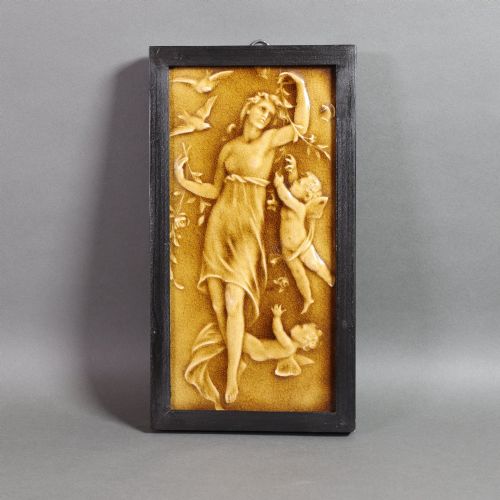
The pieces on this page appear as individual wall plaques, matched sets, and panels mounted within larger furnishings such as oak hall chairs, cast iron stick stands, and jardinieres.
Victorian and Edwardian examples dominate the selection, alongside older Dutch Delft earthenware and continental works from makers like Longwy.
How they were made
The makers utilised ceramic and earthenware bodies, finished with coloured glazes that fixed the pigments during firing.
Many of these tiles are integrated into structural mounts of brass, ebonised wood, cast iron, and oak, marrying fired earth with metalwork and cabinetry.
Listings feature items spanning the eighteenth century through to the Edwardian era, incorporating materials like brass, cast iron, and ebonised wood alongside ceramics.
What varies in quality
Quality rests upon the crispness of the moulding and the depth of the glaze, which determines how the surface catches the light.
The ambition of the design separates standard production from works featuring complex figural subjects like semi-nude maidens, ladies with ewers, or exotic birds and cheetahs.
Coalbrookdale·Minton Hollins·Sherwin and Cotton·Longwy
The Decorative Ceramic Tiles Glossary
- Earthenware
- Porous pottery fired at lower temperatures, commonly used as the body for glazed tiles.
- Delft
- Tin-glazed earthenware originating from the Netherlands, traditionally painted in blue or polychrome hues.
- Chinoiserie
- European decorative motifs inspired by Chinese art and design, seen frequently on eighteenth-century plaques.
- Ebonised
- Wood treated with a dark stain or finish to imitate ebony, providing a sharp contrast to inset ceramic panels.
Decorative Ceramic Tiles: Frequently Asked Questions
How were decorative ceramic tiles used?
These pieces served multiple functions, appearing as standalone wall art or mounted securely into functional items like hall stands, mirrors, and planters.
They added durable colour and artistic interest to high-traffic domestic spaces such as hallways and reception rooms.
How do I date a ceramic tile?
Dating relies on stylistic markers such as the painterly techniques of eighteenth-century Dutch delftware versus the mechanical precision of Victorian industrial production.
Maker marks stamped into the ceramic body or incorporated metal mounts often provide a more precise year or decade.
Are tiles set into furniture original?
In many period pieces, the ceramics were integrated by the manufacturer as part of the primary design, as seen in stick stands and jardinieres.
Examining the fit within the wood or cast iron frame helps confirm whether the panels belong to the structure.
How do I care for antique tiles?
The glazed surfaces require only gentle dusting with a dry cloth to prevent the accumulation of grime without harming the finish.
Avoid liquid cleaners that might seep into older unglazed edges or compromise the surrounding wood and iron mounts.