

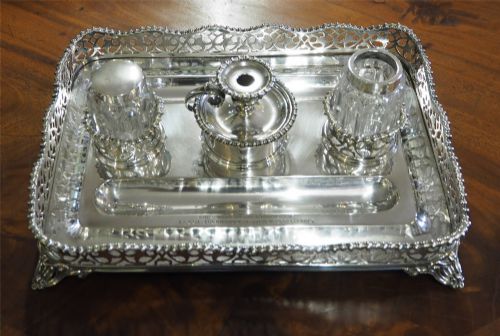
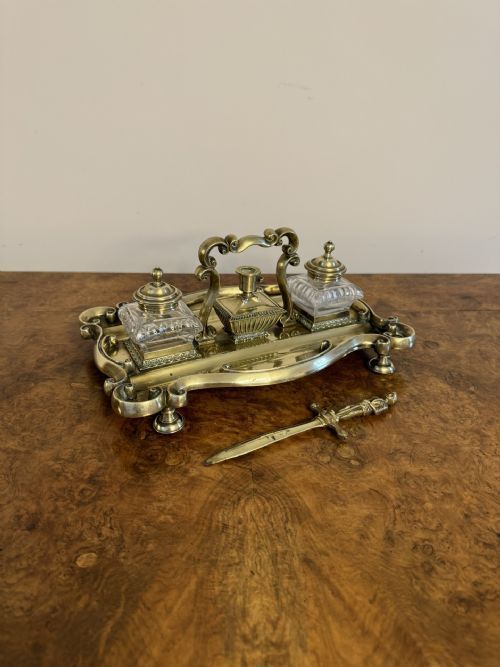
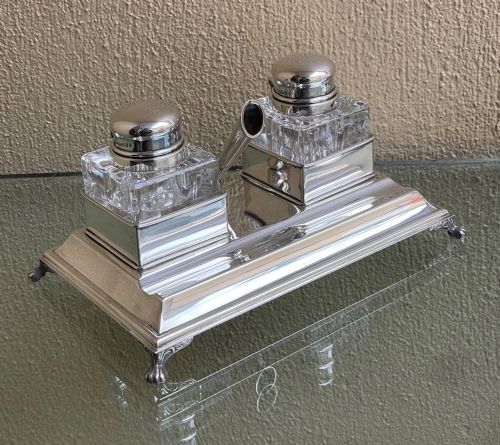
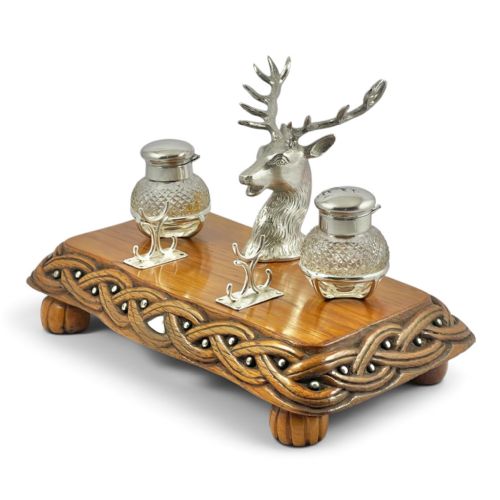
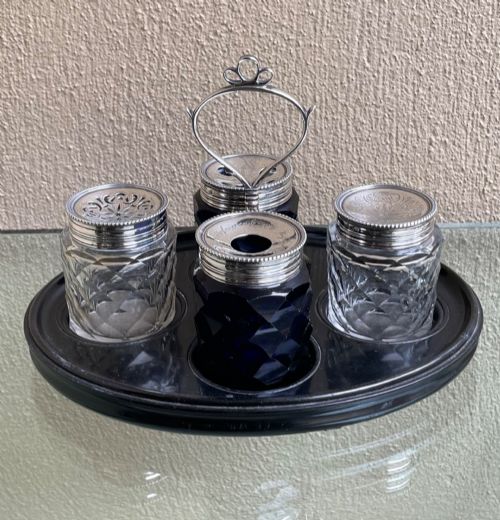
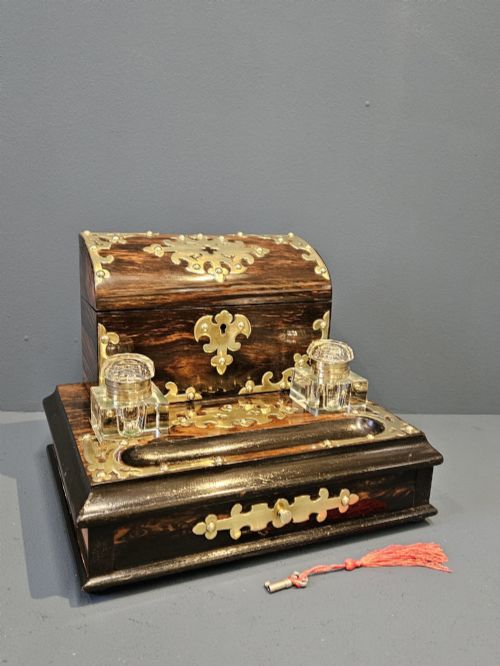
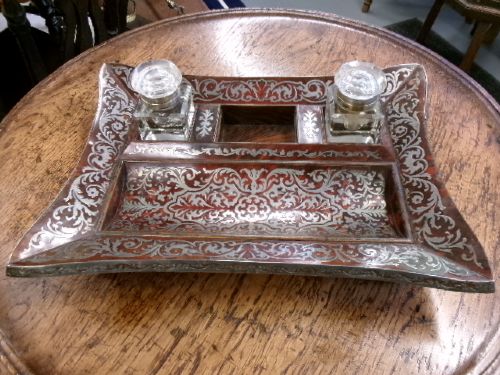
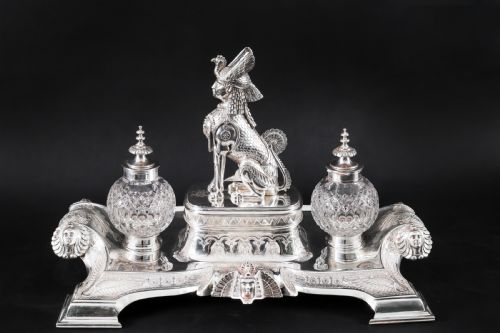


Glass Inkwell Inkstand
Glass inkwell inkstand pieces bring tangible history to the desk, combining functional writing vessels with decorative metal, wood, and glass craftsmanship.
Glass Inkwell Inkstand
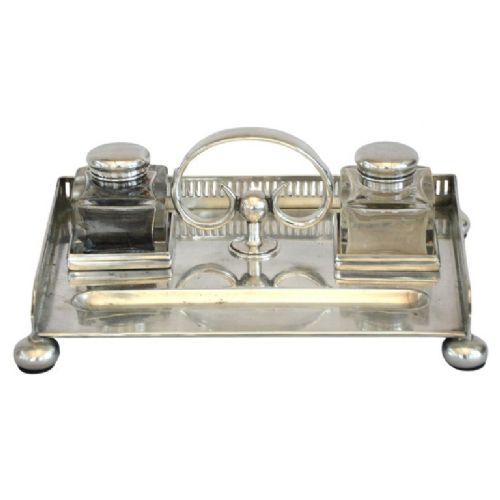
A glass inkwell inkstand combines a heavy glass ink vessel with a fitted tray, standish, or desk set designed to hold writing implements. Buyers searching for a glass inkwell inkstand will encounter diverse configurations ranging from simple portable travel bottles to elaborate multi-piece desk furniture.
The selections span distinct periods including Georgian, Regency, Victorian, Edwardian, and the Art Nouveau era. Materials frequently intersect, pairing clear or cut glass reservoirs with brass, sterling silver, silver plate, pewter, and exotic woods such as coromandel, walnut, and rosewood.
Materials and construction methods
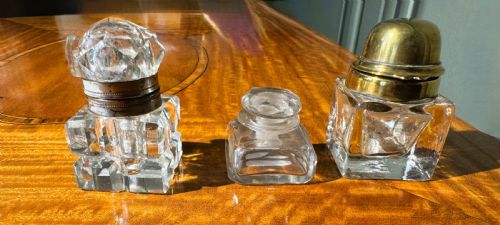
Glass components are formed through heavy moulding or intricate hand-cutting to create facets that catch the light, paired with metal collars, hinged lids, and mounts. Bases utilise timber foundations veneered in burr walnut, coromandel, or rosewood, often inlaid with brass, mother-of-pearl, or pewter.
Metal elements incorporate cast brass, ormolu, solid sterling silver, and silver plate over base metals. Artisans secured glass reservoirs into fitted wooden trays, metal stands, or leather-lined desk tidies using custom mounts, screw tops, and hinged silver collars.
Materials paired with glass inkwells include oak, coromandel, tortoiseshell, and hand-carved Irish bog oak shaped into figural animal forms.
Distinctions in manufacture and design
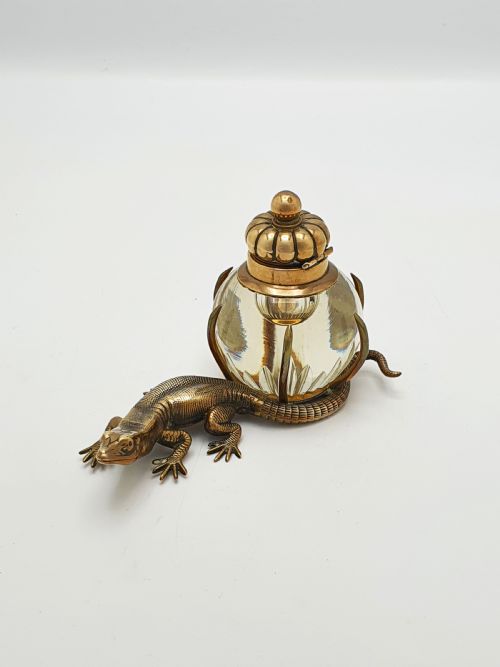
Quality reveals itself in the weight and clarity of the glass, the crispness of any hand-cut facets, and the substantial nature of the mounting metals. Finer examples display meticulous joinery in exotic woods, precise brass inlay, and fully articulated metal ornamentation such as figural mounts or weighted hinged lids.
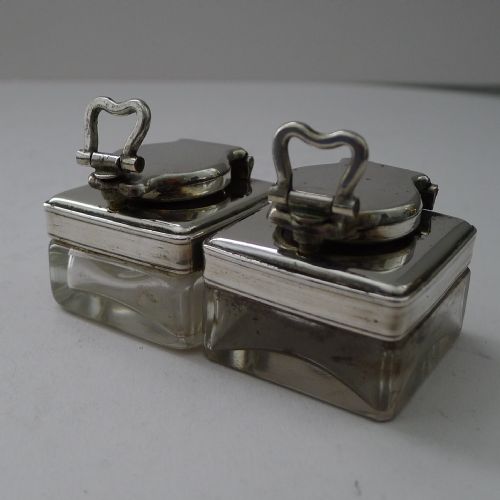
Makers elevate standard desk accessories through integrated accessories like chambersticks, pen trays, and matching double or triple glass ink bottles. The presence of fully functioning hinged silver lids with intact glass liners and original maker marks distinguishes exceptional production from standard commercial output.
Elkington·Walker And Hall·Wilkinson And Co·Tiffany And Co·Kralik·Loetz·Rupert Favell·Frederik Haberling
The Glass Inkwell Inkstand Glossary
- Standish
- A portable or stationary tray holding inkwells, pounce pots, and pen holders. It served as the central desk accessory for correspondence.
- Boulle work
- A form of marquetry using brass and tortoiseshell inlaid into wooden furniture surfaces. Named after a French cabinetmaker, it adds decorative flair to desk stands.
- Coromandel
- A dense, heavily figured East Indian timber featuring dark brown and black grain patterns. It was favoured by Victorian makers for luxury desk accessories.
- Cut glass
- Glass decorated by grinding facets or patterns into the surface using a wheel. This technique creates heavy, light-reflecting ink reservoirs.
- Sheffield plate
- An early composite material made by fusing a thin sheet of silver to a copper core. It predates electroplating and appears on older desk stands.
Glass Inkwell Inkstand: Frequently Asked Questions
What is the difference between an inkwell and an inkstand?
An inkwell is the individual vessel that holds the liquid ink, usually featuring a secure lid to prevent drying and spills. An inkstand, or standish, is the broader tray or chassis that houses one or more inkwells alongside space for pens and sealing wax.
While an inkwell can sit alone on a desk, an inkstand integrates multiple writing tools into a single cohesive station. Many larger Victorian and Georgian inkstands incorporate matching glass inkwells securely nestled into fitted wooden or metal bases.
How do I date an antique glass inkwell?
Dating relies heavily on manufacturing techniques, material combinations, and stylistic clues like hallmarks on silver mounts. Victorian pieces often feature heavy cut glass paired with coromandel wood or ornate brass castings, whereas Edwardian examples lean toward cleaner lines or specific Art Nouveau fluid motifs.
Examining the base of the glass and the construction of the hinged lid provides further evidence. Screw-top mechanisms often indicate travel inkwells from the mid-nineteenth century, while silver mounts frequently bear assay office stamps and date letters.
Were these used for travel or stationary use?
Both stationary and travel variants existed to serve different writing needs. Large desk stands remained fixed in a study or library, often featuring multiple heavy glass inkwells, pen trays, and integrated chambersticks.
Travel inkwells were engineered to be compact and secure, utilising screw tops and tight-fitting metal collars to prevent leaks inside luggage. Pairs of travel inkwells with protective leather or metal cases frequently date to the early Victorian period.
How should I clean glass inkwells without damage?
Careful maintenance preserves both the glass and any attached metal or wooden mounts. Warm soapy water and a soft bottle brush generally suffice for removing old dried ink residue from the interior of glass reservoirs.
Harsh chemical solvents and abrasive materials should be kept away from silver plate, brass, and delicate wood veneers. Metal mounts require gentle wiping, and moisture must be prevented from soaking into porous wooden stands.