


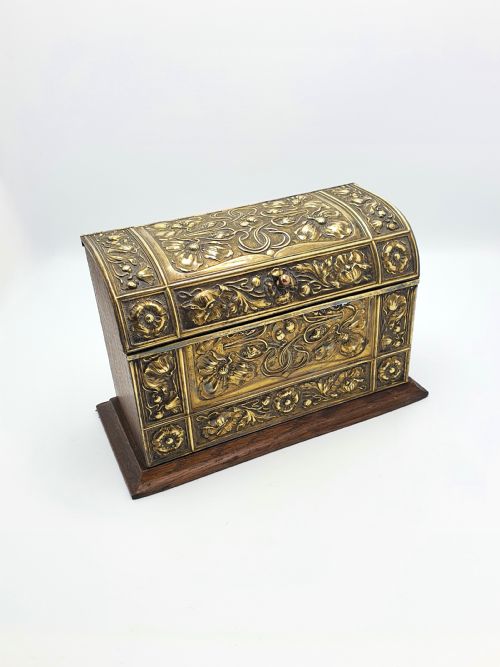


Edwardian Oak Stationery Box
These edwardian oak stationery box examples are sturdy desktop organisers that bring orderly charm to writing desks and studies.
Edwardian Oak Stationery Box
An edwardian oak stationery box is a tabletop cabinet designed to hold writing paper, envelopes, and correspondence. The pieces encountered here span late Victorian and Edwardian periods, stretching from the late nineteenth century into the early twentieth century.
Most examples take the form of table top cabinets, letter boxes, and fall front desks designed for domestic or country house use. They appear in golden oak and standard oak, often housing internal dividers and compartments for tidy desk management.
Materials and construction
The primary material across these pieces is solid or golden oak, frequently constructed with brass mounts, hinges, and bindings. Some examples incorporate glass ink bottles, copper accents, and paper or fabric linings.
Makers utilised architectural styles ranging from Arts and Crafts and Art Nouveau to Gothic Revival. Construction techniques include fall fronts, drop-front mechanisms, and revolving writing box designs.
The archive includes metamorphic stationery cases and rotating writing boxes alongside standard desktop cabinets.
Judging quality
Quality in an edwardian oak stationery box rests upon the selection of timber, particularly figured golden oak, and the robustness of the brass hardware. Superior examples display thoughtful joinery and integrated compartments that accommodate inkstands and date adjustments.
The distinction between standard utility boxes and finer specimens lies in decorative ambition, such as Arts and Crafts metalwork or Art Nouveau detailing. Well-preserved interiors with original glass ink bottles elevate a piece beyond basic desktop storage.
The Edwardian Oak Stationery Box Glossary
- Fall front
- A hinged panel that drops forward to reveal interior letter slots and pigeonholes. This mechanism allows quick access to writing materials while maintaining a tidy closed profile.
- Golden oak
- A warm, translucent timber finish popular during the late nineteenth and early twentieth centuries. It highlights the natural grain and medullary rays of the wood.
- Arts and Crafts
- A design movement prioritising traditional craftsmanship and simple forms. Objects from this style often feature honest construction and understated metal fittings.
- Letter box
- A desktop container specifically proportioned for receiving and sorting mail. These often include glazed panels or brass slit mounts for posting letters.
- Inkstand
- A fitted tray or stand holding ink bottles and pens, frequently incorporated into stationery cabinet designs. It provides a dedicated station for writing correspondence.
Edwardian Oak Stationery Box: Frequently Asked Questions
What is an edwardian oak stationery box?
An edwardian oak stationery box is a small wooden cabinet designed for organising writing paper, envelopes, and letters on a desk or table.
These pieces typically feature hinged lids, fall fronts, or interior partitions to keep correspondence neatly sorted.
How were these boxes used?
They served as desktop organisers in homes and country houses before the routine use of modern postal systems and email.
Users kept writing paper, inkstands, and incoming mail inside to maintain a tidy and accessible writing surface.
Do stationery boxes include ink bottles?
Some examples incorporate fitted inkstands complete with original glass ink bottles alongside letter compartments.
Others are dedicated strictly to stationery storage, relying on open racks or enclosed cabinet doors rather than ink wells.
Where should I place a stationery box?
These boxes suit placement on a wooden writing desk, library table, or hallway console where mail is sorted.
Their compact tabletop footprint allows them to function as both decorative period objects and practical storage.