



Giltwood Triptych Mirror
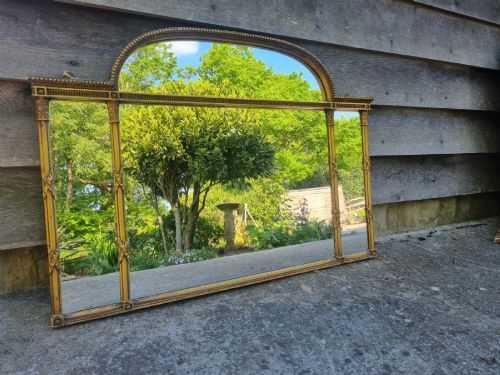
A giltwood triptych mirror brings three-panel symmetry and bright reflective light to a room, drawing the eye instantly.
Giltwood Triptych Mirror
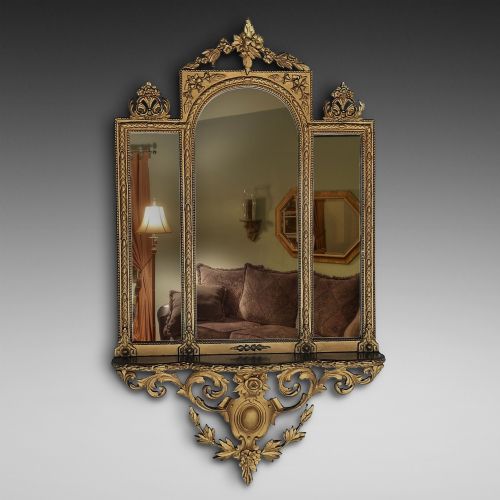
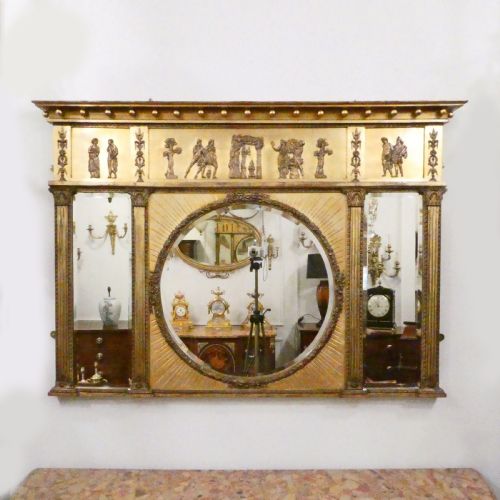
A giltwood triptych mirror is typically found as a wide overmantel mirror designed to sit above a fireplace, divided into three separate glass panels by slender columns or framing. Most examples seen here date from the nineteenth century, including the Regency period and later Victorian revivals.
You will also encounter dressing table mirrors and wall mirrors adopting the same three-panel arrangement. The form balances landscape proportions with ornate detailing such as acanthus decoration or figurative elements like birds.
The Regency style dominates the selection, accompanied by Rococo Revival and Neoclassical influences that reflect nineteenth-century taste. These pieces serve both to brighten dark interiors and to anchor a principal wall.
How they were made
Makers constructed the primary framework using timber such as walnut or ebonised wood, upon which they applied layers of gesso and plaster to build up relief ornamentation. Artisans then gilded the surfaces using gold leaf or applied composition for moulded details.
Mirror glass was set into the three distinct compartments, often framed by carved columns or intricate mouldings. The combination of carved wood, applied composition, and brilliant gilding produced the characteristic metallic sheen of these mirrors.
Listings feature periods spanning from the Regency era through the Victorian period and into the early twentieth century.
What varies in quality
Quality rests in the crispness of the carved or moulded ornamentation, where sharp acanthus leaves and well-defined figures separate superior work from softer, less detailed castings. The depth and handling of the gilding further distinguish finer examples.
Proportion and scale dictate the visual success of the piece, with neatly sized frames maintaining balance across the three panels. The integrity of the original framing elements and glass plates underpins the overall standard.
The Giltwood Triptych Mirror Glossary
- Triptych mirror
- A mirror divided into three distinct vertical or horizontal panels, often housed within a single unified frame. This layout creates an expansive panoramic reflection.
- Giltwood
- Timber that has been coated with gold leaf or a gold-coloured finish. It provides the bright metallic surface characteristic of these antique frames.
- Gesso
- A plaster-like mixture applied to wood surfaces to create a smooth base for gilding or to receive carved detail. It allows for intricate relief work.
- Composition
- A moulded mixture of materials like whiting, resin, and glue used to form decorative ornaments quickly. It replaced hand-carving on many Victorian pieces.
- Overmantel mirror
- A large mirror specifically proportioned to hang on the wall directly above a fireplace mantelpiece. They are frequently built in wide landscape formats.
Giltwood Triptych Mirror: Frequently Asked Questions
Where should I hang a triptych mirror?
These mirrors are traditionally positioned above a fireplace mantelpiece, where their wide format balances the hearth below.
They also work effectively on any principal living room wall needing additional light and a sense of expanded space.
How do I identify a Regency triptych mirror?
Regency examples often feature classical motifs, symmetrical column supports, and restrained architectural lines dating from the early nineteenth century.
Later Victorian revivals frequently incorporate heavier ornamentation, such as Rococo curves or naturalistic details.
What is the difference between wall and dressing table versions?
Wall and overmantel mirrors are built for permanent display on large architectural surfaces, usually featuring heavy wooden and gilt frames.
Dressing table versions are smaller, folding pieces designed for intimate domestic use on furniture.
How do I care for giltwood frames?
Dust the surface very gently with a soft, dry brush to avoid disturbing the fragile gold leaf or composition elements.
Keep the mirrors away from direct moisture and strong sunlight to preserve the gilded finish.