
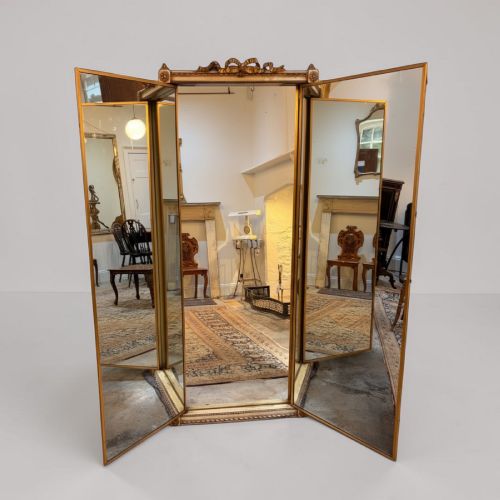
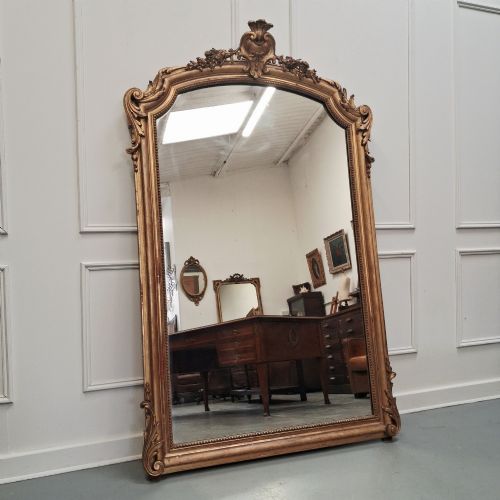
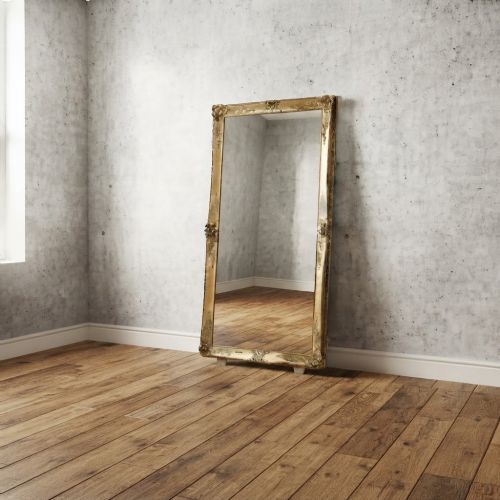
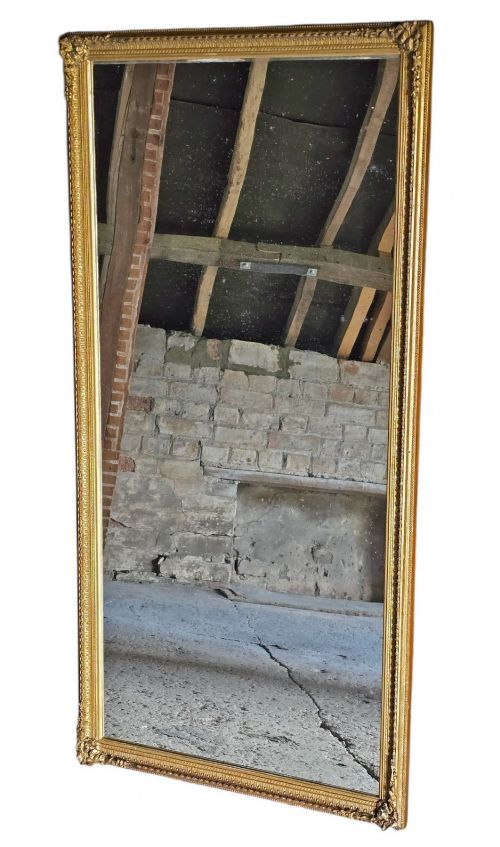
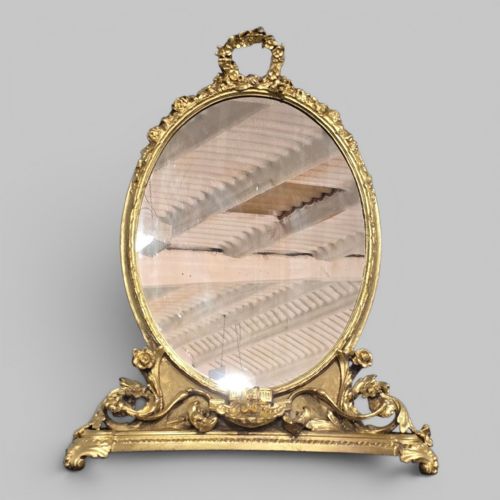
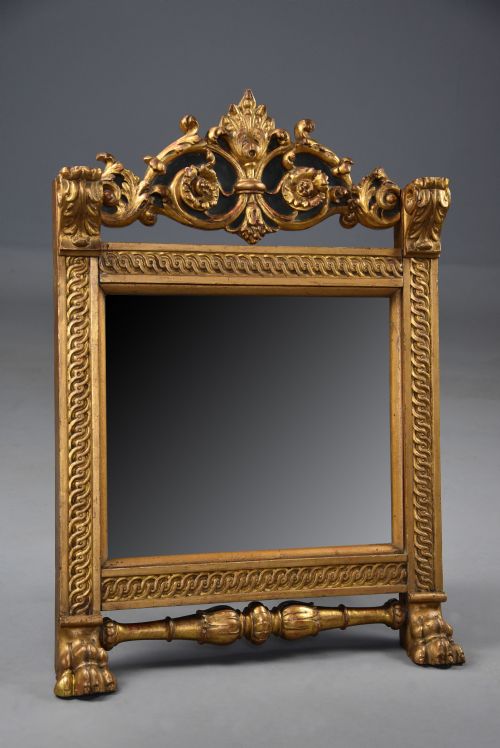


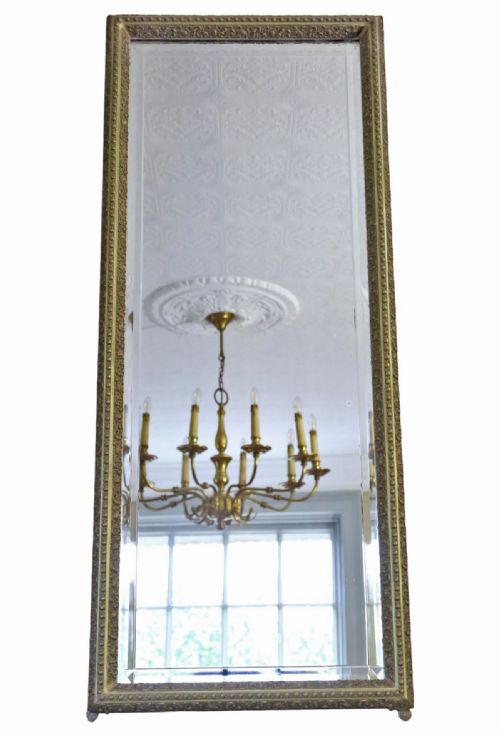


Gilded Standing Mirror
A gilded standing mirror brings vertical light and reflective depth into a room, spanning grand French leaner frames and compact Victorian dressing glasses.
Gilded Standing Mirror
A gilded standing mirror fulfils both practical dressing needs and decorative expansion of interior space. When searching for a gilded standing mirror, buyers encounter a range of forms from floor-standing cheval mirrors to larger leaner glasses.
The pieces on this page originate primarily from the nineteenth and early twentieth centuries, encompassing Victorian, Edwardian, and French Chateau styles. Makers utilised diverse formats, including full-length floor mirrors and smaller table-top dressing variants.
Examples span several distinct aesthetic traditions, from ornate Rococo revival carving to restrained early eighteenth-century Chinese export designs. Each format serves a specific placement within a domestic interior, whether mounted on a wall, supported on a table, or standing independently.
What varies in quality
The crispness and depth of the carved woodwork dictate the initial visual impact of the piece, distinguishing hand-carved ornamentation from simpler moulded composition. Superior examples exhibit intricate relief work and clean joinery that withstands close inspection.
The application of the gold leaf and the preservation of the underlying gesso layers determine the longevity and richness of the surface. Original mercury or silvered mirror glass displays subtle foxing and depth that contrast with modern replacement plates.
Listings feature items from the eighteenth, nineteenth, and twentieth centuries, utilising materials including giltwood, gesso, brass, and mirror glass.
F.Bienvue
The Gilded Standing Mirror Glossary
- Giltwood
- Wood that has been coated with gold leaf or powder. This finish provides a luminous and durable surface characteristic of fine antique frames.
- Gesso
- A plaster mixture applied to a wooden frame as a base for gilding. It allows craftsmen to carve intricate relief details before applying gold leaf.
- Cheval mirror
- A freestanding full-length mirror hung on a central pivot within a frame. This allows the glass to tilt to various angles for dressing purposes.
- Leaner mirror
- A large vertical mirror designed to lean against a wall rather than hang from brackets. These pieces often anchor large reception rooms and maximise reflected light.
- Ormolu
- Finely chased and gilt bronze mounts applied to furniture and frames. This decorative technique adds contrasting metallic texture to wooden structures.
Gilded Standing Mirror: Frequently Asked Questions
How do I place a freestanding mirror safely?
A floor-standing mirror requires a stable surface and often benefits from discreet wall tethering to prevent tipping. Positioning it opposite a window maximises natural light distribution across the room.
Ensure the floor beneath the feet is level, particularly with heavier wooden and gesso frames. This protects the joints and keeps the pivoting mechanisms of cheval styles aligned.
What is the difference between a cheval and a leaner mirror?
A cheval mirror is a self-contained unit supported by a frame with pivoting side pins, allowing the glass to tilt. A leaner mirror relies on the wall for support, resting directly on the floor at a fixed angle.
Cheval versions traditionally function as dressing pieces in bedrooms, whereas leaner formats serve to visually expand reception rooms and hallways.
How do I care for antique gilt surfaces?
Dust giltwood and gesso frames gently with a dry, soft feather duster or clean microfibre cloth. Avoid all liquid cleaners, commercial polishes, and abrasive materials, which can strip the delicate gold leaf.
Keep the mirrors away from direct sources of heat and damp environments to prevent the wooden substrate from warping and the gesso from cracking.
How do I identify a Victorian mirror?
Victorian mirrors often feature robust construction in wood and gesso, displaying revival styles such as Rococo, Renaissance, or heavy architectural moulding. The glass plates may show faint oxidation or beveling consistent with nineteenth-century manufacturing methods.
Examining the backboards and fixings reveals period-appropriate fasteners and timber shrinkage that help confirm the nineteenth-century date of origin.