


Carved Wood Triptych Mirror
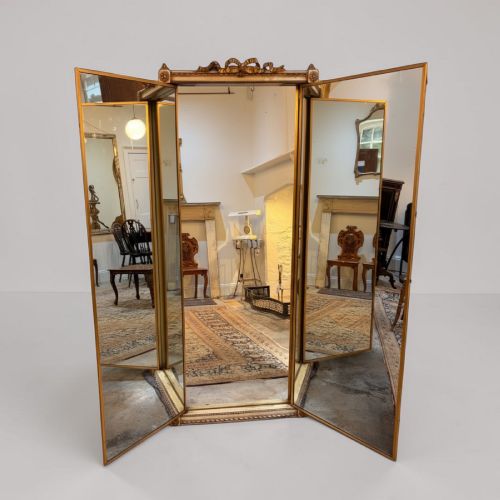
These carved wood triptych mirror pieces bring three-panel folding elegance and reflective depth into a room, offering multiple angles and period character.
Carved Wood Triptych Mirror
When you search for a carved wood triptych mirror, you are looking at multi-panel looking glasses designed to fold or present three distinct sections of glass within a single decorative frame. These objects appear across several eras, including the Victorian period, the nineteenth century, and the early twentieth century.
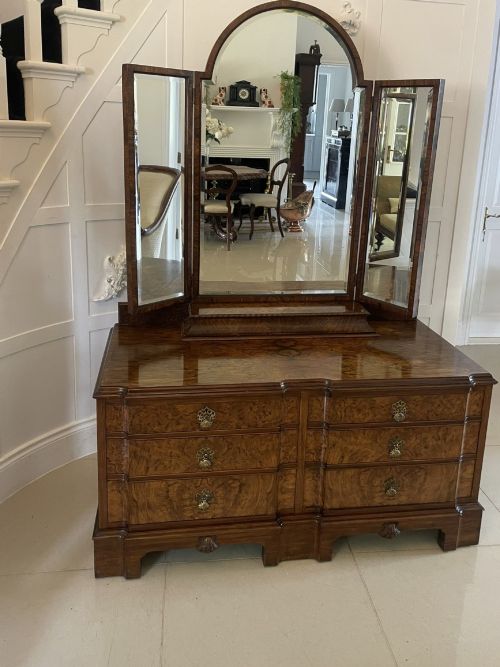
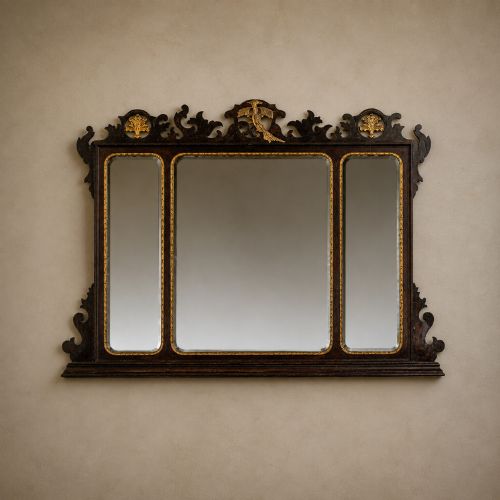
The versions you are most likely to meet on this page take the form of large overmantel mirrors and wall mirrors, alongside dressing table mirrors and dressing tables equipped with triple glass arrangements. Their frames showcase diverse historical revivals and regional interpretations, spanning Regency lines, Irish Rococo details, and French Provincial influences.
Makers and workshops constructed these triple mirror pieces to hang above fireplaces or sit upon tables, utilising hinged or fixed side panels to alter the perspective of a room. Surviving examples demonstrate how cabinetmakers adapted the triptych format from religious altarpieces into domestic furnishings.
Materials and construction methods
Makers fashioned the structural frames of these mirrors using solid hardwoods like oak, mahogany, walnut, and rosewood, often applying veneers or carving intricate ornamentation directly into the timber. Gilding techniques played a major role, with artisans laying gold leaf over layers of gesso upon wooden substrates to create brilliant reflective surfaces.
Many frames incorporate applied decorative elements, such as carved cresting depicting birds or squirrels, alongside shaped wooden tops and moulded borders. The glass plates were bevelled or flat-set into the timber and plaster housings, supported at the back by wooden panelling.
Recorded periods span from the Regency era and Victorian times through to nineteen-thirty.
Measures of quality in multi-panel mirrors
Quality in these pieces rests upon the crispness of the wood carving and the depth of the gilding applied over the gesso base. Finer examples display hand-carved motifs with distinct anatomical details on crests and figures, rather than shallow or purely moulded ornament.
The selection of timber grain, the structural integrity of the frame joints, and the preservation of the original mercury or silvered glass plates distinguish the upper tier of pieces from simpler workshop productions.
The Carved Wood Triptych Mirror Glossary
- Triptych mirror
- A looking glass composed of three panels, where two flanking wings typically angle inwards around a larger central plate.
- Overmantel mirror
- A large wall mirror specifically proportioned to hang on the wall above a fireplace mantelpiece.
- Gesso
- A plaster-like mixture applied to wood frames as a smooth base for subsequent gilding with gold leaf.
- Giltwood
- Timber that has been coated with gold leaf or gold paint to give a luxurious metallic finish.
- Cresting
- The decorative carved ornament or pediment fixed to the topmost section of a mirror frame.
Carved Wood Triptych Mirror: Frequently Asked Questions
Where should I hang a triptych mirror?
These mirrors work best mounted securely above a fireplace mantel or positioned on a large wall where the triple panels can reflect light across the room.
Because of their substantial size and weight, ensure the fixings engage directly with wall studs or masonry.
How do I date a carved wooden mirror?
Examine the underlying timber, the construction of the backboards, and the style of the carving to determine the period of manufacture.
Revival styles often borrow motifs from earlier centuries, so tool marks and glass characteristics help confirm the true age.
Can dressing tables feature triptych mirrors?
Yes, several dressing table examples incorporate triple mirrors to allow users to view profiles while grooming.
These vanity mirrors are usually attached via pivoting brackets or stand independently upon the table surface.
What maintenance do giltwood frames need?
Giltwood surfaces require gentle dusting with a soft, dry brush to protect the delicate gold leaf and underlying gesso.
Avoid liquid cleaners and direct moisture, which can lift the metallic leaf from the wooden substrate.