





Giltwood Candle Stand
A giltwood candle stand brings rich texture and gilded warmth to a room, holding candles or supporting lamps with classical presence.
Giltwood Candle Stand
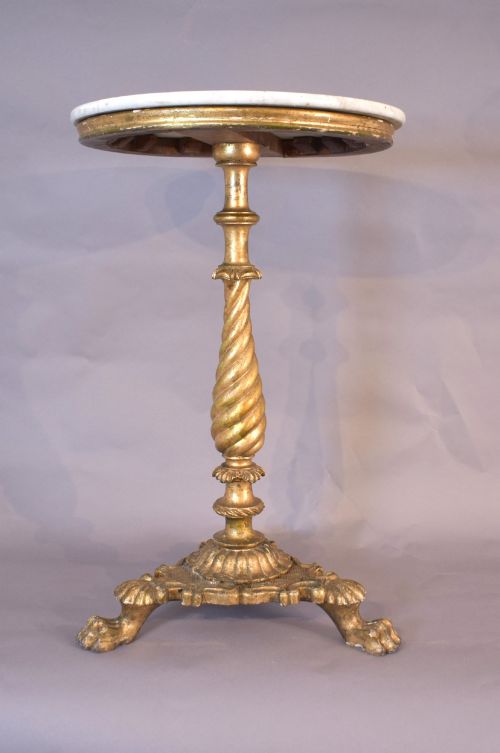
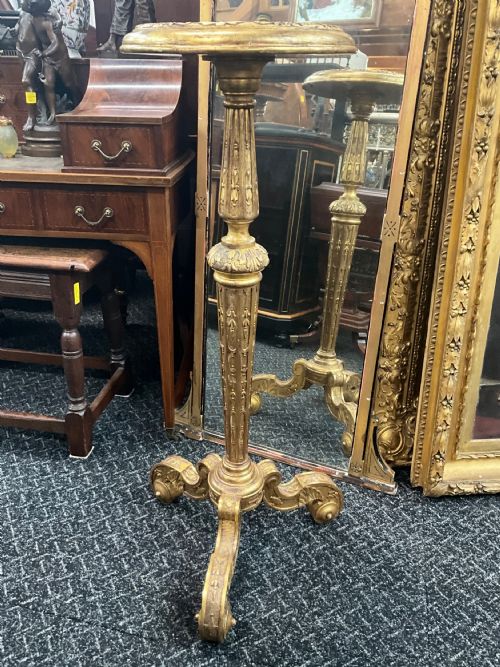
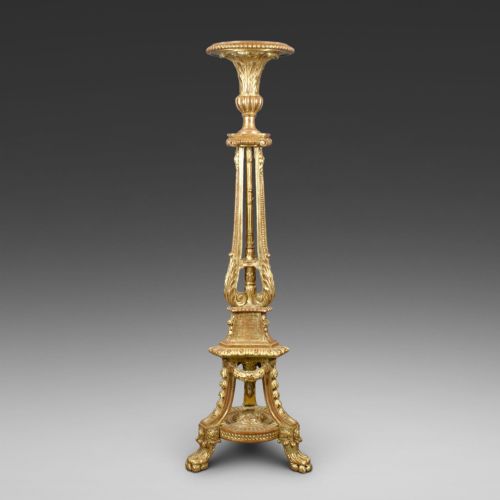
A giltwood candle stand encompasses tall torcheres, floor-standing standard lamps, altar-type candle-holders, and smaller table-standing candlesticks designed to elevate a light source. When searching for a giltwood candle stand, collectors encounter forms ranging from slender tripod tables and pricket sticks to substantial columnar torchaires.
The pieces span the eighteenth, nineteenth, and early twentieth centuries, drawing heavily upon Baroque, Italian Florentine, Regency, and French Neoclassical design vocabularies. Many examples originate from Italy or reflect the grand decorative schemes of eighteenth-century styles reinterpreted in later decades.
How they were made
Carved wood provides the foundational structure for these stands, often layered with gesso to create smooth surfaces and crisp relief details before gilding. Gold leaf is applied across the carved ornament to achieve the characteristic metallic sheen of a giltwood candle stand.
Some examples incorporate secondary materials such as polychrome paint or iron to support their structural forms, while others integrate marble elements. The interplay between carved wooden substrates and applied gold leaf defines the primary technique visible across the inventory.
Giltwood Candle Stand Retail Price Guide 2026
Typical asking prices for giltwood candle stand among the pieces listed under this phrase on Sellingantiques today, from the lower quarter to the upper quarter. They describe what is for sale here now, not the wider market.
Listings feature items spanning the eighteenth century through to nineteen-twenty, utilising carved wood, gesso, iron, and marble.
What varies in quality
The crispness of the wood carving and the depth of the gesso relief distinguish standard production from superior examples of a giltwood candle stand. Finer pieces display confident sculptural handling in their acanthus leaves, fluting, and figural or architectural motifs.
Proportion and scale also separate the items, with taller floor-standing torcheres and altar-type holders commanding spatial presence through balanced architecture and substantial timber mass. The integrity of the surviving gilding and the harmony of the overall silhouette further determine the tier of each piece.
The Giltwood Candle Stand Glossary
- Giltwood
- Wood that has been coated with gold leaf or gold powder. This surface finish gives the stand its bright, reflective metallic appearance.
- Torchere
- A tall ornamental stand designed to carry a light source such as a candle or lamp. These tall floor-standing pieces often feature slender columns or carved pedestals.
- Pricket stick
- A type of candlestick featuring a sharp metal spike, or pricket, upon which a large wax candle is impaled. They frequently appear in altar-type formats.
- Gesso
- A plaster-like mixture applied to wood to create a smooth surface for carving and gilding. It allows for intricate, sharp decorative details before gold leaf is laid down.
Giltwood Candle Stand: Frequently Asked Questions
What is a giltwood candle stand used for?
These pieces function as decorative supports for candles, pricket sticks, or converted lamp fittings. They provide elevated illumination while serving as sculptural furniture in principal rooms.
Historically, tall torcheres illuminated dark corners and halls, whereas smaller candlesticks sat upon tables or altars. Today, many collectors continue to use them with candles or as lamp bases.
How do I identify the period of a stand?
Dating relies upon stylistic markers such as Regency neoclassical geometry, Baroque exuberance, or Florentine decorative motifs. Wood types, construction joints, and the wear patterns of the gesso and gold leaf also offer clues.
Comparing the decorative vocabulary to known historical styles helps narrow down whether a piece originates in the eighteenth century or represents a later nineteenth-century revival.
Where should I place a torchere stand?
Tall floor-standing torcheres suit corners, entrance halls, or flanking large pieces of furniture where their verticality fills empty wall space. Smaller table candlesticks find homes on side tables, mantels, or desks.
Placing them away from direct heat sources helps protect the delicate gesso and wood structures over time.
Are these stands sturdy enough for daily use?
Most floor-standing torcheres and tripod tables possess solid wooden frames built to support their intended weight, such as heavy altar candles or lamps. However, their slender proportions mean they require careful placement in busy walkways.
Gentle handling during dusting and relocation ensures the antique giltwood and carved details remain undamaged.