




Carved Giltwood Display Pedestal
A carved giltwood display pedestal brings theatrical height and gilded brilliance to a room, elevating sculpture or flora with aristocratic flair.
Carved Giltwood Display Pedestal
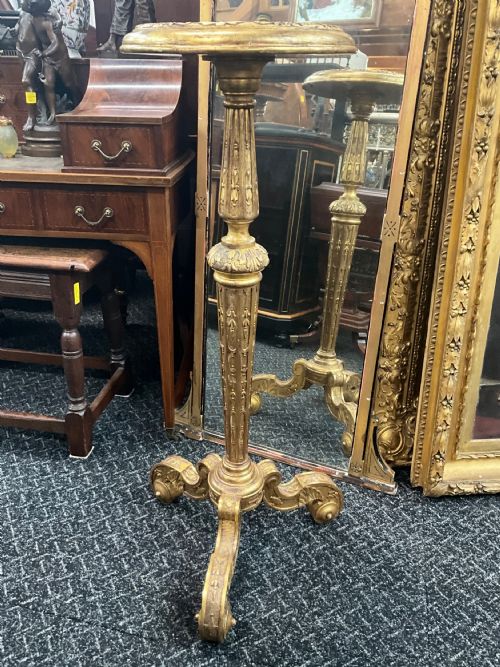
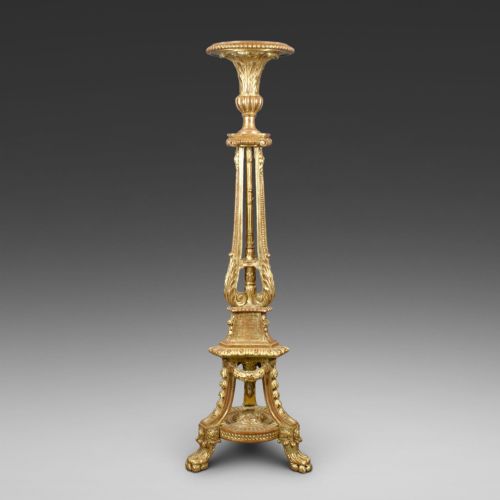
A carved giltwood display pedestal is a commanding wooden stand coated in gold leaf or gesso, designed to hold urns, plants or figures. These pieces vary from slim torcheres to sturdy plinths, lifting focal points off the floor.
Most items on this page date from the nineteenth and eighteenth centuries, reflecting revivalist tastes in French and Italian styles. The selection includes specific forms such as urn stands, plant stands and triform tables.
Makers drew on historic idioms ranging from Italian Baroque to Louis XVI and Victorian Rococo Revival. A buyer encounters tall torchaires alongside lower occasional tables, all sharing a gilded wooden surface.
How they were made
Carvers shaped timber into intricate foliage, scrolls and fluted columns before applying layers of gesso to smooth the surface. This plaster ground provided the crisp base needed for subsequent gilding.
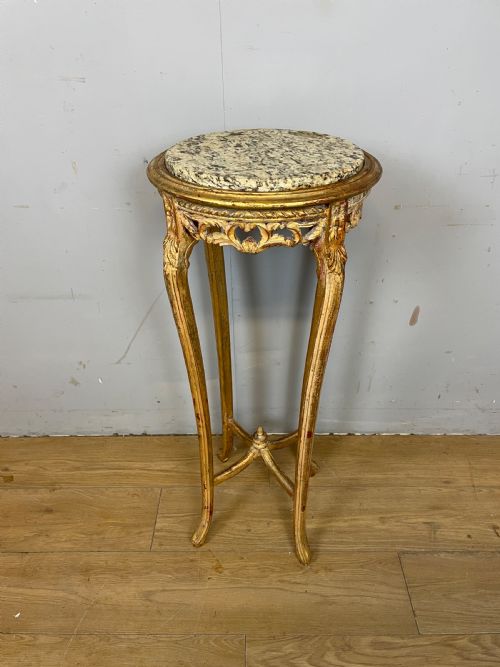
Artisans laid thin sheets of gold leaf over the prepared gesso, burnishing the metal to catch the light in domestic interiors. Certain examples incorporate inset marble tops to support heavy stone urns or bronze figures.
Carved Giltwood Display Pedestal Retail Price Guide 2026
Typical asking prices for carved giltwood display pedestal among the pieces listed under this phrase on Sellingantiques today, from the lower quarter to the upper quarter. They describe what is for sale here now, not the wider market.
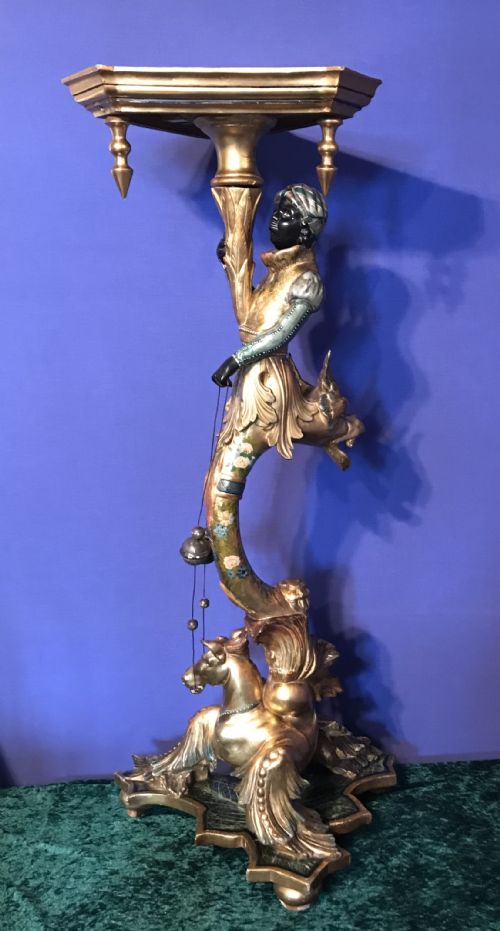
An exotic Venetian torchere doubles cheerfully as a planter, proving that nineteenth-century artisans appreciated practical indoor botany.
What varies in quality
Depth and precision of the wood carving separate ambitious workshop pieces from simpler output. Crisp undercut foliage and sharply defined motifs demonstrate sculptural skill that softer, worn mouldings lack.
The integrity of the original gilded surface determines lasting visual impact. Finely burnished gold leaf retains a warm, complex metallic sheen, whereas heavy repainting flattens the rich texture of the gesso beneath.
The Carved Giltwood Display Pedestal Glossary
- Giltwood
- Timber coated with gold leaf over a prepared ground. This opulent finish defines the luminous appearance of these stands.
- Gesso
- A plaster mixture applied to wood to create a smooth surface for carving and gilding. It allows for sharp decorative details.
- Torchere
- A tall, slender stand originally designed to hold a candle or light. These vertical supports now function primarily as display pedestals.
- Triform
- Having three sides or three feet. This structural arrangement provides stable support for tall or heavy display pieces.
- Urn stand
- A low or mid-height pedestal specifically proportioned to support a decorative urn. These items anchor heavy vessels securely.
Carved Giltwood Display Pedestal: Frequently Asked Questions
What were carved giltwood display pedestals used for originally?
These tall stands held heavy decorative urns, candelabra or exotic plants in formal reception rooms. They positioned art objects at eye level to command attention within aristocratic interiors.
Over time, collectors adapted them as standalone sculptures or plant supports in grand drawing rooms. Their sturdy construction easily sustained the weight of marble or bronze vessels.
How do I style a pedestal in a modern room?
Place a single tall torchere in an empty corner to introduce vertical interest and warm metallic reflection. Keep the top surface uncluttered or host a single striking object.
Pairing a gilded stand with minimalist furniture creates a sharp contrast that accentuates the historic carving. The reflective gold surface bounces natural light around the space.
How can I tell nineteenth century pedestals from eighteenth century ones?
Eighteenth century pieces generally display hand-carved details integrated directly into the timber frame with organic fluidity. The proportions reflect classical architectural rules of the period.
Nineteenth century revivals often employ thick gesso layers to mimic earlier styles, occasionally revealing machine-tooled precision beneath the gold leaf. Examining the wood joints and tool marks clarifies the age.
Are marble-topped pedestals stronger than all-wood ones?
Inset marble tops provide a heavy, stable platform that resists tipping when supporting dense stone urns. The stone also protects the wooden frame from moisture leaks during plant watering.
All-wood tops rely entirely on timber integrity and triform stability to distribute weight. Both variations function well when matched with appropriate display objects.