
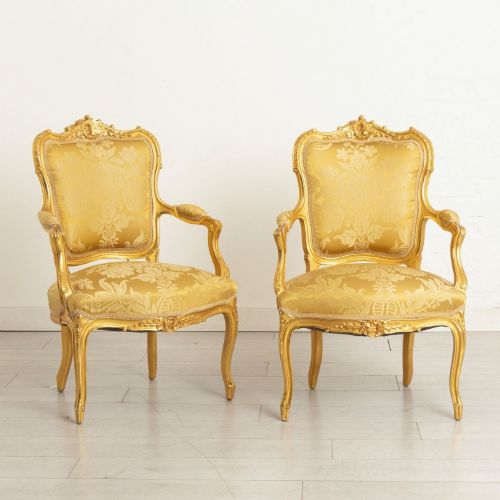


Giltwood Armchairs Pair
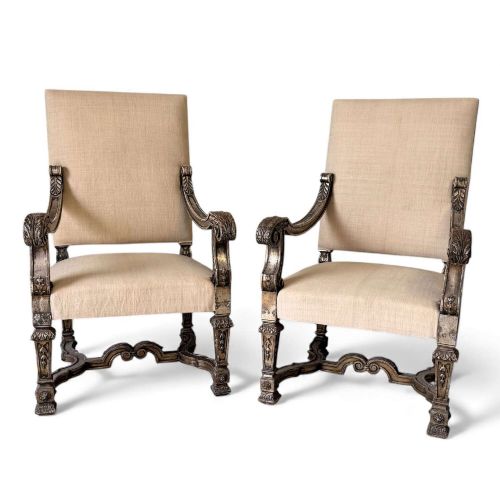
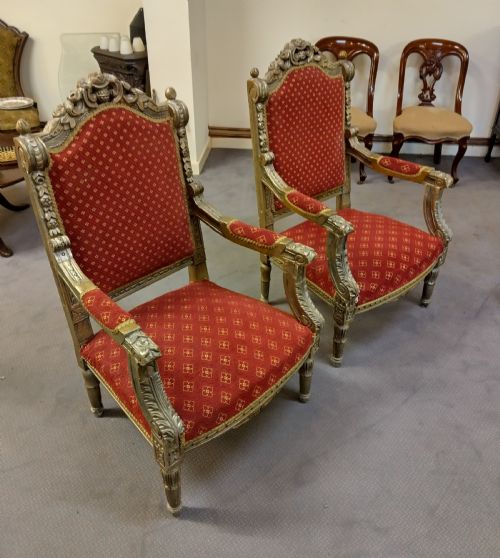
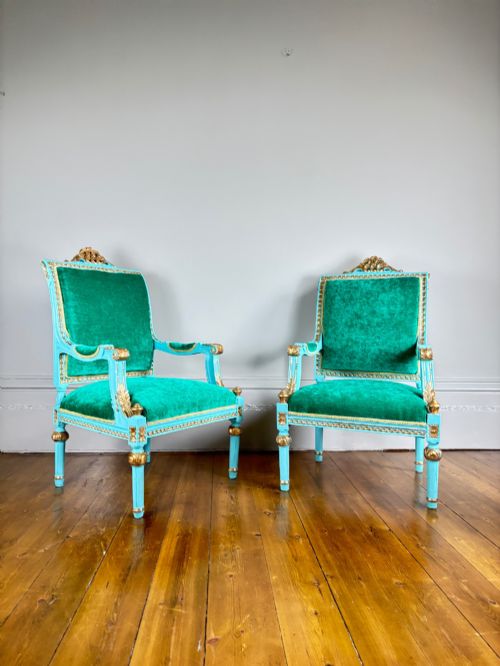
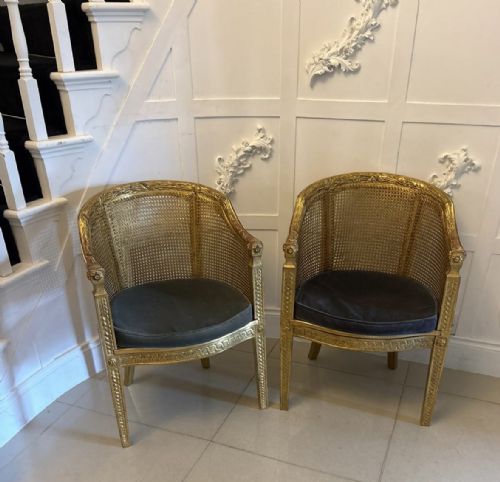
These giltwood armchairs pair options bring formal seating with gilded timber surfaces to a room.
What giltwood armchairs pair pieces are
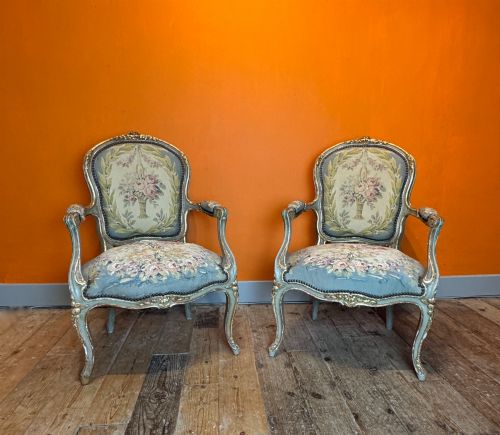
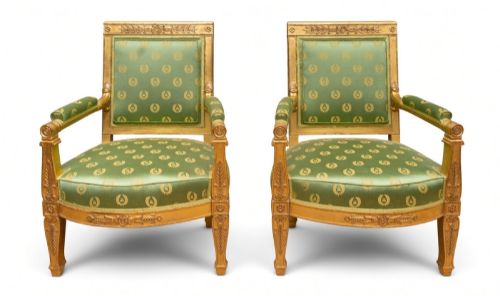
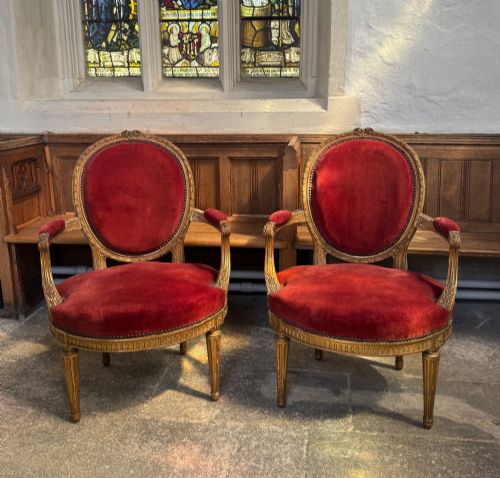
When you search for giltwood armchairs pair pieces, you encounter seating designed in pairs, primarily originating from the eighteenth, nineteenth, and early twentieth centuries. French and Italian stylistic influences dominate, with styles ranging from Régence and Rococo revival to Louis XVI and Regency manners.
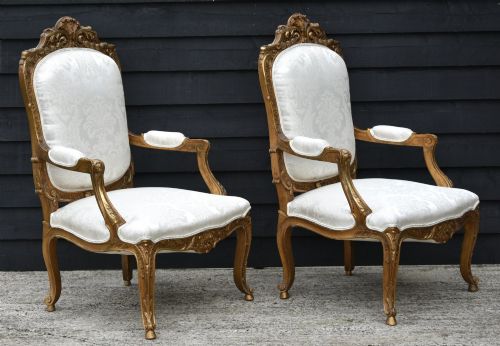
The version you are most likely to meet on this page is the nineteenth-century French salon chair, often bearing carved details and open armrests. These pieces frequently appear upholstered in various fabrics, including damask, linen, and tapestry covers.
Armchairs in these listings span grand Italianate forms to lighter Edwardian interpretations. The unifying characteristic remains the gilded wooden frame paired with matching seating construction intended for formal reception spaces.
How they were made
Frames rely on structural timbers such as beech and beechwood, shaped and carved to create the curved lines of the Rococo and Louis styles. Artisans applied thin sheets of metal leaf over a prepared surface to achieve the distinctive giltwood finish.
Upholstery methods incorporated traditional textile coverings like damask, linen, and tapestry, sometimes surviving as original covers from the nineteenth century. Joinery and carving techniques varied according to the period, from hand-carved eighteenth-century Italian examples to later revival pieces.
Retail Price Guide 2026
Typical UK retail prices for giltwood armchairs pair, calculated from the Sellingantiques database of over a million retail prices indexed since 2003. This retail price guide relies exclusively on Sellingantiques data; no external sources or auction records are used, so the figures do not describe the wider market.
Listings feature beechwood and general timber frames finished with giltwood, upholstered in linen, damask, and tapestry.
What varies in quality
The depth and crispness of the wood carving dictate the visual impact of the frame, separating finely detailed hand-work from simpler production. Original upholstery surfaces, such as period tapestry covers, distinguish pieces retaining their historic textiles from those with later re-coverings.
The integrity of the giltwood surface and the stability of the timber frame determine the overall preservation of the armchair. Heavier proportions, such as large Italianate or throne chairs, contrast with lighter salon chairs in structural ambition.
Holland and Sons
The Giltwood Armchairs Pair Glossary
- Giltwood
- Timber coated with gold leaf or a similar metallic finish to create a bright, reflective surface. This treatment defines the appearance of formal European seating.
- Fauteuil
- An open-armed upholstered armchair with exposed wooden sides, commonly associated with French seating design. These chairs typically feature padded armrests for comfort.
- Bergère
- An enclosed upholstered armchair with solid sides filled with upholstery or cane. This form offers a distinct silhouette compared to open armchairs.
- Aubusson
- A style of tapestry woven in France, frequently used for upholstery on high-end period armchairs. These covers display pictorial or floral designs.
- Regence
- A transitional design style bridging the heavy Baroque and lighter Rococo movements in France. It is characterised by curved lines and restrained ornamentation.
Frequently Asked Questions
What is a giltwood armchairs pair?
A giltwood armchairs pair consists of two matching seats featuring gilded wooden frames, designed for symmetry in a room.
These pieces typically date from the eighteenth to the early twentieth centuries and follow French or Italian decorative styles.
How were these armchairs used?
Such seating served in formal salons, withdrawing rooms, and reception spaces for seating guests or display.
Their decorative gilt surfaces and upholstered covers indicated social status and complemented coordinated interior schemes.
How do I identify the period?
Period identification relies on carved stylistic details, such as Louis XV curves, Louis XVI straight tapered legs, or Regency ebonised accents.
Construction methods and timber choices, including beech and older structural elements, also point towards specific manufacturing eras.
How do I care for giltwood?
Giltwood surfaces require gentle dusting with a soft, dry cloth to protect the delicate metallic leaf layer.
Keep these chairs away from direct sunlight and fluctuating humidity to preserve both the timber frame and the fabric upholstery.