
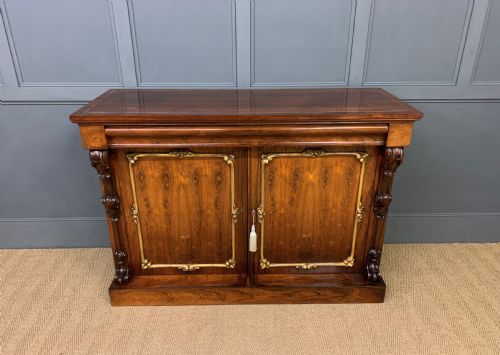
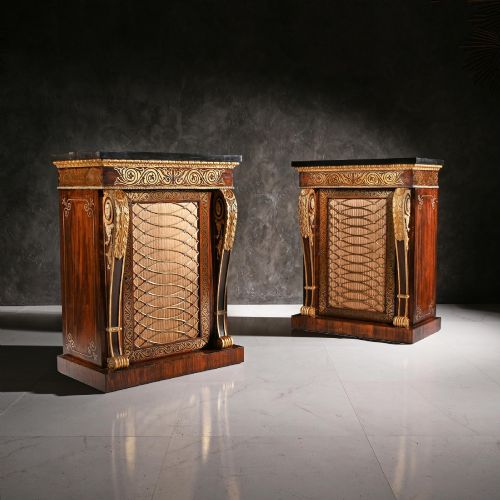
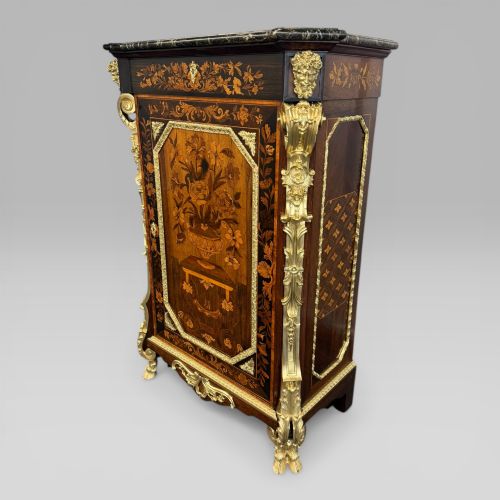
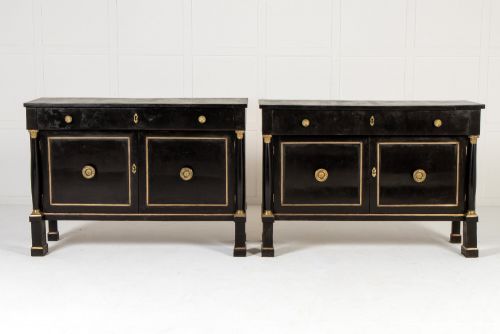


Gilt Wood Side Cabinet
A gilt wood side cabinet brings rich warmth and architectural presence to a room, offering both display space and enclosed storage.
Gilt Wood Side Cabinet
A gilt wood side cabinet spans a variety of historical periods from the eighteenth century through the Edwardian era, incorporating styles such as Regency, French Louis XVI, and Italian Neoclassical.
The objects appearing under this search phrase include traditional side cabinets, pier cabinets, credenzas, and smaller bedside tables adapted for prominent placement against walls.
Makers and workshops across England, France, and Italy produced these pieces using exotic timbers and applied metallic finishes to suit formal reception rooms.
Materials and Construction
Craftsmen built carcass structures using dense foundation woods like mahogany, walnut, and oak, often applying decorative veneers of rosewood, kingwood, and burr yew to exterior surfaces.
Giltwood, ormolu, and gilt bronze provide the characteristic metallic highlights, while brass inlays and marble tops add contrasting texture and durability to the upper surfaces.
Several pieces arrive complete with original brass galleries, ensuring no stray porcelain rolling off the top during lively dinner parties.
Assessing Quality
Quality rests on the crispness of the carving in the giltwood and the precision of the joinery in the underlying cabinetwork.
Superior examples exhibit meticulous attention to detail in ormolu mounts, marquetry patterns, and the integration of original stone or marble tops.
Louis Constantin Le Gaigneur·Edward Holmes Baldock·S Jamar·Edmond Poteau·Maison Soubrier
The Gilt Wood Side Cabinet Glossary
- Ormolu
- Gilded bronze applied as a decorative mount to furniture pieces. This technique creates sharp metallic highlights against dark timber surfaces.
- Pier Cabinet
- A narrow display piece designed to fit into the wall space between windows. These often feature glazed doors and elaborate gilt mounts.
- Marquetry
- Inlaid wood pieces arranged to form decorative pictures or geometric patterns on cabinet doors. Artisans select contrasting veneers to achieve tonal depth.
- Kingwood
- A dense, richly figured exotic timber used extensively in high-end cabinetmaking. It frequently appears alongside gilt bronze and brass accents.
Gilt Wood Side Cabinet: Frequently Asked Questions
Where should I place a side cabinet?
These cabinets work well in dining rooms, entrance halls, or drawing rooms where surface display space and concealed storage are equally useful.
They sit flush against walls, often anchoring a room's decorative scheme or echoing existing architectural details.
How do I care for giltwood surfaces?
Giltwood requires gentle dusting with a soft, dry brush to protect the delicate gold leaf application from abrasion.
Avoid liquid cleaners and direct sunlight, which can degrade the finish and dry out the underlying wood.
What is a pier cabinet used for?
Pier cabinets were historically manufactured to occupy narrow wall spaces between large windows in formal nineteenth-century interiors.
Their slim proportions make them ideal for modern rooms where floor space is limited but display shelving is desired.