


Gilt Wood Accent Chairs
Gilt wood accent chairs bring carved timber and gold leaf together for seating that draws the eye in any room.
Gilt Wood Accent Chairs
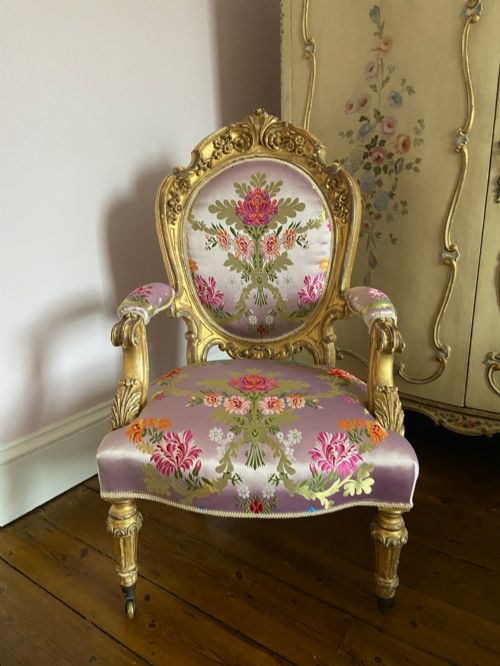
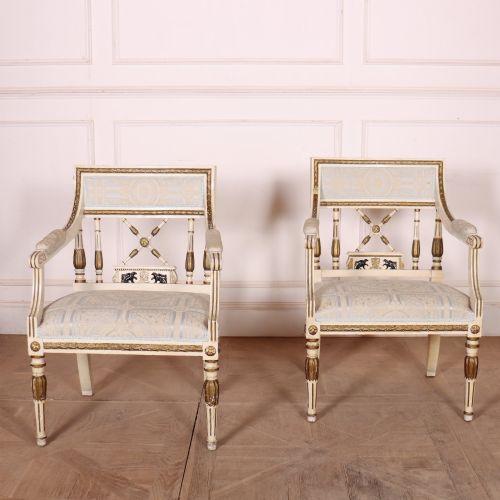
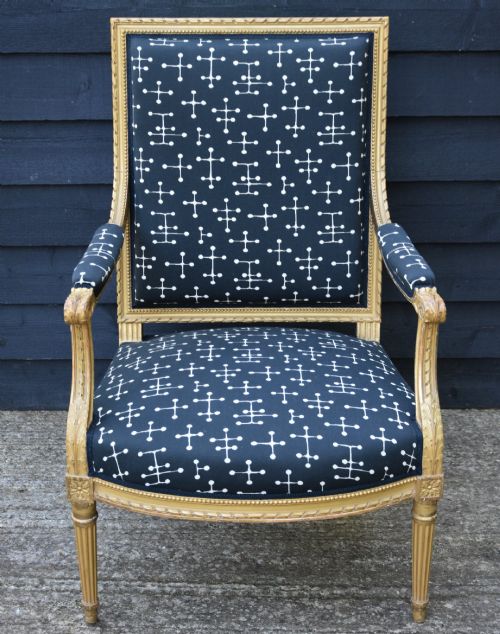
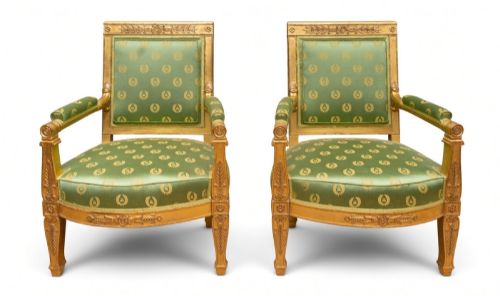
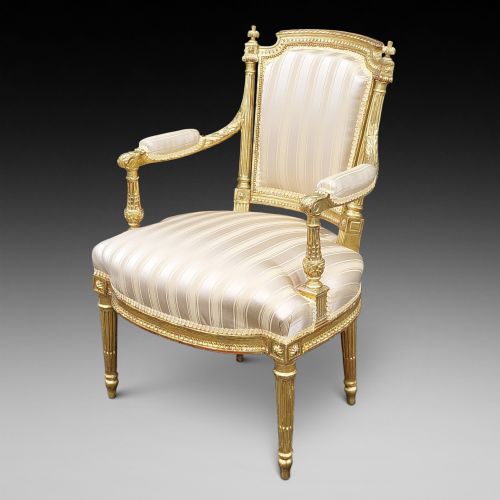
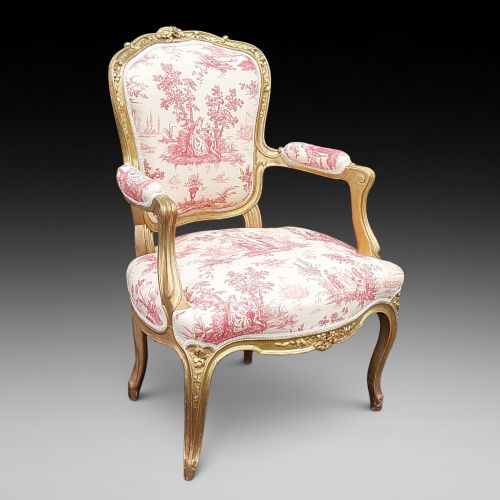
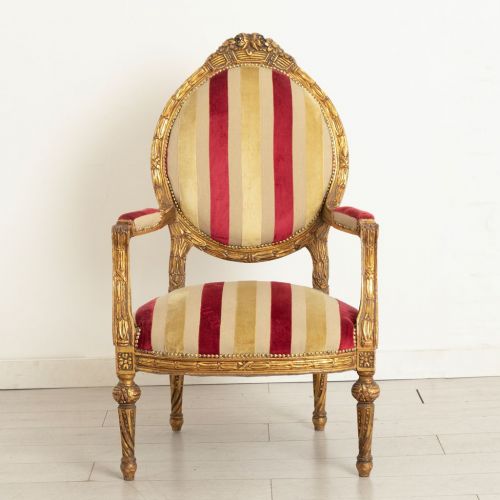
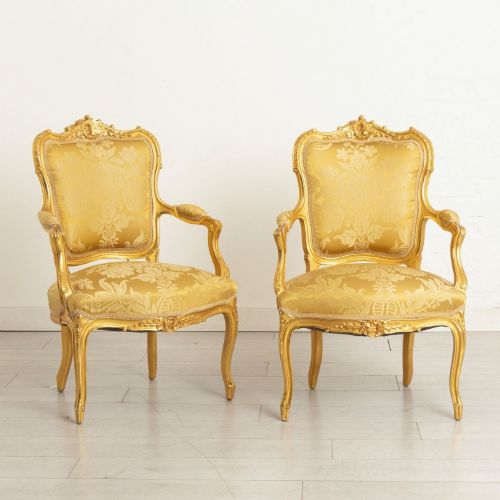
Gilt wood accent chairs encompass seating forms built to stand out, ranging from open armchairs and fauteuils to side chairs and small bedroom chairs. The selection centres heavily on nineteenth-century Continental examples, particularly French pieces shaped in the Louis XVI style or the later Rococo Revival.
Makers and makers' hands produced these seats in walnut, beech, and painted wood, finishing the surfaces with gold leaf or silver gilt. Buyers encounter pairs and single items spanning the eighteenth century through to the early twentieth century, incorporating silk, velvet, and fabric upholstery.
How they were made
Carpenters carved structural frames from solid timbers such as beech, walnut, and mahogany, applying gesso layers to prepare the wood for gilding. Artisans then laid fine sheets of gold leaf over the prepared surfaces to achieve the characteristic metallic sheen.
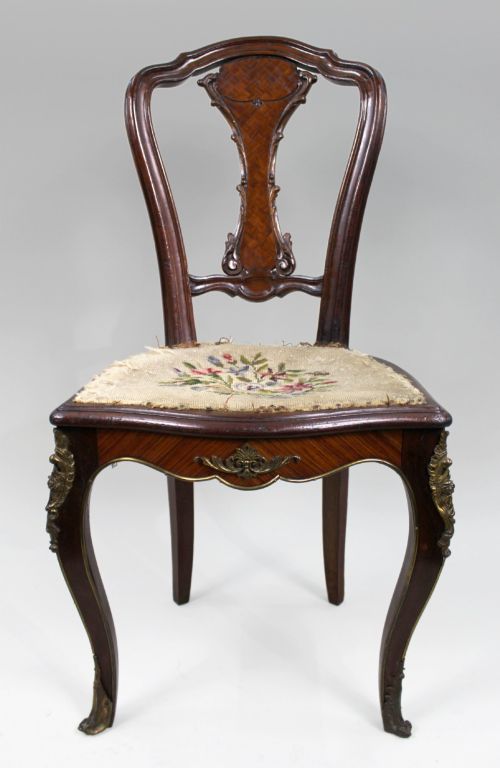
Upholsterers finished the seating using traditional webbing and stuffing, securing outer layers of silk, velvet, or patterned fabric with decorative tacks. Brass and ormolu mounts occasionally supplemented the carved woodwork on specific French and Continental pieces.
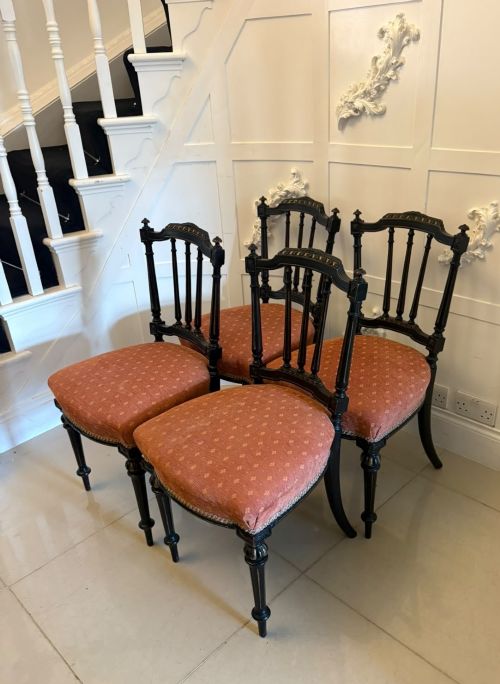
Listings span periods from the 18th century through to the 1930s, featuring walnut, beech, mahogany, and ebonised wood.
What varies in quality
The crispness of the wood carving dictates much of the visual success, separating sharply defined acanthus leaves and scrollwork from softer, more rounded moulding. Deeply undercut relief and balanced proportions reveal the hand of a skilled workshop rather than standard mass production.
The integrity of the underlying timber frame and the quality of the original gilding determine how well a piece survives the centuries. Intact gold leaf showing natural wear holds greater coherence than heavy modern over-gilding.
Jacob Desmalter·Lamb of Manchester
The Gilt Wood Accent Chairs Glossary
- Giltwood
- Wood that has been covered with a thin layer of gold leaf or gold dust. This finish defines the bright metallic appearance seen across the frames.
- Fauteuil
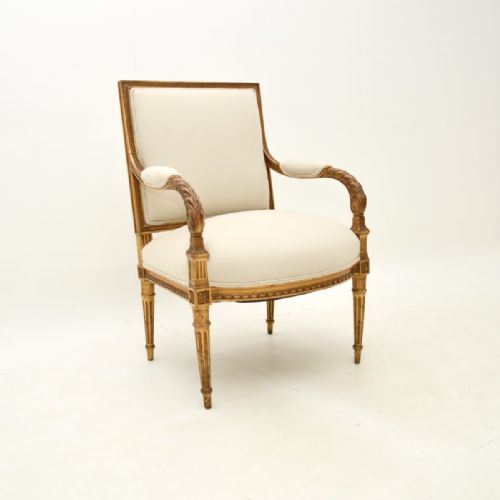
- An open-arm armchair with upholstered back and seat and exposed wooden arms. These chairs originated in France and often display carved gilt decoration.
- Ormolu
- Gilded bronze used for decorative mounts and furniture ornamentation. It frequently appears alongside parquetry and fine polished wood.
- Bergere
- An enclosed upholstered armchair with wooden framing and a solid or upholstered arm rest. Many examples date from the nineteenth century in the French taste.
- Rococo Revival
- A nineteenth-century design movement mimicking the asymmetrical scrolls and natural motifs of the eighteenth-century French style. Pieces from this period lean heavily on curved woodwork and elaborate carving.
Gilt Wood Accent Chairs: Frequently Asked Questions
How do I identify a Louis XVI style chair?
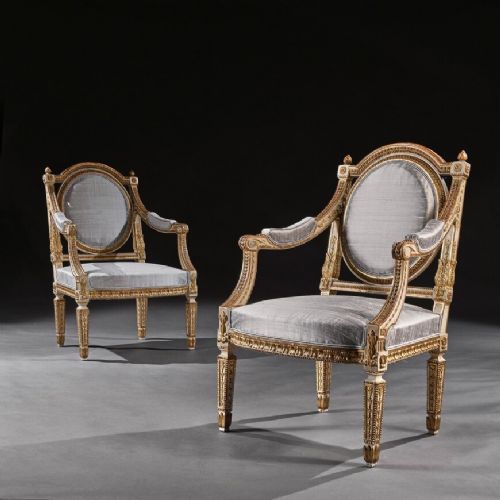
Louis XVI style chairs typically display straight fluted legs, geometric shapes, and oval or shield-shaped backs in contrast to earlier curved designs.
Craftsmen often applied classical motifs such as ribands, bead reels, and acanthus leaves within the carved gilt wood framework.
Where should I place an accent chair?
These chairs function well in bedrooms, hallways, and drawing rooms where their decorative carving serves a visual purpose.
They pair effectively with plain walls or neutral backgrounds that allow the gold leaf and fabric to stand out.
Are nineteenth-century chairs sturdy for daily use?
Nineteenth-century frames built from beech or walnut offer robust daily seating if the structural joints remain tight and secure.
Periodic checks of the glue blocks and frame joints help maintain stability over time.