

Gilt Porcelain Cup Saucer
These gilt porcelain cup saucer sets offer brilliant gilding and fine ceramic work, bringing genuine Georgian and Victorian elegance straight to your table.
Gilt Porcelain Cup Saucer
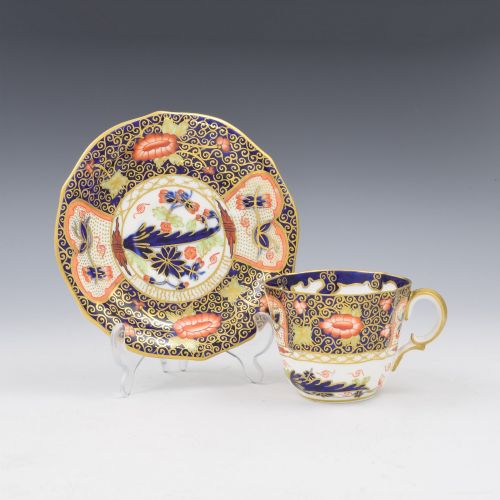
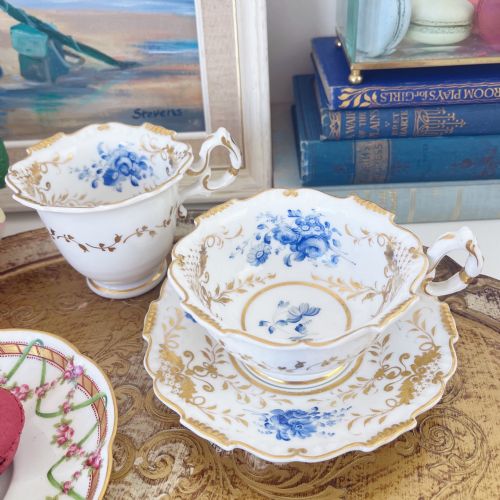
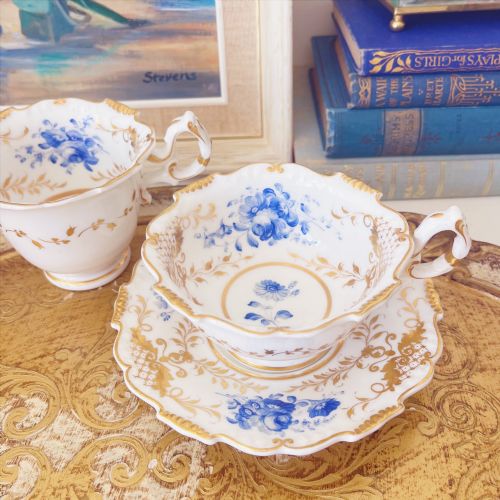
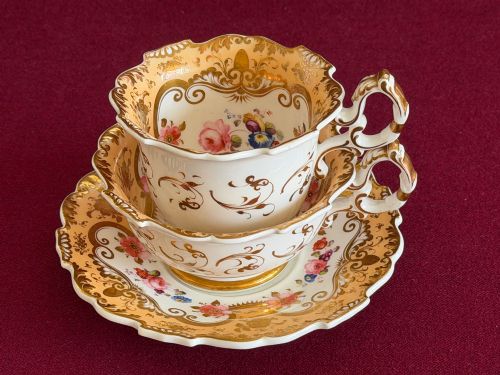
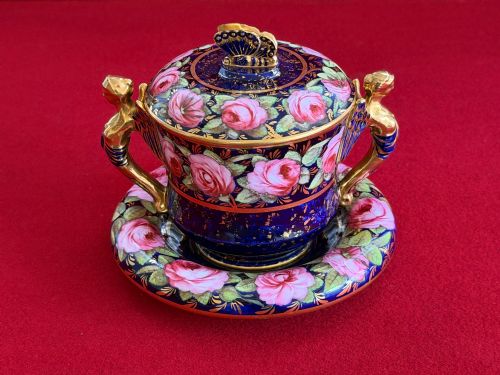
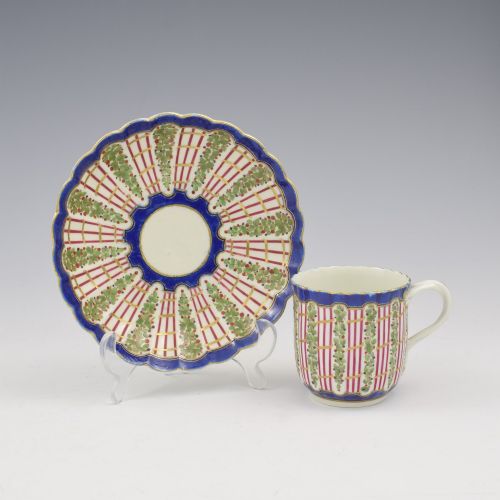
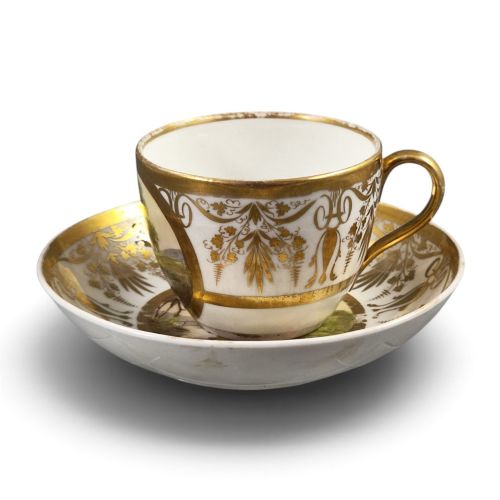
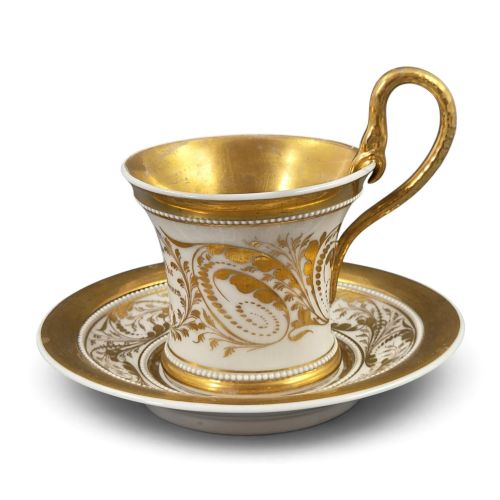
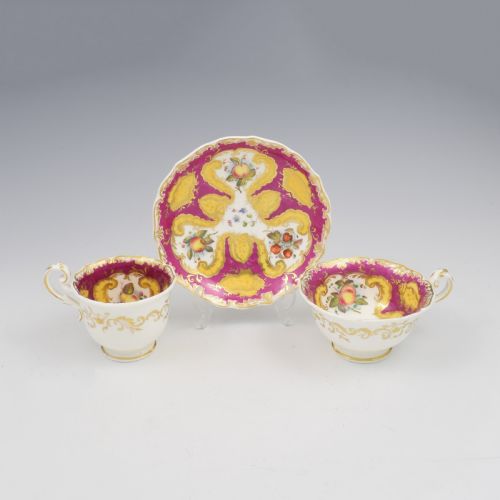
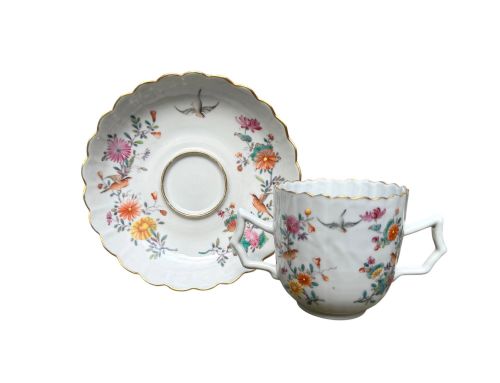
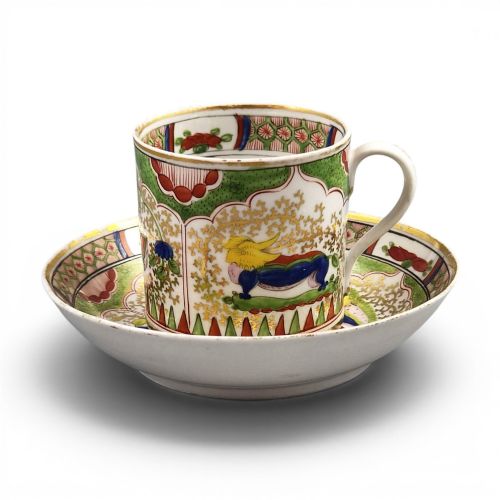
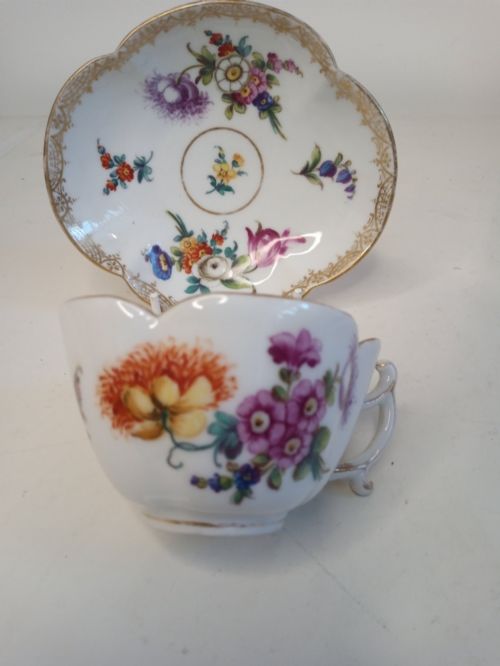
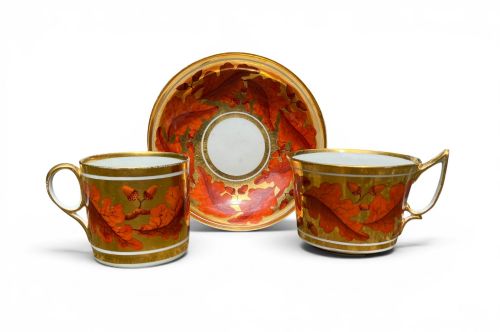
When you search for a gilt porcelain cup saucer, you look for matched drinking vessels adorned with metallic gold decoration. The pieces found here span the Georgian and late Victorian periods, taking the form of both teacups and coffee cups paired with their matching saucers.
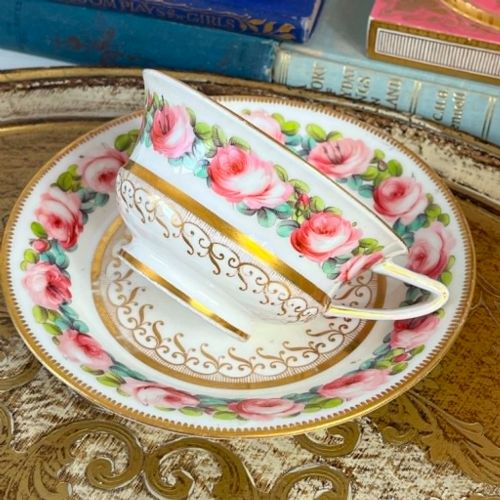
The selections range from early Georgian teacup and saucer duos decorated with handpainted pink cabbage roses to later nineteenth century pieces like Limoges coffee sets. You will most commonly encounter fine bone china and porcelain formations styled in the Regency and late Victorian manners.
Makers represented in these items include Davenport and Charles Field Haviland Limoges, alongside earlier continental pieces from Vienna. Each pairing demonstrates the traditional utility of fine dining wares combined with elaborate decorative gilding.
How they were made
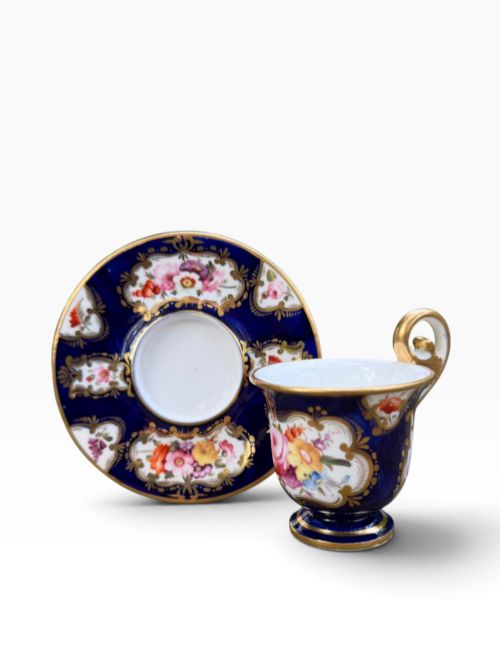
These items are constructed from porcelain and bone china, materials fired at high temperatures to achieve a hard, durable body. Artisans then applied delicate cobalt glaze and detailed enamel paints by hand to create floral and botanical motifs.
Decoration relied heavily on gold leaf and gold gilt applied to the ceramic surface. Skilled hands rendered intricate raised gilt patterns, such as thistles, alongside handpainted scenes executed in enamel and grisaille.
Listings here feature bone china and porcelain pieces spanning the Georgian era to 1880, utilising enamel, cobalt glaze, and gold leaf.
What varies in quality
The distinction between standard examples and the finest pieces rests upon the execution of the handpainting and the complexity of the gilding. Superior items feature meticulous handpainted botanical studies, such as detailed pink cabbage roses, rather than simple printed borders.
Raised gilding and heavy gold leaf application indicate higher craftsmanship, requiring skilled manipulation of the metal. Furthermore, the fineness of the porcelain body and the precision of the cobalt glaze determine the overall refinement of the set.
Davenport·Charles Field Haviland Limoges·Vienna Porcelain
The Gilt Porcelain Cup Saucer Glossary
- Bone china
- A type of soft-paste porcelain containing bone ash, known for its high strength, chip resistance, and translucent body.
- Grisaille
- A method of painting executed entirely in shades of grey or neutral monochromatic tones, often mimicking sculpture.
- Coffee can
- A straight-sided cylindrical coffee cup without a handle, popular during the eighteenth and early nineteenth centuries.
- Cobalt glaze
- A deep blue metallic oxide glaze applied under or over the ceramic body before firing to provide rich colour.
- Raised gilt
- Gold leaf applied over a raised base material to create a three-dimensional, tactile metallic decoration on the porcelain.
Gilt Porcelain Cup Saucer: Frequently Asked Questions
What is a coffee can?
A coffee can is a cylindrical cup without a foot or handle, designed specifically for drinking strong coffee in the eighteenth and early nineteenth centuries. They are frequently found paired with matching saucers in Georgian porcelain sets.
These pieces often feature elaborate cobalt glazes and gold gilt decoration, reflecting the formal dining customs of the period.
How do I date these cups?
Dating relies on stylistic clues, ceramic bodies, and maker marks where present on the base of the porcelain. Georgian pieces often display distinct Regency shapes, while late Victorian items show denser ornamentation.
Examining the type of gilding and handpainting also helps place the set within the Georgian or 1880 eras.
What is raised gilding?
Raised gilding is a decorative technique where gold leaf is applied over a built-up base layer on the porcelain. This creates a tactile, three-dimensional metallic effect that catches the light differently than flat gilt.
It is a sign of superior craftsmanship found on finer nineteenth century coffee cups and saucers.