
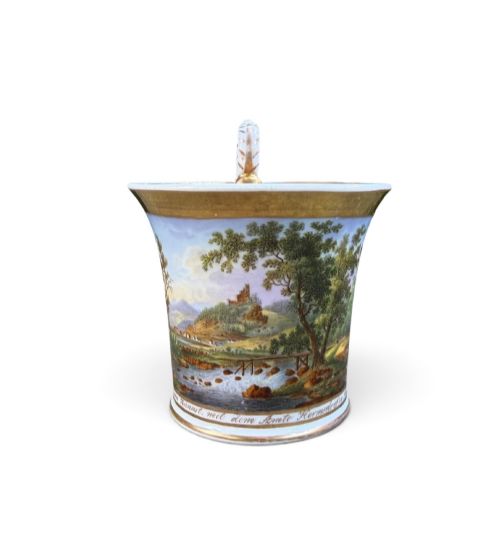


Gold Leaf Porcelain Cup
These gold leaf porcelain cup examples range from delicate Georgian cabinet wares to robust 19th Century breakfast pieces, offering a tangible connection to historical dining habits.
Gold Leaf Porcelain Cup
A gold leaf porcelain cup represents a specific intersection of fine ceramic production and decorative luxury, often taking the form of cabinet cups, teacups and saucers, or demitasse sets. These drinking vessels function primarily as decorative ceramics or display pieces, though certain forms like porter mugs and coffee services indicate actual historical use.
The specimens found here span several distinct periods, most notably the Georgian and Victorian eras, alongside Regency and early 20th Century examples. Buyers will frequently encounter forms reflecting stylistic movements such as Neoclassical, Biedermeier, and Rococo Revival.
Originating from major European factories, these items include works by continental makers such as KPM Berlin and Royal Vienna alongside notable British manufacturers like Derby, Worcester, and Coalport. Each origin brings distinct regional approaches to ceramic body composition and surface ornamentation.
How They Were Made
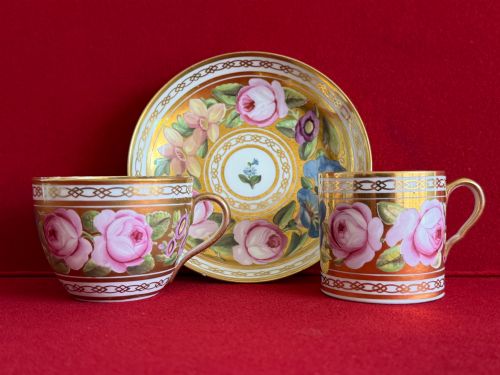
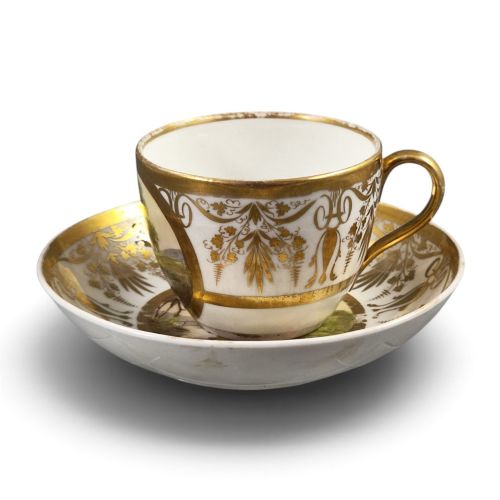
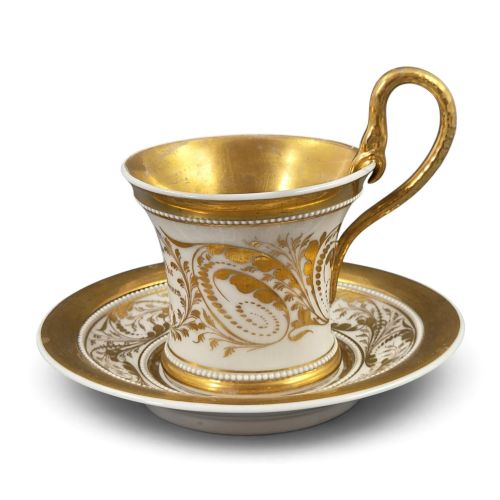
Production relies heavily on hard-paste porcelain combined with intricate application techniques for gold leaf, gilding, and gold gilt. Artisans applied these metallic elements to enhance painted landscapes, allegorical woodland scenes, and topographical views.
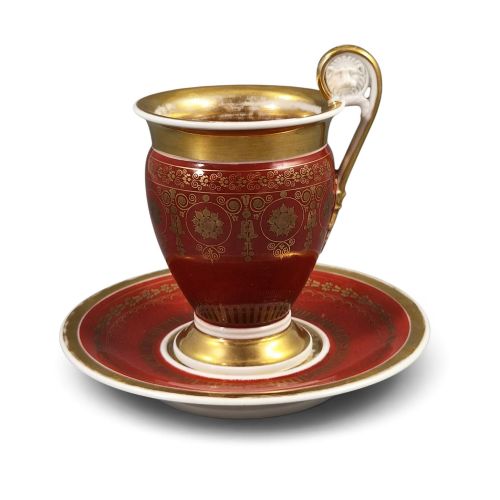
Makers utilised cobalt enamel and various coloured enamels to create contrasting backgrounds against the bright white porcelain bodies. Lion mask handles and moulded sculptural details were frequently incorporated into the structural design of cabinet cups during the Georgian and Regency periods.
Some cabinet cups feature ferocious lion mask handles holding delicate gold rings in their mouths.
What Varies in Quality
The refinement of the porcelain body and the precision of the hand-painted scenes dictate the upper tier of these pieces. Handpainted landscapes and allegorical motifs executed with fine brushwork distinguish superior cabinet cups from standard production wares.
The application and preservation of the gold leaf or gilding indicate the original workshop standards. Intact gilding with crisp burnished highlights demonstrates superior craftsmanship during the manufacturing process.
KPM Berlin·Royal Vienna·Derby Porcelain·Worcester Porcelain·Coalport·Hutschenreuther
The Gold Leaf Porcelain Cup Glossary
- Hard-paste porcelain
- A durable ceramic composition fired at very high temperatures, composed of kaolin and petuntse. This material provides the bright white, vitrified base typical of continental European cabinet cups.
- Cabinet cup
- A decorative ceramic vessel intended primarily for display in a cabinet rather than regular service. These often feature elaborate painted topographical scenes and prominent gilding.
- Demitasse
- A small cup used for serving strong black coffee or espresso. These frequently appear alongside saucers in 19th Century and later ceramic services.
- Gilding
- The application of gold leaf or powdered gold onto the surface of porcelain. This decorative technique defines the visual character of these drinking vessels.
Gold Leaf Porcelain Cup: Frequently Asked Questions
What is a cabinet cup?
A cabinet cup is a specialised ceramic vessel made for visual display rather than daily tea or coffee consumption. These pieces often showcase intricate painted landscapes or allegorical scenes.
They frequently arrived paired with a matching saucer and sit securely behind glass in period display furniture.
How do I date a porcelain cup?
Dating relies on identifying factory marks, stylistic influences such as Biedermeier or Neoclassical, and the composition of the ceramic body. Examining the style of hand-painted decoration also provides clues to the era of production.
Georgian and Regency pieces exhibit different handle formations and gilding techniques compared to later Victorian or 20th Century examples.
Were these cups actually used?
While many delicate cabinet cups and demitasse items served a primarily decorative function, porter mugs and coffee services saw genuine domestic use. The presence of wear patterns often indicates historical beverage consumption.
Fine gilding meant owners frequently reserved certain cups for formal dining or special social occasions.
How should I display porcelain?
Displaying these items requires stable shelving away from direct sunlight to protect enamel colours and delicate gold leaf details. Enclosed cabinets prevent dust accumulation on intricate handles and painted surfaces.
Proper spacing ensures that sculptural elements like lion mask handles remain visible and safe from accidental knocks.