


Gilt Porcelain Cabinet Cup
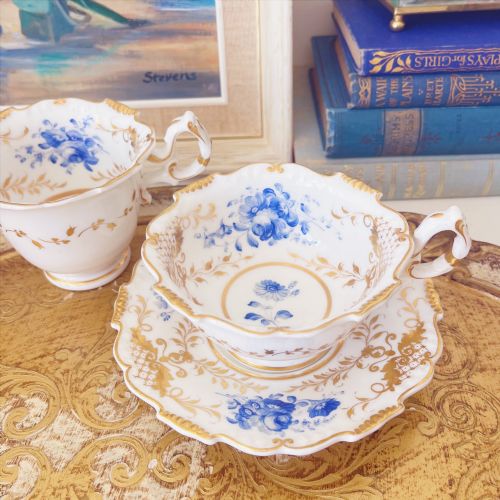
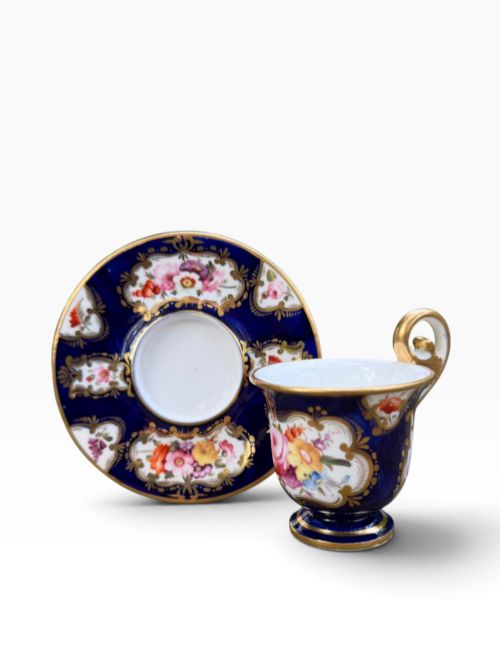
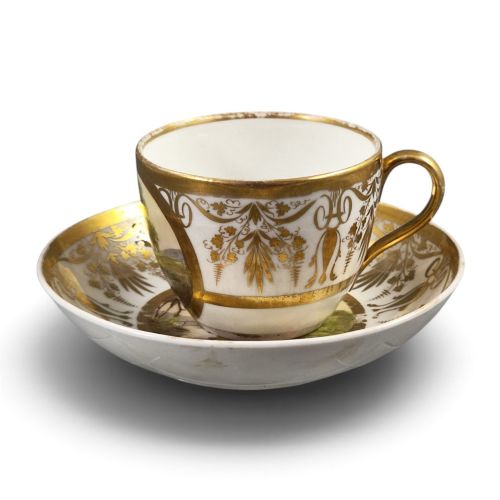
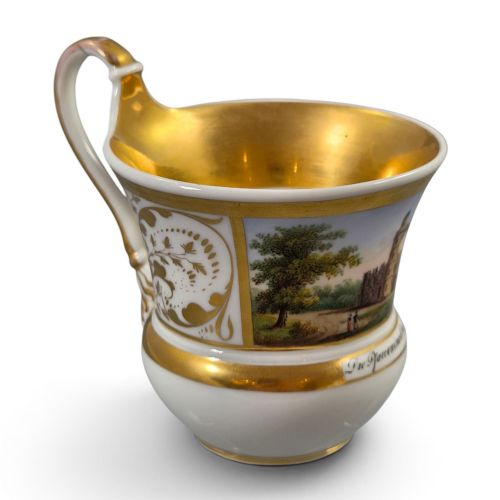
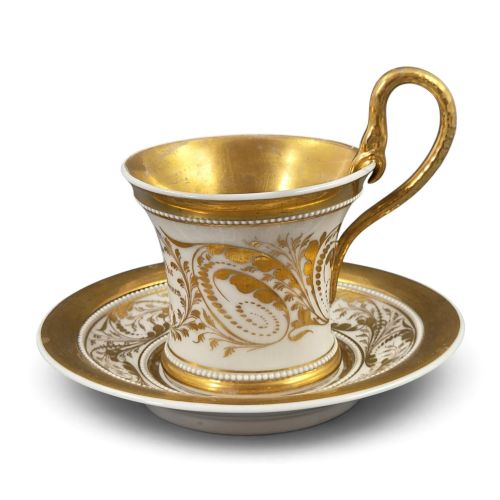
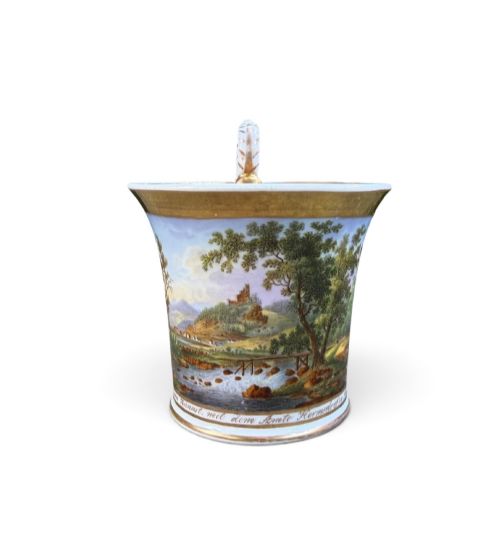
These gilt porcelain cabinet cup examples are ornamental drinking vessels designed for display rather than daily use, prized for their rich gilding and delicate painted scenes.

Gilt Porcelain Cabinet Cup
A gilt porcelain cabinet cup is an ornamental drinking vessel created for display in a cabinet or on a mantelpiece rather than for everyday tea or coffee service. These pieces frequently appear in forms such as cabinet cups and saucers, demitasse cups, chocolate cups, and miniature cups.
The pieces on this page span several distinct periods, including the Georgian, Regency, and Victorian eras, alongside early twentieth-century examples. Buyers will encounter both English manufactories like Worcester and continental European makers.
Forms range from single handle cabinet cups to two-handled presentation pieces and covered trembleuse cups designed to hold liquid securely. Each variation reflects the decorative tastes of its specific period of production.
Materials and manufacture
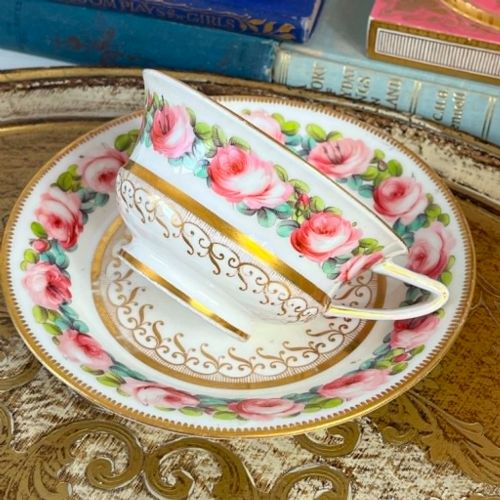
Makers shaped these vessels from hard-paste porcelain or bone china before applying intricate handpainted decoration and detailed enamelling. Artisans painted topographical landscapes, floral motifs such as pink cabbage roses, and allegorical woodland scenes directly onto the ceramic surface.
Gilding forms an essential part of these pieces, utilising gold leaf or gold gilding applied in rich bands and ornate borders. This gold work is fired and burnished to create a bright finish that contrasts with the white porcelain body.
Some miniature cups measure smaller than an acorn, proving that porcelain painters enjoyed the challenge of working on a microscopic scale.
Assessing quality and craftsmanship
Quality in these vessels rests upon the fineness of the porcelain body and the precision of the handpainted details. Superior pieces feature crisp, finely detailed topographical scenes or botanical studies executed by skilled hands.
The application and burnishing of the gilding further distinguish the range, with better examples showing deep, lustrous gold work without rubbing. The weight of the porcelain and the elegance of the handle form also indicate higher workshop standards.
H & R Daniel·Davenport·Coalport·KPM Berlin·Royal Vienna·Spode·Royal Worcester·Hutschenreuther·Barr Flight Barr
The Gilt Porcelain Cabinet Cup Glossary
- Cabinet cup
- An ornamental cup intended for display within a cabinet rather than for regular dining use. These pieces often feature elaborate painted scenes and generous gilding.
- Demitasse
- A small cup used for serving strong black coffee or espresso. They frequently appear paired with matching saucers and delicate gilt decoration.
- Trembleuse
- A specialised cup and saucer featuring a raised ring or well in the centre to hold the cup firmly in place. This design prevented spills among nobility and the upper classes.
- Hard-paste porcelain
- A durable ceramic composition fired at very high temperatures, made from kaolin and petuntse. It provides a bright white, vitreous body ideal for fine painting.
- Gilding
- The application of gold leaf or gold powder to the surface of the porcelain. It is typically fired and polished to achieve a brilliant metallic sheen.
Gilt Porcelain Cabinet Cup: Frequently Asked Questions
What is a cabinet cup?
A cabinet cup is a decorative vessel made primarily for display in a collector's cabinet or on a drawing-room shelf. Unlike everyday tableware, these pieces emphasise artistic painting and gilding.
They were produced by major porcelain factories to showcase the highest skills of their painters and gilders.
Were these cups used for drinking?
Most pieces were intended for occasional use or purely as decorative cabinet items rather than regular dining. Their delicate handles and heavy gilding made them impractical for daily service.
Many remain in pristine condition precisely because their owners kept them behind glass.
How do I date a porcelain cup?
Dating relies on identifying factory marks stamped or painted on the base of the porcelain. Stylistic clues such as Regency shapes or Victorian floral painting also help narrow the period.
Comparing the paste and gilding style with documented examples provides further chronological certainty.
What is hard-paste porcelain?
Hard-paste porcelain is a true ceramic body fired at exceptionally high temperatures with natural clay and rock. It yields a strong, translucent material that resists scratching and holds bright enamel colours well.
European factories developed their own distinct recipes for this durable white body during the eighteenth and nineteenth centuries.
Why is gold leaf used?
Gold leaf provides a brilliant, permanent metallic accent that highlights the fine white porcelain and painted panels. It reflects light and adds a sense of luxury fitting for display objects.
Makers burnished the fired gold to create varying textures and depths across the vessel.