


Gilded Ceramic Cabinet Cup
These gilded ceramic cabinet cups are opulent display vessels created to showcase mastery in porcelain and gold leaf during past centuries.

Gilded Ceramic Cabinet Cup
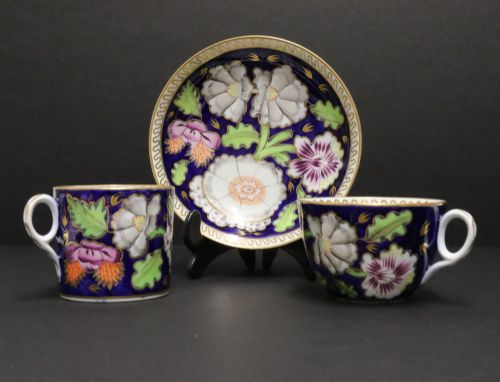
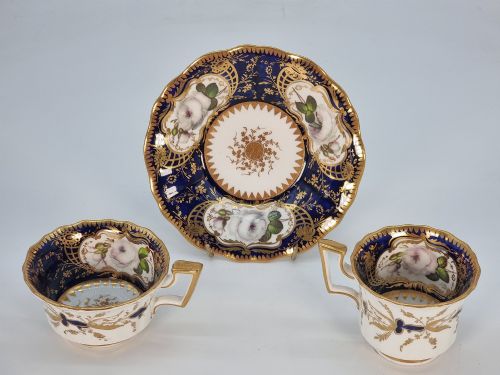
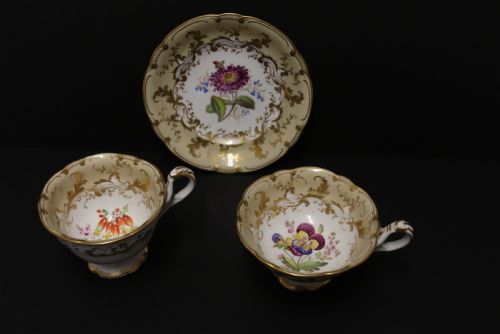
A gilded ceramic cabinet cup is a decorative vessel made for display rather than everyday dining, frequently appearing as cabinet cups, demitasse cups, or trios alongside matching saucers. When searching for this phrase, buyers encounter pieces originating from Regency, Georgian, and later 19th-century periods, as well as early 20th-century examples.
The selections span English and continental potteries, featuring forms such as chocolate cups and miniature cups alongside display stands. These pieces reflect historical shifts from neoclassical restraint to ornate rococo revival and art nouveau aesthetics.
How They Were Made
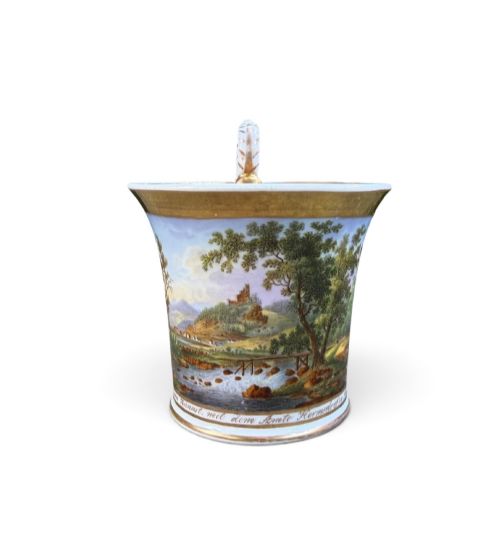
Makeries shaped these items using hard-paste porcelain, bone china, and standard porcelain, applying smooth glazes to create a glossy base for further decoration. Artisans then added hand-painted topographical scenes, allegorical woodland imagery, or dragon motifs.
Gold leaf and precision gilding were applied by hand to accent rims, handles, and borders, often cured through kiln firing to bond the precious metal permanently to the ceramic body.
Listings span the Regency, Georgian, 1800, 1880, 1910, 1920, and 1930 periods, executed in porcelain, bone china, hard-paste porcelain, and mahogany.
What Varies in Quality
Quality rests primarily in the execution of the hand-painted artwork and the precision of the gilding, where finer pieces display intricate allegorical scenes or topographical details rather than repetitive stencilling. The crispness of the porcelain moulding and the weight of the applied gold leaf further separate standard production wares from masterworks.
The prestige of the producing factory and the completeness of sets, such as trios versus single cups, influence the standing of an individual piece within its period.
Newhall·Coalport John Rose·Berlin·Wedgwood·Royal Vienna·KPM Berlin·Spode·Hutschenreuther·Royal Worcester·Barr Flight Barr Worcester·Davenport
The Gilded Ceramic Cabinet Cup Glossary
- Cabinet cup
- A decorative ceramic cup designed primarily for visual display within a cabinet rather than functional drinking. These pieces often feature elaborate gilding and hand-painted scenes.
- Demitasse
- A small cup used for serving strong black coffee or espresso. They frequently appear paired with matching saucers in porcelain and bone china.
- Hard-paste porcelain
- A durable ceramic material composed of kaolin and petuntse fired at high temperatures. It provides a bright, vitreous base ideal for detailed overglaze painting.
- Gilding
- The application of gold leaf or gold powder onto the surface of ceramic objects. This technique highlights rims, handles, and painted panels.
- Trio
- A matching set comprising a teacup, a coffee cup or saucers, and a dessert plate. They are commonly found in early 19th-century English porcelain.
Gilded Ceramic Cabinet Cup: Frequently Asked Questions
What is a cabinet cup?
A cabinet cup is a decorative ceramic vessel made to be showcased in a display cabinet rather than used for daily dining. These pieces prioritize artistic painting and rich gilding over practical utility.
Originating largely in the Georgian, Regency, and Victorian eras, they serve as miniature canvases demonstrating the highest technical skills of historic porcelain houses.
How do I display them?
These cups are best housed within enclosed glass cabinets or dedicated shelving where their delicate handles, gilding, and painted scenes remain protected from dust and handling. Pairing cups with their original saucers creates a balanced visual presentation.
Proper lighting from above or within the cabinet helps accentuate the reflective quality of the gold leaf and the fine details of the porcelain glaze.
How do I identify periods?
Dating relies on observing stylistic markers, such as the neoclassical restraint found in early 19th-century pieces versus the elaborate motifs of later Victorian and art nouveau items. Factory marks, where present on the base, provide direct chronological reference points.
Material composition also offers clues, as hard-paste porcelain and bone china shift in texture and translucency across different manufacturing decades.
Were they used for drinking?
While formed in the shape of vessels like demitasse and chocolate cups, many were created purely as ornamental objects to demonstrate ceramic artistry. Their heavy gilding and delicate painted surfaces made them impractical for regular use.
Historical examples served as status symbols for wealthy households, intended solely for visual admiration within drawing rooms and display cabinets.