




Vintage Ceramic Demitasse
These vintage ceramic demitasse sets offer small-scale elegance for after-dinner coffee, bringing historic craftsmanship straight to your table.
Vintage Ceramic Demitasse
When you search for vintage ceramic demitasse, you are looking at small cups and saucers designed specifically for strong black coffee. The pieces available here span various eras, from nineteenth century specimens to mid-twentieth century designs.
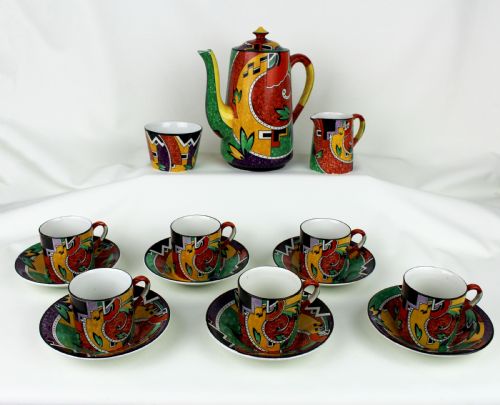
You are most likely to meet twentieth century interpretations on this page, particularly items influenced by Art Deco aesthetics alongside traditional British makers. These small vessels appear both individually and in matched sets complete with saucers.
The forms range from simple single cups to complete coffee services involving multiple matching vessels and saucers. Origins stretch across English potteries and continental European manufacturers such as German porcelain houses.
How they were made
Potters shaped these vessels primarily from porcelain and earthenware, applying specialised glazes to create smooth finished surfaces. Many examples received hand-painted decoration atop the fired ceramic body.
Craftsmen frequently added gold leaf or gold gilt highlights to rims, handles, and motifs to elevate the visual richness of the ware. Some sets also incorporate silver mounts to support the ceramic bodies.
Some lucky buyers get tiny silver spoons included, proving people have been fussing over miniature coffee gear for a century.
What varies in quality
The standard of a demitasse rests heavily on the fineness of the ceramic body and the precision of the hand-painted details. Finer porcelain versions exhibit thinner walls and greater translucency.
Decoration technique separates mass-produced items from superior artistic output, with careful hand-painting and intact gold gilt retaining greater visual sharpness. The presence of a complete cased set or matching spoons further distinguishes the caliber of the offering.
Clarice Cliff·Royal Worcester·Coalport·KPM Berlin·Hutschenreuther
The Vintage Ceramic Demitasse Glossary
- Demitasse
- A small cup used for serving black coffee after dinner. The term translates literally from French as half cup.
- Porcelain
- A hard, white ceramic material fired at high temperatures to achieve vitrification. It provides a smooth, non-porous surface suitable for detailed painting.
- Gold Gilt
- A thin layer of gold applied to the surface of the ceramic for decorative effect. It catches the light and outlines the form.
- Earthenware
- A porous pottery body fired at lower temperatures than porcelain. It requires a glaze to become impermeable to liquids.
- Art Deco
- A design style characterised by sleek geometric shapes and vibrant motifs popular during the nineteen twenties. It influenced many ceramics of that era.
Vintage Ceramic Demitasse: Frequently Asked Questions
What is a demitasse used for?
These small vessels were designed specifically for serving strong, concentrated black coffee or espresso after a meal. Their compact size kept the beverage hot.
Today, collectors often display them in cabinets or use them for casual after-dinner coffee service when entertaining guests.
How do I identify Art Deco demitasse?
Art Deco pieces display geometric patterns, bold colours, and stylized motifs characteristic of the nineteen twenties. Look for names like the Jazz pattern or Fantasque designs.
These items stand apart from earlier Victorian or neoclassical examples through their modern, streamlined silhouettes.
Are these cups safe for daily use?
While many vintage cups remain sturdy enough for occasional use, older porcelain and delicate hand-painted surfaces require careful handling. Hand washing protects the gold gilt and enamel from fading.
Collectors often reserve these delicate sets for special occasions rather than everyday morning coffee routines.
How do I date an antique demitasse?
Dating relies on maker marks stamped or painted on the underside of the ceramic base, alongside the stylistic clues of the decoration. Victorian pieces often feature ornate Rococo or neoclassical scrollwork.
Twentieth-century items typically shift toward cleaner lines, vibrant hand-painted enamels, or distinct modernist shapes.