


Gold Leaf Coffee Cup
A gold leaf coffee cup is a refined drinking vessel, typically paired with a saucer, offering a glimpse into centuries of fine ceramic artistry.
Gold Leaf Coffee Cup
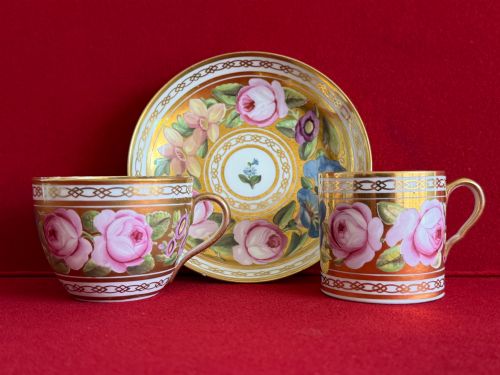
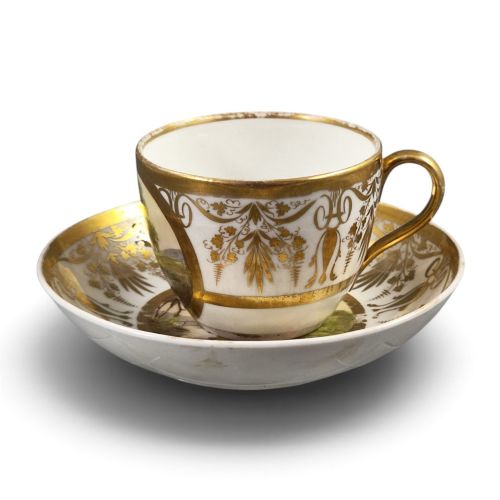
When searching for a gold leaf coffee cup, a buyer examines small drinking vessels designed for strong coffee, often paired with matching saucers. These pieces frequently appear as cabinet cups, demitasse sets, or part of larger coffee services.
The versions most commonly met on this page span several distinct periods, notably the Georgian era, the Regency period, the Victorian age, and the early twentieth century. Forms range from classical cabinet cups to individual demitasse sets produced by notable European factories.
Origin details reveal diverse European centres of ceramic production, including German, French, and English workshops. Styles stretch across Rococo Revival, Neoclassical, Biedermeier, French Empire, and Edwardian designs.
Materials and construction
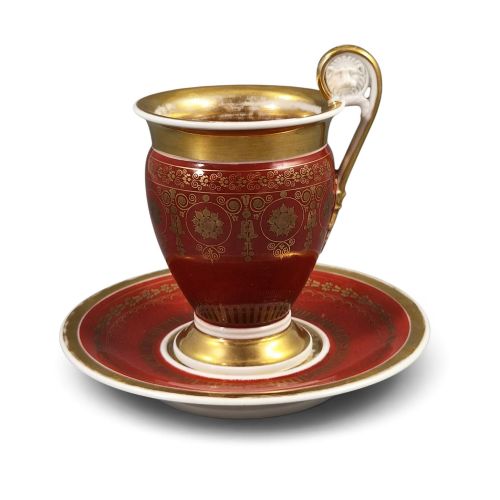
The manufacture of these drinking vessels relies heavily on hard-paste porcelain and standard porcelain bodies as the primary foundation. Artisans shape these ceramic materials into delicate cups, saucers, and specialised forms such as cabinet cups with lion mask handles.
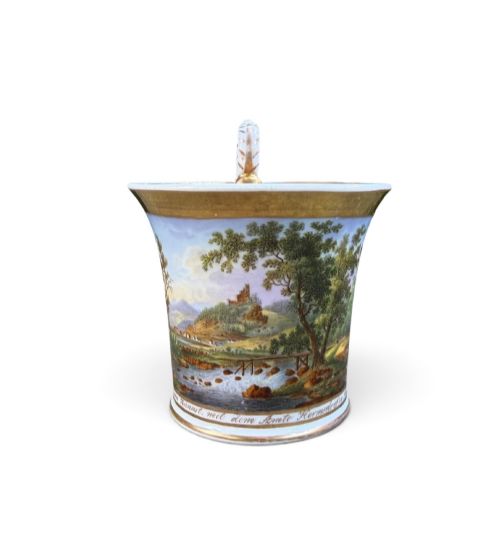
Decoration involves the application of gold leaf and gilding to accentuate handles, rims, and painted scenes. Enamel work, including cobalt enamel, combines with hand-painted landscapes and motifs to complete the surface design.
Materials recorded across the inventory include hard-paste porcelain, cobalt enamel, and applied gold leaf.
Judging quality and execution
Quality separates standard production wares from high-end cabinet pieces through the precision of the hand-painted artistry. Detailed topographical scenes and careful miniatures require superior brushwork compared to simpler or more repetitive patterns.
The application and preservation of the gold leaf and gilding dictate much of the visual distinction. Rich, burnished gold highlights executed with clean lines elevate a piece far above simpler, worn gilding.
KPM Berlin·French Old Paris·Derby·Coalport·Hutschenreuther·Royal Worcester
The Gold Leaf Coffee Cup Glossary
- Cabinet Cup and Saucer
- A decorative cup and saucer made primarily for display in a cabinet rather than for daily use. These often feature elaborate hand-painted landscapes or portraits.
- Demitasse
- A small cup used to serve Turkish coffee or espresso. The term translates literally to half cup in French.
- Hard-paste Porcelain
- A true porcelain composed of kaolin and petuntse fired at high temperatures. This material produces a dense, bright white ceramic body.
- Gilding
- The application of gold leaf or gold powder to a surface. On ceramics, it provides metallic highlights along rims and handles.
- Cobalt Enamel
- A deep blue vitreous material fused to porcelain during firing. It provides a striking contrast against white porcelain and gold leaf.
Gold Leaf Coffee Cup: Frequently Asked Questions
What is a demitasse cup?
A demitasse is a small cup designed specifically for serving strong coffee after a meal. These vessels hold a smaller volume than standard tea or coffee cups.
They frequently feature delicate handles and intricate gilding, making them popular display pieces within cabinet collections.
How do I date a porcelain cup?
Dating porcelain relies on examining factory marks, the style of painting, and the prevailing aesthetic movement of the era. Pieces from the Georgian period often display Neoclassical or early Empire characteristics.
Later Victorian and Edwardian examples shift toward different decorative tastes and standardised manufacturing marks. Comparing the base stamps with known factory operational dates clarifies the timeline.
Were cabinet cups used for drinking?
Cabinet cups were primarily produced for display within a collector's glass-fronted cabinet rather than everyday dining. Their delicate handles, often shaped like animal masks or scrolling foliage, prioritized visual elegance over practical function.
Despite this, many retain fully glazed interiors capable of holding liquids.
What distinguishes hard-paste porcelain?
Hard-paste porcelain is fired at significantly higher temperatures than soft-paste ceramic bodies. This intense heat creates a vitreous, highly durable material that resists scratching and absorbs zero moisture.
It forms the sturdy foundation for many fine European cabinet cups and services.