


Regency Period Teacup
A regency period teacup brings crisp neo-classical grace and brilliant handpainted gilding straight to the table from the early nineteenth century.

Regency Period Teacup
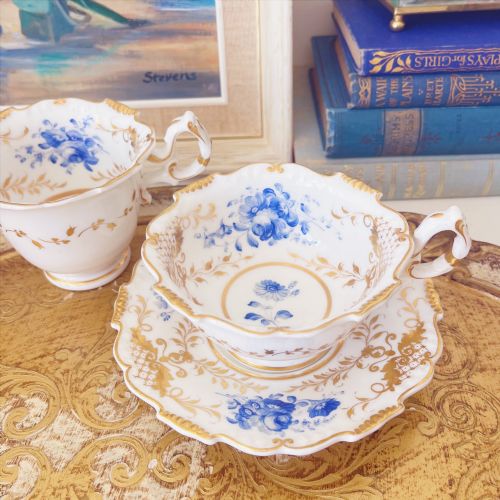
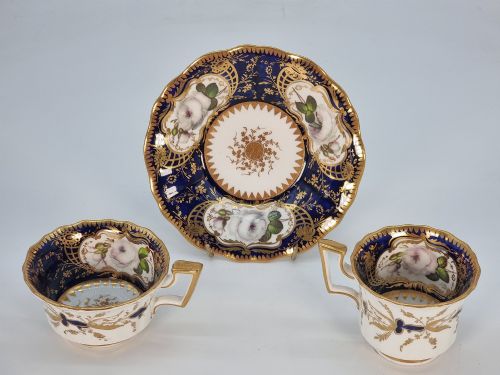
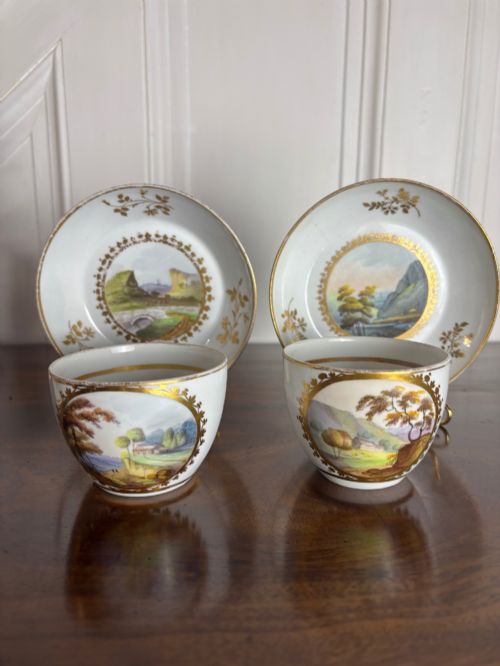
A regency period teacup sits at the intersection of Georgian elegance and nineteenth-century ceramic innovation, typically taking the form of a delicate handleless cup or footed shape accompanied by its matching saucer. Buyers searching for a regency period teacup generally encounter fine porcelain or bone china pieces spanning the years from eighteen hundred to eighteen fifty, often grouped as cabinet trios alongside coffee cups.
The aesthetic of these pieces leans heavily on Georgian neoclassical design principles, featuring handpainted landscapes, oriental motifs like the dragon in compartments pattern, and botanical themes such as oak and mistletoe. Most examples on this page hail from renowned English porcelain centres operating during the Regency era and the broader nineteenth century.
Makers represented in this category include historic factories such as Worcester, Spode, Minton, Coalport, and Derby, alongside specialised decorators like Samuel Astles. Collectors frequently discover both cabinet pieces intended for display and robust bone china vessels designed for early tea service.
Materials and methods
Potters of the era relied upon porcelain and refined bone china bodies, coated in a smooth porcelain glaze that provided an ideal canvas for intricate overglaze decoration. These substrates offered the necessary strength to form thin, translucent walls while maintaining stability through high-temperature kiln firings.
Decoration involved meticulous handpainting combined with rich gold leaf and gold gilding applied by skilled artisans in workshops across England. The application of metallic leaf required precise temperature control during firing to bond the gold permanently to the glazed surface.
Mistletoe and dragon motifs appear among the botanical and oriental handpainted designs.
Markers of superior execution
Quality in a regency period teacup is defined by the precision of the handpainted detail, particularly in miniature landscapes, botanical subjects, and complex borders. Superior pieces exhibit confident brushwork and exact registration of motifs executed by named decorators or premier factory hands.
The weight and translucency of the porcelain body also distinguish finer output, alongside the generosity and purity of the gold gilding. Well-preserved specimens retain crisp enamel colours and unblemished gilding across both cup and saucer.
H and R Daniel·Coalport John Rose·Minton·Flight Barr and Barr·Yates·Duesbury and Kean·Spode
The Regency Period Teacup Glossary
- Cabinet trio
- A matching set comprising a teacup, coffee cup, and saucer designed primarily for display in a cabinet rather than daily service.
- Bone china
- A type of porcelain incorporating bone ash that results in a strong, translucent ceramic body well suited to delicate forms.
- Gold gilding
- The application of gold leaf or powdered gold to ceramic surfaces, providing decorative borders and highlights.
- Porcelain glaze
- A glassy coating fused to the ceramic body during firing, sealing the clay and creating a smooth base for painting.
- Neoclassical
- A dominant design style drawing inspiration from classical antiquity, featuring symmetrical forms and restrained motifs.
Regency Period Teacup: Frequently Asked Questions
Are these cups safe for drinking tea?
While these ceramics were originally created for functional use during the nineteenth century, age and delicate handpainted surfaces mean most modern collectors prefer to use them for display.
Hand-applied gold gilding and historic porcelain glazes can be sensitive to modern detergents and thermal shock from hot liquids.
What is a cabinet trio?
A cabinet trio consists of a matching teacup, coffee cup, and saucer produced by the same factory in an identical pattern.
These sets were prized by collectors for display in glass-fronted cabinets rather than everyday dining tables.
How do I date a Regency teacup?
Dating relies on factory mark styles, pattern numbers, and changes in ceramic body composition recorded across the early nineteenth century.
Stylistic shifts from Georgian neoclassical motifs to later Victorian aesthetics also help narrow the production window.
Why are some cups handleless?
Many early nineteenth-century teacups followed traditional Chinese porcelain shapes which did not incorporate handles.
Drinkers held the bowl-like form with their fingers while the tea cooled slightly in the matching saucer.