


Gilt Plaster Wall Mirror
A gilt plaster wall mirror brings instant warmth and reflected light to a room, catching the eye with its historic gilded surface.
Gilt Plaster Wall Mirror
A gilt plaster wall mirror is a decorative looking glass framed in moulded plaster, gesso, or wood, finished with a metallic surface layer. Buyers searching this phrase seek characterful antique wall hangings that reflect period interior aesthetics from the nineteenth century onward.
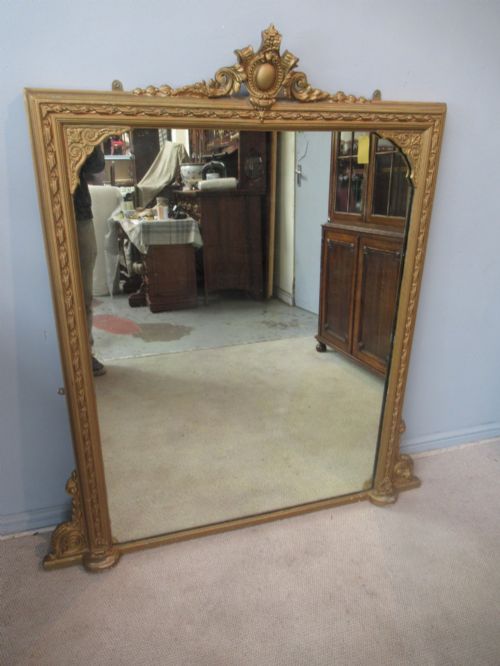
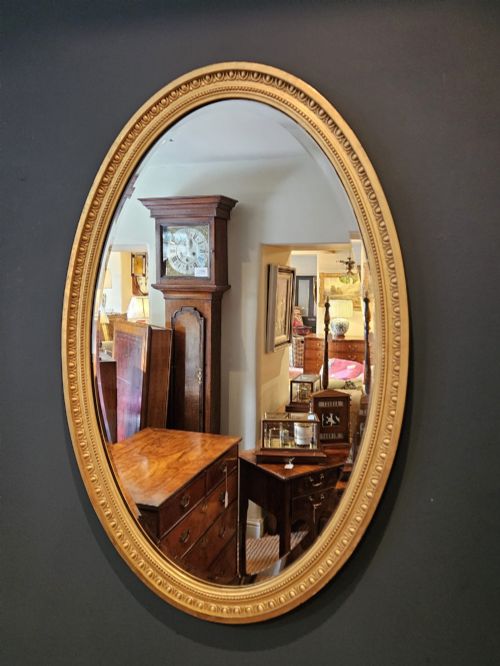
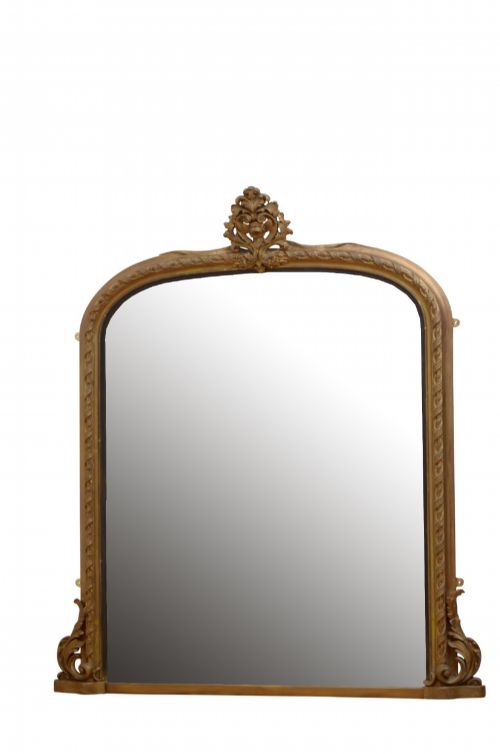
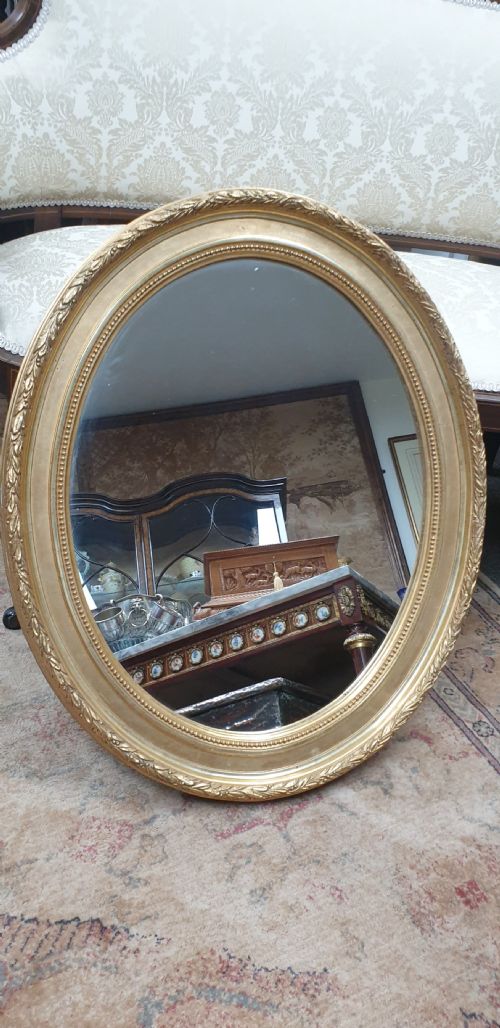
The versions most frequently encountered on this page span the Victorian and Edwardian eras, alongside nineteenth-century French and Regency pieces. Forms range from compact ovals to large overmantel mirrors designed to sit above a fireplace.
Makers utilised various silhouettes, including architectural rectangular frames, arched overmantels, and ornate oval formats. Stylistic influences draw upon Rococo Revival, Neoclassical, and Art Nouveau traditions.
Materials and Technique
Construction typically begins with a timber base frame providing structural stability, overlaid with plaster or gesso to form the relief ornamentation. Artisans then applied gold leaf, composition, or liquid gilt to achieve the metallic sheen.
The combination of wood and plaster allowed craftsmen to cast intricate foliage, scrolls, and classical motifs with high definition. Over time, the interaction between the timber substrate, plaster, and metal leaf creates distinct surface textures.
Listings feature periods from the Georgian and Regency eras through to the Victorian, Edwardian, and early twentieth century.
Defining Quality
Quality rests upon the crispness of the moulded relief and the depth of the gilding. Finer examples display hand-finished detail in the plaster work rather than flat, machine-pressed uniformity.
The preservation of the original surface finish distinguishes superior items from heavily restored alternatives. Weight and rigidity in the underlying timber and plaster carcass also indicate sturdier construction.
The Gilt Plaster Wall Mirror Glossary
- Gesso
- A plaster mixture applied to wood frames as a smooth base for gilding. It holds fine detail well during moulding.
- Composition
- A moulded mixture of whiting, resin, and oil pressed into ornament shapes. It offers an alternative to hand-carved wood.
- Overmantel mirror
- A large horizontal looking glass designed specifically to hang above a mantelpiece. These often feature multi-panel glass and architectural frames.
- Giltwood
- Timber that has been coated with gold leaf or metallic paint. It provides the core structure for many ornate frames.
Gilt Plaster Wall Mirror: Frequently Asked Questions
Where should I hang a large overmantel mirror?
These pieces sit naturally above a fireplace, anchoring the vertical space of a chimney breast. They also function effectively on main reception room walls to amplify natural light.
Ensure the wall construction safely supports the substantial combined weight of the timber, plaster, and glass.
How do I clean a gilded plaster frame?
Dust the ornate mouldings gently with a dry, soft brush to prevent accumulation in the crevices. Avoid commercial liquid cleaners or moisture, which can damage fragile gesso and gold leaf.
Light maintenance preserves the original surface finish without wearing away the metallic layer.
What styles are common in these mirrors?
Design influences include nineteenth-century French chateau aesthetics, Rococo Revival scrolls, and Neoclassical symmetry. Edwardian and Victorian interpretations also appear frequently.
Each style dictates the complexity of the plaster relief and the overall silhouette of the frame.
How can I tell the period of a frame?
Dating relies upon examining the timber backing, the formulation of the plaster or composition, and stylistic motifs. Regency and Victorian examples often exhibit distinct moulding techniques.
Glass characteristics, such as slight bevels or historic silvering variations, offer further clues to age.