


Gilt Painted Console Table
A gilt painted console table brings architectural presence and surface brilliance to a hallway or reception room.
Gilt Painted Console Table
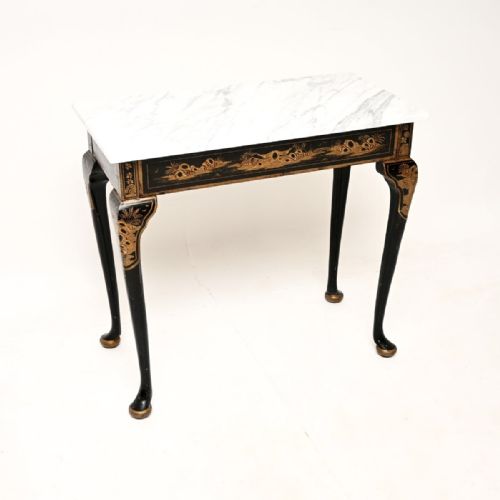
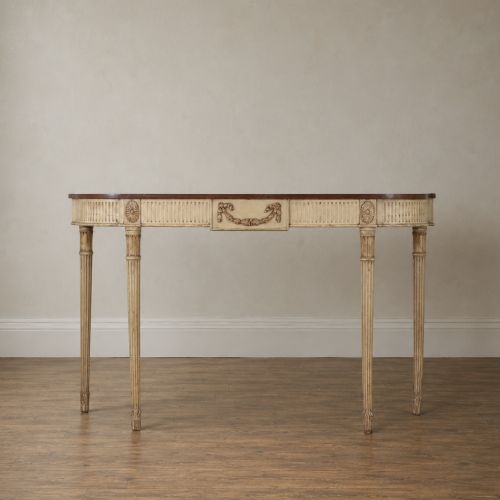
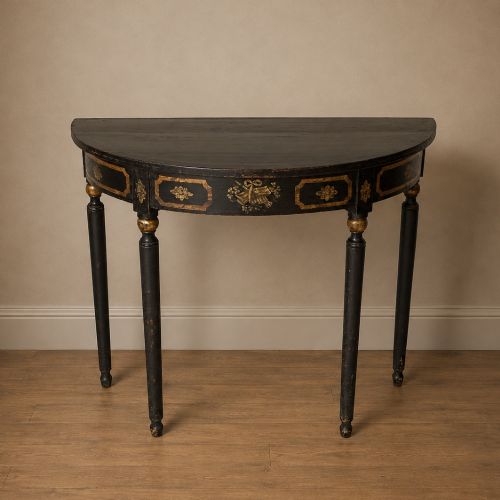
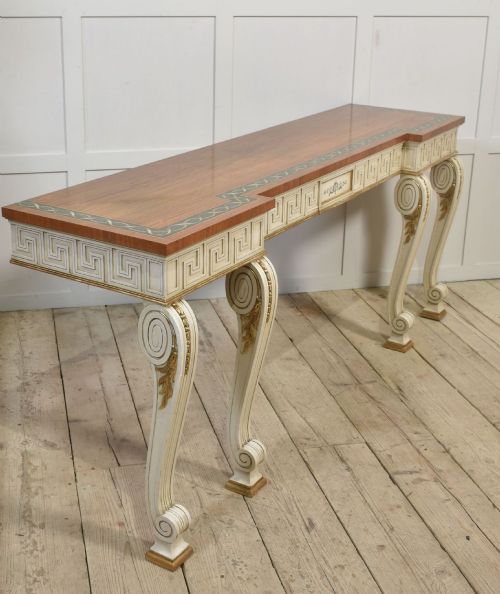
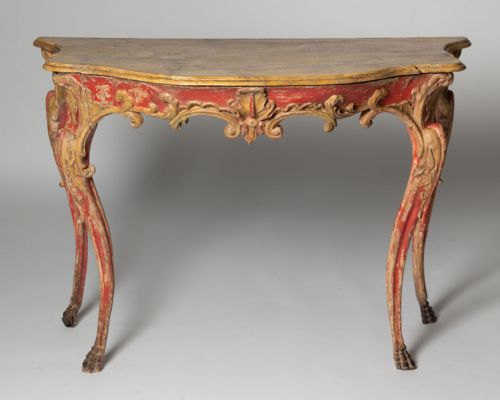
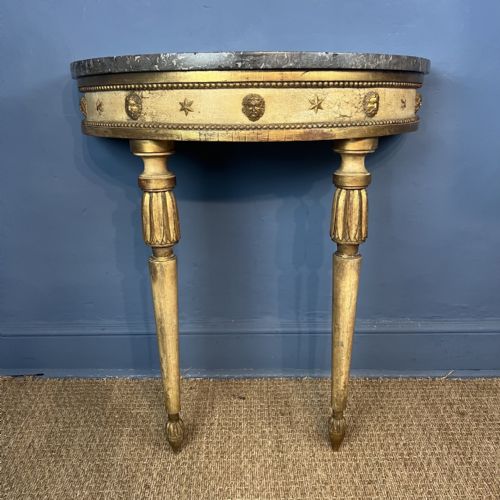
A gilt painted console table is a wall-fixed or freestanding surface designed to stand against a wall, frequently paired with a matching pier mirror. When you search for this phrase, you encounter forms ranging from half-moon demi-lune shapes to rectangular side and serving tables originating across England, France, Italy, and Sweden. The inventory relies heavily on pieces from the eighteenth and nineteenth centuries, alongside early twentieth-century revivals.
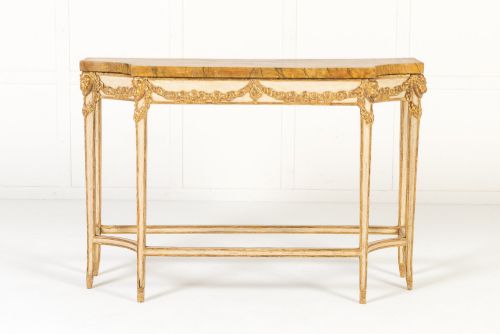
Italian and French regional examples dominate the selection, often rendered in Neoclassical or Rococo styles with painted wood and applied gold leaf. You also find British Georgian styles, Regency period pieces, and occasional Chinoiserie lacquered variants. These tables served primarily as decorative furnishing pieces in grand interiors, often supporting heavy stone tops.
How They Were Made
Carved wooden carcasses form the structural basis of these tables, utilising softwoods and hardwoods prepared to receive decorative surfaces. Artisans applied layers of gesso to wooden carvings to create a smooth ground for water gilding or oil gilding with gold leaf. Paint finishes, including cream, black, and faux marble effects, were applied to the woodwork alongside parcel gilt highlights.
Heavy stone slabs, particularly marble such as Sienna or rouge variants, sit atop many of these frames to provide a solid functional surface. Carved details range from dolphins and floral motifs to crisp architectural moulding associated with Neoclassical design.
Look closely for carved wooden dolphins serving as structural supports on nineteenth-century Italian tables.
What Varies in Quality
The sophistication of the carved wooden ornament and the depth of the gesso preparation dictate the refinement of the piece. Crisp, hand-carved details on Italian or French frames indicate superior workshop output compared to softer, more mechanical moulding found in later revivals.
The integration of the marble top with the wooden base reveals the standard of original construction, particularly where custom stone has been cut to fit a demi-lune or serpentine console. Original gilding surfaces showing authentic burnishing and patina hold greater material integrity than later overpainting.
The Gilt Painted Console Table Glossary
- Demi-lune
- A half-moon shape popular for console tables designed to sit flush against a wall. This format is common in eighteenth and nineteenth-century English and continental pieces.
- Gesso
- A plaster mixture applied to wood to create a smooth surface for gilding or painting. It allows intricate carved details to hold sharp definition.
- Giltwood
- Wood that has been decorated with thin sheets of gold leaf. It forms the primary decorative medium for high-status furniture frames.
- Parcel gilt
- A finish where only specific carved details or raised elements are gilded while the rest of the surface is painted. This technique creates contrast against coloured wooden grounds.
- Trumeau mirror
- An overmantel or wall mirror featuring an integrated painted panel or carving, frequently found paired directly above a matching console table.
Gilt Painted Console Table: Frequently Asked Questions
Where should I place a console table?
These tables traditionally occupy entrance halls, reception rooms, or living spaces against a flat wall. Because many historical console tables are shallow or demi-lune in shape, they fit narrow circulation areas without blocking pathways.
Pairing a table with a matching pier mirror creates a vertical focal point that expands the visual space of a room. Freestanding variations also function effectively as side or serving tables in dining settings.
How do I care for the marble top?
Marble surfaces require gentle cleaning with a damp cloth and mild, neutral soap. Avoid acidic cleaners, vinegar, or citrus products, which etch and dull polished stone.
Use coasters under glasses and felt pads beneath decorative objects to prevent scratching the surface of the stone over time.
Are these tables freestanding?
Many console tables in this category are designed to stand independently on four or two legs, though historical examples often required wall attachment for complete stability. Tables with heavy marble tops rely on their own substantial weight to stay secure.
Lighter or strictly wall-mounted console designs utilise brackets or fastenings fixed directly into the wall structure to prevent tipping.