
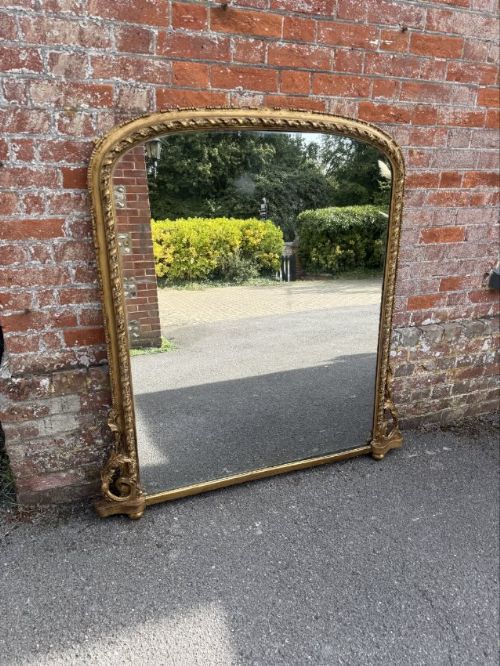
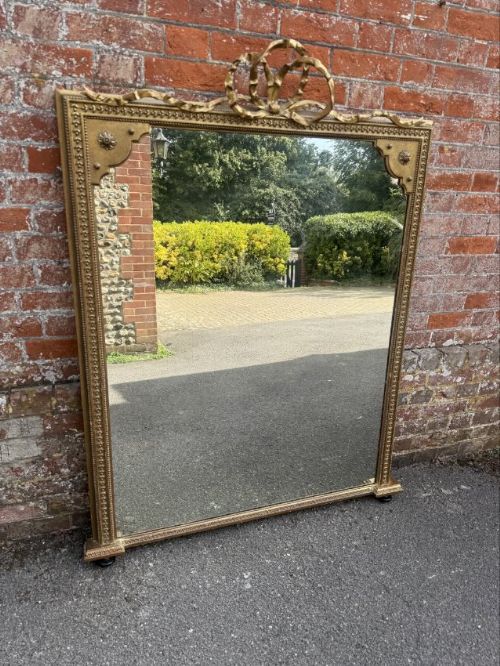
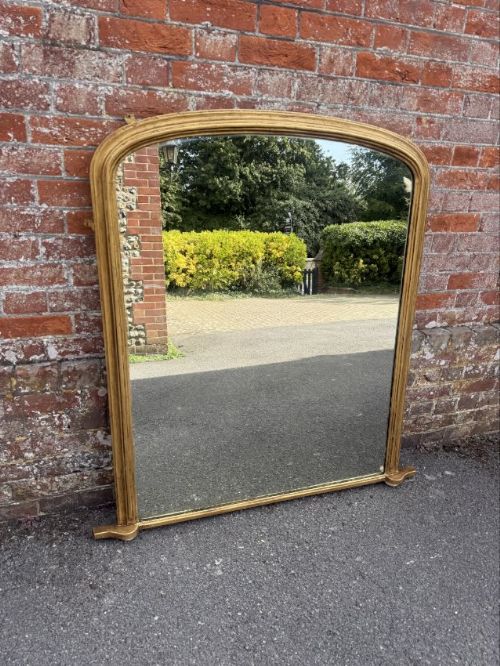
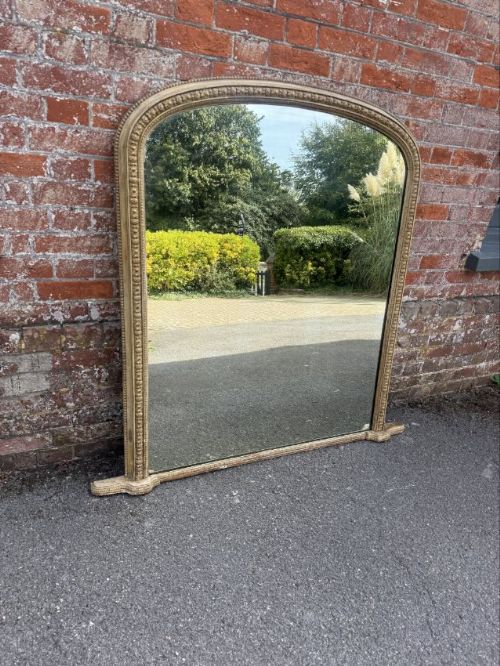
Gilt Overmantle Mirror
A gilt overmantle mirror brings grand nineteenth-century scale and light reflection to a room, hung traditionally above a fireplace.
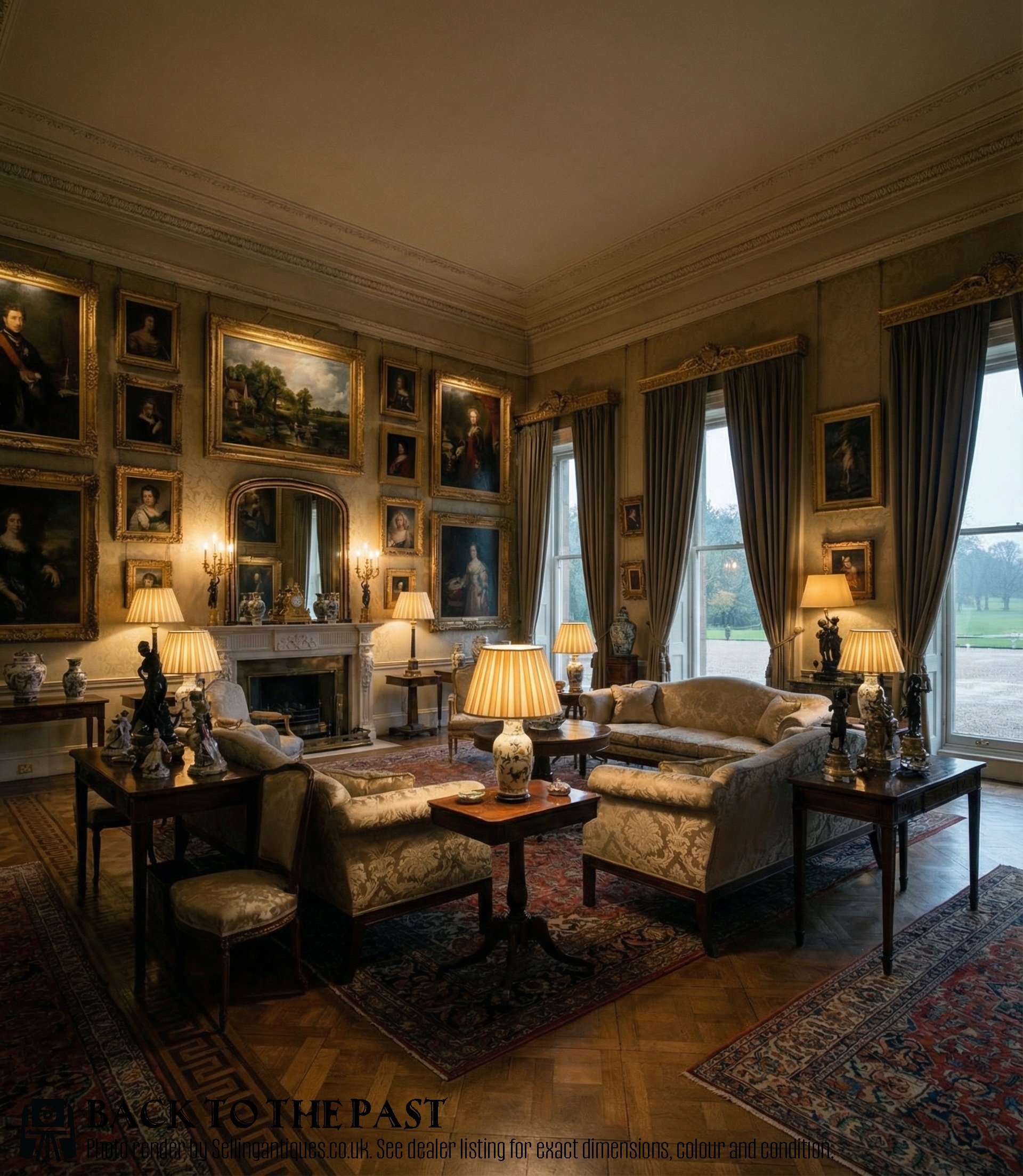
Gilt Overmantle Mirror
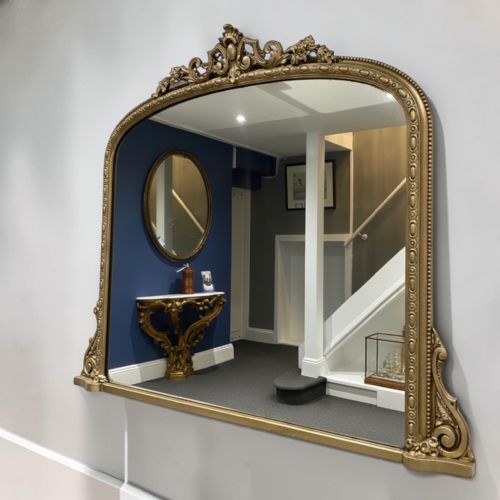
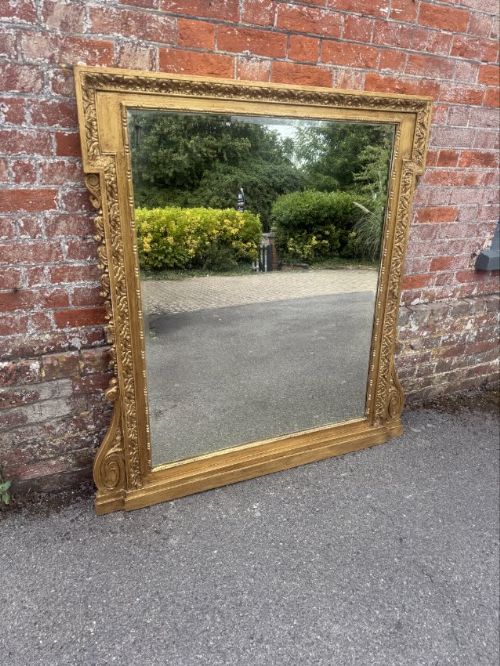
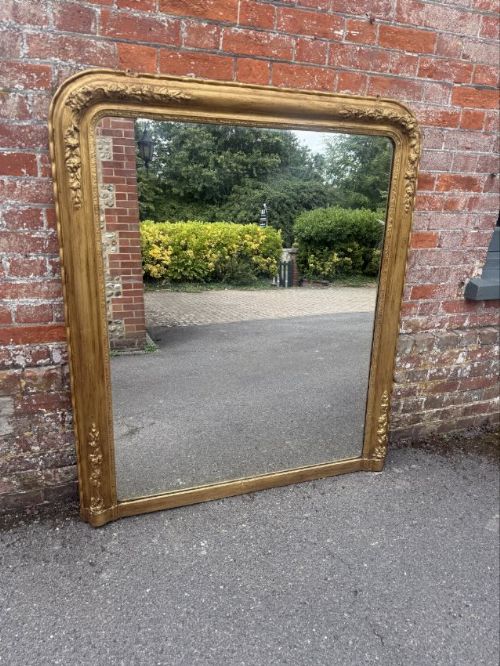
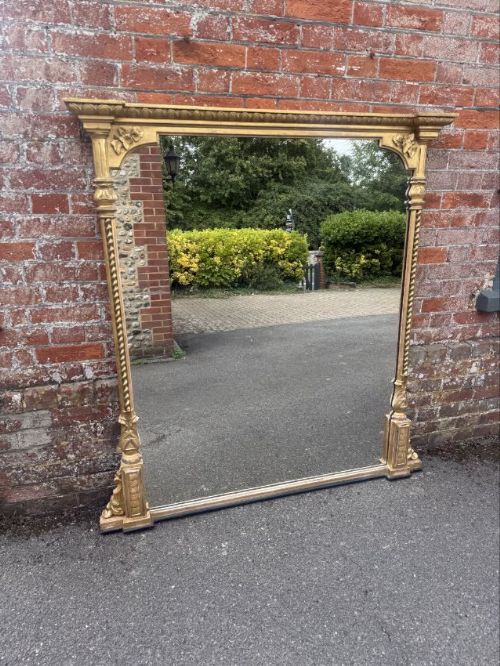
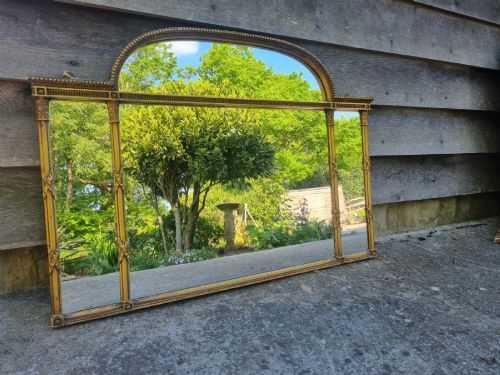
A gilt overmantle mirror is designed to sit directly above a mantelpiece, reflecting light and anchoring the fireplace wall. The selection centres heavily on nineteenth-century English pieces, alongside Regency and early twentieth-century examples.
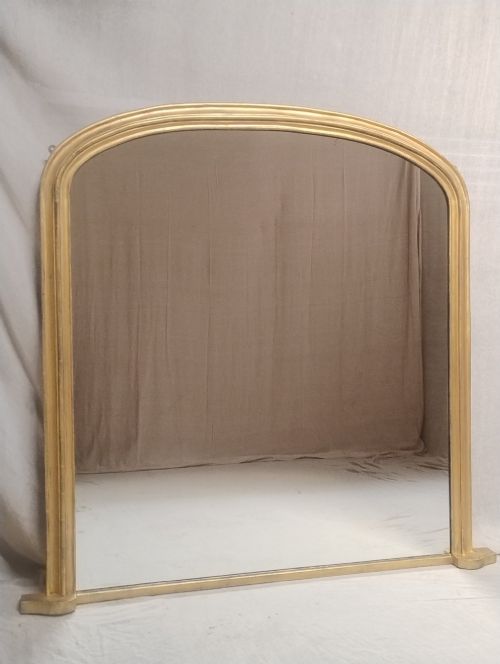
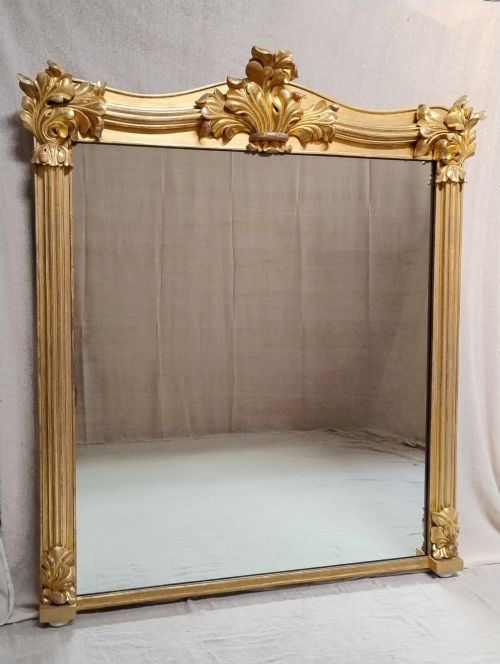
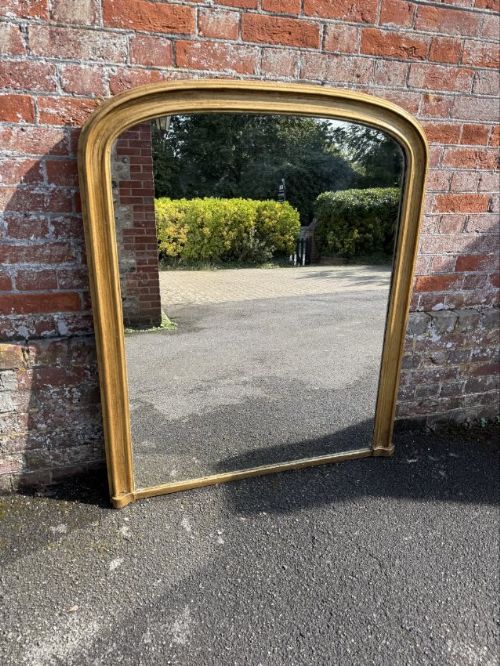
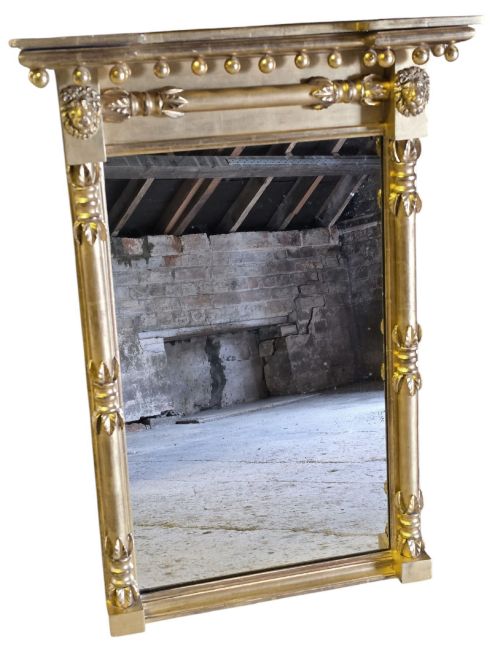
Most pieces on show feature large rectangular or arched tops, often built with substantial presence to dominate a chimney breast. Common formats include single plates framed by decorative mouldings or triple plate configurations.
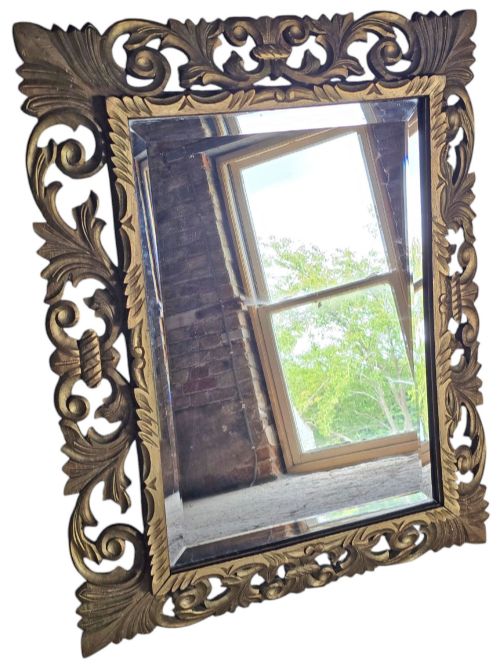
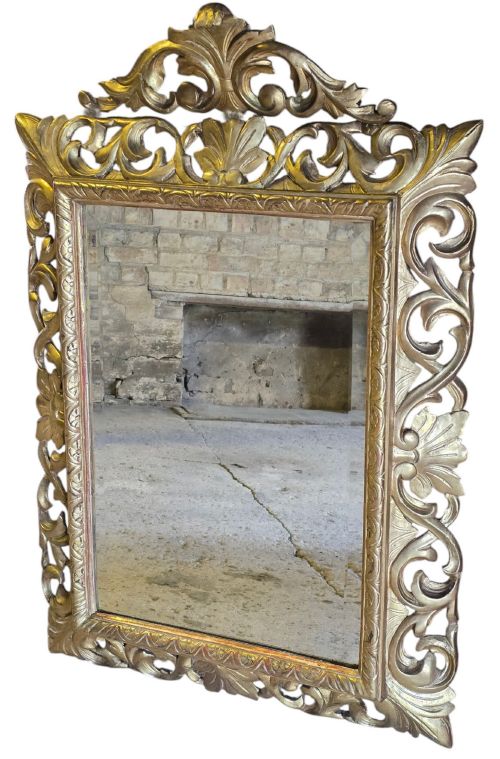
Origins span English workshops from the eighteen-fifties through to the eighteen-eighties, with occasional continental variations appearing in Florentine and French styles.
How they were made
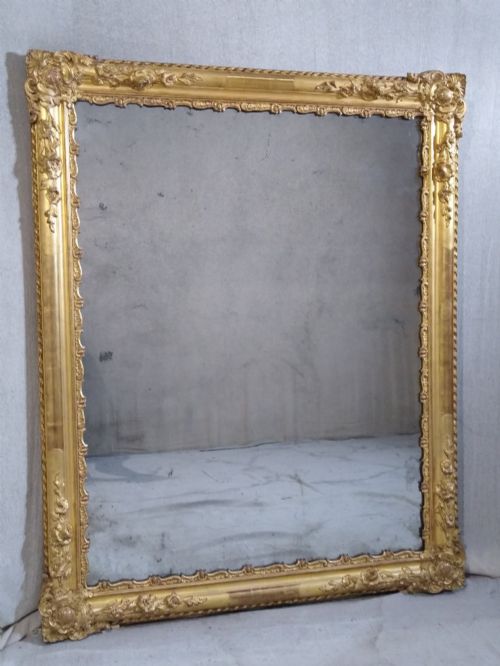
Carved wood and gesso form the primary structural foundation for the decorative frames, providing a stable base for detailed surface ornamentation. Artisans applied thin layers of gold leaf or gilt over the gesso ground to achieve a bright, reflective metallic finish.
Composition material was frequently utilised for repetitive moulded details such as rope twists, ribbed patterns, and floral motifs. Mirror glass was set within these heavy frames, occasionally accompanied by ebonised details or parcel-gilt highlights.
Nautical rope twist frames let sailors bring stormy sea motifs straight onto the drawing room fireplace.
What varies in quality
The depth and crispness of the carved wood and gesso ornamentation separate standard production items from superior examples. Hand-carved elements display sharper relief and more refined execution than moulded composition decorations.
Originality of the gilding and the mirror glass heavily influence the character of the piece. Retaining the authentic gilded surface and period glass plates preserves the integrity of the antique.
The Gilt Overmantle Mirror Glossary
- Gesso
- A plaster-based mixture applied to wood frames to create a smooth surface for gilding. It allows intricate relief moulding before gold leaf is laid down.
- Giltwood
- Timber that has been coated in gold leaf or gold paint. This technique protects the underlying wood while providing a brilliant metallic lustre.
- Overmantle
- A large mirror or painting specifically scaled to hang above a fireplace mantel. These pieces were traditionally designed to echo the architectural proportions of the hearth below.
- Composition
- A moulded mixture of whiting, resin, linseed oil and glue pressed into decorative shapes. It offered a cost-effective alternative to hand carving during the nineteenth century.
- Pier glass
- A tall mirror designed to be placed on the wall between windows, though the term often overlaps with mantel mirrors in nineteenth-century listings.
- Foxed glass
- Mirror plate showing age-related spots and discoloration where the backing has degraded. Collectors prize this characteristic for authentic period atmosphere.
Gilt Overmantle Mirror: Frequently Asked Questions
Where should I hang an overmantle mirror?
These mirrors traditionally sit directly above a fireplace mantelpiece, anchored securely to the wall to support their substantial weight. They work equally well mounted on principal living room walls where their large scale can reflect natural light.
Ensure the hanging fixings match the heavy wood and gesso construction of nineteenth-century frames. Professional wall anchoring is essential due to the considerable size of these statement pieces.
How do I identify a Victorian piece?
Victorian examples often feature arched tops, substantial carved wood and gesso frames, and specific decorative motifs like rope twists or columns. Look for nineteenth-century construction methods and materials recorded in the frame assembly.
Many pieces from this era embrace revival styles such as Rococo or Neoclassical designs. Examining the backboards and fixings helps confirm the period origin.
What is foxed glass?
Foxed glass refers to the natural spotting and darkening that occurs on antique mirror plates over decades. This ageing process creates a mottled reflection valued for historical authenticity.
Original plates with light foxing are common in nineteenth-century pieces. They provide a softer reflection than modern replacement mirror glass.