
Gilt Ormolu Centrepiece
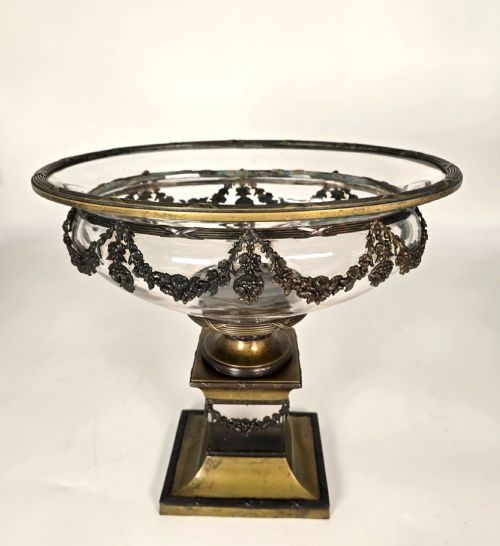
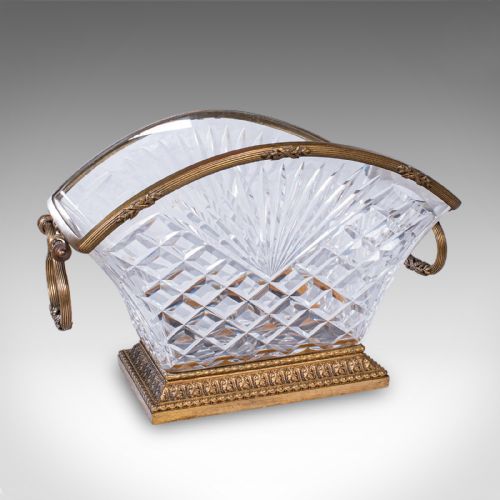
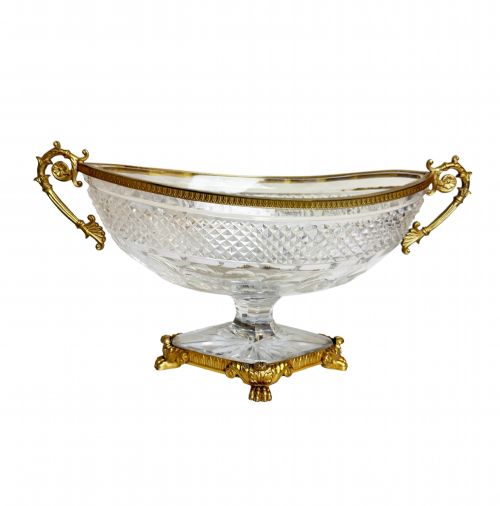
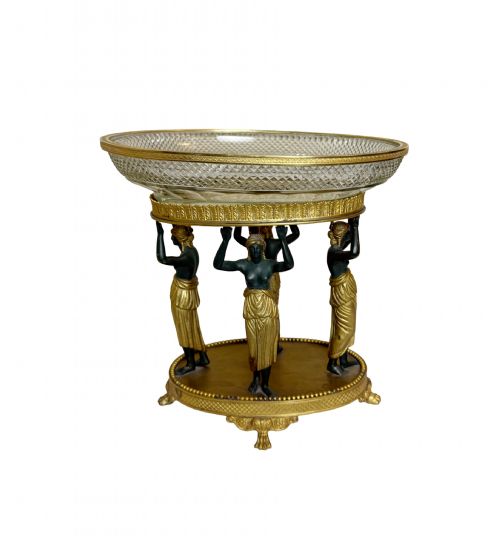
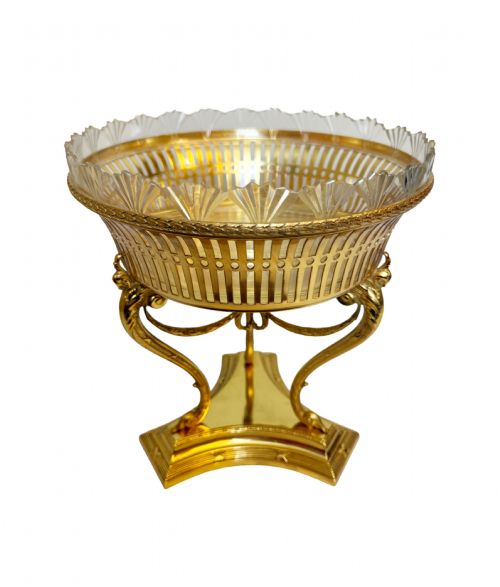
A gilt ormolu centrepiece commands a dining table with the gleam of 19th-century French metalwork and crystal.
Gilt Ormolu Centrepiece
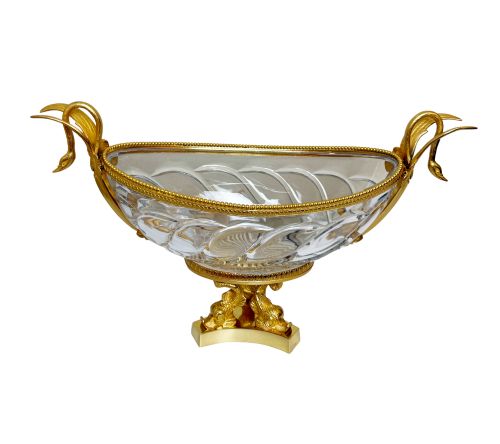
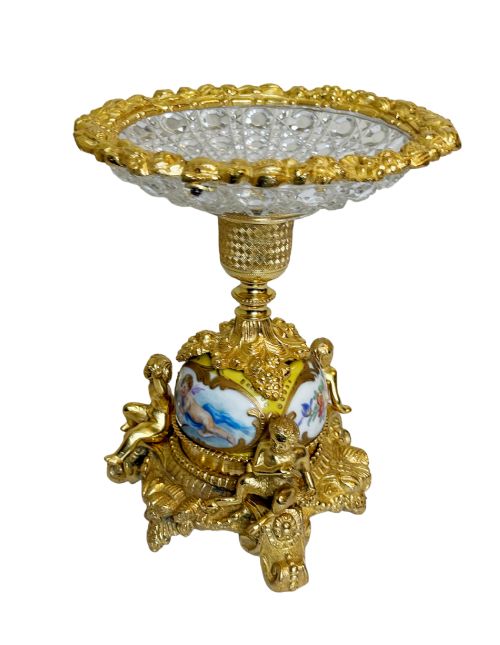
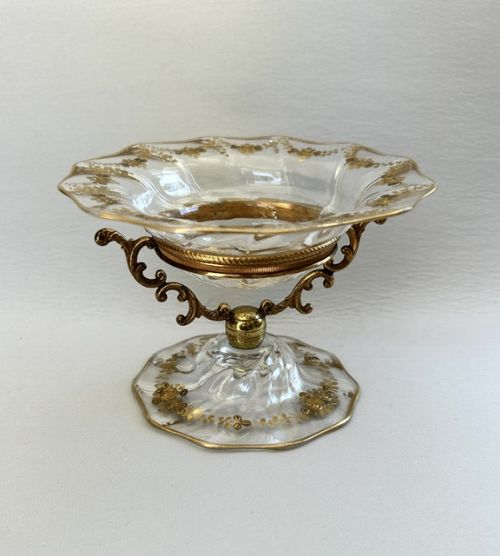
A gilt ormolu centrepiece serves as an ornamental focal point for a formal table, taking the form of tazzas, pedestal bowls, and jardinieres. These pieces originate predominantly from the 19th century, drawing on French Empire, Regency, and Rococo Revival styles.
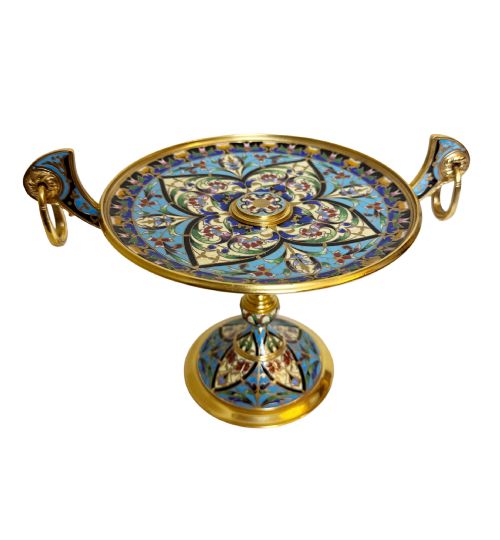
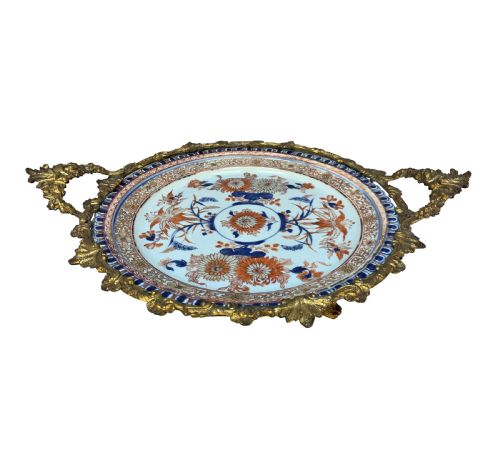
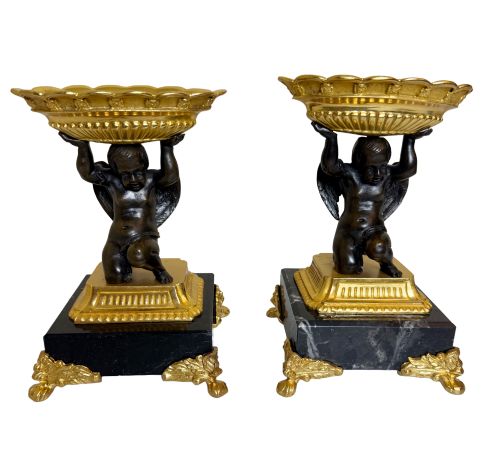
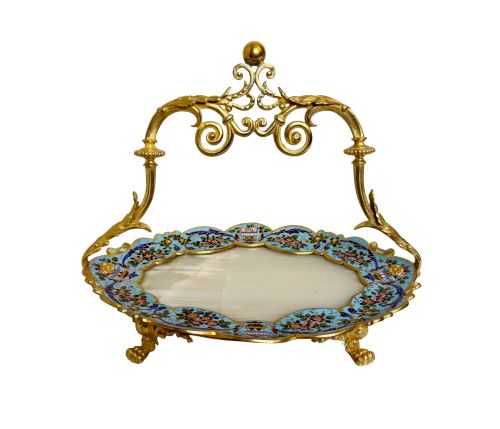
The version most commonly encountered on this page combines gilt bronze or ormolu mounts with glass inserts, porcelain bowls, or marble bases. Makers often incorporated decorative elements such as cherubs, mermen, and champlevé enamel detailing into the design.
How they were made
Artisans constructed these works by combining cast bronze with mercury gilding to produce the characteristic ormolu finish. Metal mounts were then fitted meticulously around hand-cut crystal bowls, porcelain plaques, or carved marble and green onyx sections.
Complex pieces required multiple specialised disciplines, uniting bronze founders with specialists in enamel work, glass cutting, and porcelain painting. Mounts were secured to ceramic or glass bodies using threaded pins and custom brackets.
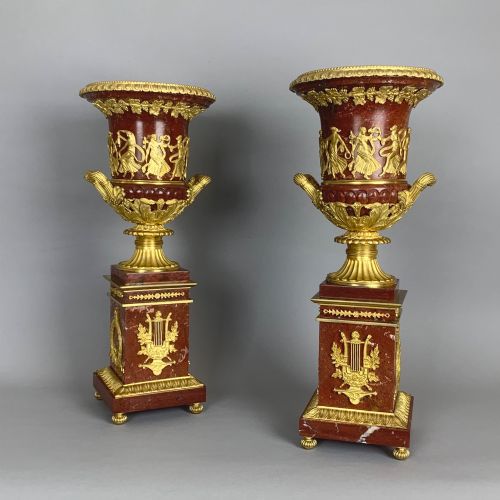
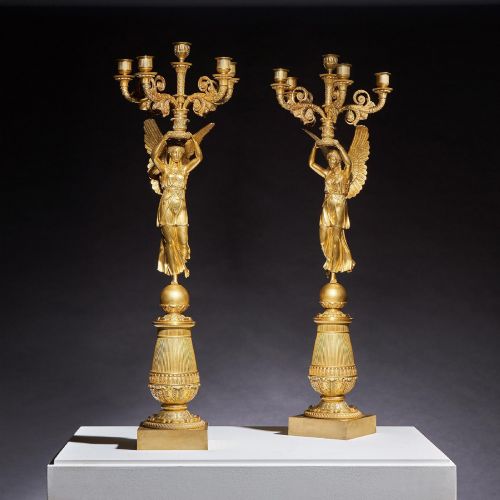
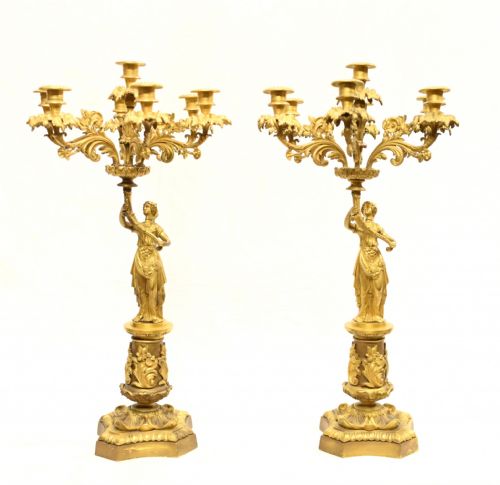
The selection spans architectural candelabra, pedestal bowls, and Grand Tour reductions of classical antiquities.
What varies in quality
Quality also depends upon the integration of materials, where fine crystal glass and hand-painted Sevres style porcelain sit perfectly flush within their cast metal armatures without excess clearance or visible pinned joints.
Pierre Philippe Thomire
The Gilt Ormolu Centrepiece Glossary
- Ormolu
- Gilded bronze, produced by applying a mercury and gold amalgam to a cast bronze object and heating it until the mercury vaporised. This technique creates a durable, golden surface finish characteristic of fine 19th-century decorative hardware.
- Tazza
- A shallow ornamental bowl or cup raised on a high foot and stem. These stemmed vessels are frequently mounted in ormolu and paired with marble or cut glass.
- Champlevé
- An enamelling technique where troughs or cells are hollowed out of the metal surface and filled with vitreous enamel paste before firing. The resulting coloured designs sit flush with the surrounding metal partitions.
- Jardiniere
- An ornamental receptacle designed to hold plants or floral arrangements, often executed in bronze and cut glass. They serve as substantial table centrepieces in formal interiors.
- Grand Tour
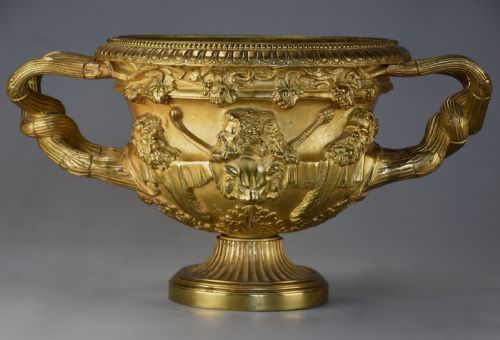
- The 19th-century practice of cultural travel through Europe, which inspired miniature bronze reductions of classical antiquities such as the Warwick Vase. These decorative reductions were brought home by wealthy travellers.
Gilt Ormolu Centrepiece: Frequently Asked Questions
What was a centrepiece used for?
These large ornamental pieces occupied the middle of dining tables during formal meals to display fruit, sweetmeats, or floral arrangements. They served primarily as decorative status symbols for wealthy households.
Over time, their function shifted from dining utility to purely decorative table and sideboard display, often matched with flanking candelabra to form a complete garniture set.
How do I clean gilt bronze?
Gilt bronze and ormolu require gentle dusting with a soft, dry brush to prevent the accumulation of dirt in recessed chased areas. Moisture and aggressive metal polishes strip the historic gold layer away entirely.
Any handling should be done with cotton gloves to prevent skin oils from tarnishing exposed areas of bronze beneath the gilding. Professional conservation is advised for heavily soiled surfaces.
Are these pieces French?
A large proportion of these works originate from 19th-century French workshops working in the Empire, Régence, and Rococo Revival styles. Paris served as the primary manufacturing centre for high-end ormolu metalwork.
British makers and other European workshops also produced similar designs, frequently adopting French aesthetic standards and employing immigrant artisans to execute complex casting and chasing work.
What is the difference between ormolu and gilt bronze?
Ormolu is simply the traditional term for mercury-gilded bronze, historically derived from the French term ourmoulu. Both phrases describe the same underlying technique of applying gold to a cast bronze base.
While modern usage sometimes distinguishes electroplated items from historic fire-gilded pieces, antique market terminology uses the words interchangeably for 19th-century metalwork.