





Gilt Metal Urns
These gilt metal urns bring classical elegance and French Empire grandeur into a room, offering striking decorative presence through centuries of craftsmanship.
Gilt Metal Urns
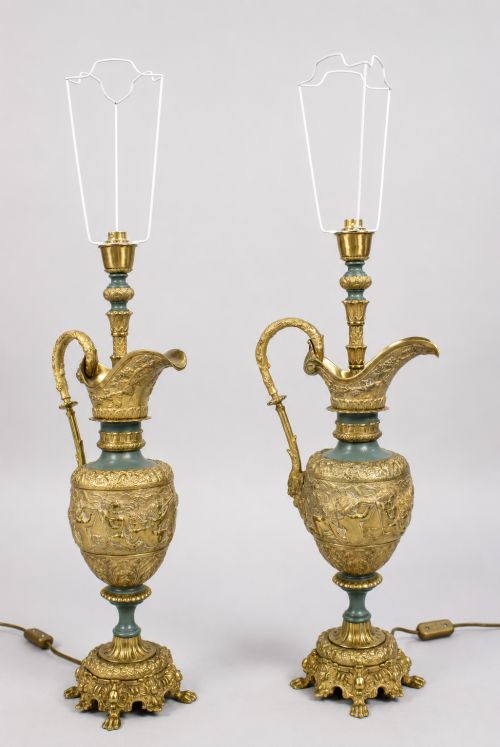
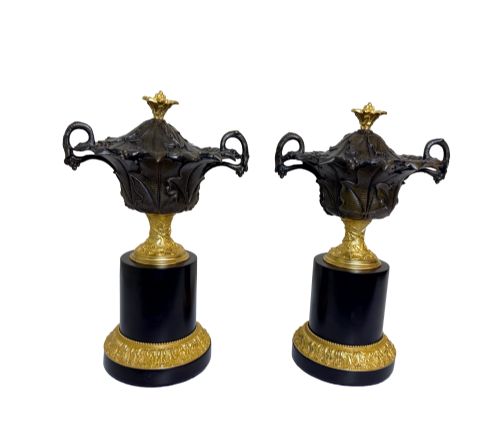
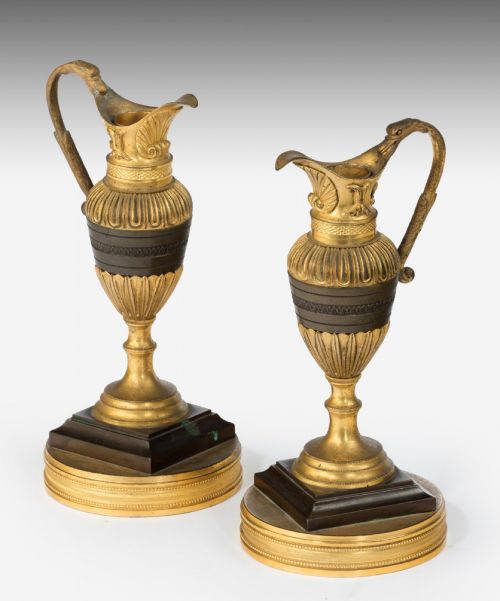
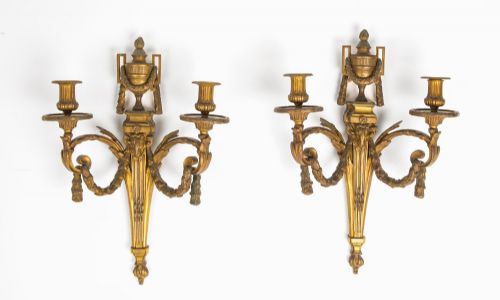
When you search for gilt metal urns, you are looking at decorative vessels, lamps, and garnitures cast in bronze, brass, or ormolu, frequently paired with marble bases or plinths. The pieces available here span the nineteenth century and the Edwardian era, drawing heavily on French Empire, Regency, and Neoclassical styles.
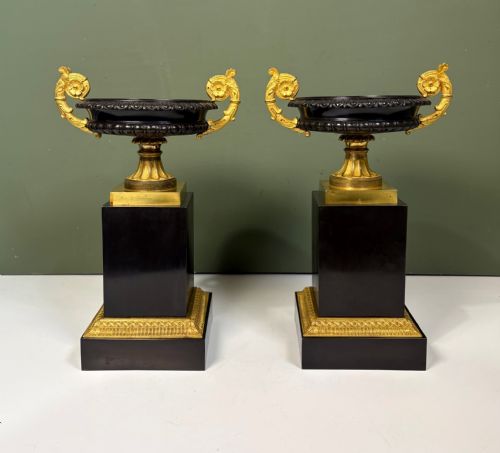
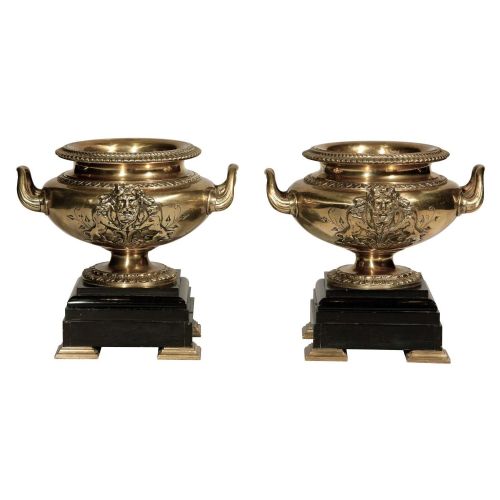
The most common forms you will meet on this page are decorative urns, ewers, and tazzas created for display on mantelpieces or tables. Many incorporate classical motifs such as ram's head masks, cherubs, and acanthus leaves, reflecting the enduring influence of the Grand Tour and classical antiquity.
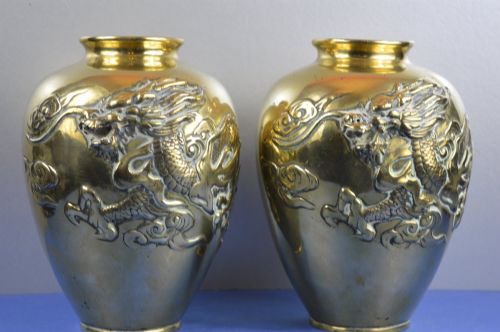
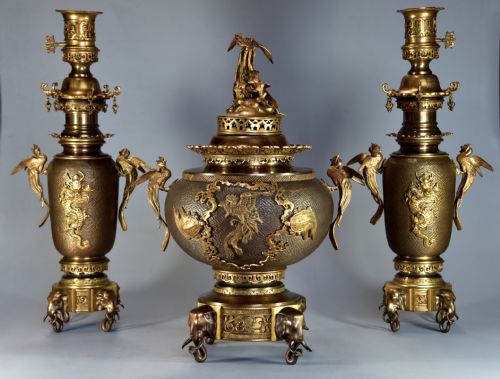
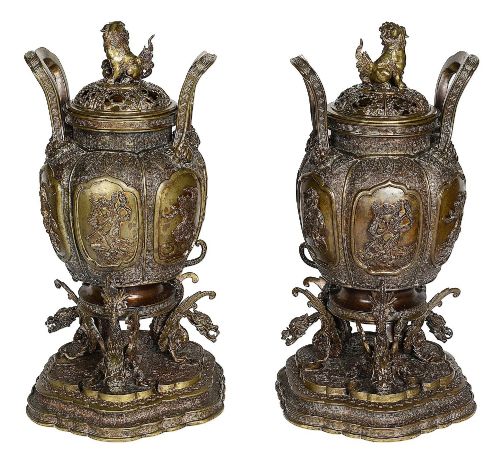
Beyond traditional urn shapes, the selection includes converted lamp bases, cassolettes with reversible lids, and incense burners. These objects cross paths with Japanese Meiji bronzes and Chinese cloisonné wares, demonstrating how nineteenth-century European workshops absorbed global decorative traditions.
Materials and methods
The fabrication of these pieces relies heavily on bronze casting, often finished with fire gilding or ormolu to achieve a bright, durable golden surface. Ormolu involves applying a mixture of gold and mercury to copper alloy, a technique requiring immense skill.
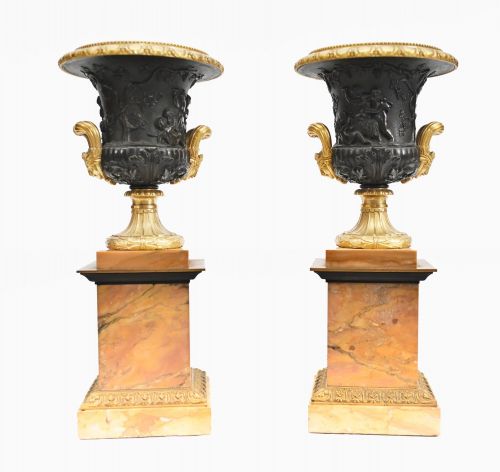
Makers frequently combined cast metals with natural stones such as white, black, or Sienna marble, as well as onyx and porcelain. Champlevé and cloisonné enamels also appear, adding vibrant bands of colour and intricate patterns to the metal bodies.
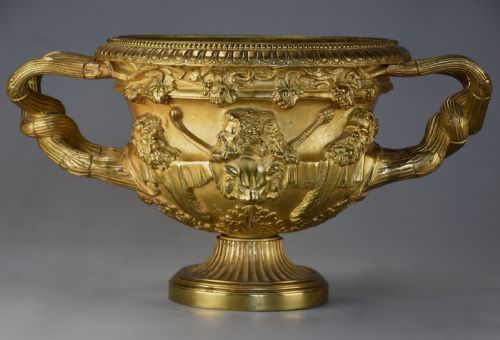
Several nineteenth-century bronzes pay direct tribute to the classical Warwick Vase, bringing miniature Roman monuments indoors.
Distinctions in quality
The weight and selection of auxiliary materials also define the grade of an object. Heavy, dense marble pedestals, precise mounts, and well-fitted lidded elements indicate workshop standards at the higher end of the scale.
The Gilt Metal Urns Glossary
- Ormolu
- A gold-mercury amalgam applied to bronze or copper to create a rich golden finish. This historical method was largely superseded in the later nineteenth century by electroplating.
- Cassolette
- A decorative vessel featuring a reversible lid that transforms from a closed urn into a burner for perfumes. They often double as dual-purpose mantel ornaments.
- Champlevé
- An enamelling technique where troughs are carved into the metal surface and filled with vitreous paste before firing. This creates intricate geometric or floral bands.
- Grand Tour
- A cultural journey undertaken by wealthy young Europeans in the eighteenth and nineteenth centuries, inspiring souvenir purchases of small bronzes and classical replicas.
Gilt Metal Urns: Frequently Asked Questions
What is a gilt metal urn?
These decorative vessels are cast in bronze or brass and finished with a golden surface layer, designed primarily for interior display.
Originating largely from nineteenth-century European workshops, they draw directly on ancient Greek and Roman forms.
How were these urns used?
Owners placed them on mantelpieces, sideboards, and pedestals as symbols of taste, culture, and classical learning.
Some served functional roles as lamps, incense burners, or cassolettes for diffusing pleasant scents through formal rooms.
How do I style them at home?
They suit formal mantelpieces, classical sideboards, and console tables where their metallic sheen catches natural light.
Pair them with dark wood furniture and neutral stone backgrounds to let the gilt details and marble bases stand out.
How can I tell the period?
Stylistic clues such as Regency motifs, Empire period proportions, or later Edwardian manufacturing techniques help date each piece.
The presence of hand-chased bronze work usually points toward earlier nineteenth-century production.