





19th Century Mantle Garniture
A 19th century mantle garniture brings symmetry and striking presence to a room, anchoring a fireplace with a central clock and matching side pieces.
19th Century Mantle Garniture
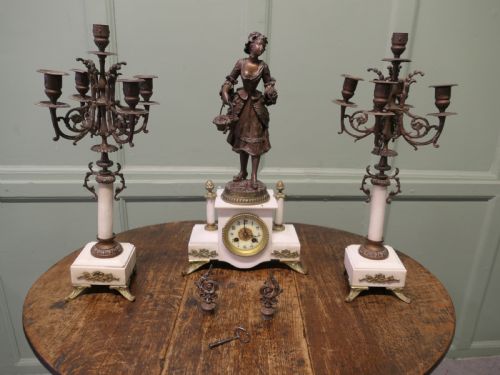
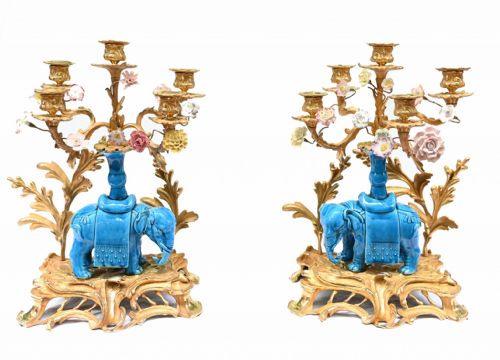
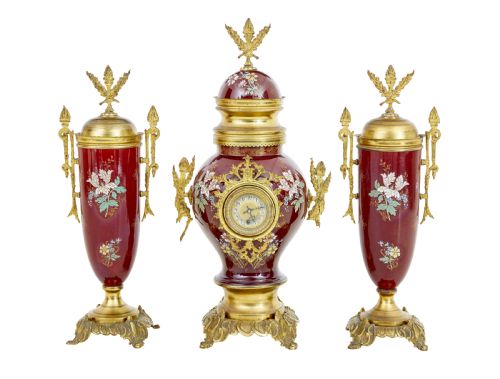
A 19th century mantle garniture typically consists of a central mantel clock accompanied by matching side ornaments such as urns, candelabras, or vases designed to coordinate in style and materials.
The pieces appearing in this selection lean heavily toward French design, spanning Louis XVI revival, Rococo revival, and Empire styles alongside Victorian interpretations.
Most configurations comprise three matching items, uniting bronze, marble, porcelain, and ormolu into a balanced decorative statement for a chimney piece.
Materials and construction
Makers shaped heavy mounts from gilt bronze and ormolu, pairing them with natural stone bases carved from white or siena marble, green onyx, and alabaster.
Porcelain panels and vessels received hand-painted details and enamelling, often incorporating cloisonné work or detailed figures cast in bronze.
Clock movements relied on eight-day striking mechanisms housed within ornate metal and stone casings.
Cupid figures cast after Etienne Maurice Falconet occasionally keep watch over the ticking clock face.
Distinctions in craftsmanship
Quality rests in the crispness of the bronze casting and the depth of the gilding, where finer sets display sharp chasing and well-defined sculptural elements.
The selection of materials creates a clear hierarchy, distinguishing simple brass and toleware combinations from dense marbles paired with heavy hand-chiseled ormolu.
Cohesion across the set dictates value, separating unified suites designed as one piece from matched groupings assembled later.
Finnigan Manchester·Ferdinand Barbedienne·Meissen·Etienne Maurice Falconet
The 19th Century Mantle Garniture Glossary
- Garniture
- A set of matching decorative objects designed to be displayed together on a mantelpiece or sideboard. They typically feature a central clock flanked by two urns, candelabras, or vases.
- Ormolu
- Finely ground high-carat gold applied to a bronze base using a mercury amalgamation process. This technique gives the metal a rich, durable golden finish common on French decorative objects.
- Cloisonné
- An ancient enamelwork technique where thin metal wires are soldered to a metal body to create compartments filled with coloured paste and fired. These patterns add vibrant colour and texture to clock faces and urns.
- Toleware
- Painted or lacquered sheet metal items produced throughout the period for domestic decoration. The technique allows for bright surface designs on utilitarian objects.
- Candelabra
- Branched candlesticks designed to hold multiple tapers simultaneously. In a garniture set, they match the decorative motifs of the central clock.
19th Century Mantle Garniture: Frequently Asked Questions
What is included in a complete garniture set?
A complete set usually contains a central mantel clock accompanied by two matching side pieces like urns, candlesticks, or candelabras. These secondary pieces echo the motifs and materials of the clock to create a balanced display.
While three-piece sets predominate, pairs of candelabras or urns also appear independently under the same descriptive heading.
How do I identify French Empire style pieces?
French Empire pieces display heavy classical influences inspired by antiquity, featuring dark marbles, stark architectural lines, and finely cast ormolu mounts. Look for motifs like military trophies, sphinxes, and classical foliage.
These designs convey a sense of monumental gravity distinct from the lighter, more fluid curves of later Rococo revival items.
Where should I place a garniture set?
These sets find their traditional home on the mantelpiece above a fireplace, where the central clock sits flanked symmetrically by the matching side pieces. The arrangement creates a formal focal point for a room.
Console tables and large sideboards also provide suitable flat surfaces for displaying the full spread safely.
How do I tell marble types apart?
Siena marble exhibits a warm yellow and ochre tone with darker veining, whereas green onyx displays translucent banding in shades of green and amber. White marbles present a clean, uniform crystalline structure often contrasted against bright gilt bronze.
Examining the underside or unpolished edges reveals the natural density and grain of the stone.