
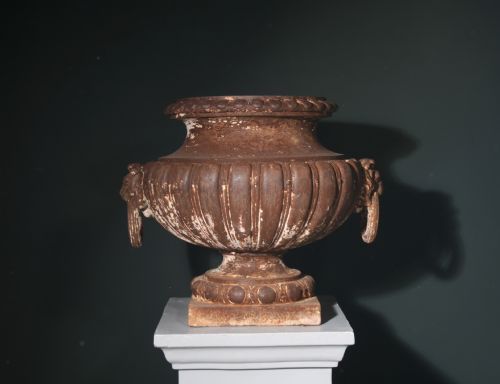


Fluted Decorative Urns
These fluted decorative urns bring classical presence to a room or garden, shaped in cast iron, bronze, porcelain and pine.
Fluted Decorative Urns
When you search for fluted decorative urns, you encounter substantial vessels designed for display rather than utility, originating mostly in the nineteenth century and the Edwardian period. The forms vary from heavy garden pieces in cast iron and bronze to refined porcelain vases and planters, carrying neoclassical lines.
The domestic and garden versions divide clearly by material and scale, with cast iron and pine serving outdoor spaces while porcelain and silver occupy rooms. English, French, Italian and Japanese examples appear, showing how widely classical shapes travelled across nineteenth-century workshops.
How they were made
Foundries cast iron into heavy garden urns using sand moulds, while patinated bronze and brass took shape through traditional metal casting requiring careful finishing. Pine and other woods were turned on lathes and joined for interior planters.
Ceramic pieces such as the Japanese Imari vases and porcelain vessels relied on high-firing techniques before receiving hand-painted glazes, lacquer or gold leaf overlays. Silversmiths hammered and chased solid silver to form intricate tea caddies.
The listings span cast iron, porcelain, gold leaf, wood, enamel, patinated bronze, sterling silver and pine.
What varies in quality
Quality rests upon the crispness of the casting and the depth of the chasing, where sharper fluting and cleaner surface details distinguish superior foundry work from routine production. The handling of materials matters greatly, whether in the weight of a bronze pair or the precision of porcelain painting.
Proportion and surface finish dictate the overall success of each piece, as seen in the balance of classical handles and bases. Original surfaces, from patinated bronze to aged cast iron, retain greater integrity than heavily restored examples.
Val D'Osne Foundry·Goldsmiths and Silversmiths Co
The Fluted Decorative Urns Glossary
- Fluted
- Having parallel shallow grooves running vertically along the body of the urn. This classical decorative technique adds visual rhythm and elegance to the vessel.
- Neoclassical
- A style drawing inspiration from the classical art and architecture of ancient Greece and Rome. It dominates the nineteenth-century pieces found here through formal symmetry and restrained ornament.
- Patinated
- Showing a surface sheen or colour developed naturally through age and exposure, or artificially applied by makers. It enhances the visual depth of bronze and metal surfaces.
- Imari
- A type of Japanese porcelain decorated in underglaze blue and overglaze red, gold and other colours. These wares were widely exported to Europe during the nineteenth century.
Fluted Decorative Urns: Frequently Asked Questions
What are fluted decorative urns?
These are ornamental vessels featuring vertical grooves, ranging from monumental cast iron garden pieces to porcelain vases and silver tea caddies.
They reflect neoclassical design principles developed across nineteenth-century Europe and Japan for both interior display and garden landscaping.
How were cast iron urns used?
Cast iron urns served as durable garden ornaments, placed along pathways, terraces or lawns to provide architectural structure outdoors.
Their heavy construction allowed them to withstand weather while anchoring planting schemes with classical silhouettes.
Can these urns stay outside?
Materials dictate placement, with cast iron and stone handling outdoor weather while porcelain, silver and pine require indoor environments.
Cast iron develops a natural patina over time when exposed to the elements, whereas delicate lacquered or silver surfaces demand protection from moisture.
How do I date a nineteenth-century urn?
Dating relies on material markers, foundry stamps, casting techniques and stylistic cues associated with Victorian or Edwardian production.
Nineteenth-century pieces often display specific foundry marks or hand-finishing methods that distinguish them from later reproductions.