




French Chateau Urns
French chateau urns bring grand provincial weight to a room, turning practical vessels into decorative centrepieces.
French Chateau Urns
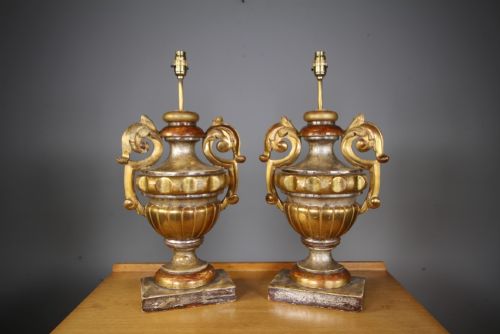
When buyers search for french chateau urns, they find decorative objects and vessels adapted from classical architecture and country house styling. The pieces appearing in this selection lean heavily towards 19th-century lamp conversions, mantel garnitures, and jardinieres rather than garden statuary.
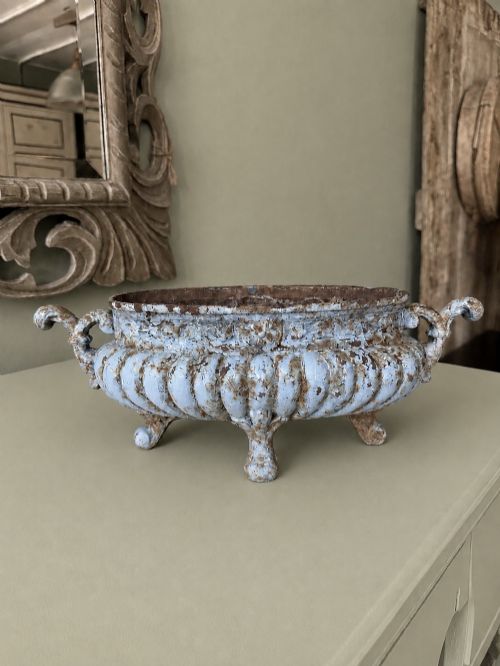
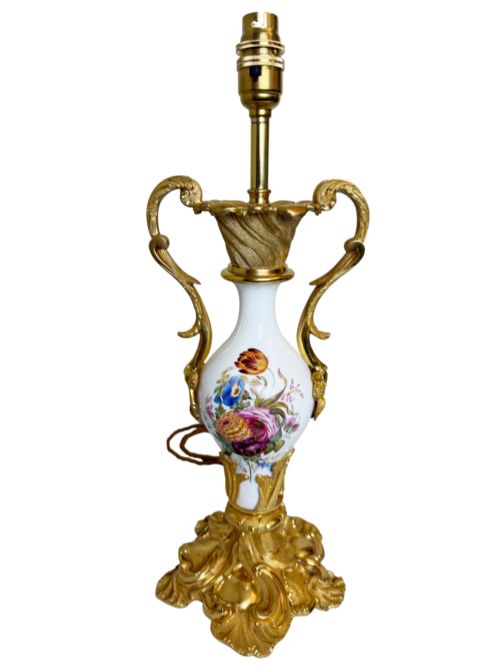
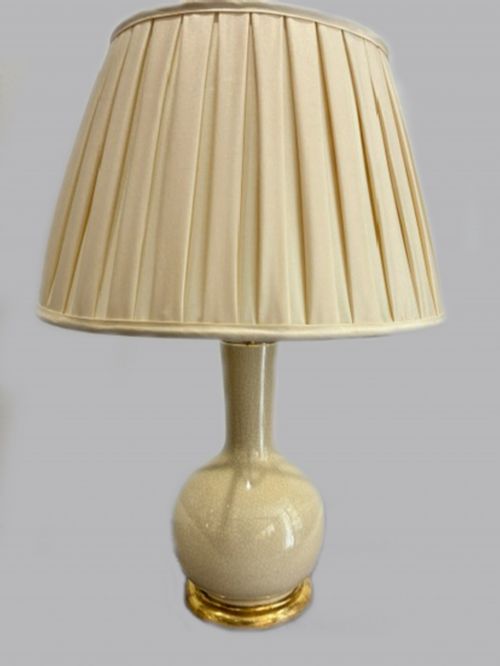
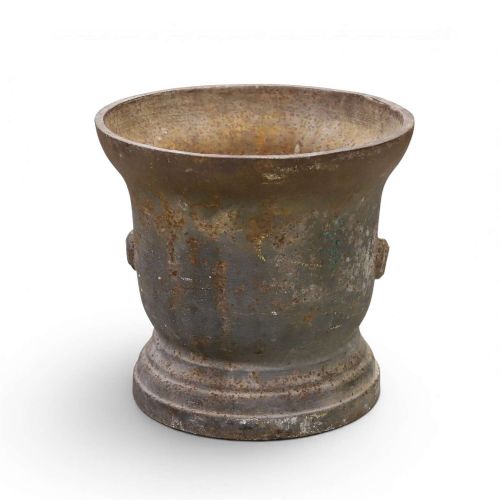
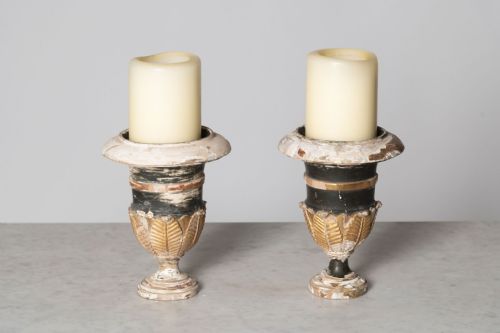
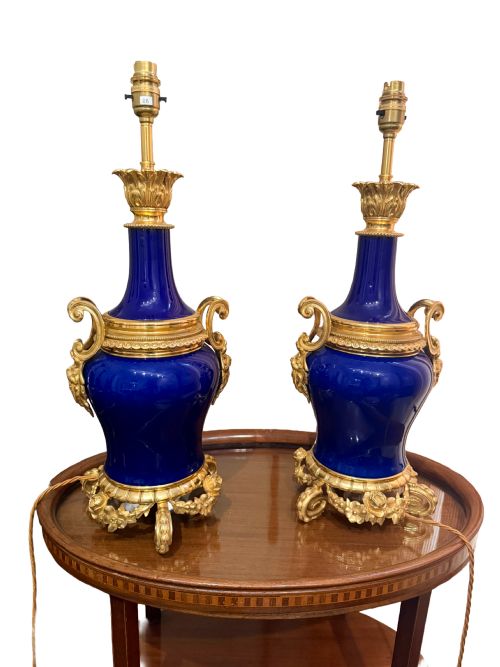
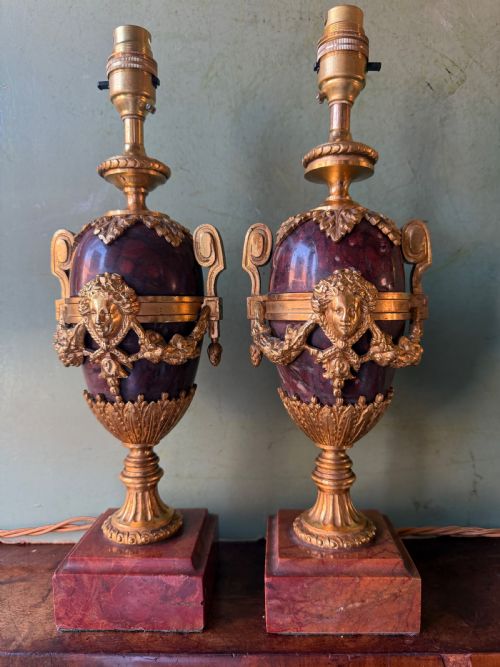
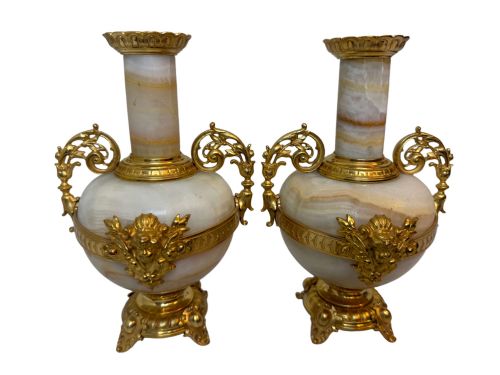
The most common forms on this page include porcelain and marble vases mounted with gilt bronze, alongside cast iron kitchen mortars and carved wooden urns with tole flowers. These items reflect the broader design vocabulary of French neoclassical and Louis XVI revivals found in country houses.
Origins trace directly to 19th-century workshops producing items influenced by earlier periods, incorporating classical motifs like gadrooning and cherubs. Buyers encounter objects that served domestic interior roles, from side table lighting to decorative mantel ornaments.
How they were made
Makers utilised a combination of cast metals, carved natural materials, and fired ceramics to achieve heavy, substantial decorative forms. Ormolu mounts and gilt bronze accents were cast and chased to frame bodies of white onyx, rouge marble, and blue porcelain.
Cast iron and carved pine provide the structural weight for utilitarian jardinieres and architectural lamps, often finished with paint, gesso, or gilding. Detail work relies on traditional hand-carving alongside moulded plaster and turned wood elements.
The integration of functional hardware into decorative vessels, particularly for table lamps and wired urns, shows how period pieces were adapted for domestic utility while retaining their classical proportions.
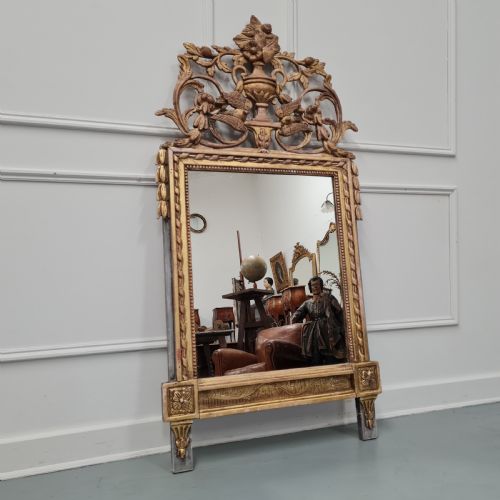
Object forms focus heavily on table lamps, wall mirrors, and decorative jardinieres rather than garden statuary.
What varies in quality
Quality rests primarily on the crispness of the casting in metal mounts and the depth of hand-carving in wood or stone. Finer examples display precise chasing on ormolu and well-defined classical motifs rather than soft, blurred details.
The selection of materials creates a clear hierarchy, with heavy rouge marble, white onyx, and fine Sevres-style porcelain sitting above simpler cast iron or painted pine. Superior pieces maintain harmonious proportions between the central vessel and its decorative base or handles.
The French Chateau Urns Glossary
- Ormolu
- Gilded bronze, used extensively for decorative mounts on porcelain and marble objects. This technique involves applying a mercury-gilding process to cast bronze.
- Jardiniere
- An ornamental pot or stand for holding plants or flowers. These items often appear in cast iron, brass, or ceramic.
- Gadrooned
- Ornamented with a carved or cast series of convex curves. This decorative banding frequently circles the base or body of classical urns.
- Sèvres style
- A term describing porcelain decorated in the manner of the famous French royal factory. Pieces often feature rich blue grounds paired with gilded bronze mountings.
- Tole
- Painted or enamelled sheet metal. It is commonly shaped into decorative floral arrangements placed inside carved urns.
French Chateau Urns: Frequently Asked Questions
What are french chateau urns used for today?
These pieces serve primarily as decorative interior accents, often placed on side tables, mantels, or console units to add height and classical proportion to a room.
Many of the items listed have been converted into table lamps, combining period vessels with modern electrical fittings for functional household lighting.
How do I identify the period of an urn?
Dating relies on examining the materials, casting quality, and stylistic revivals present in the object, such as Louis XVI neoclassical motifs or Napoleon III excess.
Most items date from the 19th century, reflecting historical revivals rather than original 18th-century production dates.
Are these urns heavy?
Most examples possess considerable weight due to their construction from solid marble, cast iron, bronze, and dense woods like pine.
This heft makes them stable when used as heavy table lamps or floor-standing jardinieres, requiring sturdy placement surfaces.
Can I place these pieces outdoors?
The majority of items here are designed for indoor domestic use, featuring delicate gilding, painted finishes, and electrical conversions that suit sheltered reception rooms.
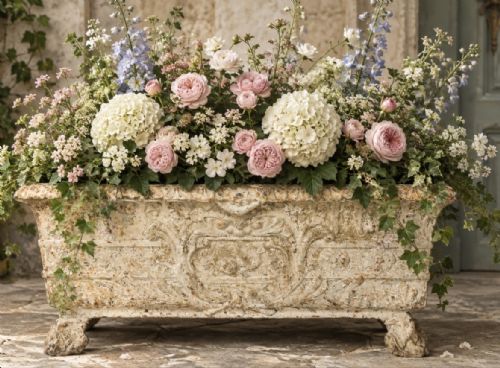
Weather-resistant cast iron mortars and heavy planters can withstand protected outdoor spaces, but delicate ormolu and marble require indoor care.